Artwork
Adoration of the Magi
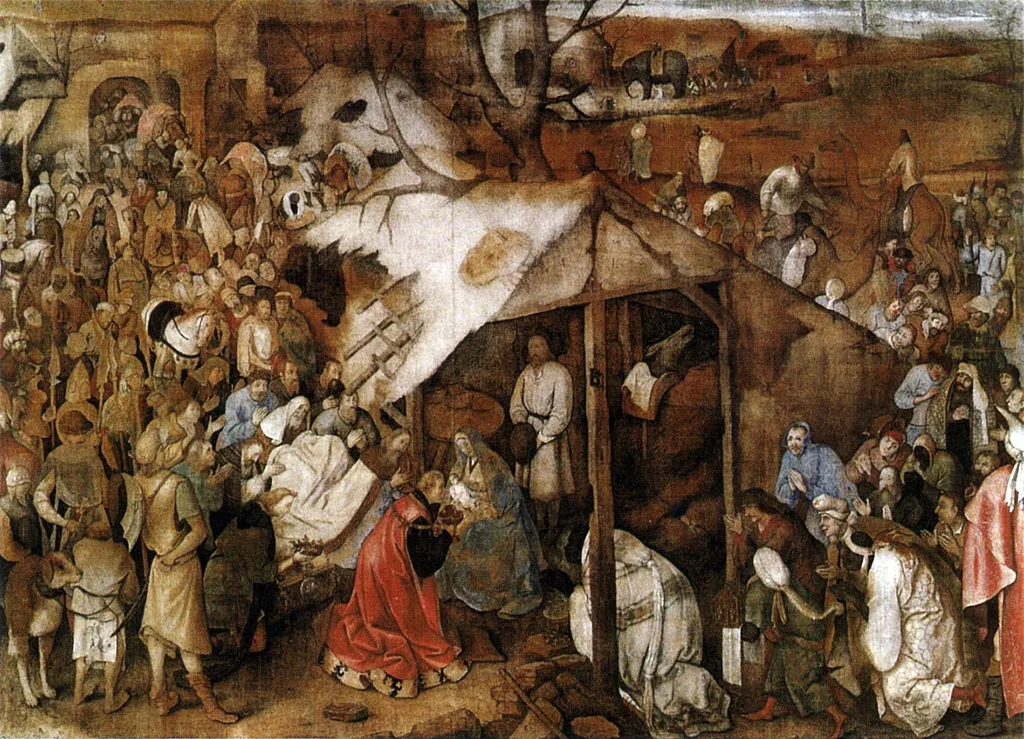
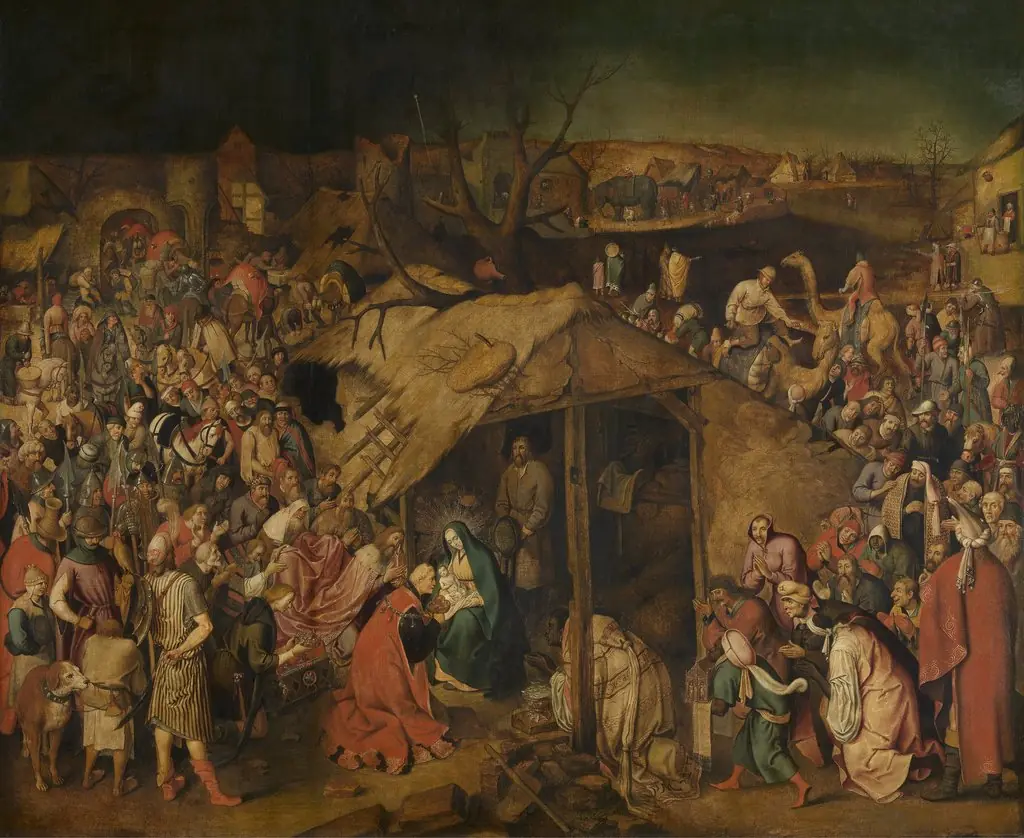
Adoration of the Magi is a tempera painting by the Northern Renaissance artist Pieter Brueghel I. It dates from 1556 and is held in the collection of the Royal Museums of Fine Arts of Belgium.
About this work
Subject & Meaning
A bird's-eye view reveals a large crowd following the kings from Bethlehem's city gate, most figures appearing unmoved by the divine event unfolding among them.
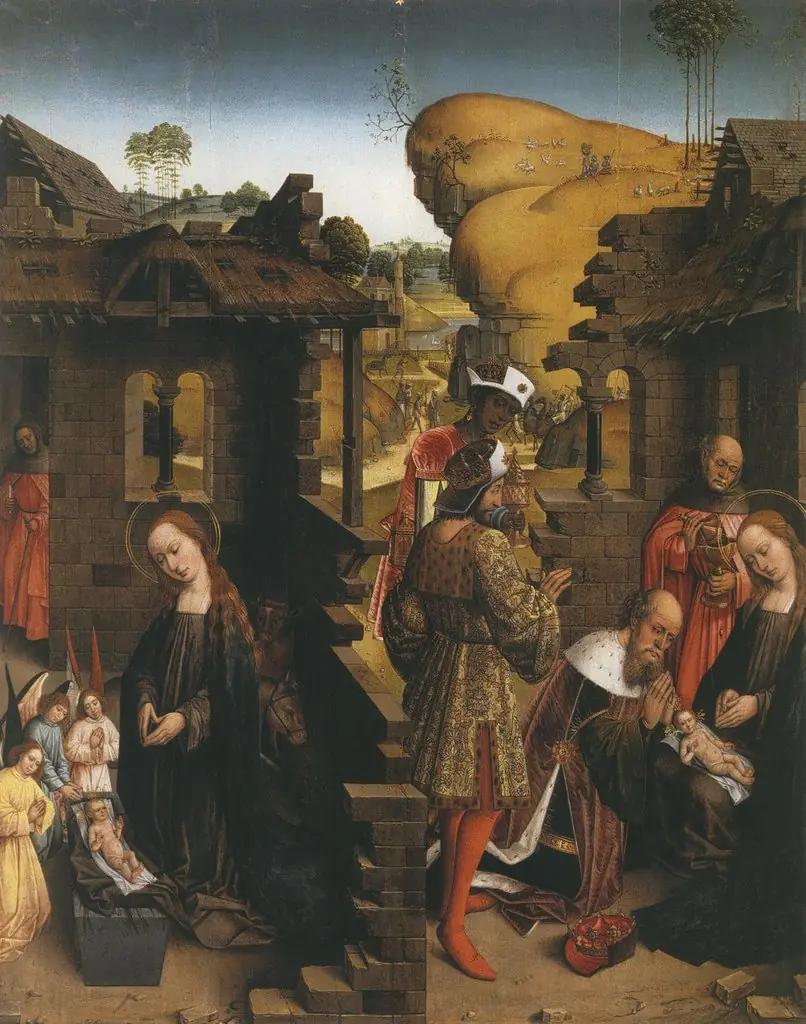
The painting depicts the Adoration of the Magi, the biblical episode from Matthew 2:1-12 in which the three Magi present gifts to the Christ Child. The central group forms a triangular composition with the Virgin Mary and the infant Jesus at the apex, surrounded by the kneeling kings. Bruegel places the scene in a ramshackle stable, borrowed from Hieronymus Bosch's Epiphany triptych, with Joseph standing reverently in the background. The Magi are richly dressed and accompanied by exotic animals including an elephant and camels. A bird's-eye view reveals a large crowd following the kings from Bethlehem's city gate, most figures appearing unmoved by the divine event unfolding among them. An earthenware jug hangs in a tree behind the stable, while armored soldiers in the left foreground point forward, alluding to the looming threat of Herod and the subsequent Massacre of the Innocents. The work carries universalizing symbolism: by mingling the oriental sovereigns with common people, Bruegel underscores the Epiphany's broader meaning as a revelation to all humanity.
Technique & Style
Executed circa 1556, this work is a tempera painting on fine linen canvas, utilizing the rare tüchlein technique. Bruegel applied glue-bound tempera directly onto the unprimed fabric, allowing the ground tone of the linen to show through while the paint was immediately absorbed. This method, likely learned from Mayken Verhulst, precluded the use of oil or varnish, resulting in a distinctive aesthetic characterized by paleness and matte finishes that lacks transparent effects. The rapid drying time of the medium demanded extreme precision from the artist.
The painting's condition is poor, a fragility inherent to tüchlein in humid climates, exacerbated by historical mishandling. The canvas exhibits cracks, water stains, and edge damage caused by repeated nailing to an oak panel, a mounting method removed during a 1969 restoration. Stylistically, the composition displays a limited pictorial depth reminiscent of tapestry aesthetics, featuring a high viewpoint and a triangular arrangement of figures. The scene includes a dilapidated stable and a crowded procession with exotic animals, echoing influences from Hieronymus Bosch and Raphael's tapestry cartoons.
History & Provenance
The work was painted by Pieter Brueghel the Elder in 1556 using tempera on canvas. It was first owned by Édouard Fétis, who acquired it from the gallery of J. and A. Leroy Frères, with the sale recorded between 8 and 12 November 1909. The painting was subsequently donated to the Royal Museums of Fine Arts of Belgium by the Society of Friends of the Museums. The work remains in the collection of the Old Masters Museum in Brussels. The attribution and dating have been debated, with some scholars questioning the attribution due to the painting's condition, though recent analysis supports its autograph status and places it in the early phase of Bruegel's career. The technique employed is characteristic of the Tüchlein method, involving thin layers of tempera on a fine linen support without preparatory ground, resulting in a matte finish and limited transparency.
The painting Adoration of the Magi by Pieter Brueghel the Elder is held in the collection of the Royal Museums of Fine Arts of Belgium, specifically in the Oldmasters Museum. Its inventory or accession history begins with Édouard Fétis, who acquired the work and later sold it in 1909 through Galerie J & A Leroy Frères. Following the artist's death, the painting was donated to the museum by the Friends of the Royal Museums of Fine Arts. The work has been exhibited as part of the museum's permanent collection and has appeared in exhibitions focusing on Bruegel's oeuvre and Renaissance art, though specific exhibition titles are not detailed in the sources. The painting was created in 1556 using tempera on canvas and is documented in multiple museum and scholarly references as part of the institution's holdings.
Context
Painted around 1556, the Adoration of the Magi is one of only four surviving works Pieter Brueghel the Elder executed in the fragile tüchlein technique, a method he likely absorbed from his mother-in-law Mayken Verhulst. The composition openly competes with Hieronymus Bosch's Epiphany triptych of about 1495, borrowing the skewed stable and the figure of the black sage, while also echoing a Brussels tapestry woven in the 1520s after a Raphael workshop cartoon that Bruegel's publisher Hieronymus Cock had engraved. Bruegel universalizes the Epiphany by mingling the eastern kings with ordinary townspeople emerging from Bethlehem's gate.
Scholarship has long debated the attribution. The canvas is neither signed nor dated, and Charles de Tolnay rejected it outright, while Michel relegated it to Bruegel's circle; Max Friedländer accepted it but noted a tapestry-like flatness in the figures. More recent specialists, including Grossmann and the contributors to the 2018 Royal Museums catalogue, have reaffirmed autograph status on the strength of preserved passages showing exceptional painterly nuance. Bruegel later reused the central group in the so-called London Adoration, and several oil-on-panel copies survive from the workshop of Pieter Brueghel the Younger.
Legacy
The painting stands as one of only four surviving works Bruegel executed in the fragile tüchlein technique, making it a key reference point for understanding his early experimentation with tempera on fine linen. Its compositional core, the central Holy Family group, was later reworked by the artist into an independent composition known as the London Adoration, demonstrating the work's generative role in his own development. Multiple copies survive from the workshop of Pieter Bruegel the Younger, typically rendered in oil on panel, which helped disseminate the composition and secure its place within the Bruegel family tradition. Scholarship has continued to engage with the painting as a touchstone for Bruegel's early style. Max Friedländer used it to argue for a tapestry-derived aesthetic in the master's figure handling, while later commentators such as Grossmann and Sabine Pénot have revisited its attribution and condition, with a 1969 restoration documented by Philippot, Goetghebeur, and Guislain-Wittermann. The work is cited in major Bruegel catalogues by Marlier, Marijnissen, Roberts-Jones, and Sellink.
Artist & collection

Artist
Pieter Bruegel (also Brueghel or Breughel) the Elder ( BROY-gəl, US also BROO-gəl; Dutch: ; c.

Museum
Royal Museums of Fine Arts of Belgium
Continue through works from the same source collection.
- Adoration of the Magi
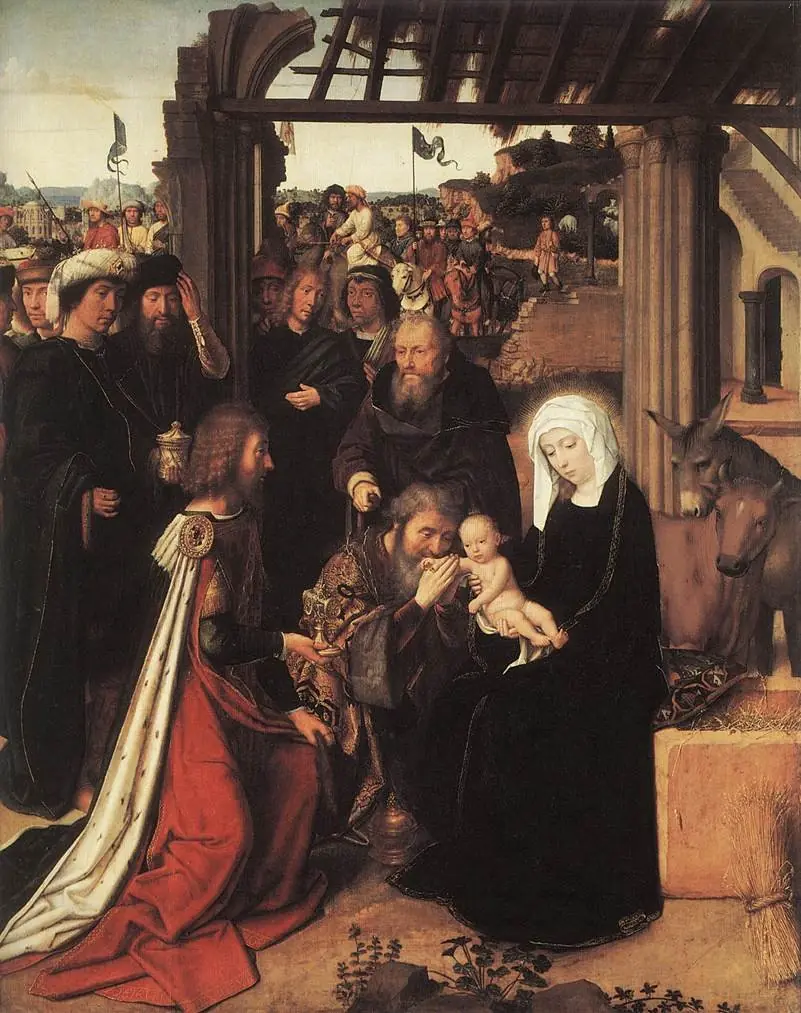 Adoration of the Magi
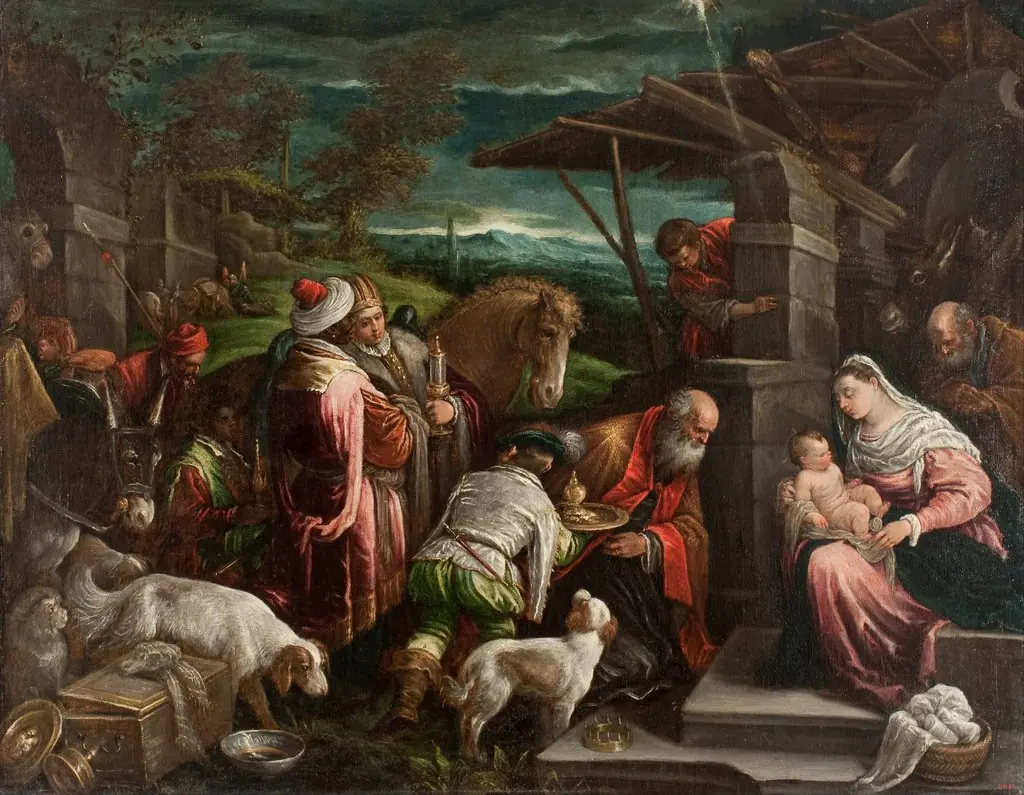 Adoration of the Magi
 Adoration of the Magi
 Adoration of the Magi
 The Adoration of the Magi
 Adoration of the Magi before the stable on the hill
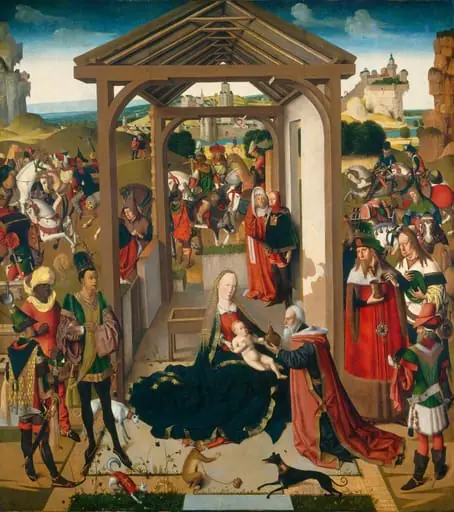 The Adoration of the Magi
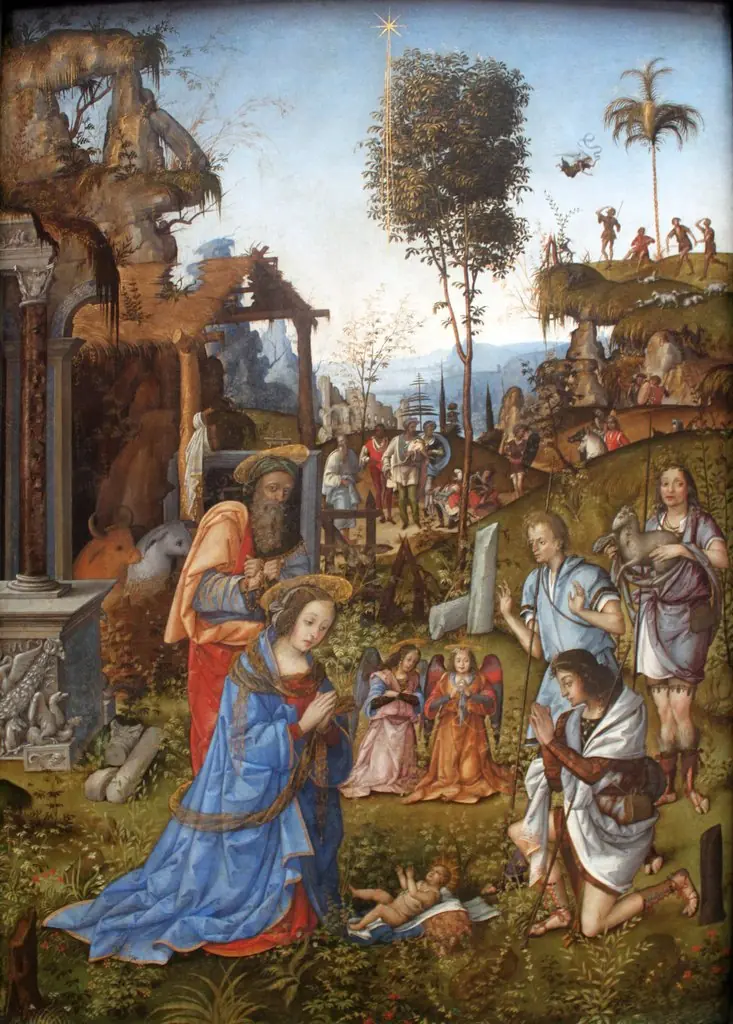 The Adoration of the Shepherds
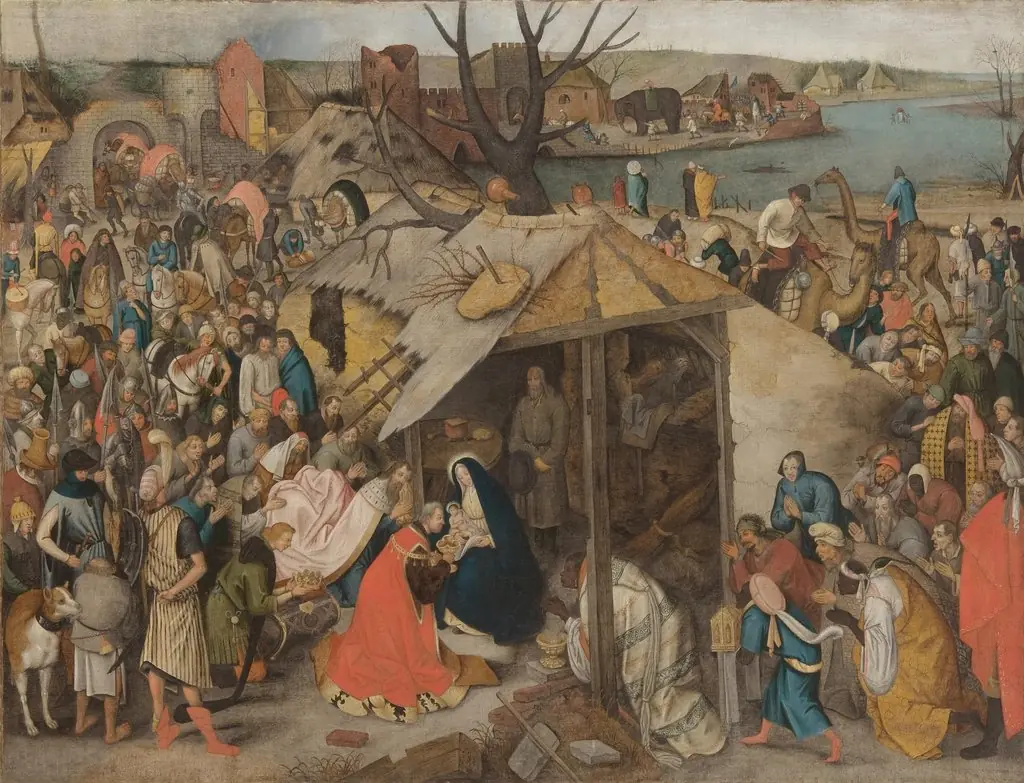 The Adoration of the Magi
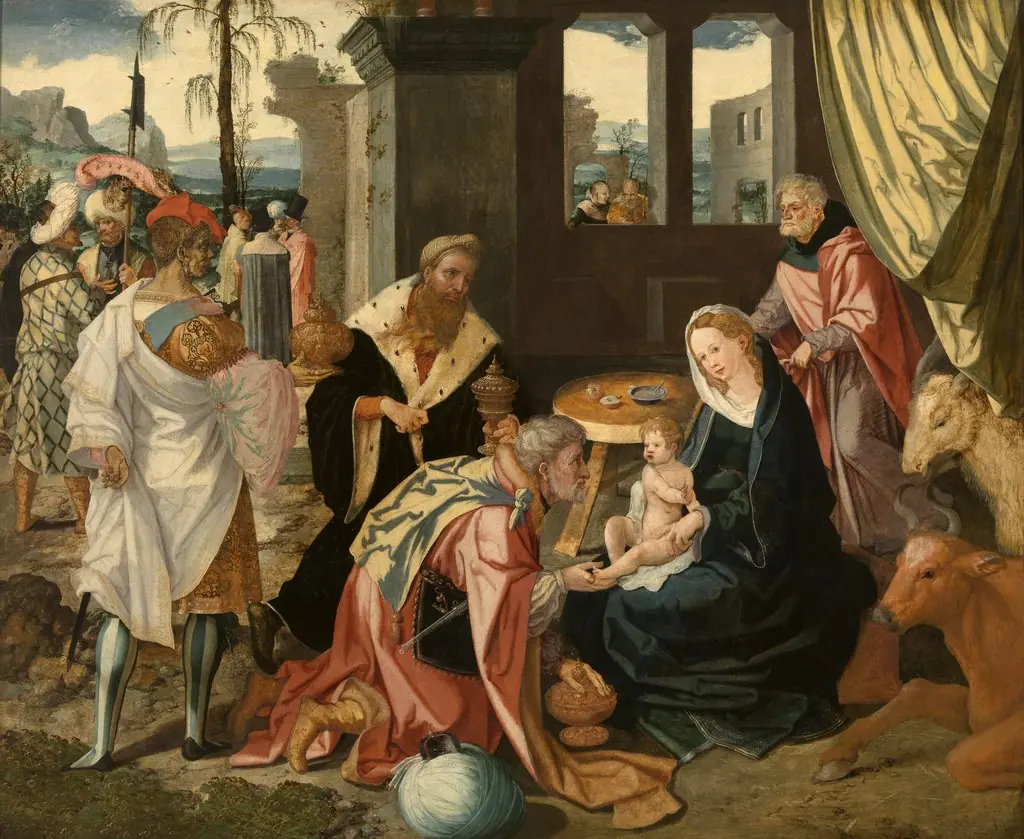 The Adoration of the Magi
 De geboorte en de aanbidding van de Wijzen