Artwork
Christ in Limbo
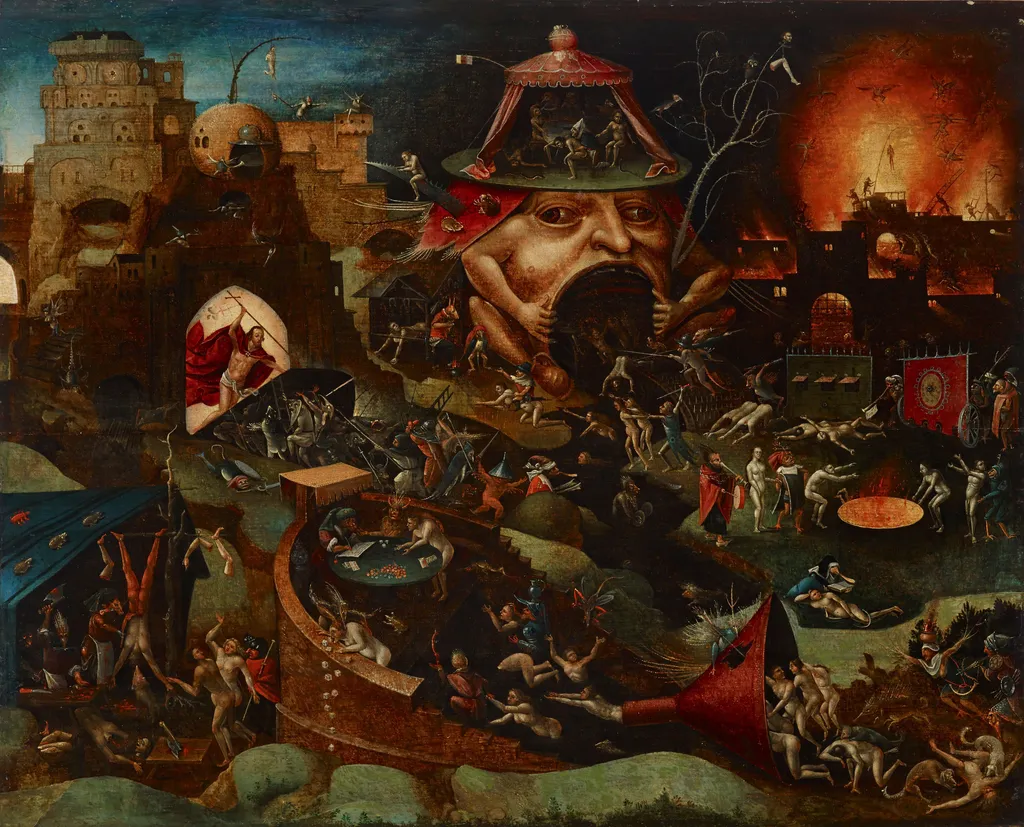
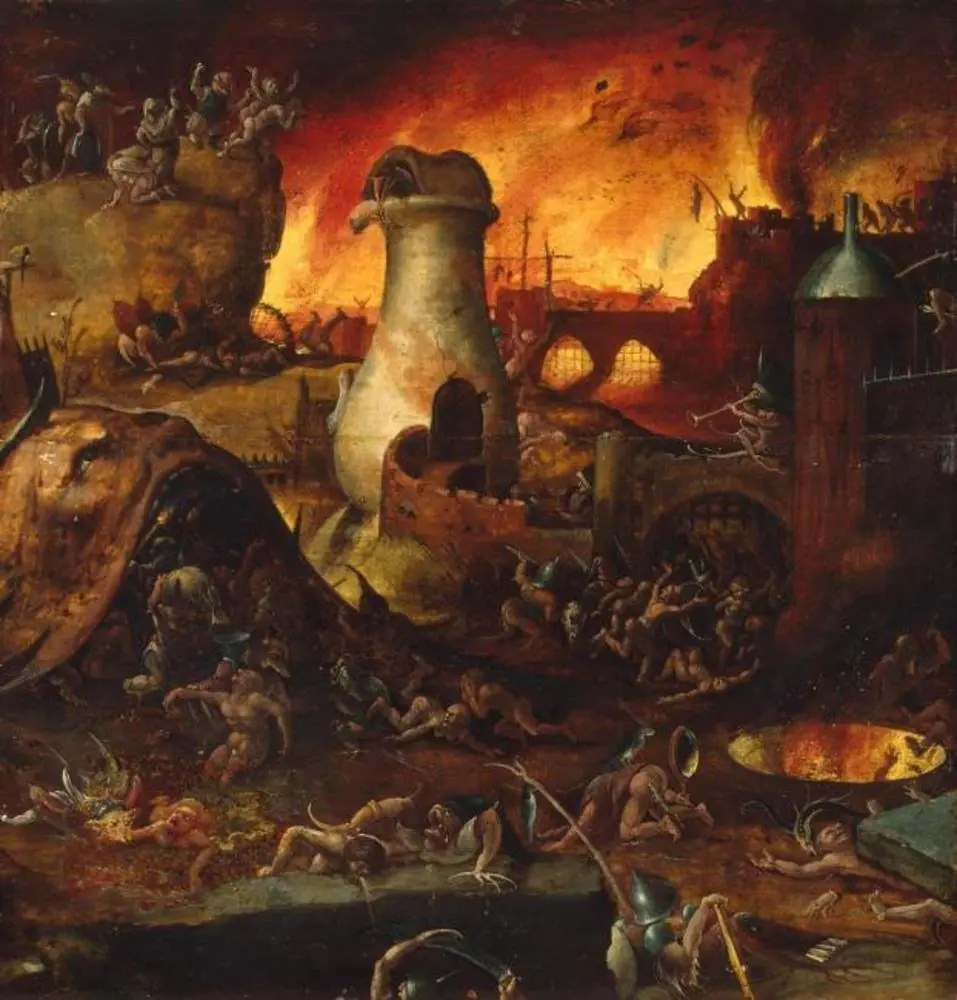
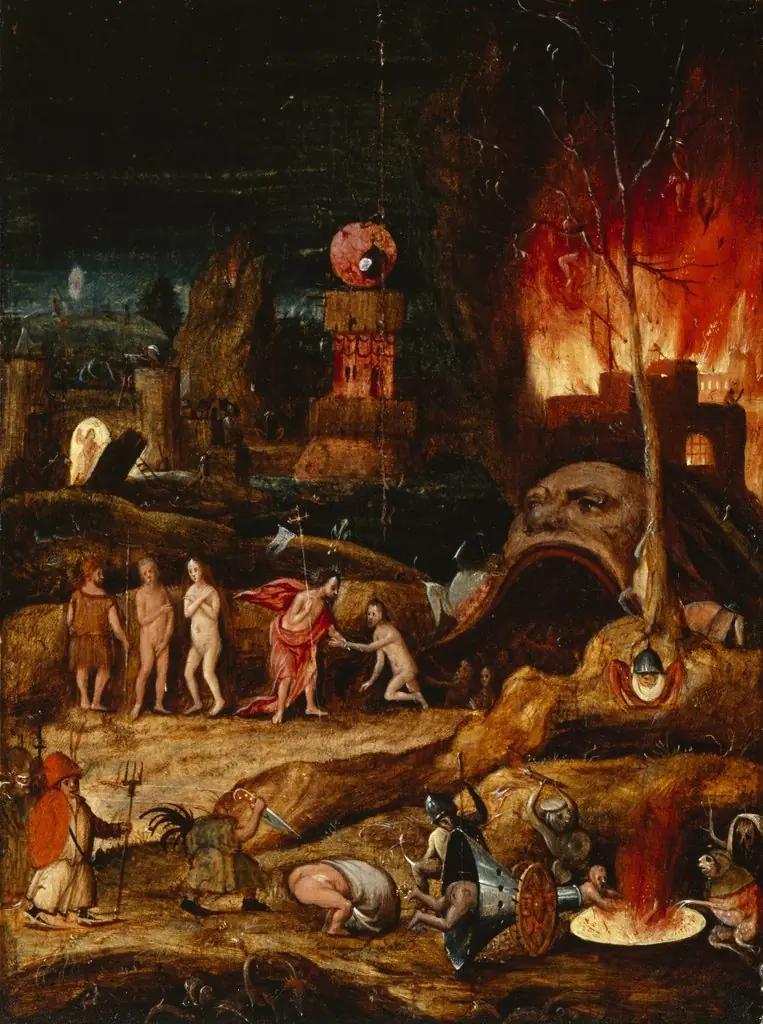
Christ in Limbo is an oil painting by the Northern Renaissance artist Hieronymus Bosch. It is held in the collection of the Kunsthistorisches Museum.
About this work
Subject & Meaning
In this iconographic tradition, Christ is typically portrayed half-naked, holding a staff or rod to which a banner bearing a cross is attached.
The painting depicts the Harrowing of Hell, specifically illustrating the Limbo, a transitional realm situated between heaven and hell. This space held the souls of the unbaptized and righteous figures who died before Christ's resurrection, awaiting their liberation. In this iconographic tradition, Christ is typically portrayed half-naked, holding a staff or rod to which a banner bearing a cross is attached.
The work represents the moment these waiting souls are led by Christ from this intermediate state into the heavenly paradise.
Technique & Style
Executed in oil paint on a wooden panel, this work measures 55 cm in height and 74 cm in width. The composition depicts the Harrowing of Hell, illustrating Christ half-naked and holding a staff, sometimes bearing a banner with a cross, as he leads souls from limbo. Stylistically, the piece is attributed to a follower of Hieronymus Bosch rather than the master himself, belonging to a group of paintings that may derive from a lost original by Bosch.
The handling of the religious subject matter aligns with conventions for representing the temporary abode of the unbaptized and the righteous prior to the Resurrection.
History & Provenance
Christ in Limbo is a religious oil painting on panel attributed to a follower of the Netherlandish artist Hieronymus Bosch rather than to Bosch himself. The work is dated 1550 and is held by the Kunsthistorisches Museum in Vienna. It belongs to a group of paintings of the Harrowing of Hell produced by Bosch followers, a group that may derive from a now-lost original by Bosch.
The Vienna panel is descended from the Habsburg collections. Archduke Ernest of Austria, governor of the Spanish Netherlands, is recorded as having owned a Harrowing of Hell by Bosch, and the Kunsthistorisches Museum example also originated in Habsburg hands. It first appears in the museum's archives in 1881.
The painting measures 55 cm in height by 74 cm in width. A near-identical copy is held by the Indianapolis Museum of Art, and a related version was offered at Christie's in London on 7 December 2007.
The painting, titled Christ in Limbo or The Descent into Limbo, is held by the Kunsthistorisches Museum in Vienna. It entered the museum's archives in 1881 and originates from the former Habsburg collection, having previously belonged to Archduke Ernst of Austria, the Governor of the Southern Netherlands. The work is attributed to a follower of Hieronymus Bosch rather than the master himself, though it may derive from a lost original by Bosch.
While this specific version resides in Vienna, a nearly exact copy is held by the Indianapolis Museum of Art. Another similar painting was offered for sale at Christie's in London on December 7, 2007.
Context
Christ in Limbo reflects Bosch's enduring influence on religious painting within the Northern Renaissance tradition, particularly through its depiction of limbo as an intermediate state for virtuous pre-Christian souls. Scholarship emphasizes its role in understanding the Harrowing of Hell motif and its transmission through followers who adapted Bosch's compositional innovations, such as the half-naked Christ figure bearing a staff with a cross banner. The work's attribution to Bosch's circle is supported by its stylistic parallels with documented copies and its provenance linking Habsburg collections to the Kunsthistorisches Museum in Vienna, where it entered records in 1881.
Its significance is underscored by comparative analysis with near-identical versions in Indianapolis and a 2007 London auction, highlighting its place in the broader discourse on Bosch's legacy and the evolution of limbo imagery in art history.
Overview
Created circa 1550, this oil on canvas by Hieronymus Bosch portrays the moment Christ enters limbo, the theological realm where virtuous souls await salvation. The composition is densely populated with a multitude of figures, some nude, some clothed, many bearing wings or grotesque attributes, set against a bleak, shadowy landscape that heightens the sense of otherworldly disorder.
Own this work as a print
Artist & collection
Artist
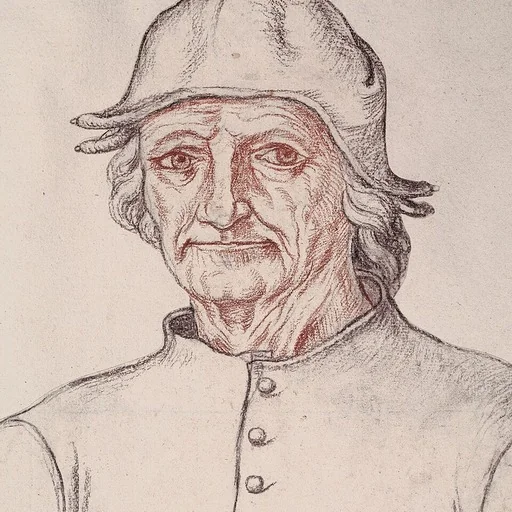
Hieronymus Bosch (; Dutch:; born Jheronimus van Aken; c. 1450 – 9 August 1516) was a Dutch painter from Brabant. He is one of the most notable representatives of the Early Netherlandish painting school. His work,…