Artwork
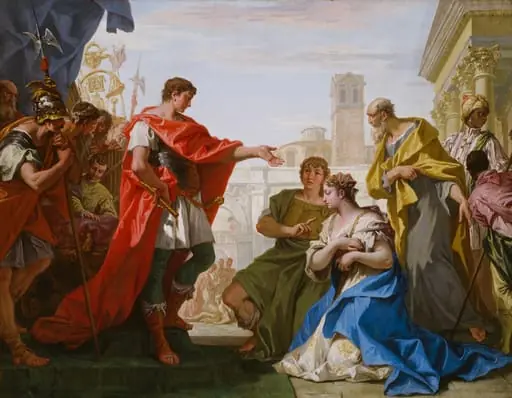
Caesar Giving Cleopatra the Throne of Egypt
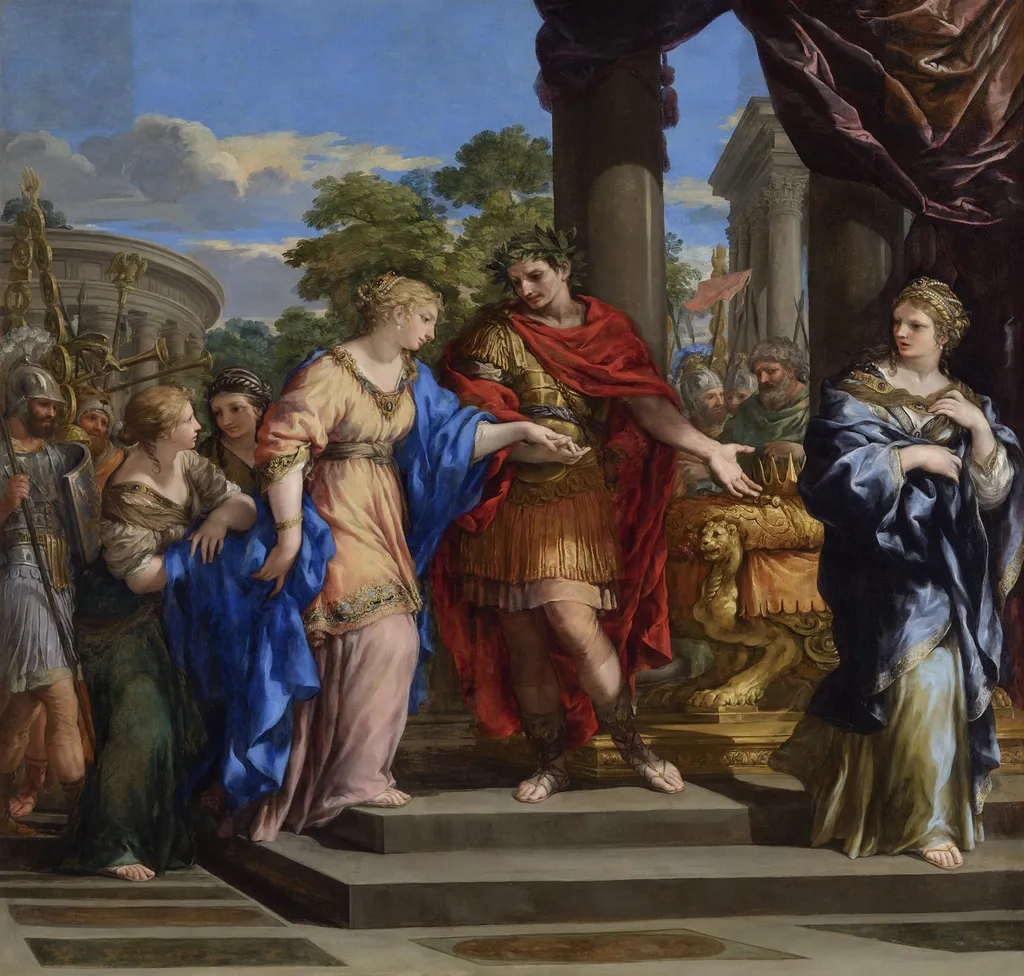
Caesar Giving Cleopatra the Throne of Egypt is an unspecified painting by the High Baroque Italian artist Pietro da Cortona. It dates from 1637 and is held in the collection of the Department of Paintings of the Louvre.
About this work
He asked that the nine works match the size and style of Guido Reni’s The Abduction of Helen, and the picture has stayed in Lyon’s museum since 1811.
Caesar Giving Cleopatra the Throne of Egypt is an oil on canvas by Pietro da Cortona, painted in 1637.
It was one of three paintings Louis Phélypeaux originally ordered for the gilded gallery of his new hôtel de La Vrillière in Paris. He asked that the nine works match the size and style of Guido Reni’s The Abduction of Helen, and the picture has stayed in Lyon’s museum since 1811.
Next, check out the Museum of Fine Arts of Lyon.
Subject & Meaning
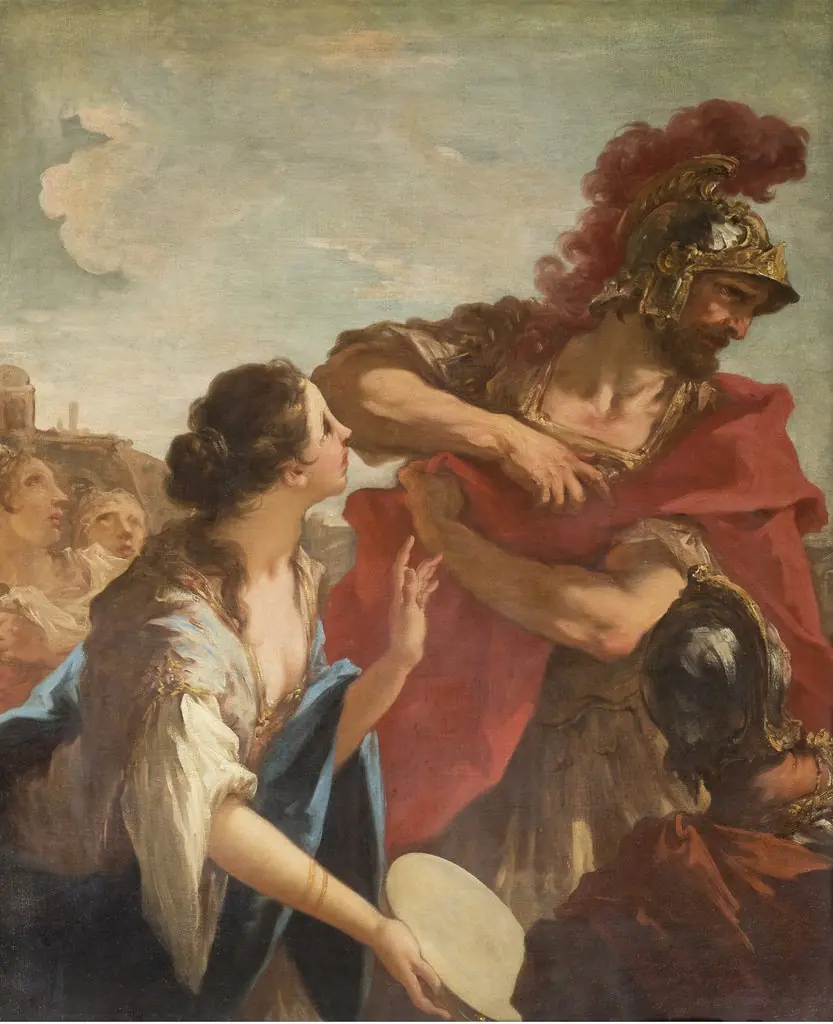
The painting shows Julius Caesar presenting the Egyptian throne to Cleopatra VII, a scene that symbolizes the transfer of political authority and the alliance between Rome and Egypt. Caesar is identified by his laurel crown, cuirass and red drapery, while Cleopatra wears a royal blue mantle, jewellery and a chignon, emphasizing her queenly status. An angry Arsinoe IV is positioned to the right, withdrawing from the central gesture that unites the two lovers.
The composition uses a classical triangular arrangement, a marble column, and a backdrop of Roman soldiers and a sky of hopeful blue, reinforcing ideas of imperial power, legitimacy and the triumph of the new Egyptian ruler under Roman patronage.
Technique & Style
The work is an oil on canvas, with the paint applied on a plain-weave linen support stretched to a vertical format measuring approximately 255 cm in height and 265–266 cm in width.
The composition unfolds in three distinct spatial planes. In the foreground, the central group, Caesar and Cleopatra, occupies the center, their clasped hands marking the exact midpoint of the canvas. Caesar, identifiable by his laurel wreath and Roman military attire with a crimson drape, gestures toward the throne with his left hand while holding Cleopatra’s right.
Cleopatra appears in a rich blue mantle over a lighter dress, adorned with jewelry, her pale skin rendered with the period’s idealized delicacy. To the right, Arsinoe IV withdraws in shadow, her dull drapery contrasting with the luminous figures at center. Behind them, a marble column divides the middle ground: to the left, Roman soldiers display standards and an aquila; to the right, supporters of Arsinoe cluster in agitated silhouettes.
The background features a blue sky and verdant foliage framing Roman-style architecture, reinforcing the scene’s theatricality through sweeping gestures and expressive glances.
Preparatory studies preserved at the Uffizi differ significantly from the final composition, indicating revisions that advanced the central group forward and adjusted proportional relationships.
History & Provenance
The painting was commissioned by Louis Phélypeaux, seigneur de La Vrillière, a politician and collector, for the gilded gallery (Galerie dorée) of his new Parisian hôtel particulier designed by François Mansart from 1635. The commission formed part of a series of ten canvases by Roman-school painters, including three works by Pietro da Cortona, sized and styled to harmonize with Guido Reni's The Abduction of Helen, which Phélypeaux had already acquired. Most commissions were placed between 1635 and 1645, possibly mediated through the Barberini.
The canvas is dated on stylistic grounds to circa 1637, though the Joconde database records 1643. Da Cortona produced preparatory drawings, including one at the Uffizi's Gabinetto Disegni e Stampe (inv. 1407) and a faithful derivative at Rome's Istituto Centrale per la Grafica (inv. F.N. 9624).
The painting passed to the French State in 1793 through revolutionary expropriations and was assigned to the newly founded museum in Lyon by the Chaptal decree of 31 August 1801, where it has remained on deposit since 1811.
The painting has been held in the collection of the Museum of Fine Arts of Lyon since 1811. Originally commissioned by Louis Phélypeaux, Seigneur de La Vrillière, for the Galerie dorée of his Parisian hôtel, the work entered the French State's possession following revolutionary expropriations in 1793. It was subsequently assigned to the Lyon museum under the Chaptal Decree of August 31, 1801, which established provincial museums.
While the original canvas resides in Lyon, copies were installed in the Hôtel de Toulouse to replace the dispersed masterpieces. A second version was documented in the Strozzi collection in Florence during the late eighteenth century, known today only through a 1783 engraving by Giovanni Battista Cecchi; its current location is unknown.
Context
Pietro da Cortona’s Caesar Giving Cleopatra the Throne of Egypt serves as a key example of Roman Baroque history painting, created for the Galerie dorée of the Hôtel de La Vrillière in Paris. Commissioned by Louis Phélypeaux, seigneur de La Vrillière, the work was intended to harmonize stylistically with Guido Reni’s The Abduction of Helen, anchoring a cycle of ten canvases by leading Italian masters including Guercino and Nicolas Poussin. Scholars date the painting variously to 1637 or 1643, noting its evolution from preparatory drawings in the Uffizi that featured significantly different compositional arrangements.
The work’s interpretation remains debated, with traditional readings identifying the figures as Julius Caesar and Cleopatra VII, while alternative theories suggest scenes involving Mark Antony or Caesar’s repudiation of Pompeia. Its transfer to the Musée des Beaux-Arts de Lyon in 1811 following the French Revolution marked its shift from private aristocratic display to public institutional collection.
Legacy
The painting, titled "Caesar Giving Cleopatra the Throne of Egypt", has been the focus of ongoing scholarly discussion regarding its dating (commonly placed at 1637) and the identification of its central figures, with some interpretations proposing a representation of Mark Antony or a repudiation scene.
Commissioned by Louis Phélypeaux de La Vrillière for the decorative program of his Galerie dorée, the work entered the Musée des Beaux-Arts de Lyon in 1811 and has remained there, contributing to the museum’s early collection.
Its composition and Baroque style influenced later artists and was reproduced in an 18th‑century engraving, underscoring its lasting impact on the study of Baroque history painting.
Overview
Pietro da Cortona's painting, "Caesar Giving Cleopatra the Throne of Egypt," executed in oil on canvas around 1637, depicts a pivotal moment in ancient history. This work was part of a significant commission for Louis Phélypeaux, Seigneur of La Vrillière, intended to adorn the grand gallery of his newly constructed Parisian residence. It exemplifies the Baroque style prevalent in the mid-17th century.
Own this work as a print
Artist & collection
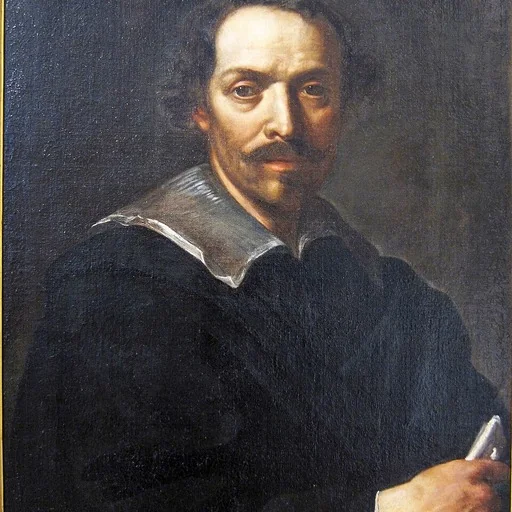
Artist
Pietro da Cortona (Italian:; 1 November 1596 or 1597 – 16 May 1669) was an Italian Baroque painter and architect.

Museum
Department of Paintings of the Louvre
Continue through works from the same source collection.
- The Continence of Scipio
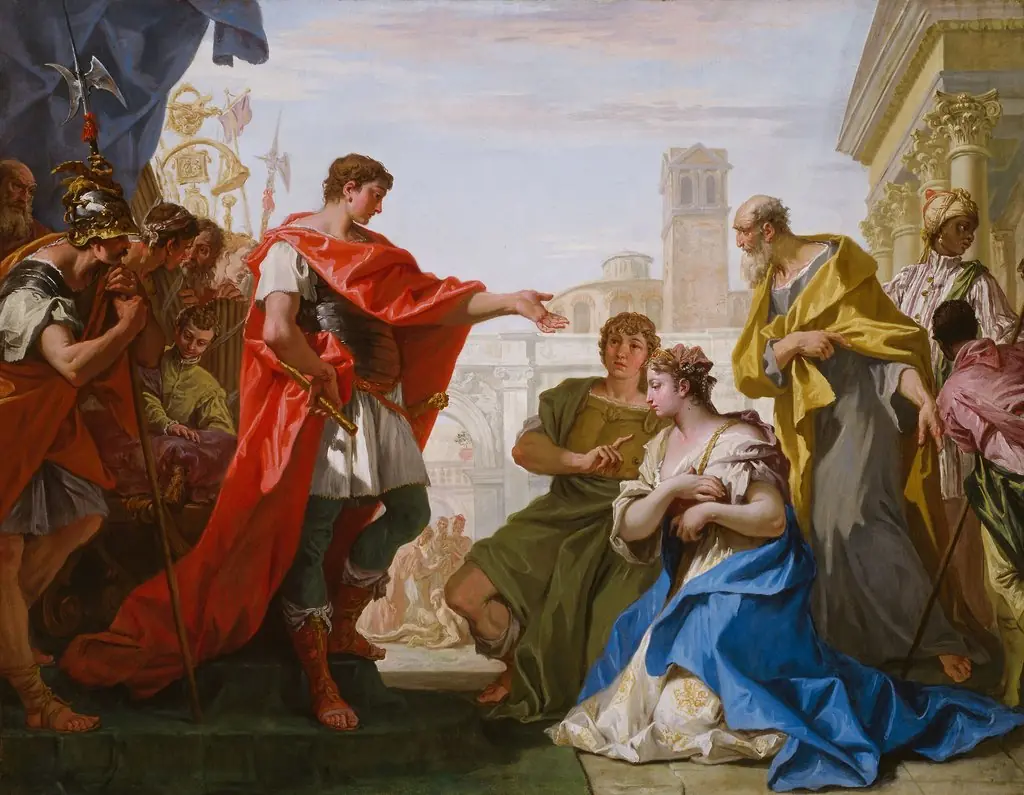 The Continence of Scipio
 Enthaltsamkeit des Scipio
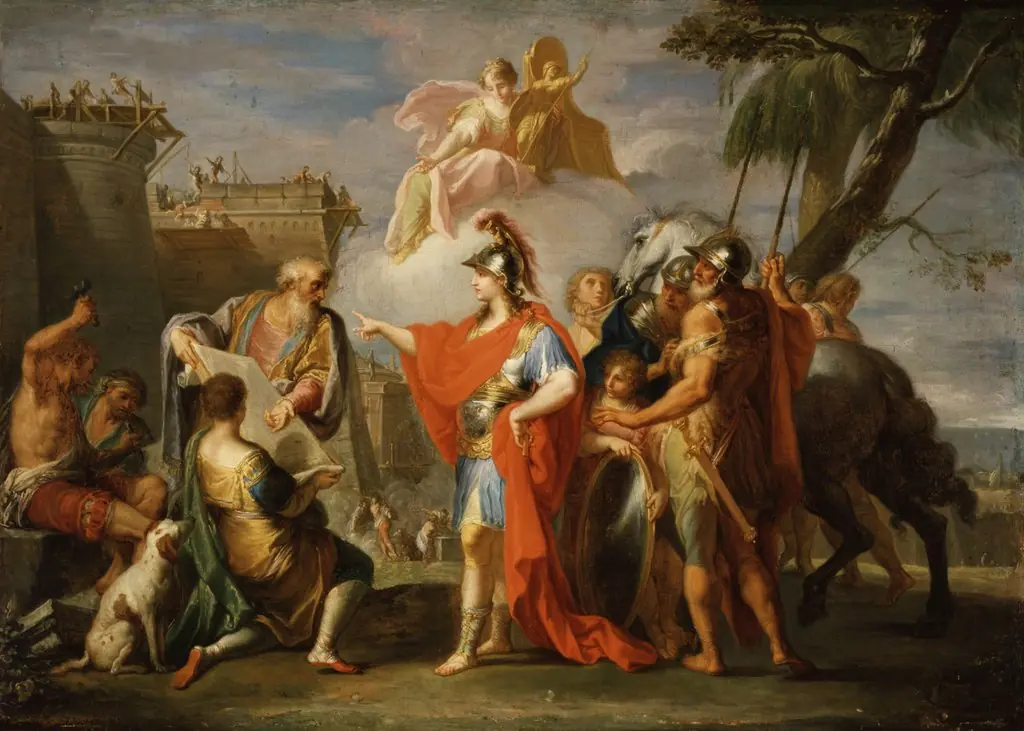 Alexander the Great Founding Alexandria
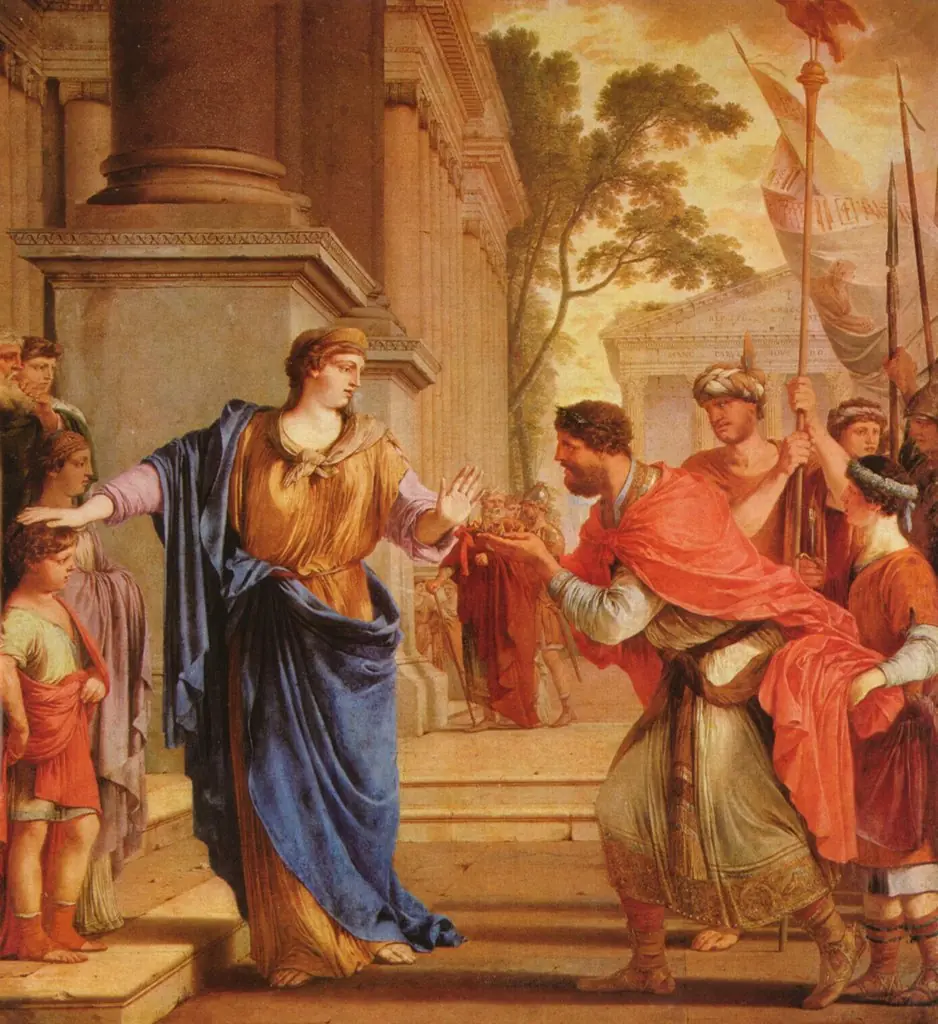 Cornelia rejects the crown of the Ptolemies
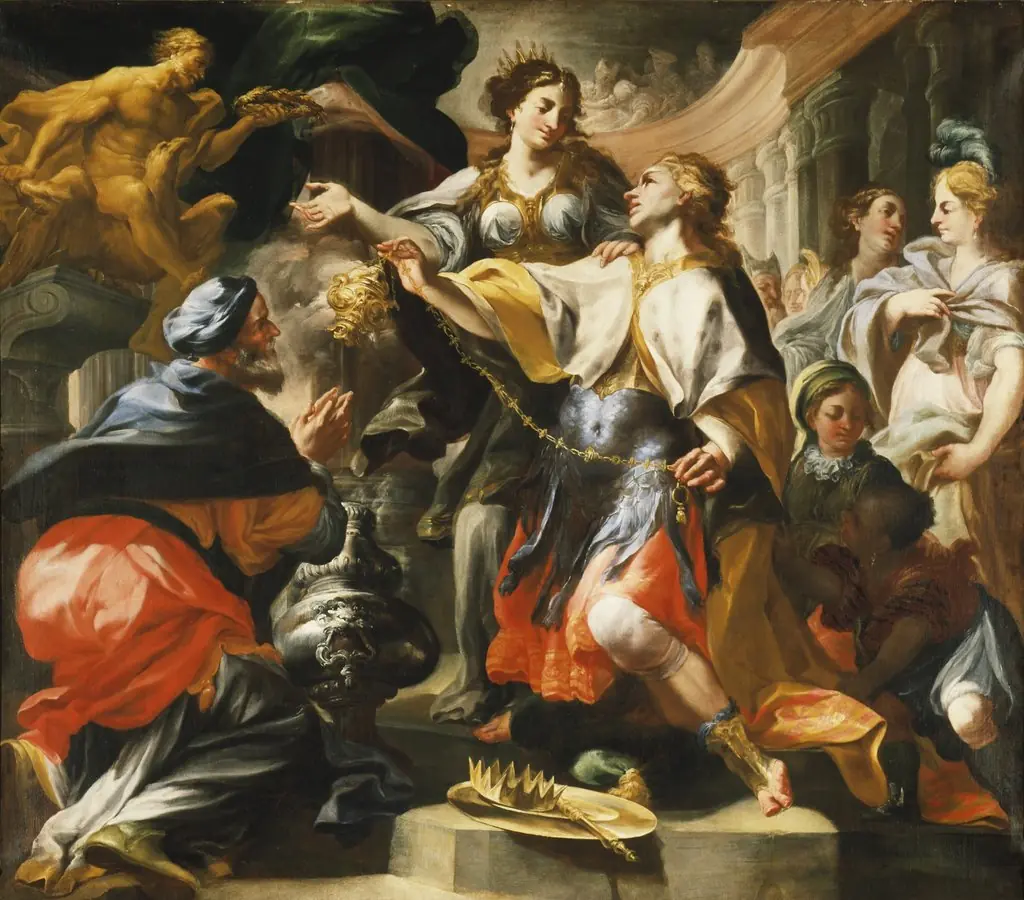 Solomon Worshiping a Pagan God
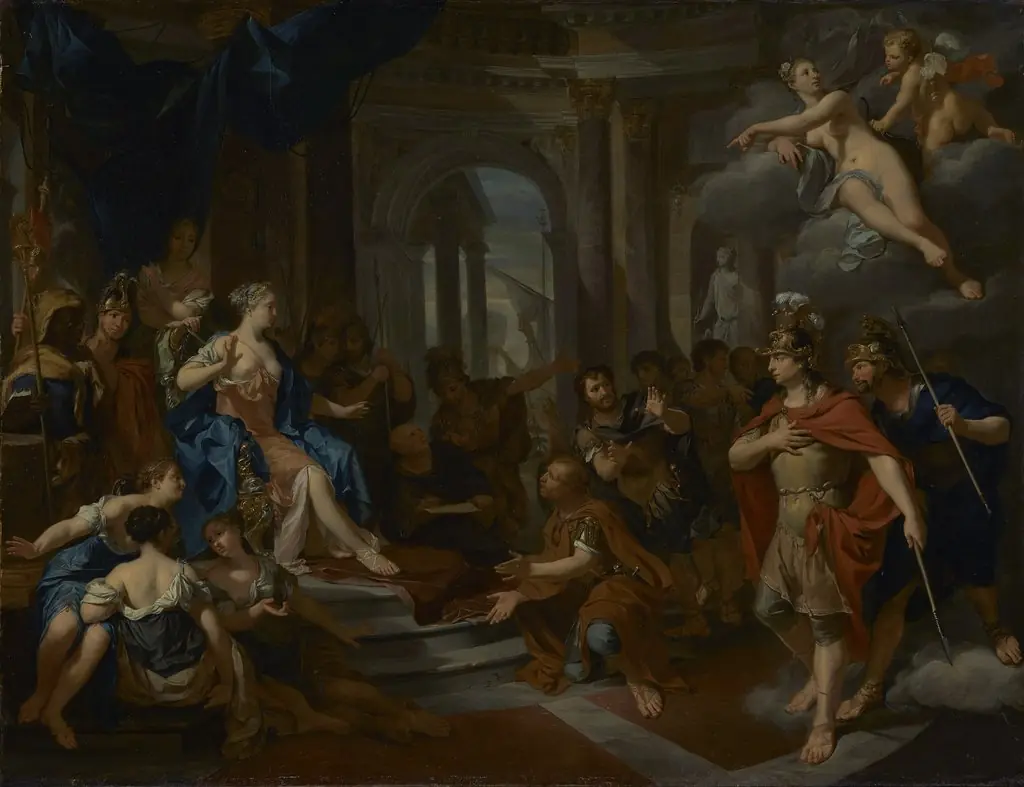 Dido and Aeneas
 Scipio Africanus Freeing Massiva
 The Generosity of Scipio
 La prudente Abigail
 The Sacrifice of Polyxena in Malibu
 Jephthah returning from Battle is greeted by his Daughter