Artwork
The penitent saint Jerome
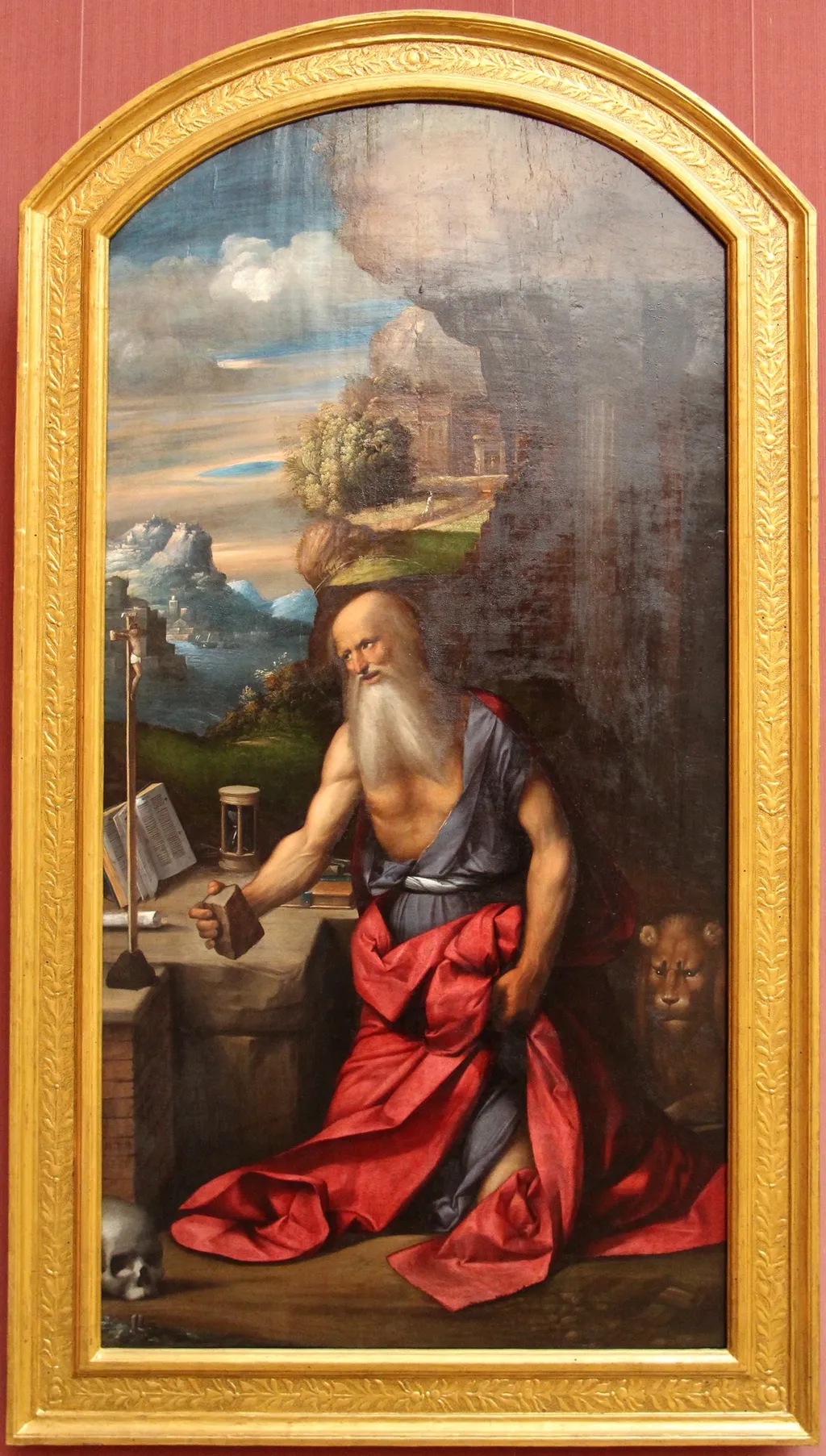
The penitent saint Jerome is an unspecified painting by the Early Baroque Italian artist Benvenuto Tisi. It dates from 1524 and is held in the collection of the Gemäldegalerie Berlin.
About this work
Overview
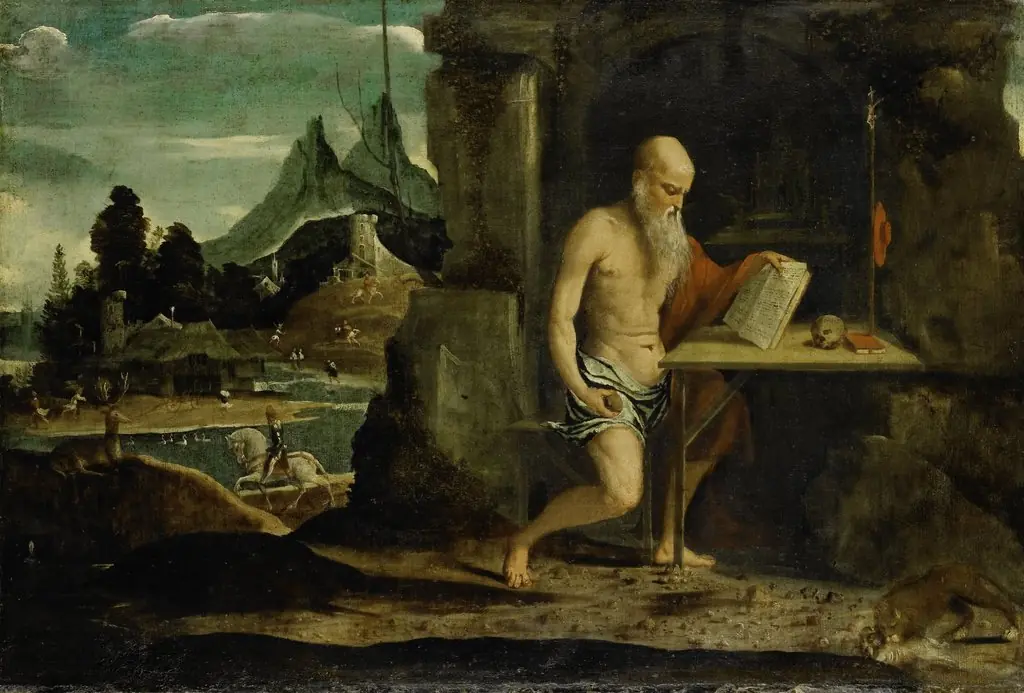
Jerome is shown kneeling on the ground, clad in a red cardinal's robe over a gray tunic, his long white beard framing a face turned toward the heavens.
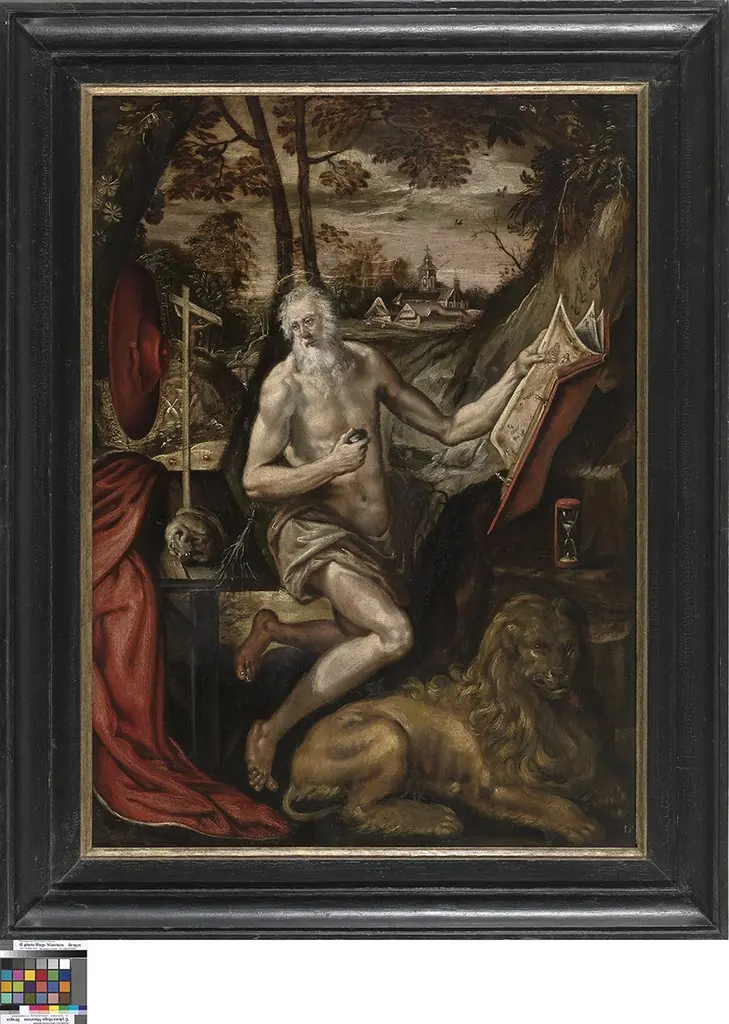
Painted in 1524, The Penitent Saint Jerome by Benvenuto Tisi, known as Il Garofalo, depicts the saint in a moment of ascetic contemplation within a rocky landscape. Jerome is shown kneeling on the ground, clad in a red cardinal's robe over a gray tunic, his long white beard framing a face turned toward the heavens. In his right hand, he grips a stone, the instrument of his self-flagellation, while a skull and a lion rest nearby, traditional attributes symbolizing mortality and the saint's legendary taming of the beast.
The composition places the figure in the foreground against a backdrop of distant mountains, a body of water, and architectural ruins, characteristic of the Ferrarese school's interest in atmospheric depth. Created during the High Renaissance, this work exemplifies Garofalo's mature style, blending the emotional intensity of Counter-Reformation piety with the refined colorism and balanced structure typical of his career. The painting reflects the artist's ability to synthesize influences from Raphael and Mantegna into a distinct personal idiom, focusing on the spiritual interiority of the subject amidst a serene, natural setting.
Subject & Meaning
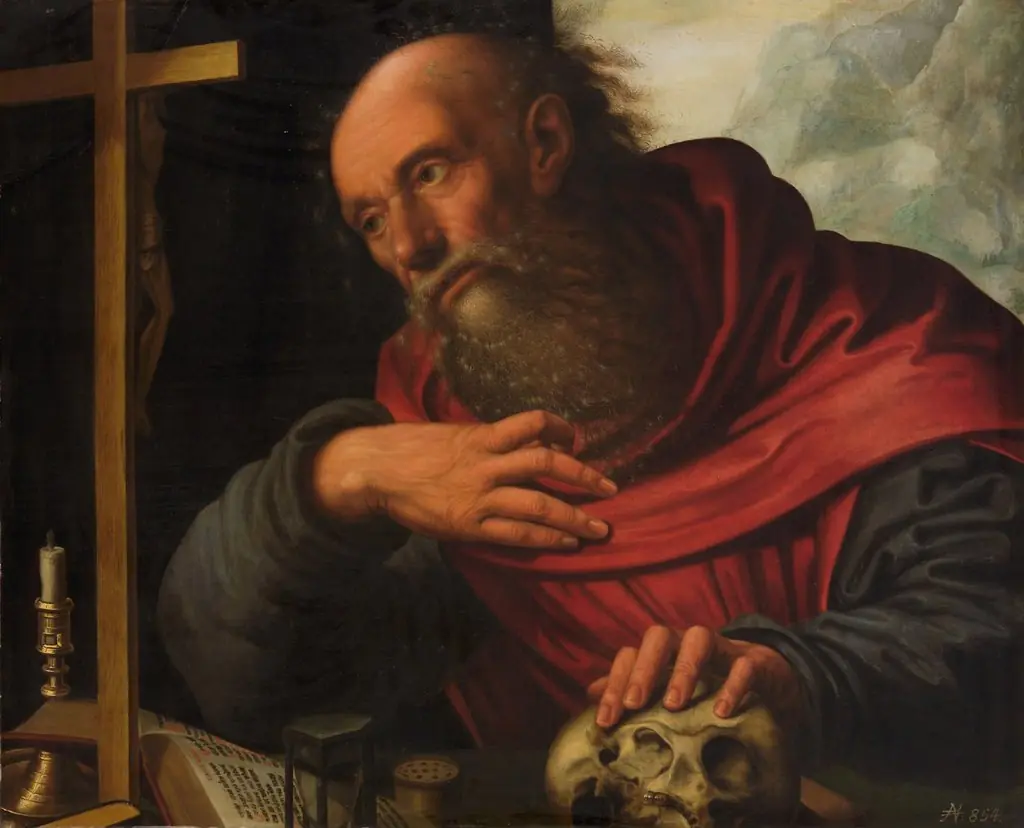
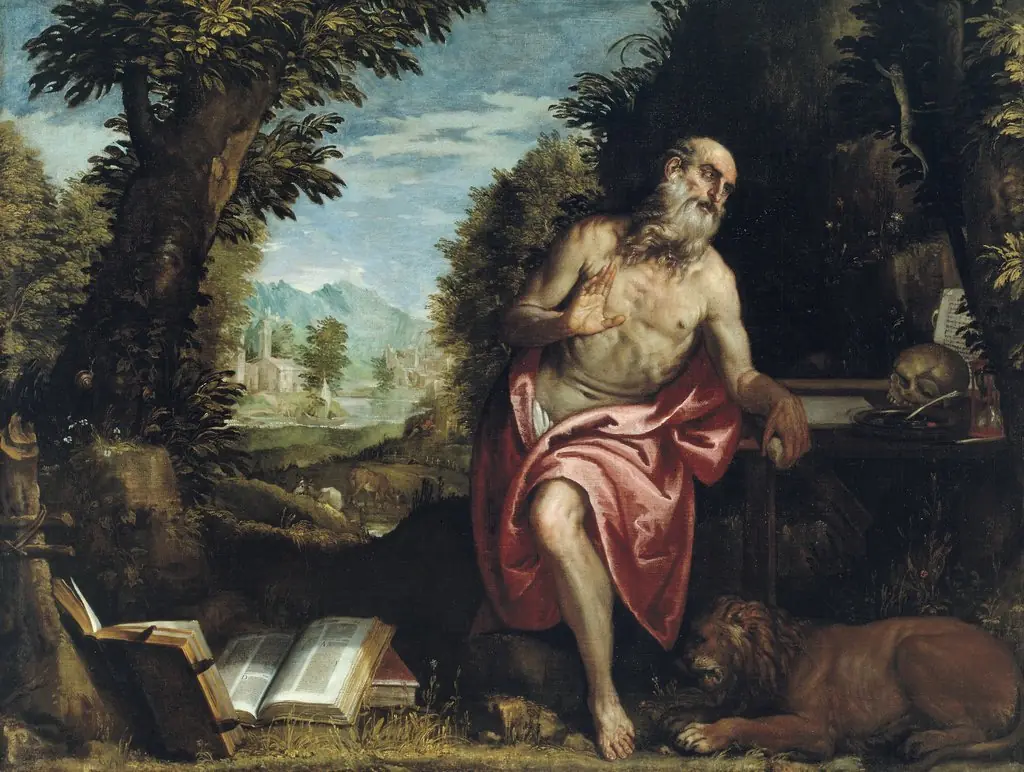
The central figure is identified as Saint Jerome, a 4th‑century hermit and biblical translator, signaled by his ascetic garb, the presence of a skull, and a lion, iconographic attributes traditionally linked to the saint. His posture of kneeling and the stone in his hand evoke the penitent’s meditation on mortality and the rigors of scholarly devotion.
Technique & Style
Tisi employs chiaroscuro to model the saint’s form, allowing light to cascade across the folds of the red robe while deep shadows recede into the background. The palette balances warm reds with cool grays and blues, creating spatial depth that separates the figure from the expansive landscape, a hallmark of early‑Renaissance compositional practice.
History & Provenance
Created in 1524, the painting entered the Gemäldegalerie Berlin’s holdings in the early 20th century, though earlier ownership records are sparse. Its attribution to Benvenuto Tisi, a prominent figure of the Ferrara school, has been affirmed through stylistic comparison with his documented works.
Artist & collection
Artist
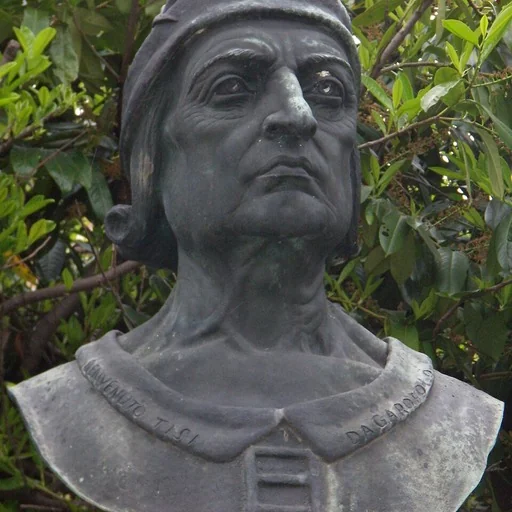
Benvenuto Tisi (Italian:; 1481 – September 6, 1559), also known as Il Garofalo (Italian: ), was a Late-Renaissance-Mannerist Italian painter of the School of Ferrara.