Artwork
Andromeda Chained to the Rocks
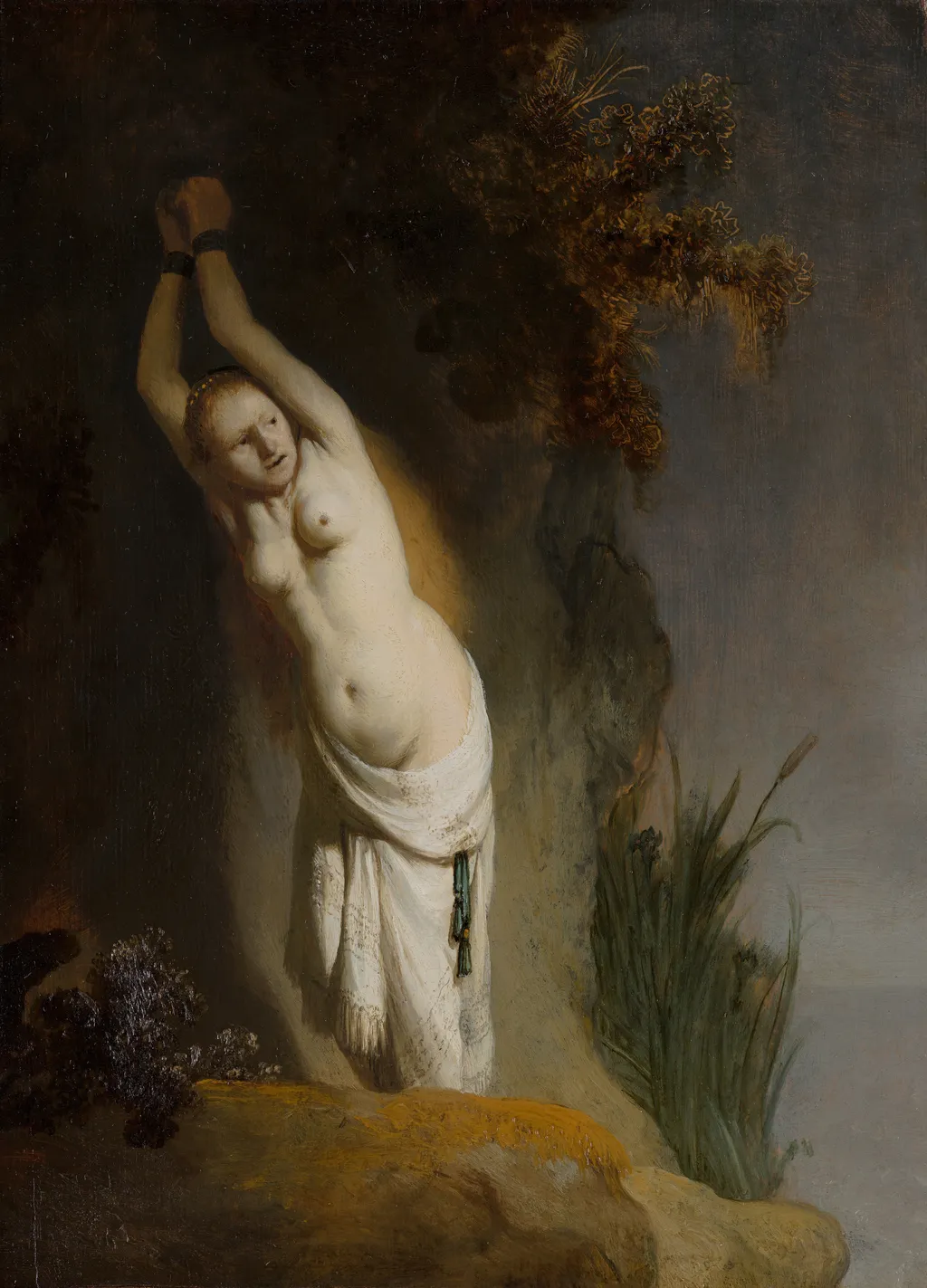
Andromeda Chained to the Rocks is an oil painting by the Dutch Golden Age artist Rembrandt van Rijn. It dates from 1630 and is held in the collection of the Mauritshuis. Created in 1630, this modestly sized work measures 34 by 24.
About this work
Subject & Meaning
Her alarmed gaze directed out of the picture space to the right generates narrative tension and concentrates the pathos entirely on her distressed expression.
The painting illustrates the myth of Andromeda from Ovid's Metamorphoses. Andromeda, daughter of the Ethiopian king Cepheus and queen Cassiopeia, was chained naked to coastal rocks as a sacrifice to a sea monster sent by Neptune in punishment for her mother's boastful claims to surpass the beauty of the Nereids. She awaits rescue by Perseus, who agreed to save her in exchange for her hand in marriage.
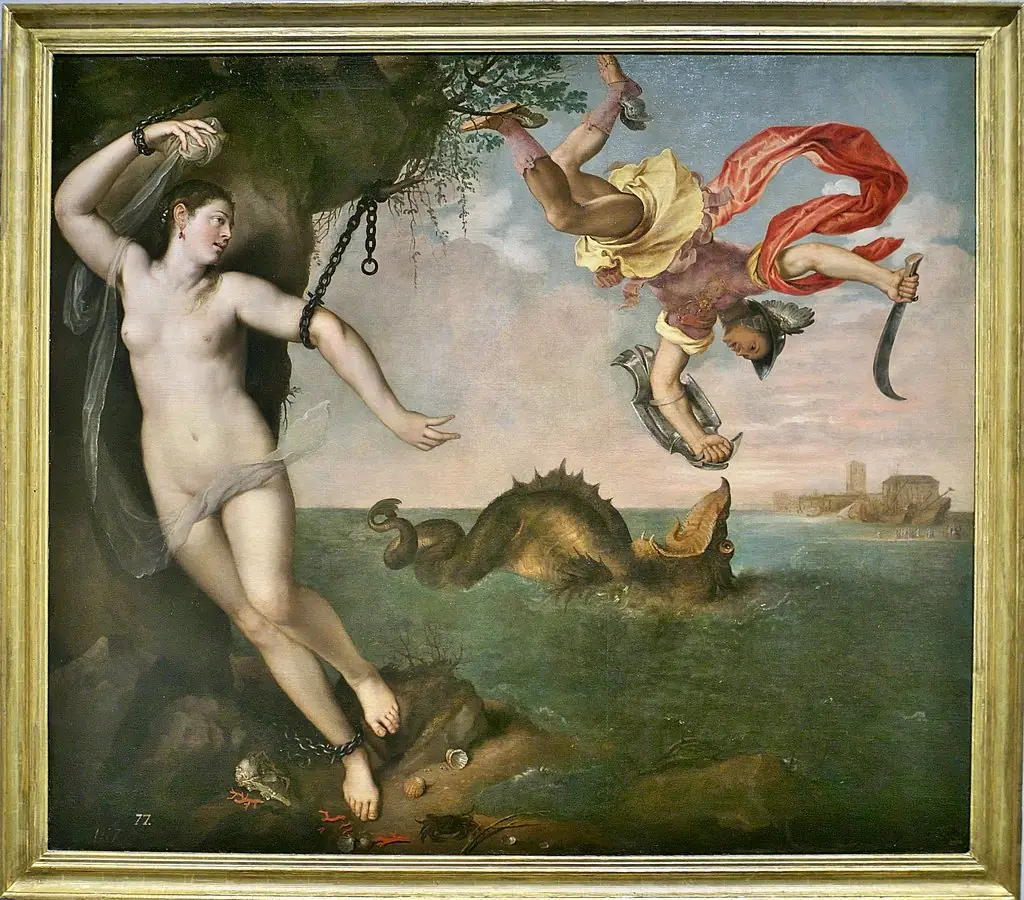
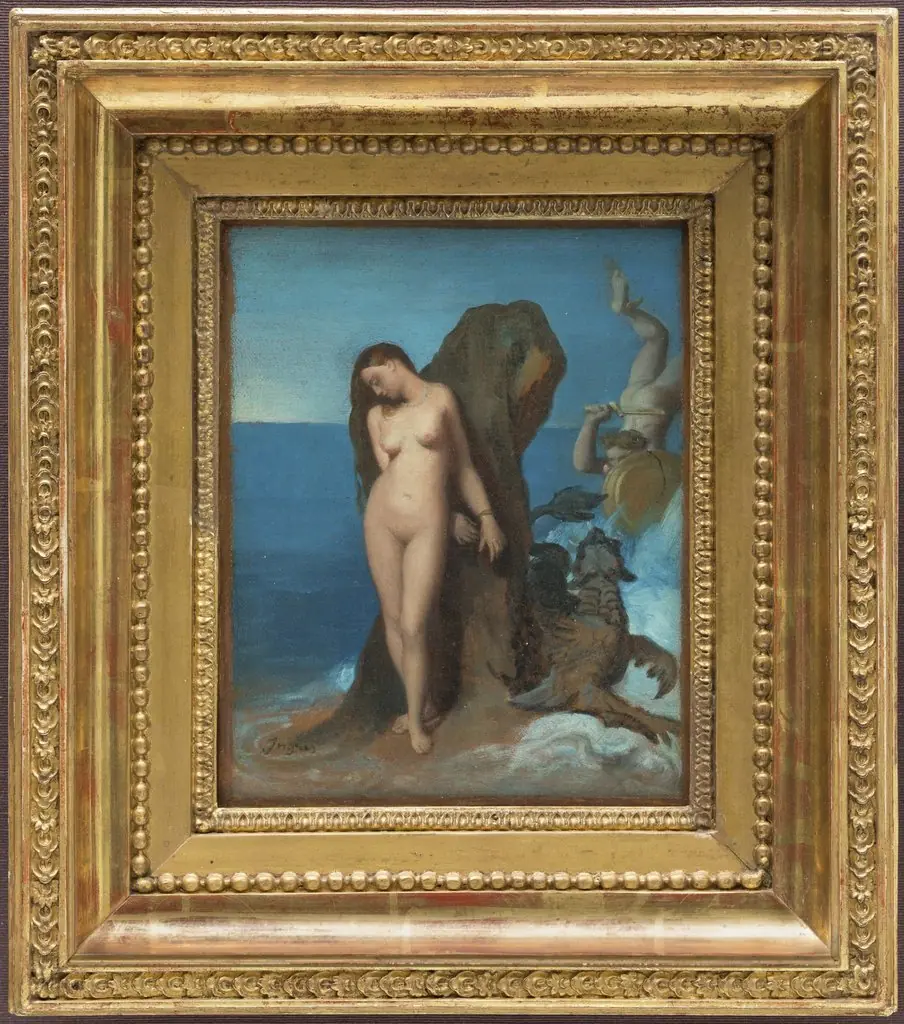
Rembrandt departs from the traditional iconography established by artists such as Titian, who typically included Perseus and the sea monster in the same composition. Here Andromeda appears alone, shackled and immobilized on the rocks, with no other figure present. Her alarmed gaze directed out of the picture space to the right generates narrative tension and concentrates the pathos entirely on her distressed expression.
Rather than presenting an idealized beauty, Rembrandt depicts her as a naturalistic, frightened young woman with red hair, embracing visible imperfections. The work stands as Rembrandt's first full-length mythological female nude history painting and exemplifies his rejection of classical conventions of idealized beauty.
Technique & Style
Executed in oil on panel in 1630, the work measures 34 × 24.5 cm and depicts the mythological subject through a restrained, nocturnal palette and concentrated chiaroscuro.
Rembrandt isolates the climactic moment in Andromeda alone, chained to a rocky outcrop, and renders her partially nude with visible breast and navel. The handling emphasizes tactile surface and subtle transitions in the modeling of flesh, while the background is left broadly brushed and dark to heighten the figure's isolation. Conservation examination has documented later overpaint that originally covered the lower legs, confirming a deliberate shift from a more fully rendered underdrawing toward the final, more restrained composition.
History & Provenance
Created during Rembrandt's stay in Leiden, Andromeda Chained to the Rocks is dated to 1630. Executed in oil on panel, the painting measures 34 cm in height by 24.5 cm in width and represents the artist's first full-length mythological female nude history painting. The composition is derived from a narrative in Ovid's Metamorphoses.
During the creation process, Rembrandt initially painted Andromeda's legs but subsequently covered them, resulting in the final depiction of a partially nude figure. The work currently resides in the collection of the Mauritshuis in The Hague.
Context
This painting is recognized as Rembrandt's first full-length mythological female nude history painting, marking a significant evolution in his treatment of the nude form and his engagement with Dutch Golden Age themes. The work depicts the mythological moment of Andromeda's sacrifice, drawn directly from Ovid's Metamorphoses as retold in classical and Renaissance art traditions. Critical scholarship emphasizes Rembrandt's departure from idealized classical beauty, instead rendering Andromeda as a naturalistic, frightened figure to convey psychological tension and reject artificial perfection.
This approach aligns with his broader artistic context, where he explored mythological narratives with emotional realism, influencing later depictions of the female nude. The painting's composition, isolating Andromeda in distress without the hero Perseus, reflects a deliberate artistic choice to heighten narrative focus on her vulnerability, contrasting with other artists who included the full rescue scene.
Legacy
The painting stands as a significant example of Rembrandt's rejection of classical conventions and idealized beauty. By isolating the figure of Andromeda and omitting both the sea monster and her rescuer Perseus, a departure from the traditional iconography employed by artists like Titian, Rembrandt concentrated the narrative's pathos entirely into her desperate, frightened face, portraying her as a naturalistic, imperfect girl rather than a glamorous beauty. This approach established a precedent for his evolving portrayal of the nude, directly influencing his subsequent mythological paintings of the period, such as Diana Bathing and Danaë.
Overview
Created in 1630, this modestly sized work measures 34 by 24.5 centimeters and is executed in oil on a wooden panel. It depicts the figure of Andromeda, rendered by Rembrandt van Rijn during his early Dutch Golden Age period. The painting is part of the collection of the Mauritshuis in The Hague, where it is on public display.
Own this work as a print
Artist & collection

Artist
Rembrandt Harmenszoon van Rijn, known mononymously as Rembrandt, was a Dutch Golden Age painter, printmaker, and draughtsman.