Artwork
Haman recognizes his fate
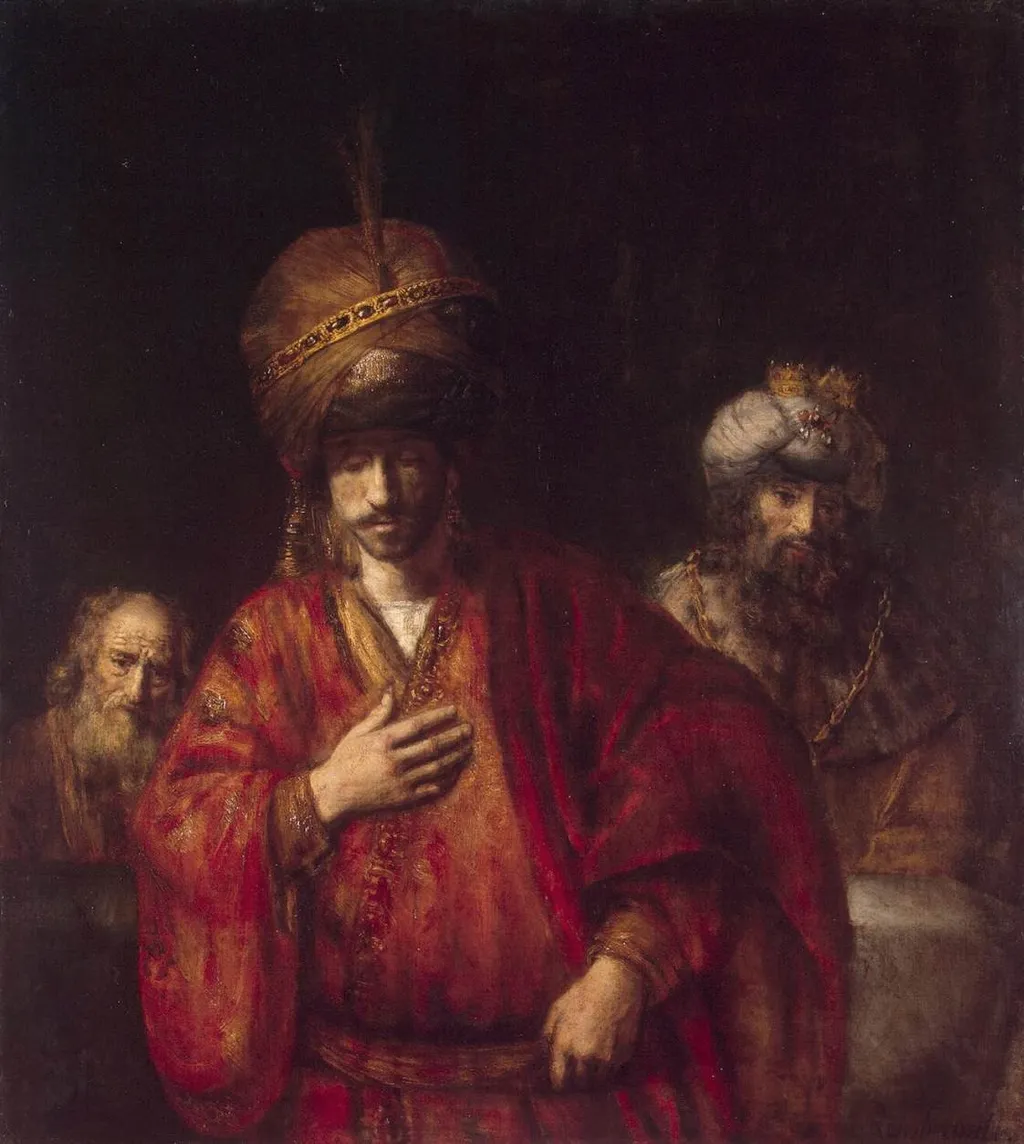
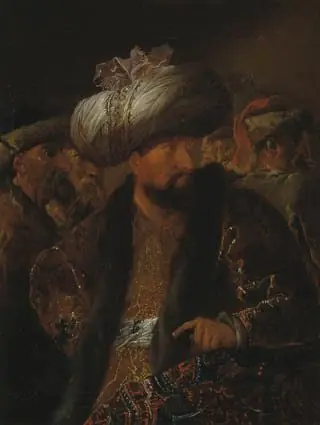
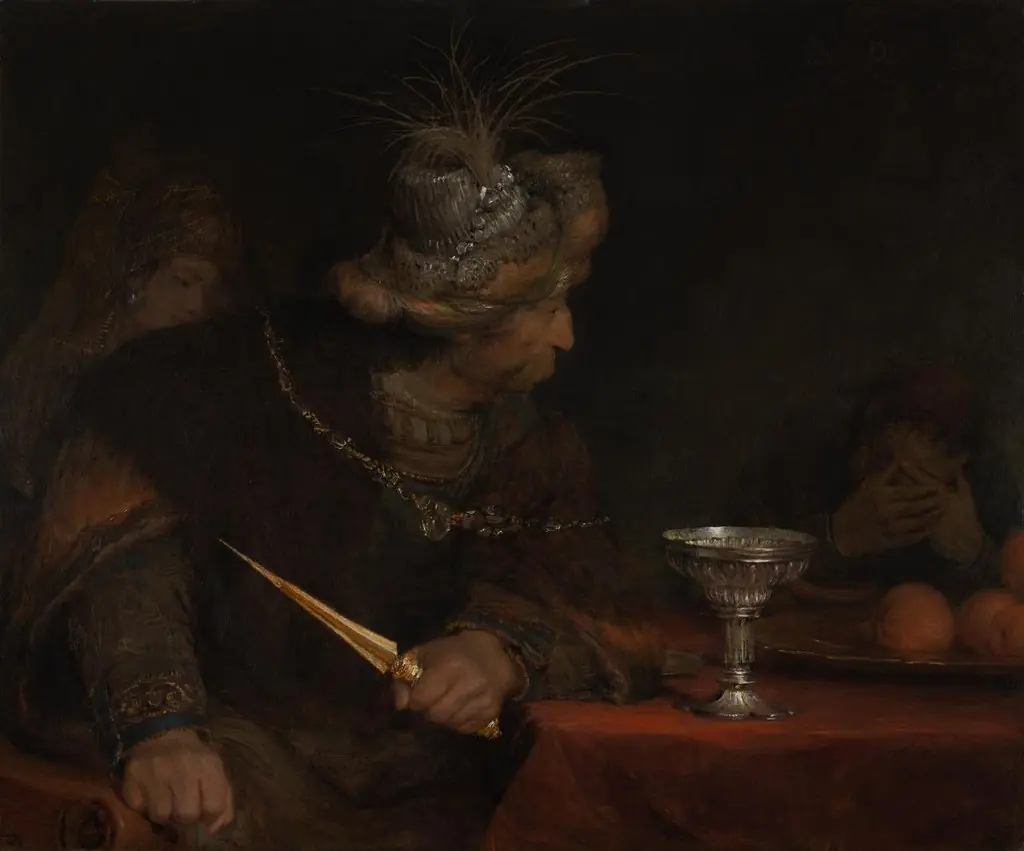
Haman recognizes his fate is an oil painting by the Dutch Golden Age artist Rembrandt van Rijn. It dates from 1650 and is held in the collection of the Hermitage Museum.
About this work
Overview
Haman recognizes his fate is an oil-on-canvas painting by Rembrandt van Rijn, dated to circa 1665 by the Hermitage Museum in Saint Petersburg, which owns it, or to approximately 1666-1669 according to the dating adopted for the 2015 Late Rembrandt exhibition at the Rijksmuseum in Amsterdam. Measuring 127 by 116 centimeters, the work is one of Rembrandt's late paintings and occupies a contested position in his oeuvre due to a long-standing scholarly debate over whether its subject is biblical or historical. The Hermitage has retained the title Haman recognizes his fate since the painting entered the Russian imperial collection in 1773, though an alternative identification as David and Uriah has gained significant scholarly support since the mid-twentieth century.
Subject & Meaning
None of the figures meet each other's gaze, creating an atmosphere of visible discomfort and unspoken tension.
The painting depicts three male figures in a tense, emotionally charged encounter. The foreground figure stands with his right hand placed on his chest, wearing a jeweled turban with a feather, a voluminous red robe with gold trim, and a golden undergarment. Behind him to either side stand two other men: to his right, a bearded man in a white turban with a small crown, fur-trimmed garment, and chain; to his left, an older man with a long gray beard and balding head. None of the figures meet each other's gaze, creating an atmosphere of visible discomfort and unspoken tension. Under the Hermitage's traditional title, the central figure is Haman from the Book of Esther, shown at the moment he has received orders from King Ahasuerus to prepare an honor procession for Mordecai, the Jew who had foiled an assassination plot. Haman's reluctance stems from his expectation that such honor would be his own, compounded by Mordecai being the one person in the land who refused to bow to him. The alternative identification, proposed by Abraham Bredius and supported by scholars including Madlyn Kahr in 1965, sees the foreground figure as Uriah the Hittite, receiving King David's command to return to the front lines of war against the Ammonites, a sentence of certain death arranged so that David could take Uriah's wife Bathsheba. In this reading, the right-hand figure is David and the left-hand figure is the prophet Nathan. The central theme becomes tragic recognition: Uriah comprehends his fate without knowing of David's letter to his commander Joab, yet must obey the all-powerful king.
Technique & Style
The painting is executed in oil on canvas, displaying the characteristic richness and material presence of Rembrandt's late technique. Light enters strongly from the left, illuminating the central figure's face, hand, and costume while leaving much of the scene in deep shadow, a dramatic chiaroscuro that intensifies the emotional weight of the moment. The palette is dominated by deep reds, warm golds, and browns set against near-black shadows. Brushwork varies across the surface: smooth blending in the faces gives psychological immediacy, while looser, more textured strokes in the fabrics create tactile richness, with visible impasto in the highlights. The background remains dark and undefined, producing a shallow, compressed space that focuses attention entirely on the human drama. The monumental stature of the central figure, rendered in thick paint, and the expressive handling of the red mantle contribute to the work's emotional impact.
History & Provenance
The painting entered the Russian imperial collection in 1773 under the title Haman recognizes his fate, a designation the Hermitage Museum has maintained to the present day. The alternative identification as David and Uriah was first proposed by the Dutch Rembrandt scholar Abraham Bredius in his catalogue of the artist's works. This reinterpretation gained scholarly momentum from the 1950s onward, notably through a 1965 study by Madlyn Kahr in the Journal of the Warburg and Courtauld Institutes, who argued that the Uriah version was psychologically more plausible and that the turbans, which Rembrandt kept as studio props, need not indicate an Eastern setting. The Hermitage Museum, however, has preserved the original title under which the work has been known since 1773. The painting was included in the major exhibition Late Rembrandt held at the Rijksmuseum in Amsterdam in 2015, where it was dated to approximately 1666-1669.
Context
The scholarly dispute over the painting's subject reflects broader questions about Rembrandt's late style and thematic preoccupations. The identification as David and Uriah places the work within Rembrandt's sustained engagement with Old Testament narratives of power, betrayal, and human weakness, themes equally present in the alternative Haman subject. Kahr's 1965 argument that the Uriah interpretation is psychologically more compelling speaks to critical interest in Rembrandt's exploration of interior states and moments of tragic recognition. The fact that Rembrandt had depicted the figure of Haman in earlier works complicates the attribution of subject, as noted by Dutch scholarship. The painting's place in the Hermitage collection since 1773, under its original title, has preserved an alternative tradition even as academic opinion shifted. The work exemplifies how Rembrandt's late paintings, with their reduced settings and intensified emotional focus, can sustain multiple interpretive frameworks. The 2015 Rijksmuseum exhibition's slightly later dating (1666-1669 versus the Hermitage's circa 1665) indicates ongoing scholarly negotiation of the chronology of Rembrandt's final years.
Legacy
The painting's enduring significance lies less in widespread cultural reproduction than in its function as a case study in Rembrandt scholarship and the interpretive challenges of his late work. The title dispute, ongoing since Bredius's intervention, has made the painting a touchstone for discussions of iconographic method, the role of costume and setting in establishing narrative, and the limits of visual evidence. Kahr's 1965 study remains a foundational text in this debate, demonstrating how psychological plausibility and studio practice can be weighed against documented provenance and traditional identification. The Hermitage's steadfast retention of the Haman title, despite scholarly pressure, illustrates the institutional weight of historical nomenclature. For viewers, the painting offers an unresolved tension that mirrors its subject: like the central figure caught between comprehension and powerlessness, the audience must choose between competing narratives, neither of which entirely dispels the other.
Artist & collection

Artist
Rembrandt Harmenszoon van Rijn, known mononymously as Rembrandt, was a Dutch Golden Age painter, printmaker, and draughtsman.