Artwork
Man in Oriental Dress
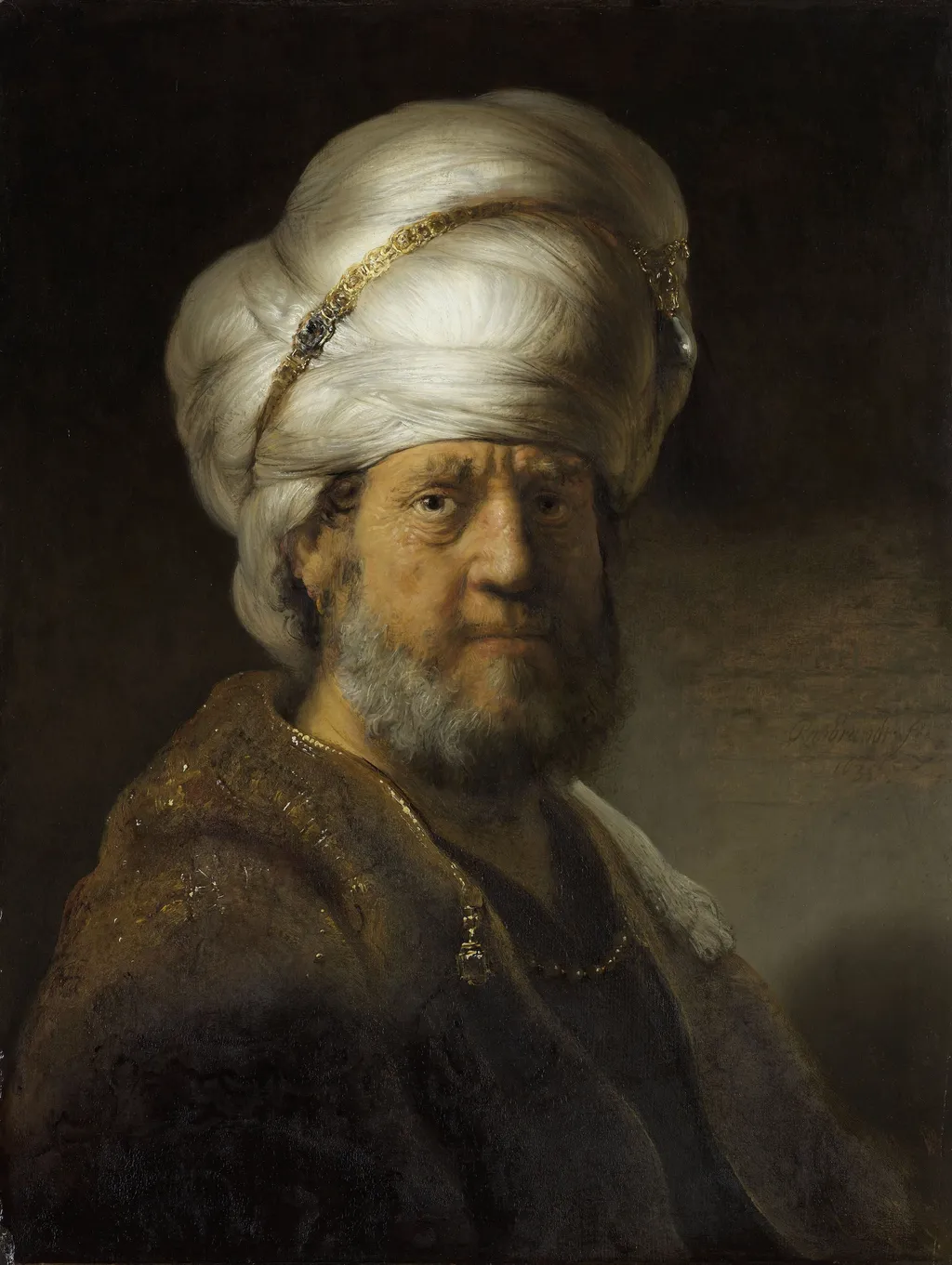
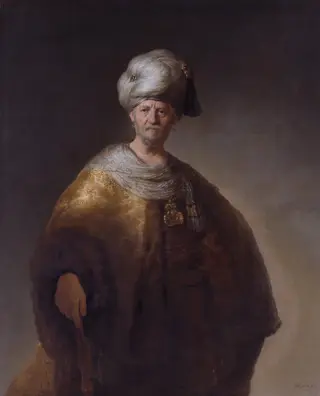
Man in Oriental Dress is an oil painting by the Dutch Golden Age artist Rembrandt van Rijn. It dates from 1635 and is held in the collection of the Rijksmuseum.
About this work
Subject & Meaning
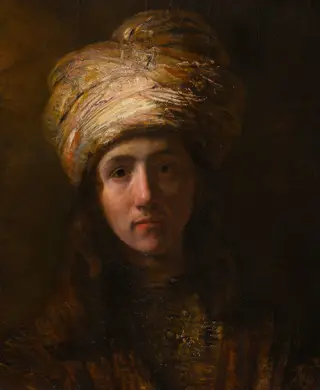
The painting depicts a solitary male figure dressed in imagined Eastern attire, a type often labeled a tronie that emphasizes character study over narrative.
The painting depicts a solitary male figure dressed in imagined Eastern attire, a type often labeled a tronie that emphasizes character study over narrative. Rembrandt’s treatment conveys an exoticized yet intimate presence, inviting viewers to contemplate the sitter’s identity as a symbolic embodiment of universal humanity rather than a specific individual. The work’s meaning derives from its blend of realism and theatricality, reflecting 17th‑century European fascination with foreign cultures while suggesting timeless introspection.
Technique & Style
The painting is executed in oil on a wooden panel support, measuring 72 cm in height and 54.5 cm in width. The handling is consistent with Rembrandt’s early-career technique, employing layered translucent glazes over a warm imprimatura to build luminous flesh tones and volumetric form.
Stylistically, the work aligns with the tronies genre, emphasizing expressive characterization over idealized portraiture. The sitter’s rich costume and turban are rendered with careful attention to texture and light, while the face is modeled through subtle transitions of tone rather than linear definition. The overall finish suggests a deliberate balance between precision in costume detail and painterly freedom in the handling of the face.
History & Provenance
The painting was created by Rembrandt in 1635, as indicated by the artist’s execution date and confirmed by the Rijksmuseum’s cataloging.
The work entered the collection of Christopher Vane, 10th Baron Barnard, whose ownership is documented in the painting’s provenance. It later passed to Raby Castle, where it remained before entering the holdings of the Rijksmuseum.
Man in Oriental Dress is held in the collection of the Rijksmuseum in Amsterdam. According to the work's documented provenance, the painting was owned by Christopher Vane, 10th Baron Barnard, and is associated with the location Raby Castle in addition to the museum.
The painting was created by Rembrandt in 1635 and is catalogued within the Rijksmuseum's holdings as an oil-on-panel tronie.
Overview
Man in Oriental Dress is a 1635 oil painting by Rembrandt van Rijn, characteristic of the Dutch Golden Age. The work features a solitary figure adorned in Near or Middle Eastern attire, set against a plain, dark background that emphasizes the subject's facial expression and ornate headwear.
Context
The painting was produced during the Dutch Golden Age, a period marked by increased interest in global cultures and trade, which likely influenced the choice of Oriental dress as a subject.
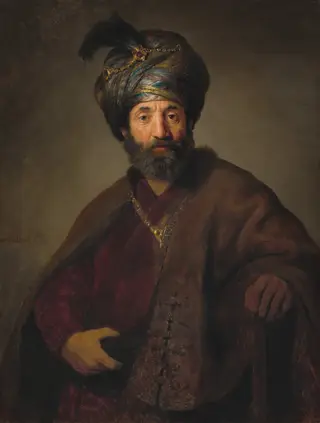
Own this work as a print
Artist & collection

Artist
Rembrandt Harmenszoon van Rijn, known mononymously as Rembrandt, was a Dutch Golden Age painter, printmaker, and draughtsman.