Artwork
Head of Christ (after 'Dinner at Emmaus' in Louvre)
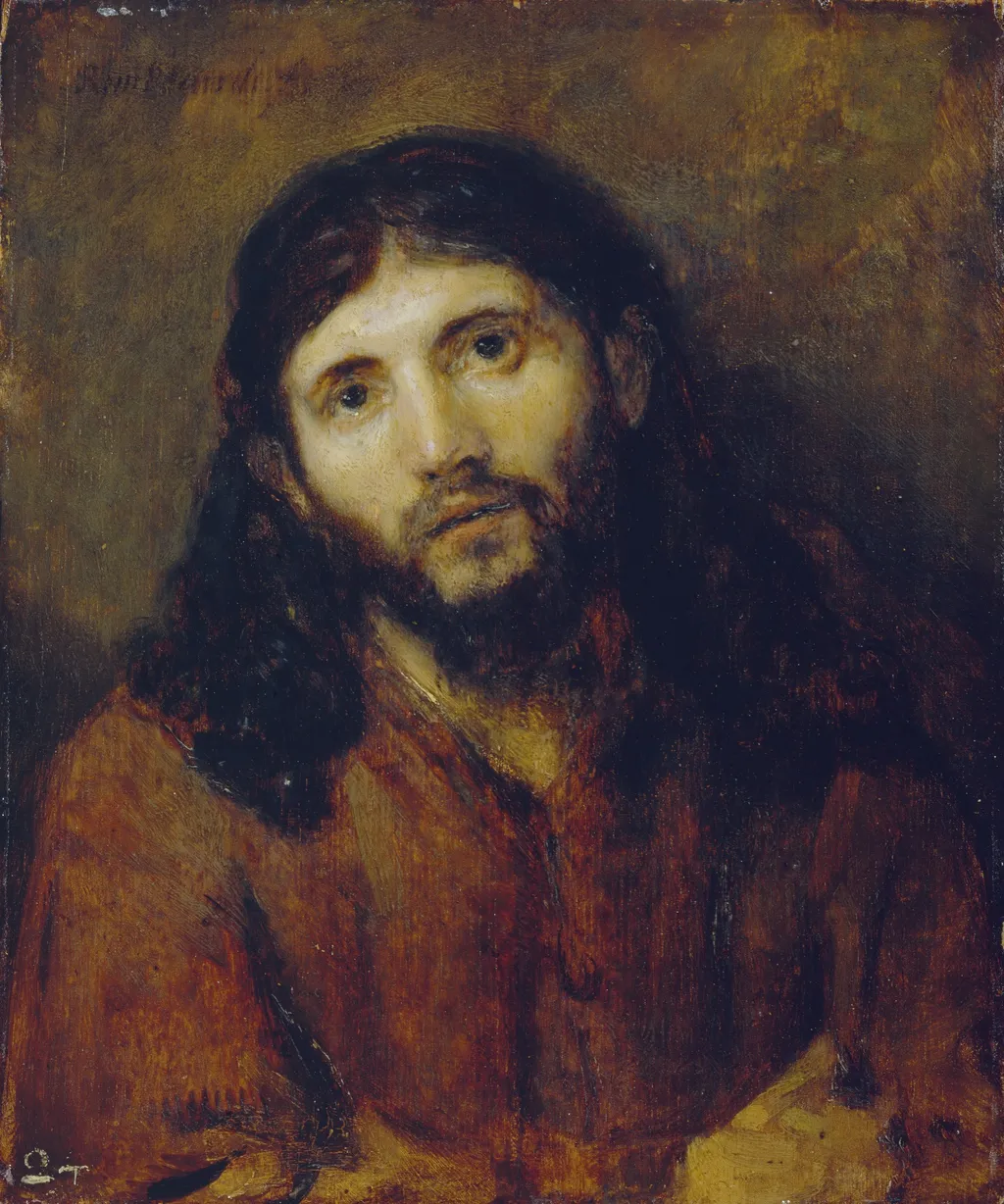
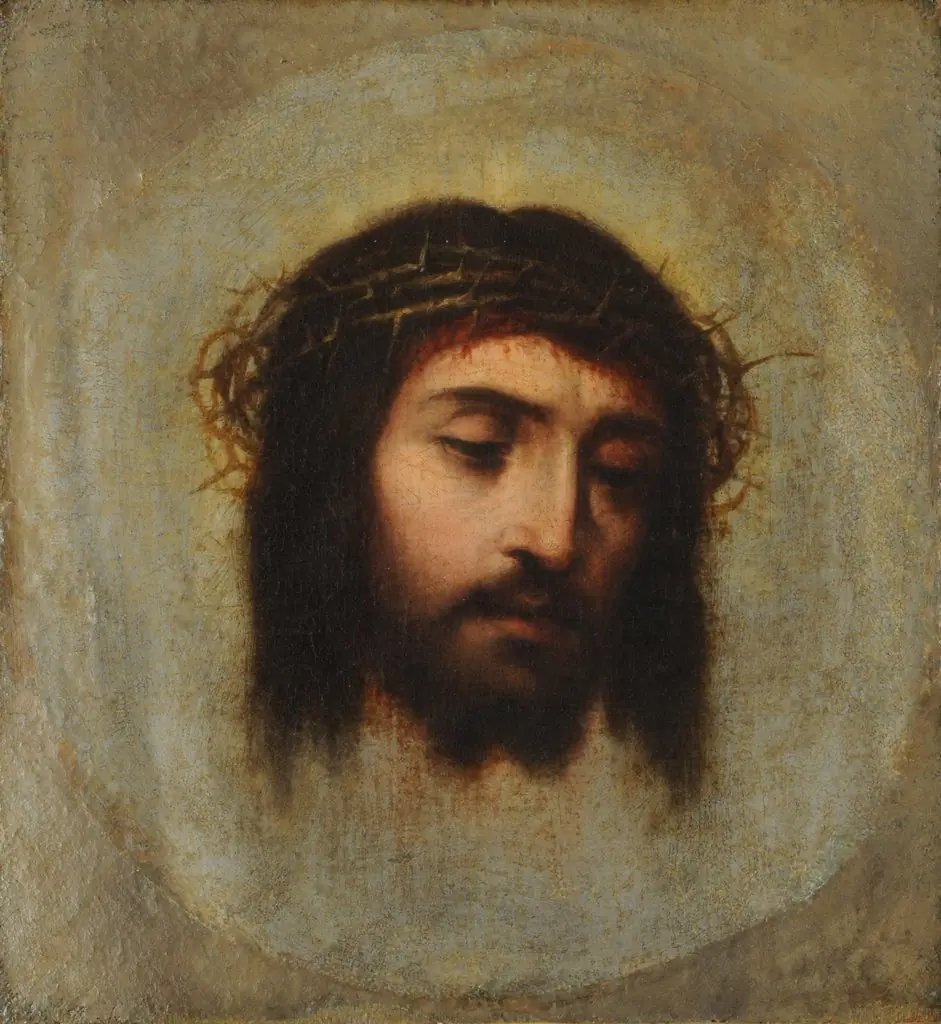
Head of Christ (after 'Dinner at Emmaus' in Louvre) is an oil painting by the Dutch Golden Age artist Rembrandt van Rijn. It dates from 1650 and is held in the collection of the Detroit Institute of Arts.
About this work
Subject & Meaning
The subject is rendered with psychological depth, highlighting the moment of spiritual awakening through subtle facial expression and light.
The painting shows a close-up of Jesus Christ, identified by his beard and traditional attributes, as a contemplative figure emerging from the biblical scene of The Pilgrims of Emmaus. The work combines realism with spiritual intensity, reflecting Rembrandt's exploration of divine presence in ordinary humanity. Its religious meaning centers on the moment of recognition of the resurrected Christ, emphasizing revelation and faith.
The subject is rendered with psychological depth, highlighting the moment of spiritual awakening through subtle facial expression and light. This iconography aligns with Counter-Reformation themes of personal devotion and recognition of the divine in human form. The painting's religious significance lies in its ability to convey theological concepts through intimate human interaction.
Technique & Style
The work is an oil painting executed on oak panel, reflecting Rembrandt's mature handling of light and chiaroscuro. Its formal composition isolates the figure of Christ, emphasizing a contemplative expression and a restrained palette that underscores the spiritual gravity of the subject. The surface retains original brushwork with visible impasto in the highlights, contributing to a tactile presence that has been carefully preserved despite minor craquelure across the panel.
History & Provenance
The painting began as a composition for Rembrandt's 1650 work The Pilgrims of Emmaus, later adapted into a standalone portrait of Christ. It entered the collection of Jacques Goudstikker, then passed to his nephew Johan van der Marck before being acquired by the Detroit Institute of Arts.
The painting is held in the collection of the Detroit Institute of Arts. According to the Wikidata record, it is associated with the Jacques Goudstikker collection and the Johan van der Marck collection, reflecting earlier ownership prior to its arrival at the Detroit museum. No specific inventory or accession number is provided in the available sources, and no exhibition history is documented.
Overview
Created circa 1650, this oil painting by Rembrandt van Rijn presents a close‑up portrait of a bearded figure identified as Christ. The work belongs to the Detroit Institute of Arts and belongs to the artist’s later period, when he frequently explored religious subjects through intimate, expressive studies.
Context
During the Dutch Golden Age, Rembrandt’s religious works often combined dramatic lighting with psychological depth. This head study aligns with his broader practice of extracting a single, expressive element from larger narrative scenes, a method he applied across his extensive oeuvre of roughly three hundred paintings and numerous prints.

Own this work as a print
Artist & collection

Artist
Rembrandt Harmenszoon van Rijn, known mononymously as Rembrandt, was a Dutch Golden Age painter, printmaker, and draughtsman.