Artwork
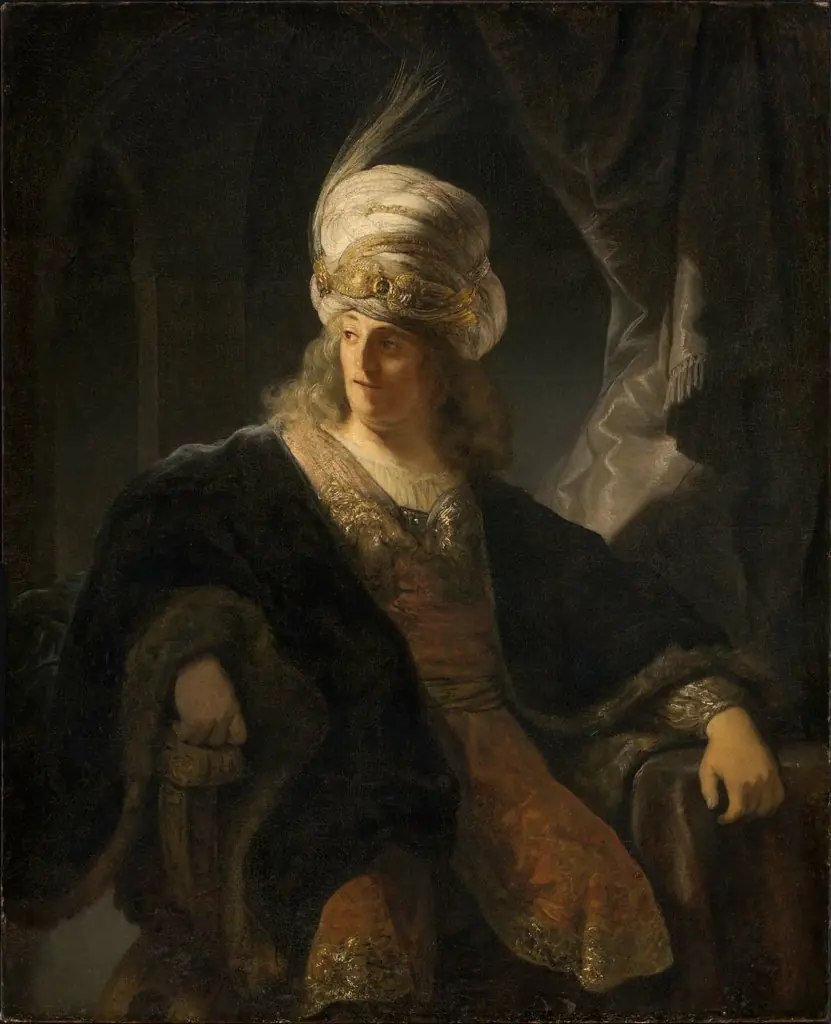
Man in Oriental Costume ("The Noble Slav" or "Man in a Turban")
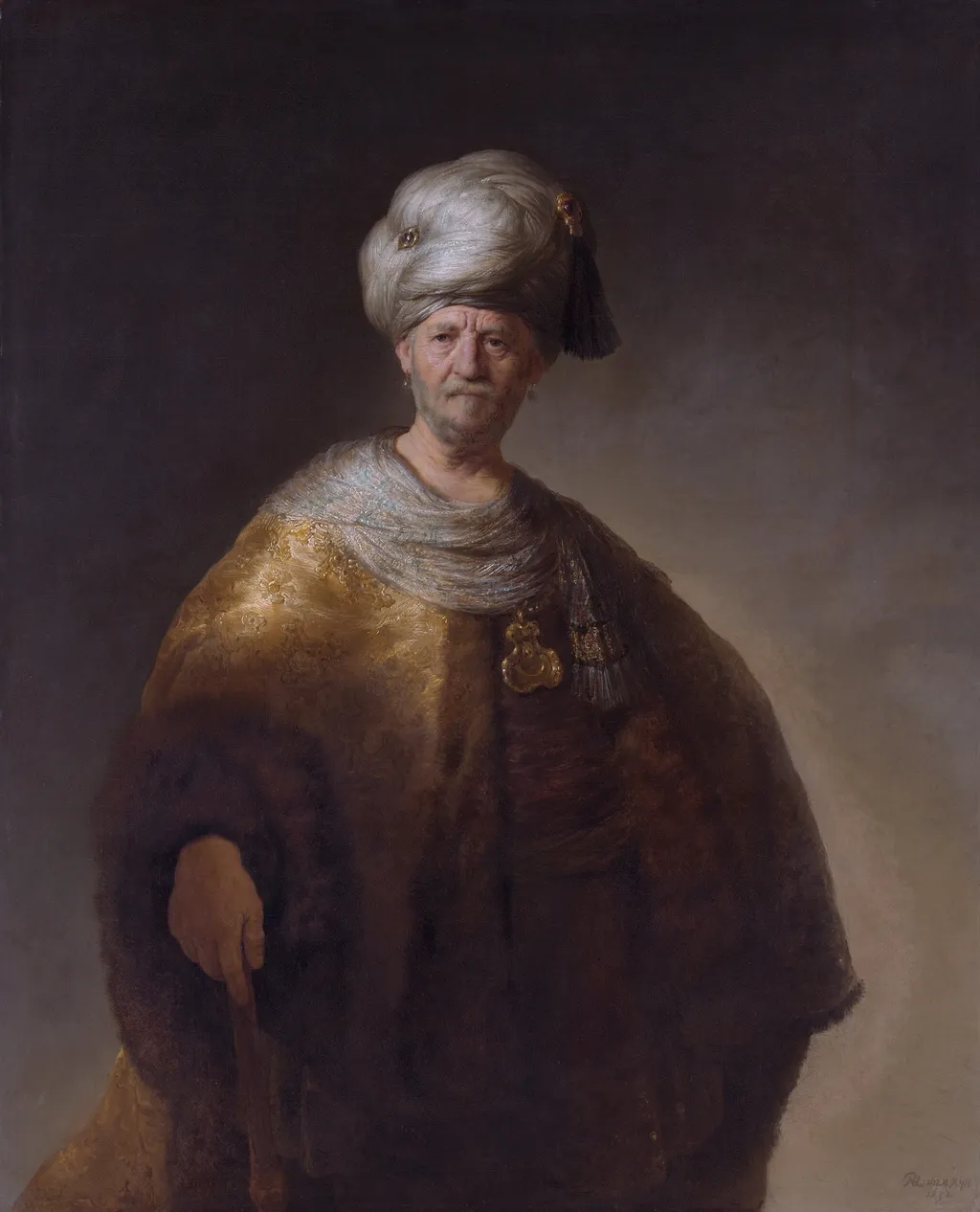
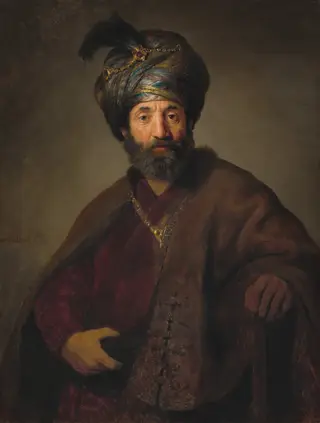
Man in Oriental Costume ("The Noble Slav" or "Man in a Turban") is an oil painting by the Dutch Golden Age artist Rembrandt van Rijn. It dates from 1632 and is held in the collection of the Metropolitan Museum of Art. Rembrandt's Man in Oriental Costume, an oil painting from 1632, exemplifies the artist's skill during the Dutch Golden Age.
About this work
Subject & Meaning
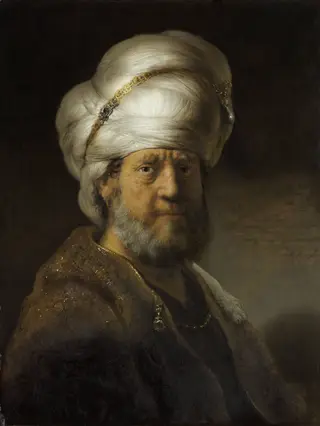
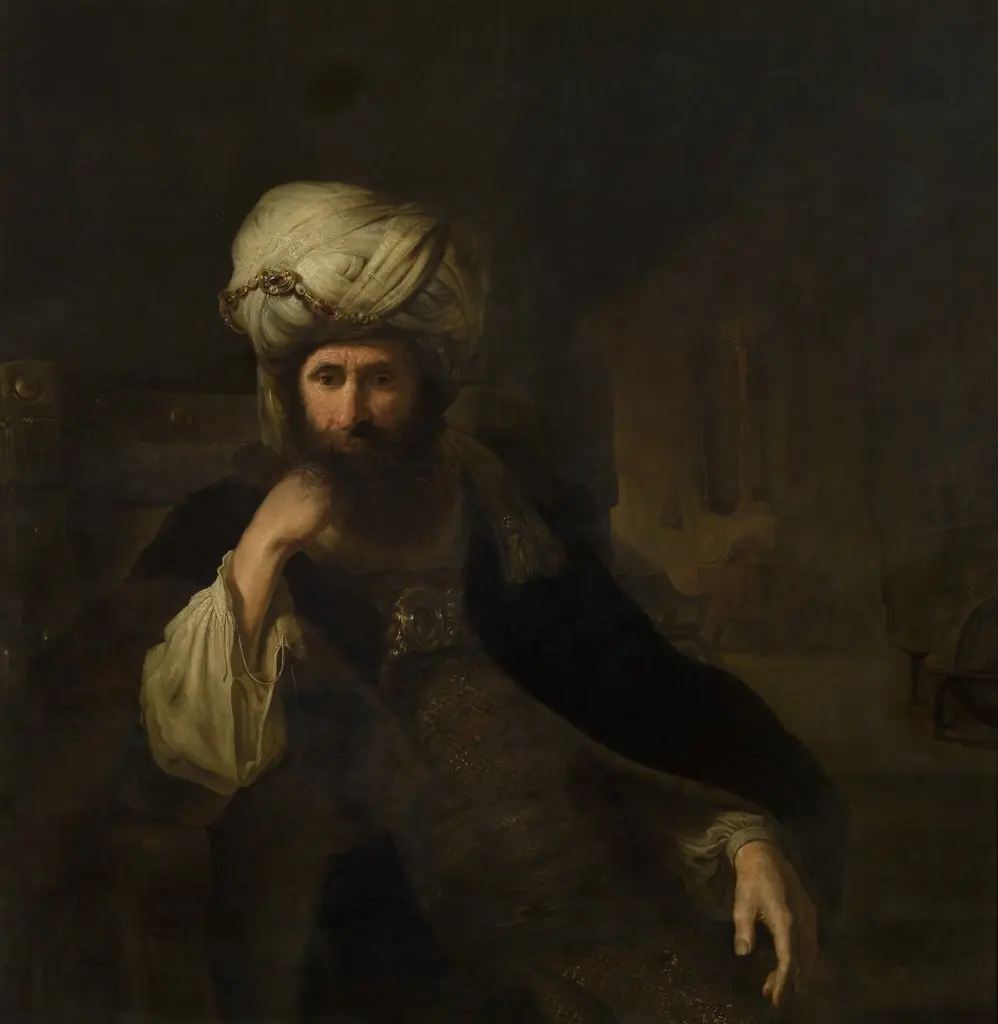
The work reflects the 17th-century fascination with Orientalism, using the exotic costume and a dark background to emphasize texture and psychological presence.
The painting shows a man in richly detailed oriental dress, known as "The Noble Slav" or "Man in a Turban". It is one of Rembrandt's early full-scale oil portraits on canvas, created in 1632, and belongs to a series of individual character studies that he could insert into biblical scenes. The sitter's identity is unknown; no evidence suggests he portrayed a specific person, only that the figure serves as a generic noble other.
The work reflects the 17th-century fascination with Orientalism, using the exotic costume and a dark background to emphasize texture and psychological presence. Its meaning lies in the study of individuality and the symbolic representation of an imagined elite figure within Dutch Golden Age art.
Technique & Style
Man in Oriental Costume is executed in oil paint on canvas, measuring 152.7 × 111.1 cm. It is signed and dated "RHL VAN RIJN 1632." The work belongs to Rembrandt's series of individual character studies intended as models for figures in biblical scenes, a practice he began in his youth and continued throughout his career. It is among the earliest such studies painted at full scale and on canvas rather than on wood panel.
The unknown sitter wears a richly detailed Oriental-style robe, rendered with a meticulous finish that stands out against the dark background. The painting is classified within the Dutch Golden Age and reflects the artist's interest in "tronie"-type character portraits.
History & Provenance
Created in 1632, the oil-on-canvas portrait is signed and dated "RHL VAN RIJN 1632." It is among the artist's earliest life-sized character studies executed on canvas rather than wood panel, depicting an unknown model in elaborate oriental attire of a type Rembrandt could insert into biblical scenes. The painting entered the collection of the Metropolitan Museum of Art in New York in 1920 through the bequest of William K. Vanderbilt, where it is held under accession number 20.155.2 and continues a tradition of individual character studies that Rembrandt pursued throughout his career.
Context
Rembrandt's Man in Oriental Costume (1632) occupies a transitional moment in his oeuvre, marking one of his earliest full-scale, oil-on-canvas portraits rather than the traditional panel supports he used earlier in his career. The work's reception has long been framed by its enigmatic Orientalist attire and the absence of a clearly identifiable sitter, a feature that aligns it with Rembrandt's broader practice of using individual studies as preparatory material for biblical scenes. Scholarship has emphasized the painting's technical virtuosity, particularly the meticulous rendering of the sitter's luxurious, dark-toned garment against a shadowed background, positioning it within the Dutch Golden Age's engagement with exotic motifs while resisting reductive readings of pure costume portraiture.
The painting entered the Metropolitan Museum of Art in 1920 through the William K. Vanderbilt Bequest, anchoring its institutional presence in early 20th-century collecting practices that valorized such works as exemplars of Rembrandt's genius.
Overview
Rembrandt's Man in Oriental Costume, an oil painting from 1632, exemplifies the artist's skill during the Dutch Golden Age. This work is a portrait that captures the era's fascination with distant cultures and elaborate attire. It showcases the artist's characteristic approach to depicting individuals while incorporating popular exotic themes of the time.
Own this work as a print
Artist & collection

Artist
Rembrandt Harmenszoon van Rijn, known mononymously as Rembrandt, was a Dutch Golden Age painter, printmaker, and draughtsman.