Artwork
Portrait of Johannes Wtenbogaert
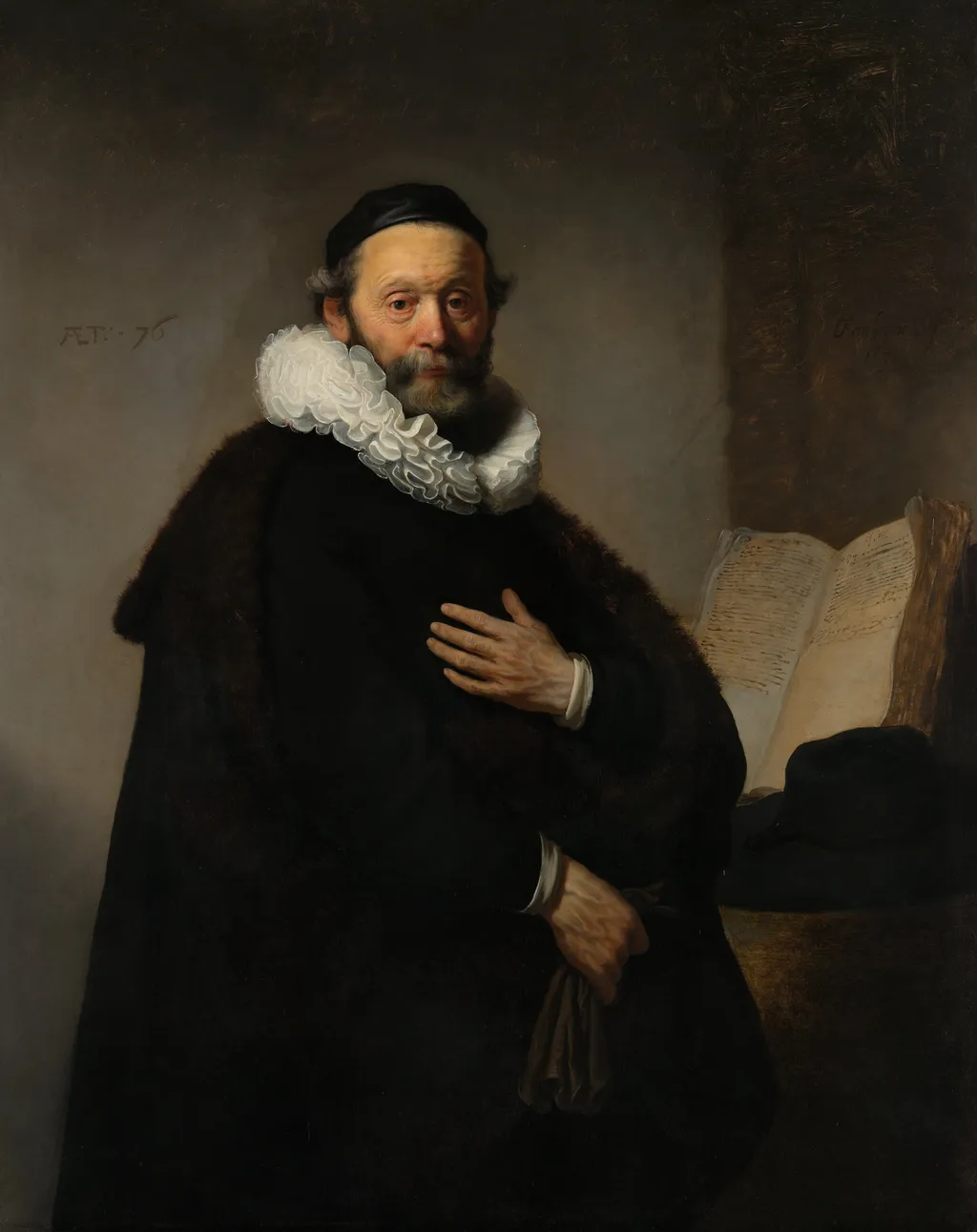
Portrait of Johannes Wtenbogaert is an oil painting by the Dutch Golden Age artist Rembrandt van Rijn. It dates from 1633 and is held in the collection of the Rijksmuseum. Created in 1633, this oil on canvas portrait depicts Johannes Wentebogaert, a prominent Remonstrant preacher and author.
About this work
Subject & Meaning
Wtenbogaert is shown in scholarly attire typical of the period: a black doublet and black toga, conveying gravitas and learned authority.
The portrait depicts the Dutch Remonstrant preacher and writer Johannes Wtenbogaert at age 76, identified by the Latin inscription ‘ÆT[ATIS]:·76’ in the upper left.
Wtenbogaert is shown in scholarly attire typical of the period: a black doublet and black toga, conveying gravitas and learned authority. He holds a pair of gloves in his right hand while resting his left on his chest, a pose often associated with probity and civic virtue. An open book against the wall and a broad-brimmed black hat on the table suggest piety, learning, and public service.
The flat handling of the hands compared to the subtly modeled face may reflect studio collaboration, yet the ensemble underscores the sitter’s status as an esteemed religious intellectual in the Dutch Republic.
Technique & Style
The Portrait of Johannes Wtenbogaert is an oil painting on canvas, executed in 1633. The work depicts the sitter in a black doublet and black toga, attire typical for scholars of the period. The handling of the paint varies across the composition; the face is rendered with detailed modeling, while the hands appear significantly flatter in execution, a characteristic that has led to speculation that they may have been painted by one of Rembrandt's pupils.
The figure holds a pair of gloves in his right hand and places his left hand on his chest. The painting is signed and dated 'Rembrandt Ft. / 1633' in the upper right corner, a signature verified as authentic by the Rembrandt Research Project.
History & Provenance
Rembrandt executed this oil on canvas portrait in 1633 on commission from the Amsterdam merchant Abraham Anthonissen Recht. The sitter, Johannes Wtenbogaert, recorded the sitting in his diary on April 13, 1633. The painting remained in Recht's estate until at least 1664, when it was valued at 40 guilders.
By the late 18th century, the work entered the Venetian collection of Girolamo Manfrin, passing to his son Pietro and later to Bortolina Manfrin Plattis. Plattis sold the piece in 1856 to a London dealer for 8,000 napoléons.
Subsequent ownership included Mayer Amschel de Rothschild and the Primrose family, Earls of Rosebery, who held it until 1992. After appearing at a Sotheby's auction in July 1992, the Canadian entrepreneur Alfred Bader purchased the work and sold it later that year to the Rijksmuseum with support from the Vereniging Rembrandt and other donors.
The painting is held by the Rijksmuseum Amsterdam, accessioned as SK-C-571.
Its exhibition history includes display within the collection of Girolamo Manfrin in Venice by the late 18th century, with documented presence in the Manfrin family holdings in 1806. It was sold in 1856 by Bortolina Manfrin Plattis to London dealer A. Barker, later entering the collection of Mayer Amschel de Rothschild before passing to the Primrose family. The work was exhibited at Sotheby’s, London, on 8 July 1992, prior to its acquisition by the Rijksmuseum on 1 December 1992.
Context
Painted in 1633, the portrait of Johannes Wtenbogaert stands as a significant example of Rembrandt's early mature portraiture, capturing the 76-year-old Remonstrant preacher in the sober black attire favored by scholars of the era. The work's attribution is firmly established, bearing the signature 'Rembrandt Ft. / 1633' which was authenticated by the Rembrandt Research Project. While the facial features display the artist's characteristic depth, scholarly observation notes that the hands, rendered with flatter technique, may have been executed by one of Rembrandt's pupils.
This collaboration reflects the workshop practices common in the artist's wider context during the Dutch Golden Age. The painting's historical trajectory, moving from a private commission by Abraham Anthonissen Recht to major European collections before its 1992 acquisition by the Rijksmuseum, underscores its enduring status as a masterpiece of 17th-century Dutch art.
Legacy
The painting has been recognized for shaping portrait conventions in Dutch art, particularly through its psychological depth and the use of academic attire as a marker of intellectual status. Its provenance through prominent collectors, including the Manfrin family and the Rothschilds, contributed to its reputation as a seminal work of Rembrandt’s portraiture. The work was acquired by the Rijksmuseum in 1992 following a high-profile sale, underscoring its enduring cultural significance.
Overview
Created in 1633, this oil on canvas portrait depicts Johannes Wentebogaert, a prominent Remonstrant preacher and author. Executed by Rembrandt, the work is part of the Rijksmuseum’s collection in Amsterdam.
Own this work as a print
Artist & collection

Artist
Rembrandt Harmenszoon van Rijn, known mononymously as Rembrandt, was a Dutch Golden Age painter, printmaker, and draughtsman.


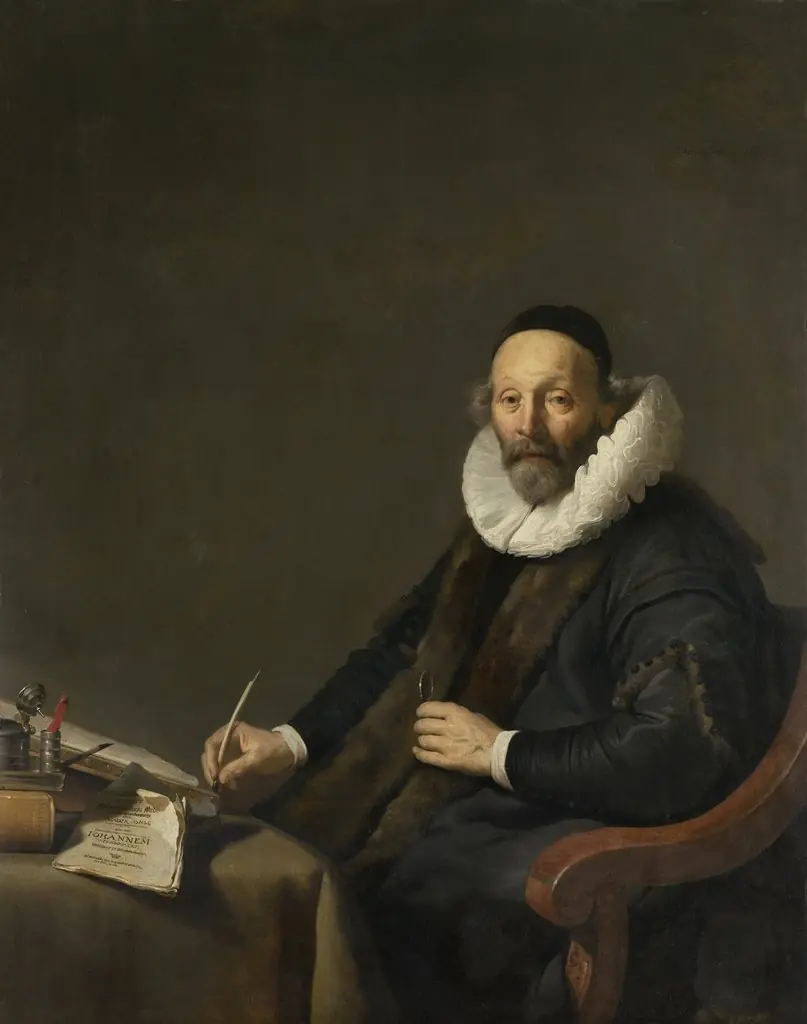 Johannes Uyttenbogaert (1557-1644). Remonstrant minister in The Hague
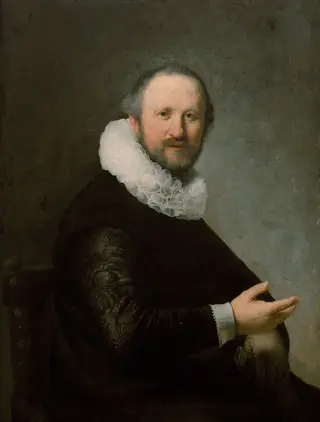 Portrait of a Man Seated
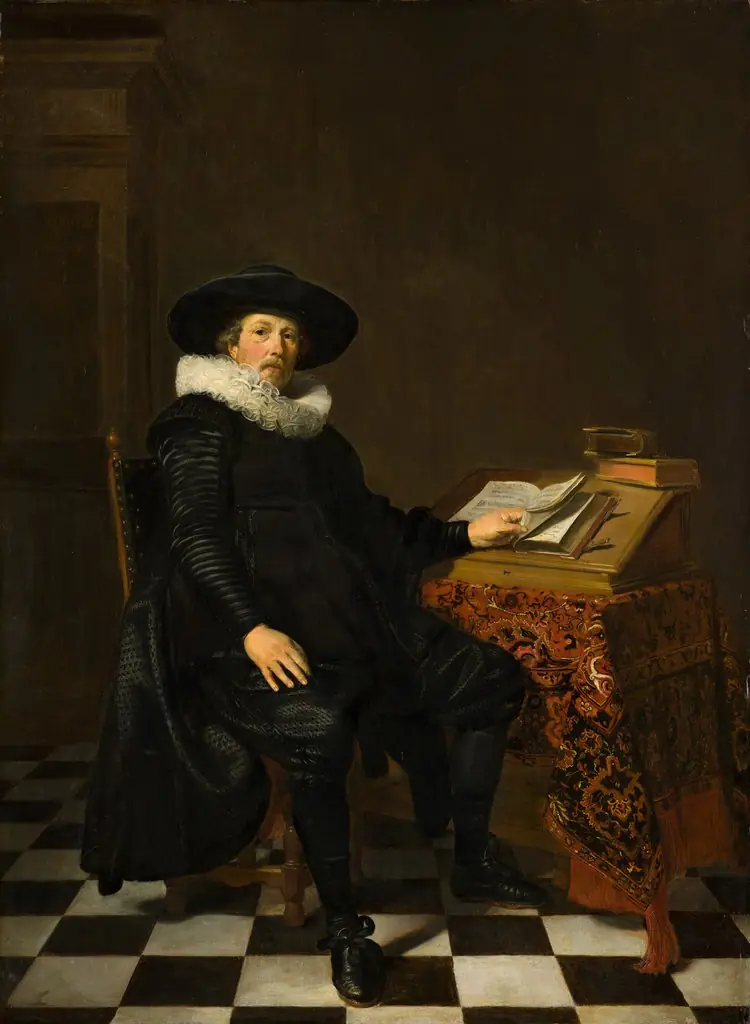 Portrait of a Scholar
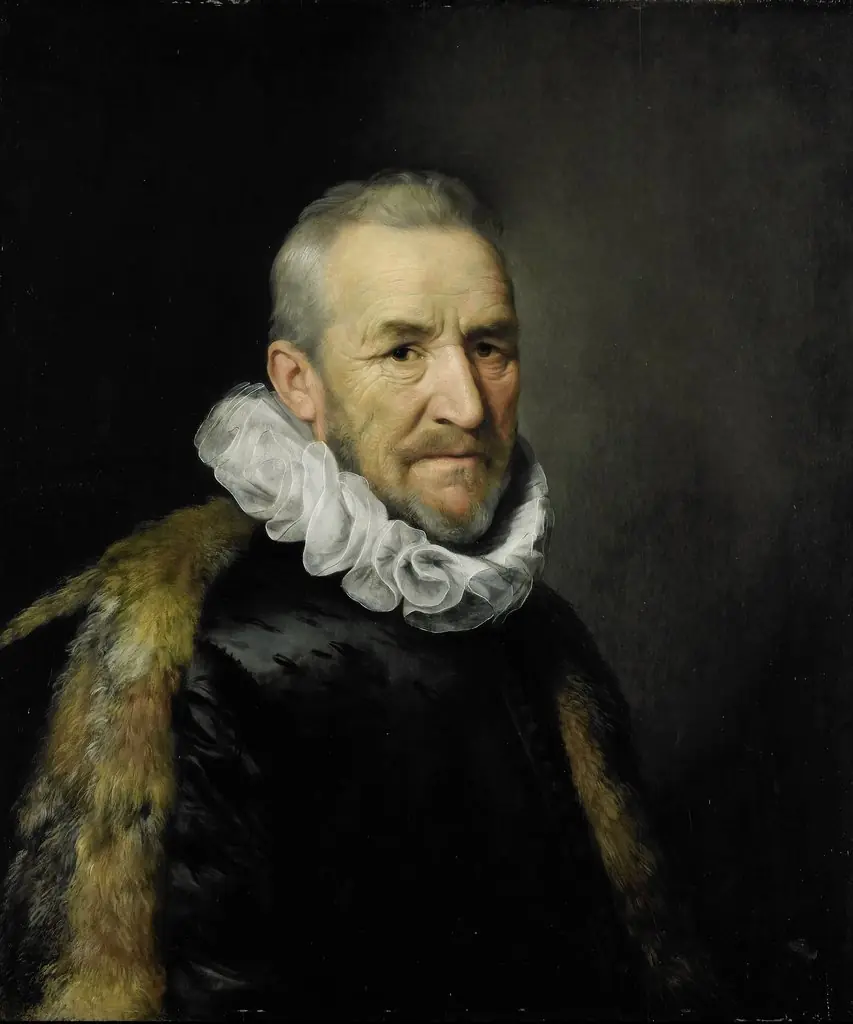 Portrait of a man formerly identified as Johan van Oldenbarnevelt (1547-1619)
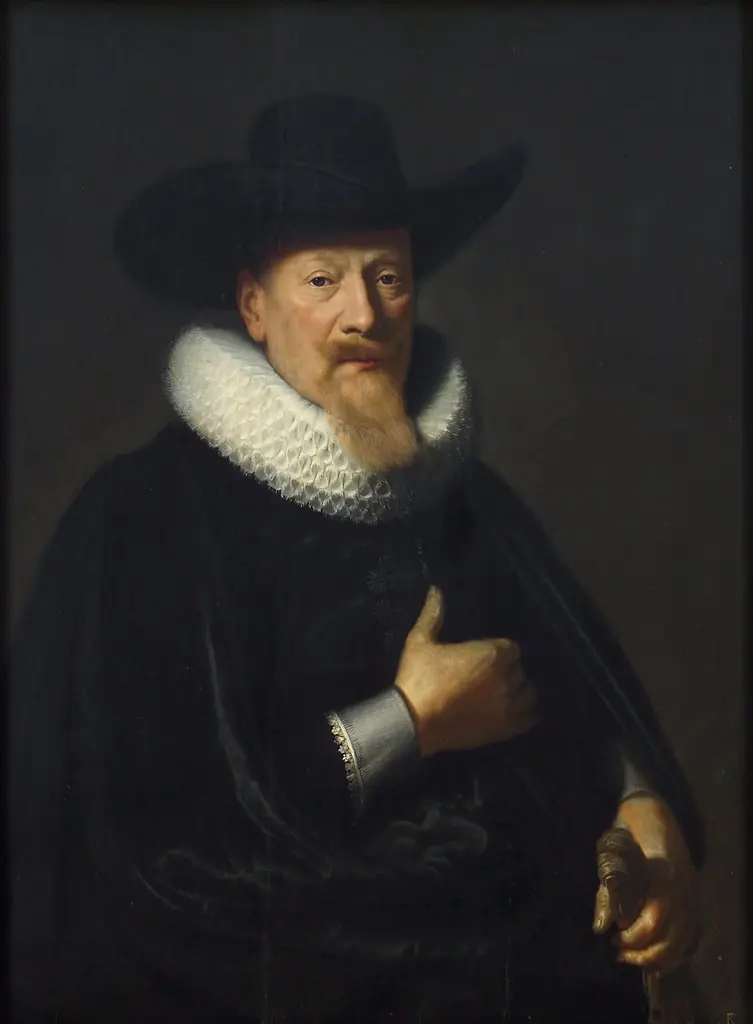 Casanova del Monte Turris, Bürgermeister von Prag
 Portrait of a Man
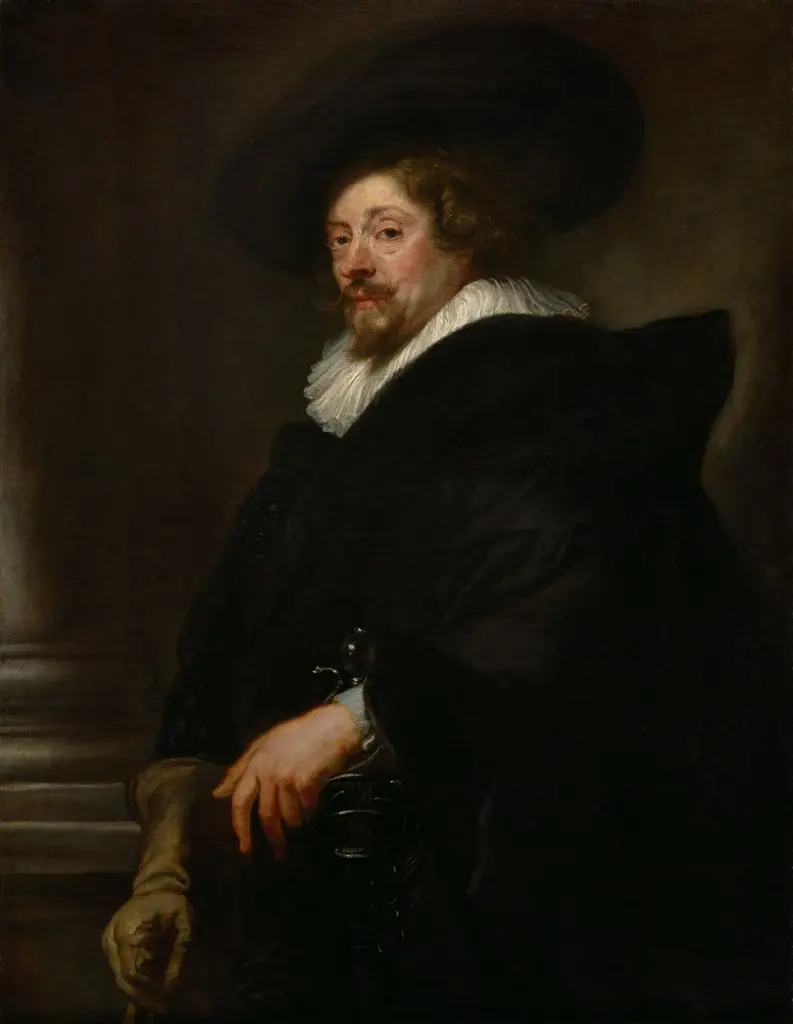 Self-portrait
 Portrait of a Man
 Cornelis Nuyts (1574-1661). Amsterdam merchant
 Portrait of Andries Bicker