Artwork
The Vision of Zacharias in the Temple
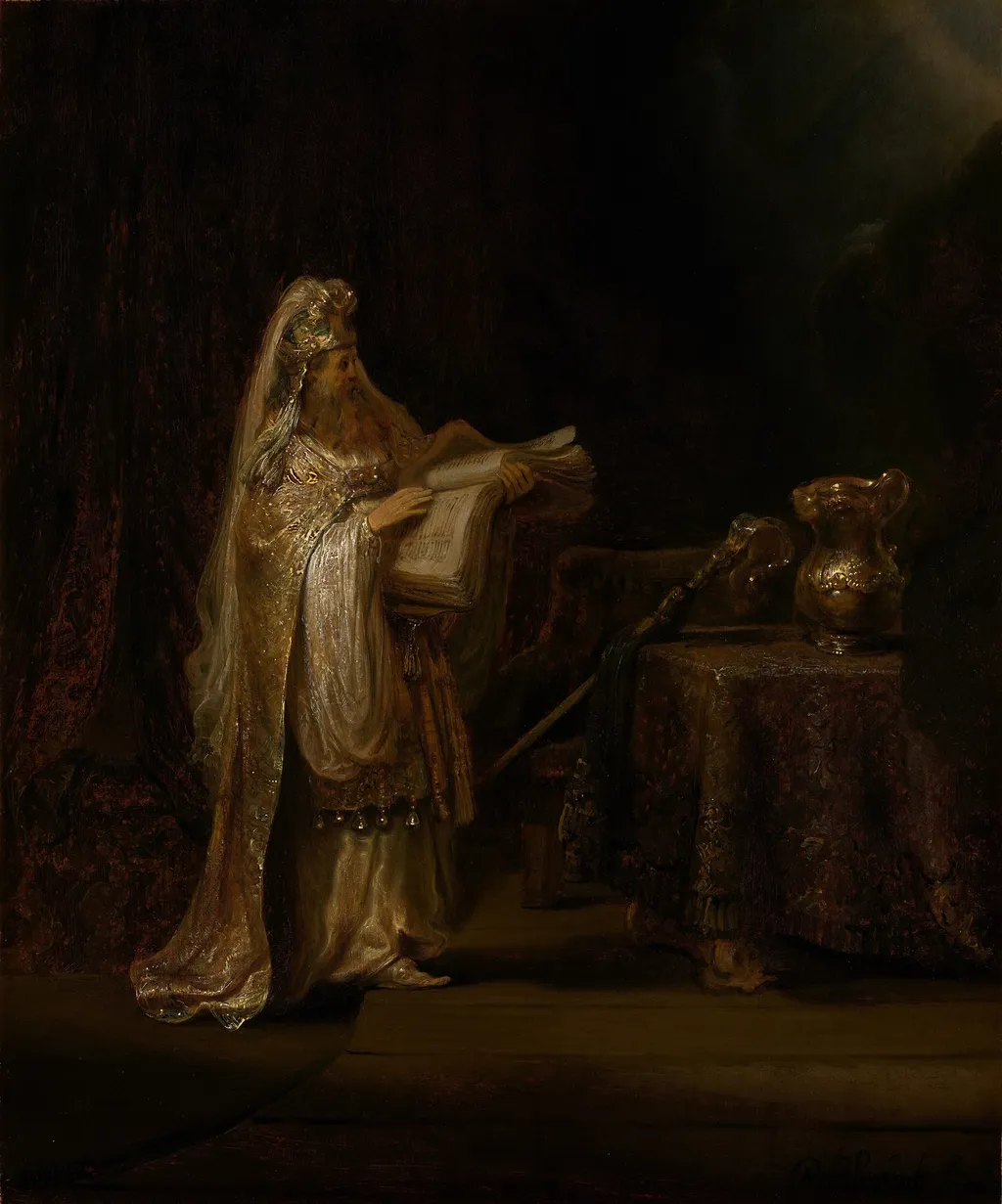
The Vision of Zacharias in the Temple is an oil painting by the Dutch Golden Age artist Rembrandt van Rijn. It dates from 1633 and is held in the collection of the Rijksmuseum.
About this work
Subject & Meaning
The work exemplifies the artist's early experimentation with chiaroscuro as a storytelling device to convey divine intervention.
The painting illustrates the biblical episode from Luke where the high priest Zacharias receives the Archangel Gabriel's announcement that he and his wife will bear a son, John the Baptist. Departing from traditional iconography that typically renders the angel as a figure, Rembrandt evokes Gabriel's presence solely through a beam of light entering from the upper right corner. This artistic choice shifts the narrative focus to the psychological reaction of the protagonist, emphasizing his surprise and inner turmoil rather than the supernatural visitor itself.
The scene is set within the temple, featuring Zacharias in elaborate priestly vestments holding an open book, surrounded by objects such as a silver vase and staff that ground the sacred event in a tangible reality. The work exemplifies the artist's early experimentation with chiaroscuro as a storytelling device to convey divine intervention.
Technique & Style
Executed in 1633, this work is an oil painting on an oak panel measuring 58 by 48 cm. The composition employs dramatic chiaroscuro to narrate the biblical scene, diverging from traditional iconography by omitting a physical depiction of the Archangel Gabriel. Instead, the divine presence is suggested solely by a beam of light entering from the upper right corner. This lighting strategy focuses attention on the psychological reaction of the high priest Zacharias, emphasizing his surprise and turmoil.
The figure is rendered in profile, clad in elaborate priestly vestments including a gold-embroidered mantle and a helmet-like head-dress with a falling veil. Stylistically, the painting aligns with Rembrandt's early experimental phase in history painting, using light as a primary narrative device as in his other religious works from the early 1630s.
History & Provenance
Painted in 1633, the work is a product of Rembrandt's early Amsterdam period, executed when he was twenty-seven. It was catalogued in 1915 by Hofstede de Groot among Rembrandt's attributions, who noted its oak support (58 × 48 cm) and signature on the right at the foot.
The painting's ownership chain traces from Jean de Jullienne in Paris to Jeremiah Harman in London, then through Captain E. Purvis, before passing to the Paris dealer Charles Sedelmeyer and the collector Albert Lehmann. It was sold from de Jullienne's estate in 1767 for 150 francs, again in 1844 for £157 10s, and resurfaced in Sedelmeyer's 1906 catalogue. After removal from Rembrandt's catalogue in 1960 and a private sale in 1961, the present owner engaged the Rijksmuseum for authentication, which culminated in the work's re-attribution and long-term loan to the Rijksmuseum in March 2026.
Following its re-attribution to Rembrandt in March 2026, the painting is held on long-term loan by the Rijksmuseum in Amsterdam, with public display beginning that same month. The work had previously disappeared from public view after being sold to a private collector in 1961. Historical records indicate the piece was exhibited in Amsterdam during the Rembrandt Exhibition of 1898 and later shown by dealers Fred.
Muller and Co. in 1906, as well as in Paris in 1911. Prior to its modern rediscovery, the painting passed through notable collections including those of Jeremiah Harman, Charles Sedelmeyer, and Albert Lehmann.
Context
Recognized in scholarship since Hofstede de Groot's 1915 documentation, this work was excluded from Rembrandt's accepted catalogue in 1960 and subsequently entered a private collection, disappearing from public discourse for over sixty years. In March 2026, following a two-year authentication process initiated by the owner, the Rijksmuseum officially re-attributed the painting to Rembrandt, dating it to 1633 when the artist was twenty-seven.
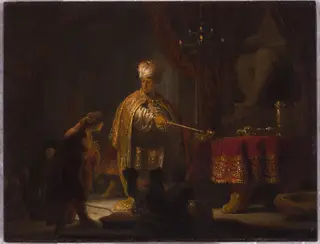
Art historically, the painting represents a rare example of Rembrandt's early history painting, a genre he pursued less frequently than portraiture during this period. Scholars contextualize the work within his early Amsterdam years, noting stylistic and thematic affinities with contemporaneous biblical scenes such as Daniel and Cyrus before the Idol Bel. The composition distinguishes itself from traditional iconography by depicting the Archangel Gabriel not as a figure, but as a beam of light, emphasizing the psychological reaction of the priest Zacharias through dramatic chiaroscuro.
Legacy
The Vision of Zacharias in the Temple gained renewed scholarly attention when the Rijksmuseum reattributed the work to Rembrandt in 2026 after a two-year authentication process. The painting had been excluded from Rembrandt's catalogue raisonné since 1960 and was out of public view after being sold to a private collector that year. Its reemergence was documented in both English and French Wikipedia entries, which note its inclusion in major Rembrandt exhibitions in Amsterdam (1898) and Paris (1911), and its passage through several prominent collections, including those of Charles Sedelmeyer, Albert Lehmann, and Jeremiah Harman.
The attribution was further supported by stylistic analysis linking it to other early 1630s biblical works by the artist.
Overview
The Vision of Zacharias in the Temple is an oil on canvas executed in 1633 by the Dutch artist Rembrandt van Rijn. Measuring roughly a typical size for his early works, the composition centers on the aged high priest Zacharias, illuminated against a dark interior. The painting re‑entered the scholarly canon in 2026 after the Rijksmuseum confirmed its attribution through technical and documentary analysis.
Own this work as a print
Artist & collection

Artist
Rembrandt Harmenszoon van Rijn, known mononymously as Rembrandt, was a Dutch Golden Age painter, printmaker, and draughtsman.

- The Presentation in the Temple
 Daniel and Cyrus Before the Idol Bel
 Old scholar in a study
 King David
 Jeremiah Lamenting the Destruction of Jerusalem
 Portrait of a Man in Eastern Attire
 King Ahasuerus condemning Haman
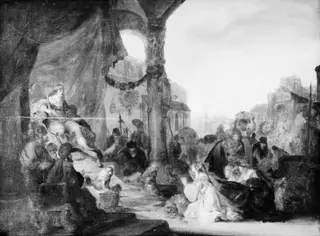 The Queen of Sheba's Visit to Solomon
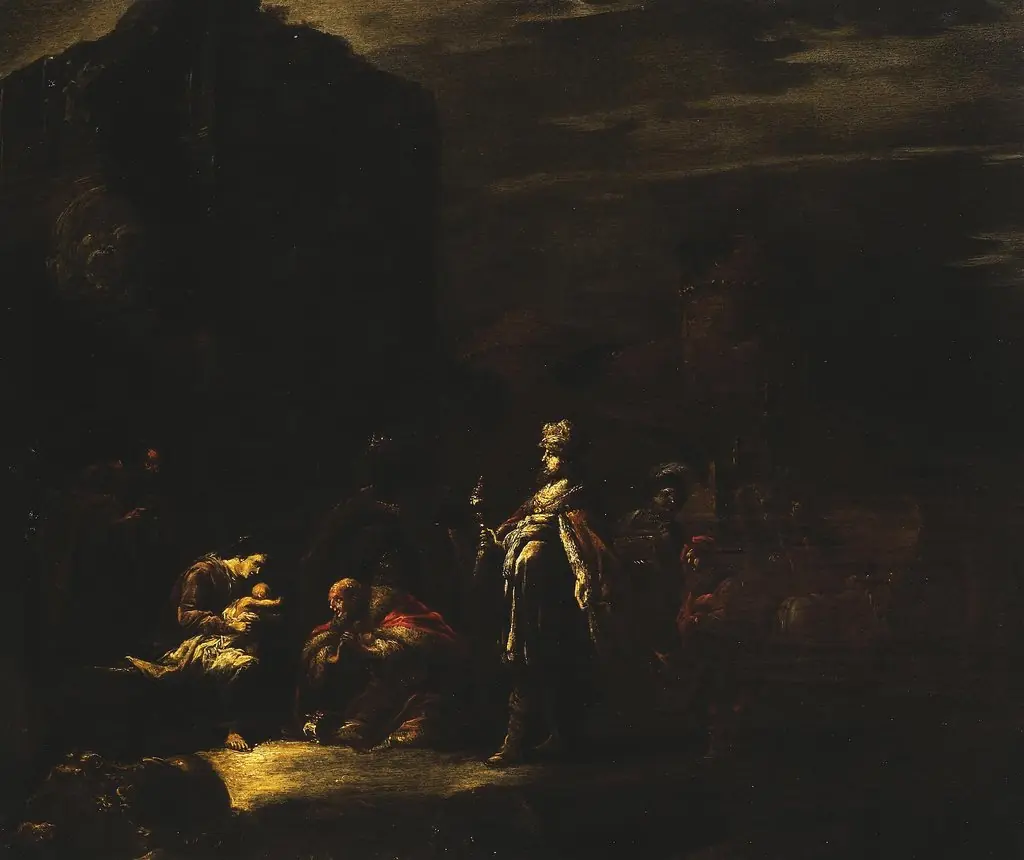 Adoration of the Magi
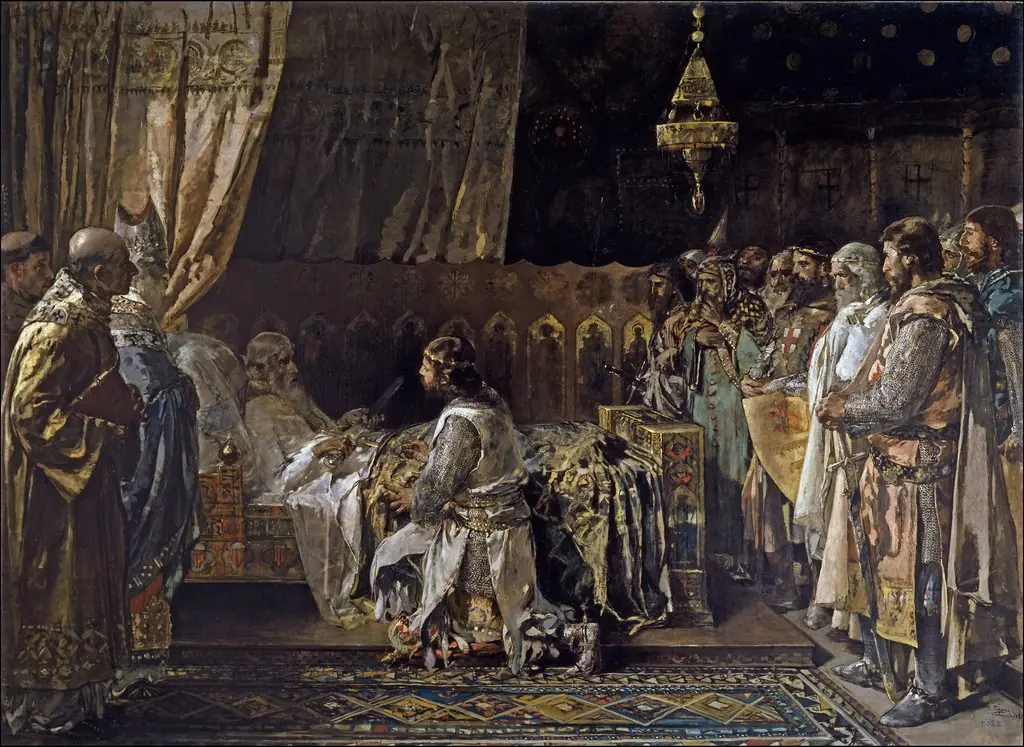 In his final moments, King Jaime el Conquistador gives his sword to his son, Pedro
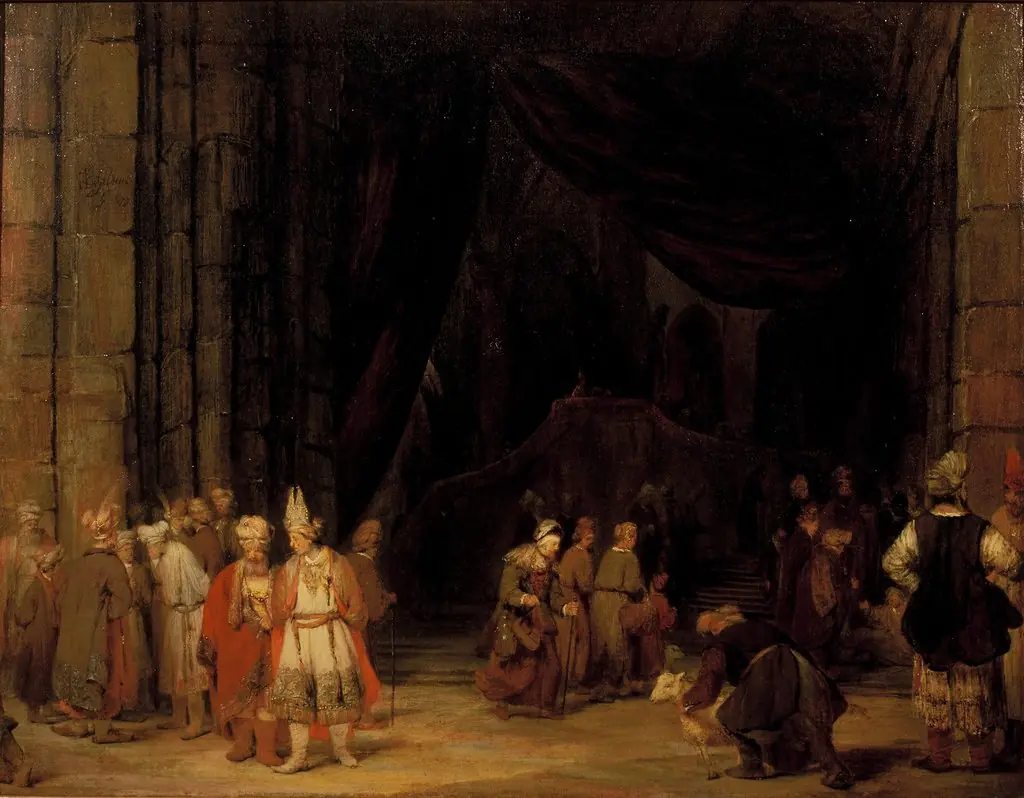 Courtyard of a temple
 Peasants in an Inn