Artwork
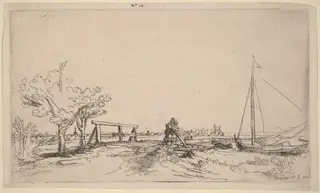
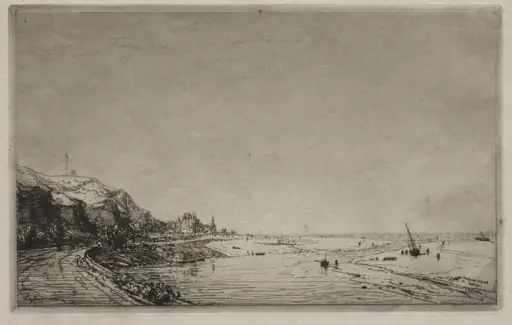
Canal with a Large Boat and Bridge
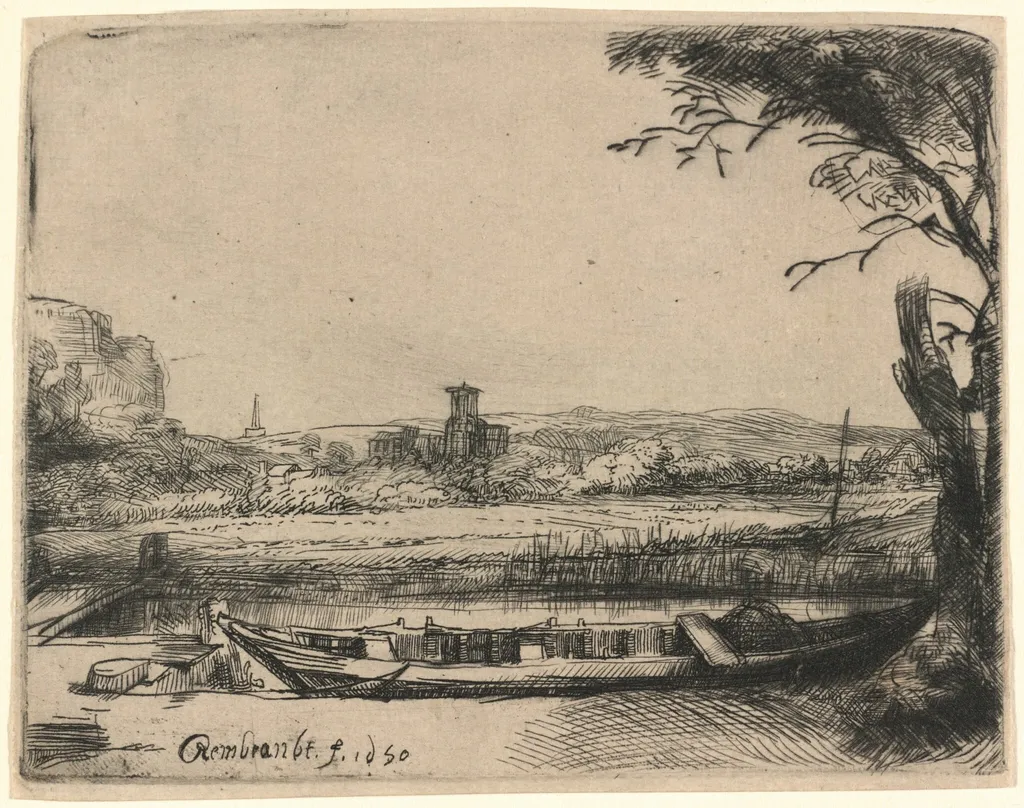
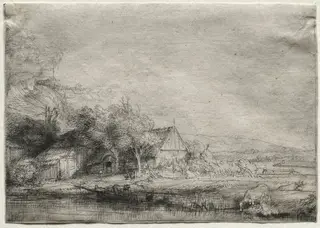
Canal with a Large Boat and Bridge is an ink print by the Baroque artist Rembrandt van Rijn. It dates from 1650 and is held in the collection of the National Gallery of Art.
About this work
Overview
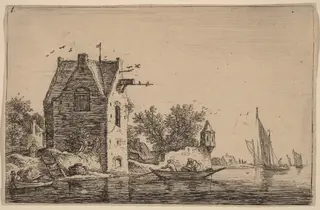
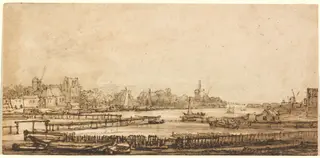
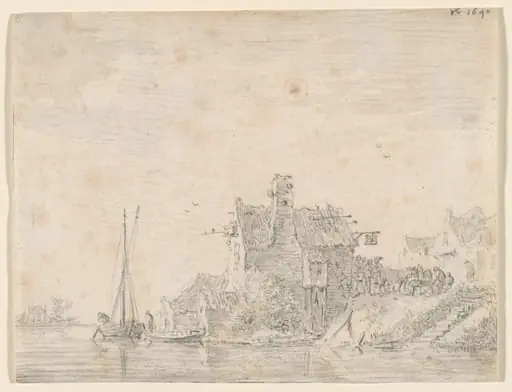
Created in 1650, this print by Rembrandt van Rijn depicts a tranquil canal scene. A modest bridge spans the water, while a sizable vessel rests near the far bank beneath a gently rising hill. Sparse architecture and trees frame the composition, giving a sense of quiet depth and everyday Dutch life.
Subject & Meaning
The work presents a commonplace riverine landscape, emphasizing the interplay of human activity and natural surroundings. The large boat suggests commerce or transport, while the bridge connects the viewer to the distant shore, hinting at movement and connection within a modest, lived environment.
Technique & Style
Executed through etching and drypoint, Rembrandt incised the design onto a copper plate, allowing ink to settle in the carved lines. The resulting prints feature a combination of fine, controlled lines and looser, scratchy marks, characteristic of his experimental approach to texture and tonal variation.
History & Provenance
The print was produced in the mid‑17th century, a period when Rembrandt was exploring printmaking alongside painting. While specific ownership records are limited, the work is documented among his etchings and has been included in several museum collections devoted to Dutch Golden Age prints.
Context
During the 1650s, Dutch artists frequently turned to everyday scenes of canals, bridges, and vessels, reflecting the centrality of waterways to commerce and daily life. Rembrandt’s treatment aligns with this tradition yet retains his distinctive handling of line and atmosphere, distinguishing the piece within the broader genre.
Own this work as a print
Artist & collection

Artist
Rembrandt Harmenszoon van Rijn, known mononymously as Rembrandt, was a Dutch Golden Age painter, printmaker, and draughtsman.