Artwork
Jacob Haaringh (Young Haaringh) (Pieter Haaringh)
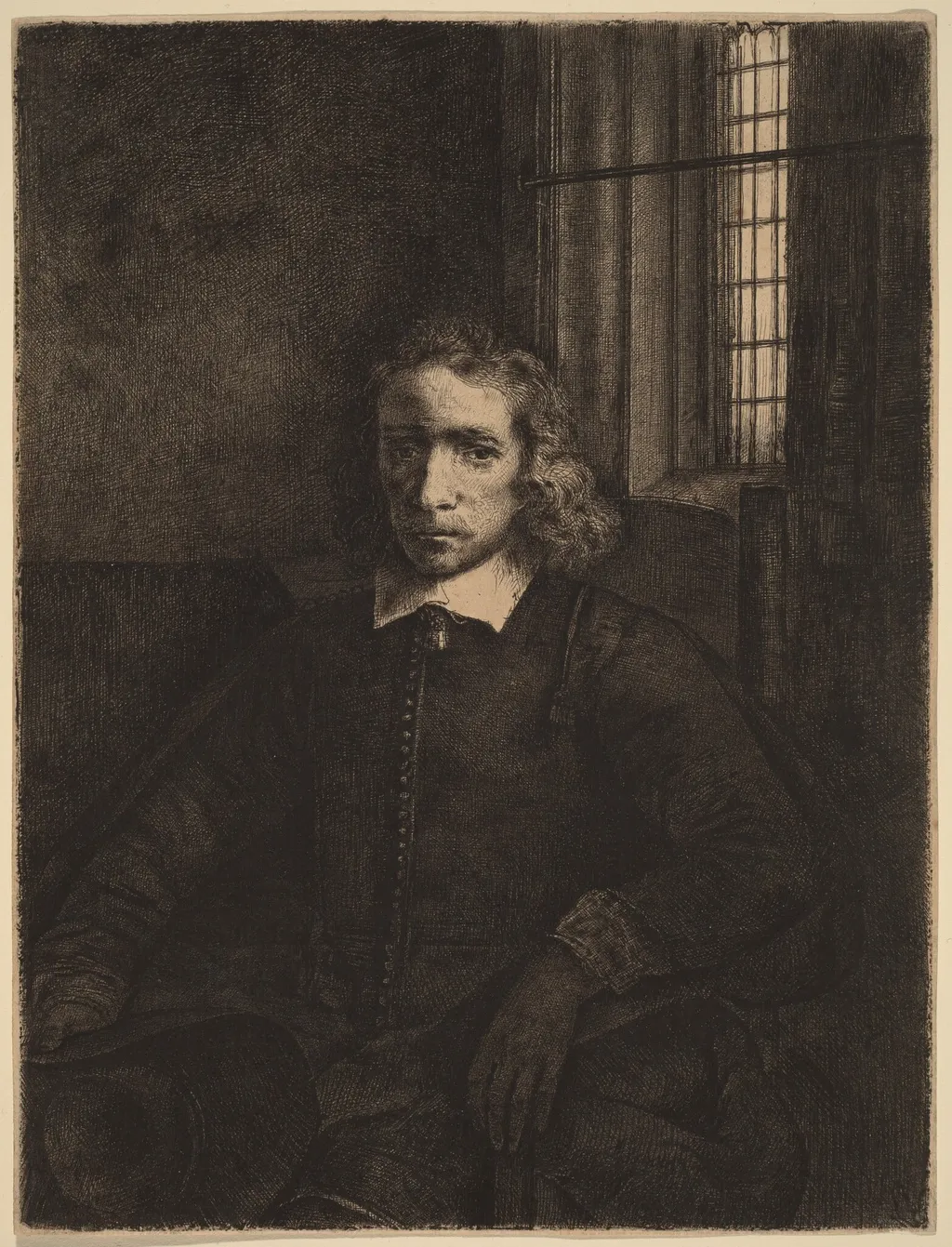
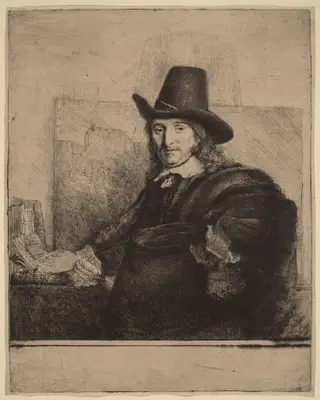
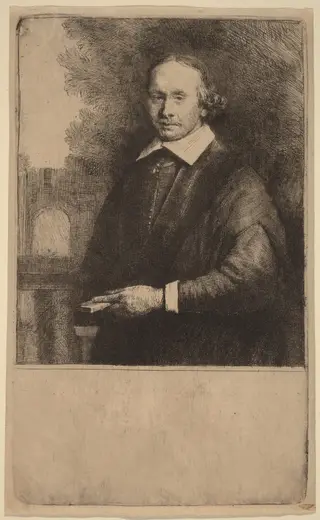
Jacob Haaringh (Young Haaringh) (Pieter Haaringh) is an ink print by the Baroque artist Rembrandt van Rijn. It dates from 1655 and is held in the collection of the National Gallery of Art.
About this work
Overview
The composition relies on the artist's mastery of line, using sharp etched strokes combined with the soft, velvety tones of drypoint to create depth and volume.
Jacob Haaringh, also known as Young Haaringh, is a 1655 print by Rembrandt van Rijn executed in etching, drypoint, and engraving. The work presents a half-length portrait of a young man with curly hair and a serious expression, dressed in a dark, buttoned garment featuring a high collar and ruffled cuffs. Rembrandt employs a window with small panes in the background to introduce dim, directional light that models the sitter's face and highlights the texture of the rough wall behind him.
The composition relies on the artist's mastery of line, using sharp etched strokes combined with the soft, velvety tones of drypoint to create depth and volume. This piece reflects Rembrandt's mature period in printmaking, where he frequently explored the psychological intensity of individual sitters through innovative technical layering. The print stands as a significant example of his ability to convey character and atmosphere within a small, intimate format, showcasing his continued experimentation with mixed media techniques to achieve complex tonal effects.
Subject & Meaning
The work depicts a youthful figure, likely a member of the Haaringh family, rendered with a solemn demeanor that suggests a formal or commemorative purpose. The restrained attire and subdued lighting focus attention on the sitter’s facial features, conveying a sense of dignity without overt symbolism.
Technique & Style
Rembrandt combined etching, drypoint, and engraving on a single plate, employing fine, incisive lines to delineate clothing folds and facial shadows. The interplay of etched grooves and drypoint burrs creates subtle tonal variations, characteristic of his printmaking practice in the mid‑seventeenth century.
History & Provenance
Created in the later phase of Rembrandt’s career, the portrait entered collections of Dutch art patrons before being documented in museum inventories in the nineteenth century. Its attribution to Rembrandt has been consistently affirmed by scholars specializing in his graphic oeuvre.
Context
The portrait belongs to a period when Rembrandt produced numerous individualized prints for private clients, reflecting a market for personalized likenesses among the Dutch bourgeoisie. The work exemplifies the artist’s shift toward more intimate, less grandiose subjects during the 1650s.
Own this work as a print
Artist & collection

Artist
Rembrandt Harmenszoon van Rijn, known mononymously as Rembrandt, was a Dutch Golden Age painter, printmaker, and draughtsman.