Artwork
The Adoration of the Shepherds: a Night Piece
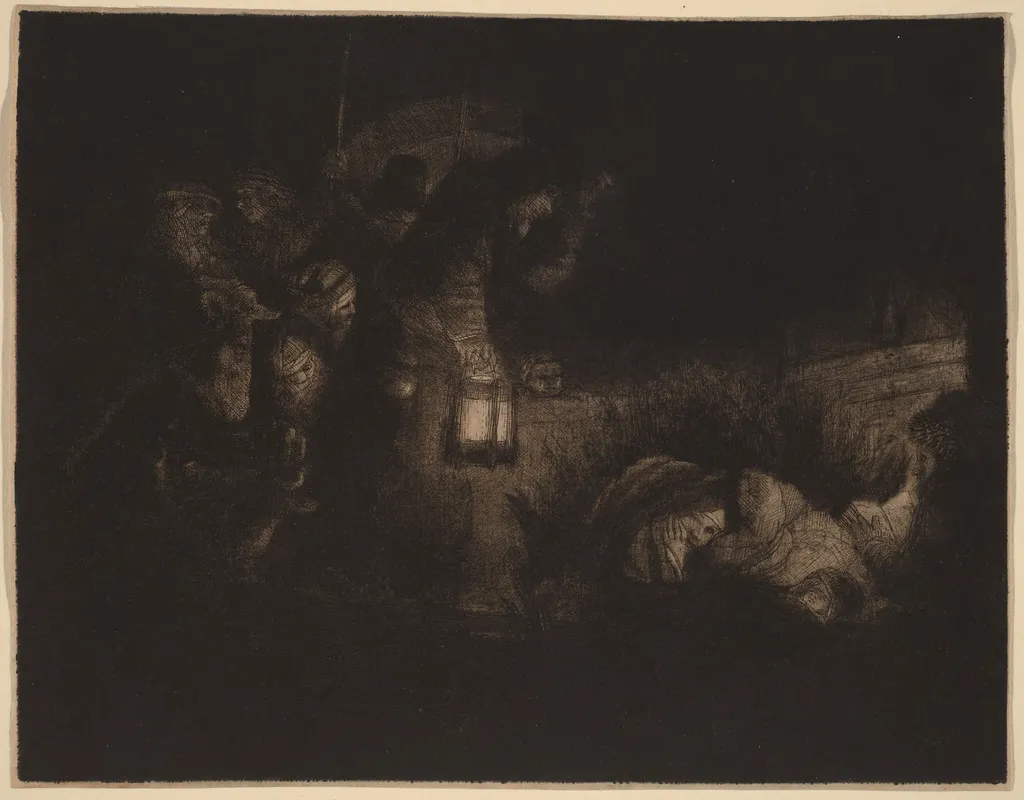
The Adoration of the Shepherds: a Night Piece is an ink print by the Baroque artist Rembrandt van Rijn. It dates from 1652 and is held in the collection of the National Gallery of Art.
About this work
Overview
The artist employs dense cross-hatching and the soft, velvety lines of drypoint to render the textures of rough clothing and the smoky atmosphere of the night.
Rembrandt van Rijn's 'The Adoration of the Shepherds: a Night Piece,' created in 1652, is a masterful print executed in etching, drypoint, and burin on Japan paper. The composition centers on the biblical nativity scene, reimagined as an intimate nocturnal gathering. Rather than relying on divine radiance, Rembrandt anchors the illumination in a single, earthly lantern held by a shepherd, which casts a dramatic, flickering glow against the surrounding darkness.
This chiaroscuro effect defines the work's emotional weight, carving out the huddled figures of the shepherds, the Virgin Mary, and the infant Jesus from the deep shadows of the stable. The artist employs dense cross-hatching and the soft, velvety lines of drypoint to render the textures of rough clothing and the smoky atmosphere of the night. Animals, including an ox and a donkey, emerge tentatively from the gloom, adding to the rustic authenticity.
This print represents a mature exploration of light and spiritual introspection in Rembrandt's late career, distinguishing itself from his earlier, more theatrical treatments of the subject by emphasizing human vulnerability and the quiet awe of the moment.
Subject & Meaning
The work portrays the biblical episode of the shepherds’ adoration, focusing on the intimate reaction of the figures as they encounter the newborn figure in the stable. The lantern’s glow emphasizes the spiritual significance of the scene, while the surrounding darkness underscores the contrast between the earthly and the divine.
Technique & Style
Rembrandt employed a layered approach: fine etching lines establish the overall structure, drypoint adds rich, velvety shadows, and burin work sharpens details such as the lantern’s rim and the animals’ outlines. The ink, pressed into the absorbent Japan paper, yields a textured surface that conveys both immediacy and depth, enhancing the nocturnal atmosphere.
History & Provenance
The print belongs to Rembrandt’s mature period, when he frequently explored religious subjects through printmaking. It is catalogued among his late etchings and has been held in several European collections, reflecting the artist’s continued interest in combining multiple intaglio techniques to achieve nuanced tonal effects.
Own this work as a print
Artist & collection

Artist
Rembrandt Harmenszoon van Rijn, known mononymously as Rembrandt, was a Dutch Golden Age painter, printmaker, and draughtsman.

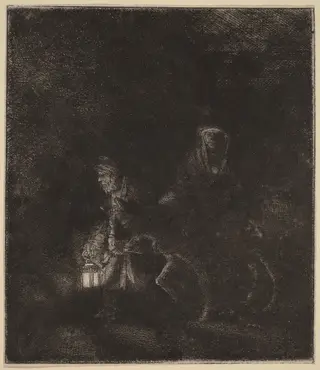 The Flight into Egypt: a Night Piece
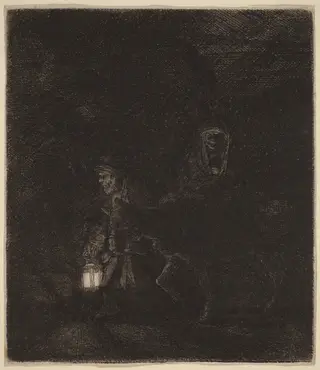 The Flight into Egypt
 Fire, 3rd plate (L'incendie)
 Serenade
 The Triumph of Death: Proclamation (Le triomphe de la mort: La proclamation)
 The Star of the Kings: A Night Piece
 The Proverbs: God Creates Them and They Join Up Together
 The Star of the Kings: a Night Piece
 The Entombment
 The Boat Trip: The Search for an Inn