Artwork
The Goldsmith
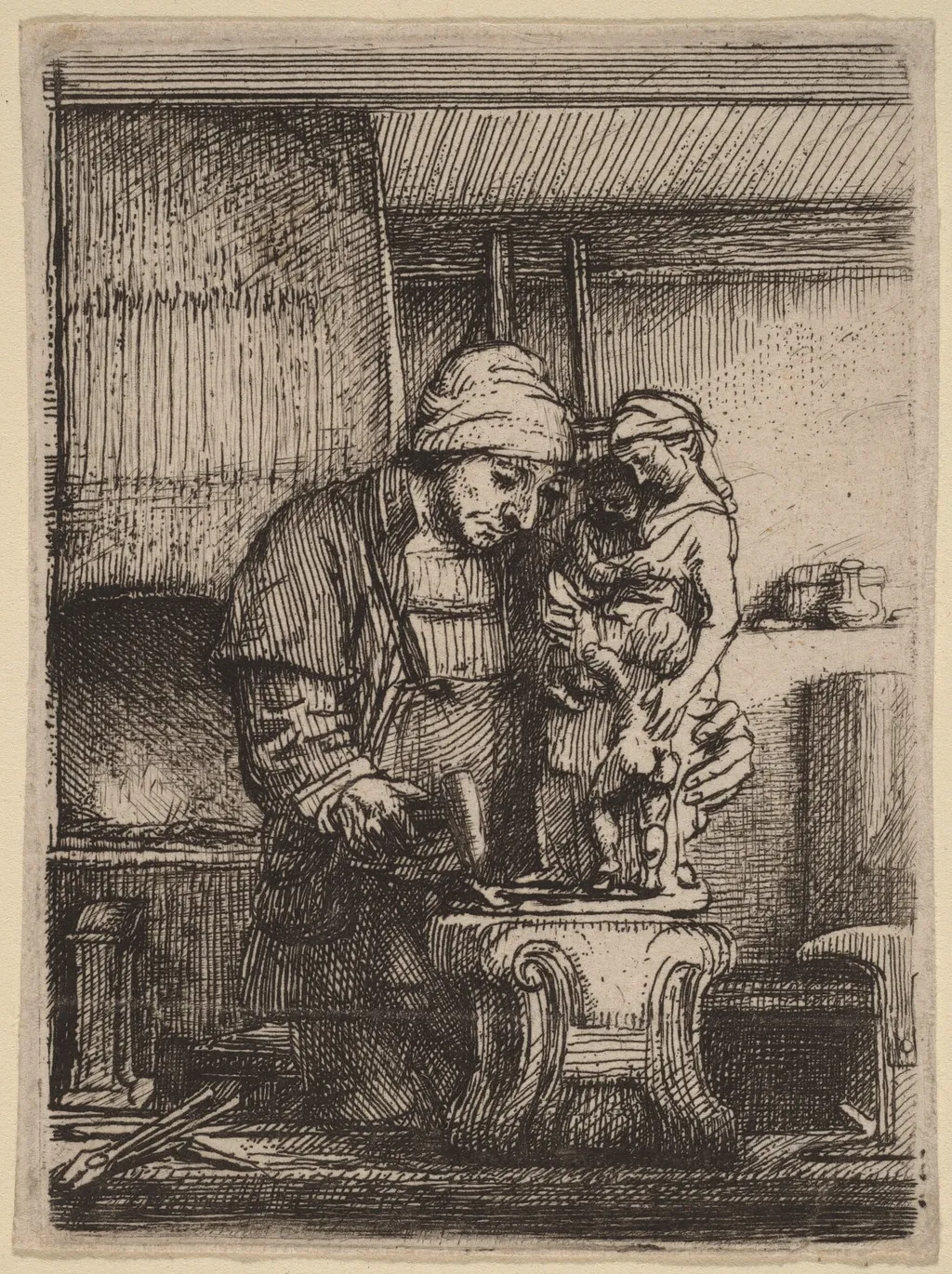
The Goldsmith is an ink print by the Baroque artist Rembrandt van Rijn. It dates from 1655 and is held in the collection of the National Gallery of Art.
About this work
Overview
Rembrandt van Rijn produced the print The Goldsmith in 1655 using a combination of etching and drypoint. The work presents a single figure, a goldsmith, engaged in his trade within a cluttered workshop, rendered in the characteristic chiaroscuro of the artist’s late period.
Subject & Meaning
The composition focuses on the artisan at his bench, clothed in a long coat and hat, his gaze fixed on the task at hand. The goldsmith’s concentrated posture and the careful rendering of his hands and tools convey a quiet dedication to craft, inviting reflection on the dignity of manual labor.
Technique & Style
Rembrandt employed both etched lines and drypoint burr to achieve a rich tonal range. The interplay of deep shadows and illuminated surfaces creates a three‑dimensional effect, while the fine hatching highlights the texture of metal tools and fabric, exemplifying the dramatic lighting associated with the Baroque aesthetic.
History & Provenance
The print was created in the mid‑1650s, a period when Rembrandt increasingly turned to printmaking to explore narrative and everyday subjects. Surviving impressions are held in several European collections, documenting the work’s continued presence in institutional holdings since the artist’s lifetime.
Own this work as a print
Artist & collection

Artist
Rembrandt Harmenszoon van Rijn, known mononymously as Rembrandt, was a Dutch Golden Age painter, printmaker, and draughtsman.

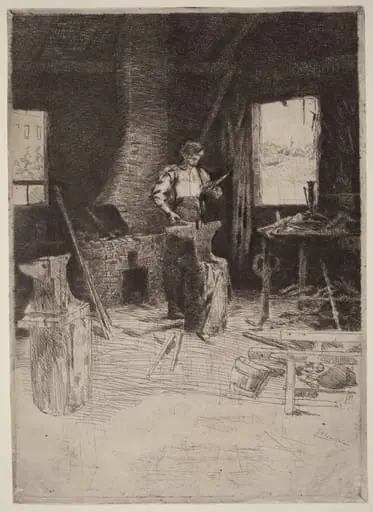 The Blacksmith's Shop
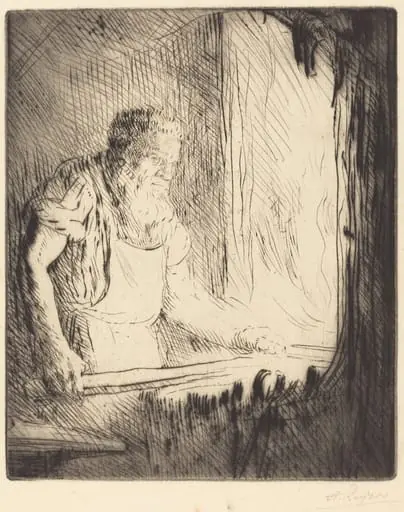 Blacksmith (Le forgeron)
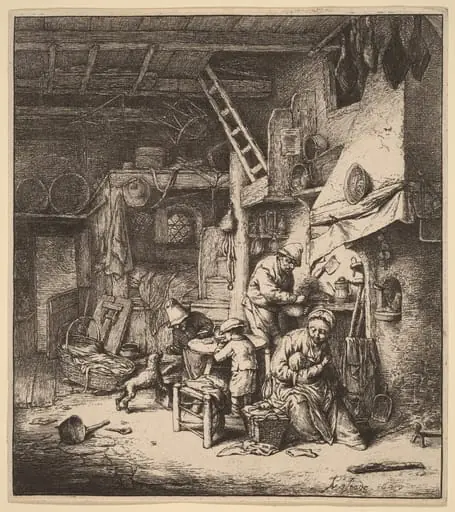 Peasant Family in an Interior with the Mother Feeding a Child
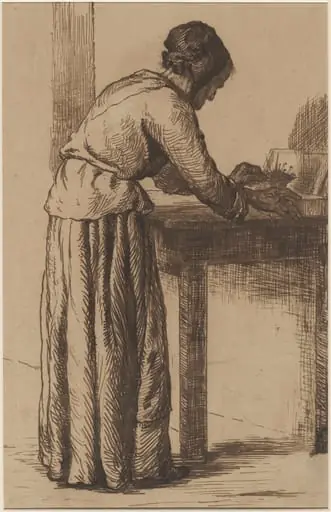 Old Woman Working
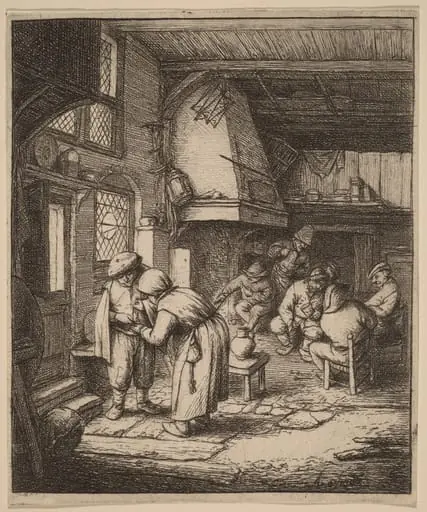 Man Paying the Landlady at an Inn
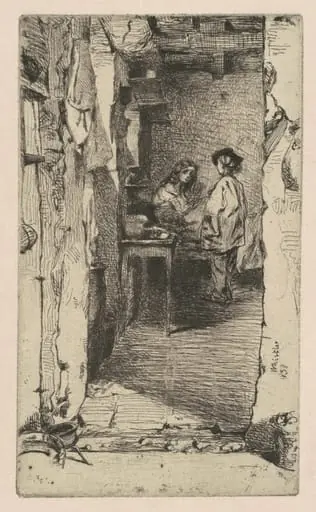 Rag Pickers, Quartier Mouffetard, Paris
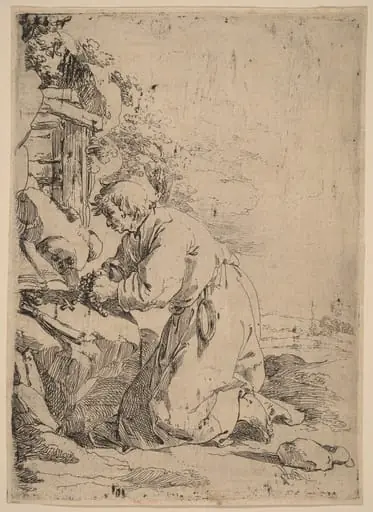 The Kneeling Hermit Facing Left
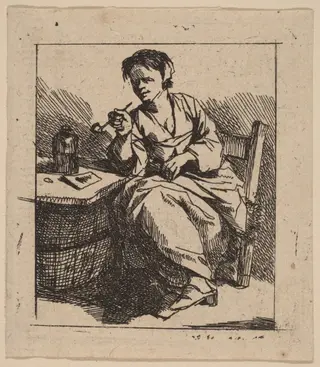 A Woman Smoking
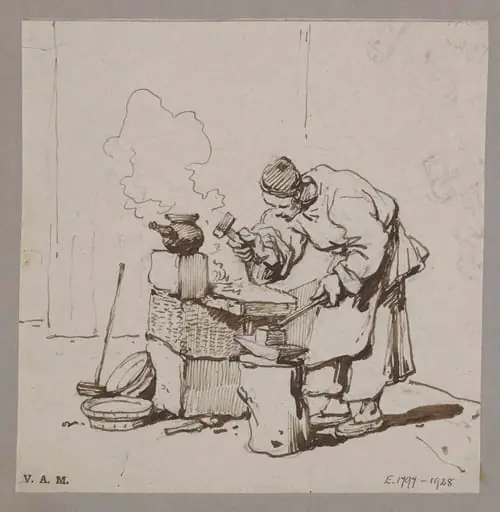 A blacksmith at his anvil
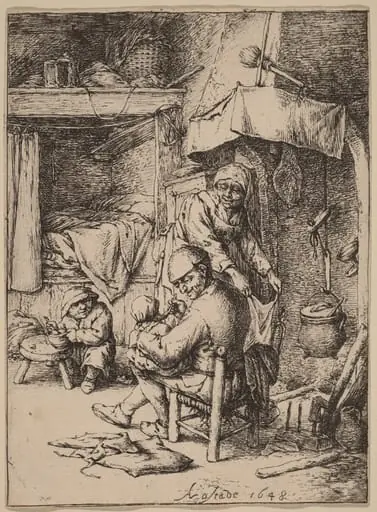
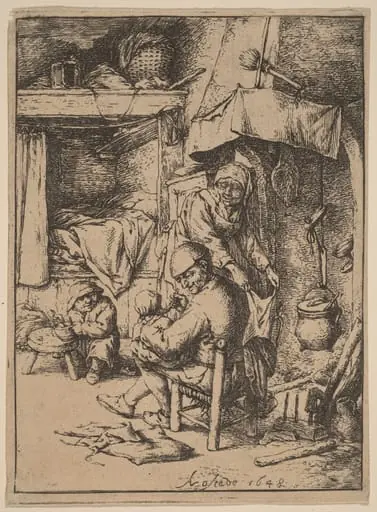 Peasant Family in an Interior wtih the Father Feeding a Child
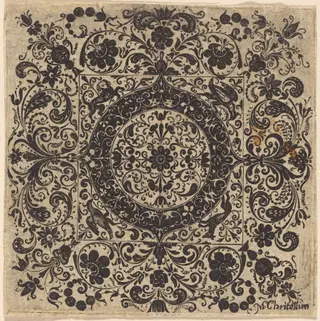 Goldsmith's Ornament in Square
- Peasant Family in an Interior wtih the Father Feeding a Child