Artwork
John the Baptist
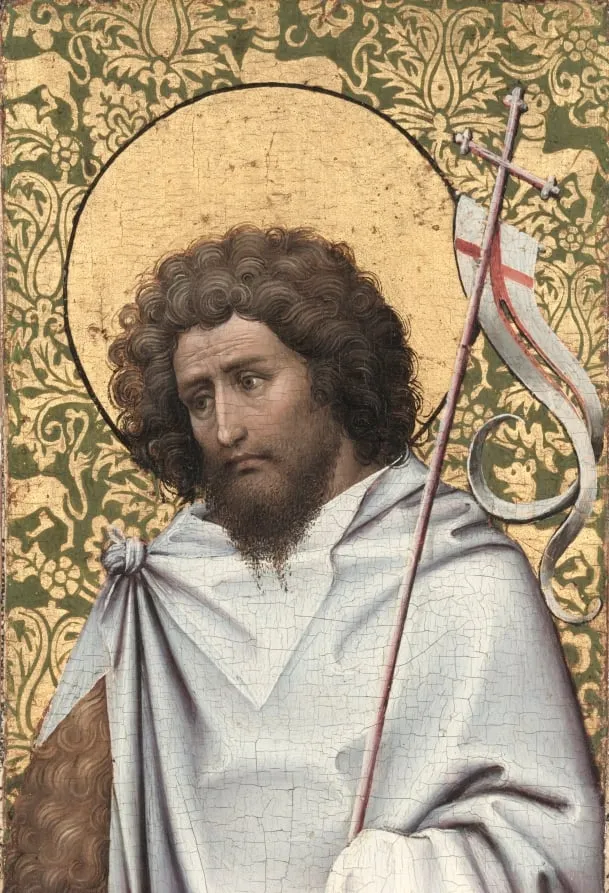
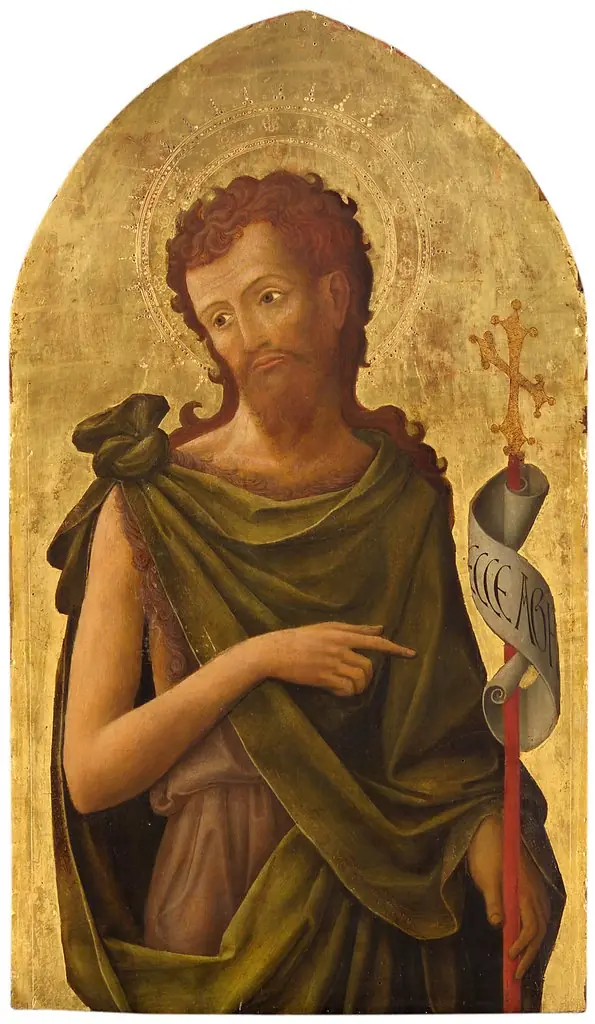
John the Baptist is an unspecified painting by the Northern Renaissance artist Robert Campin. It dates from 1410 and is held in the collection of the Cleveland Museum of Art.
- Accession no.
- 1966.238
About this work
Overview
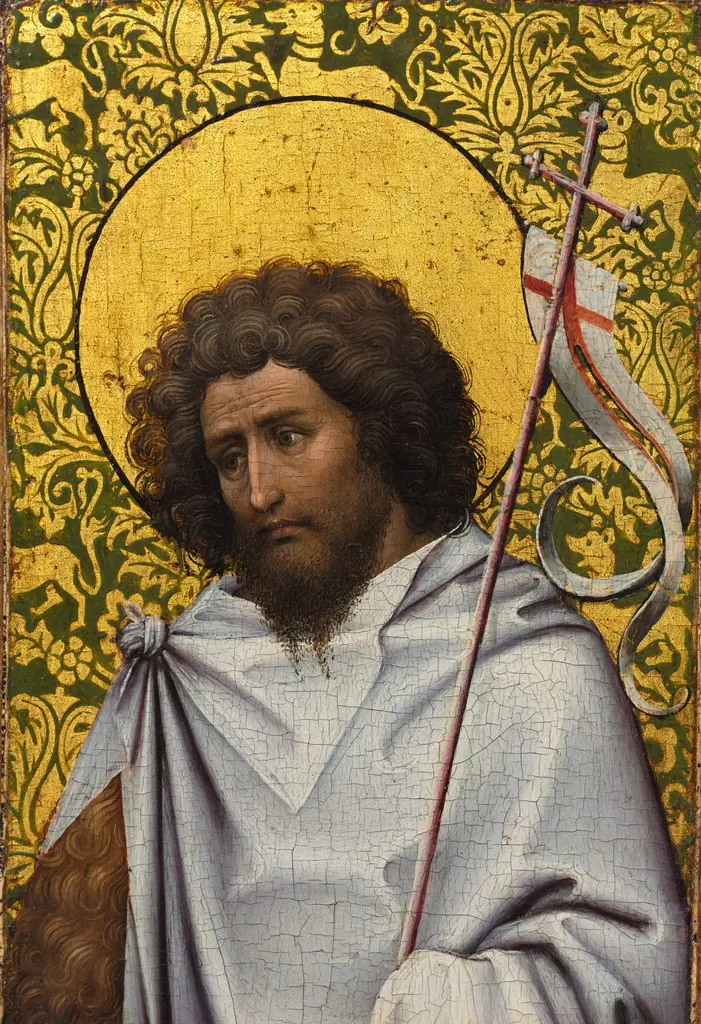
This painting depicts a close-up of John the Baptist, shown in a white robe holding a tall wooden cross. The image is a fragment, having been cut down to exclude the saint's lower body.
Subject & Meaning
John the Baptist is represented wearing a hair shirt under his robe, signifying penitence. A flag with a red cross, symbolizing resurrection, is also present. The contrast between the saint's simple attire and the luxurious gold-patterned silk background is notable.
Technique & Style
The artist, Robert Campin, was a pioneer in the use of oil-based colors, achieving brilliant hues. The painting's attention to detail and realistic observation are characteristic of Campin's work, which was influenced by manuscript illumination.
History & Provenance
The painting was likely the right wing of a triptych, with the central image possibly depicting the Virgin and Child. It was cut down along the lower edge at some point. Campin settled in Tournai around 1405-6 and acquired citizenship in 1410, suggesting he was born elsewhere.

Artist & collection
Artist
Robert Campin (Valenciennes (France) c. 1375 - Tournai (Belgium) 26 April 1444) now usually identified with the Master of Flémalle (earlier the Master of the Merode Triptych, before the discovery of three other similar…

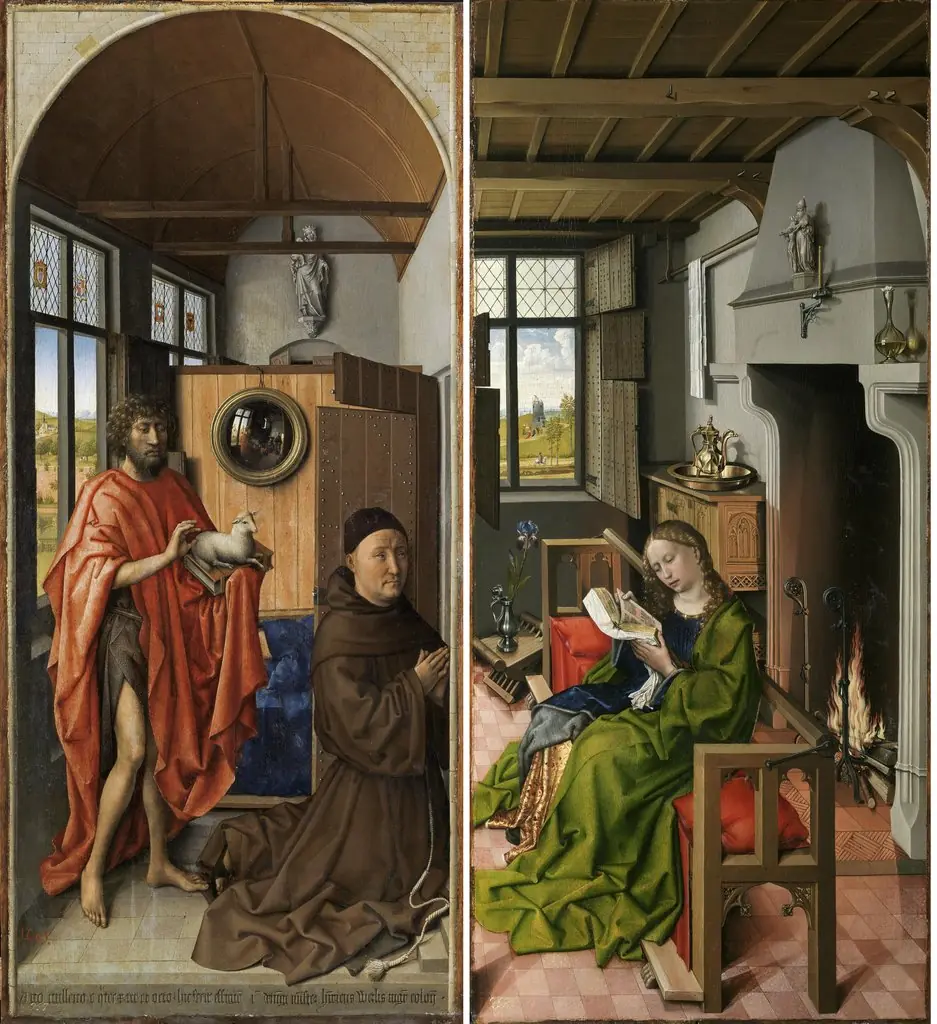
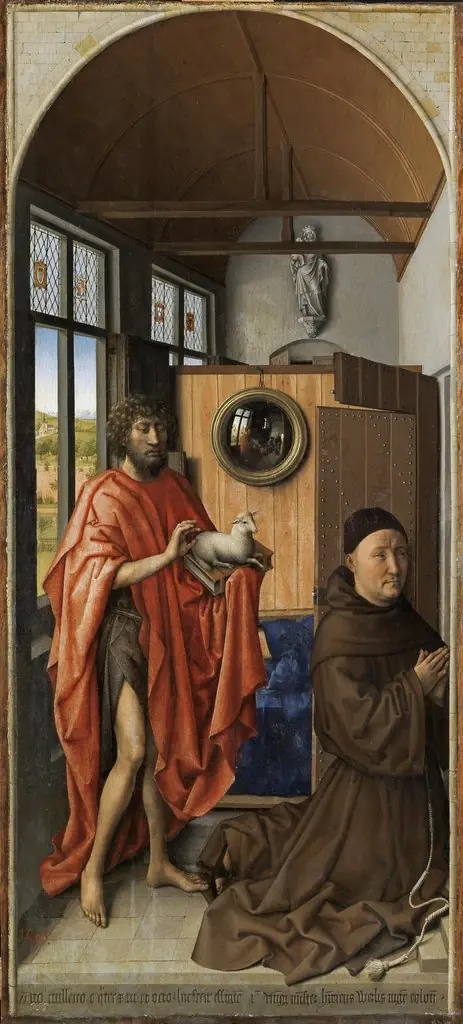
 John the Baptist
 St. Paul
 A Saint (Mark?) Reading
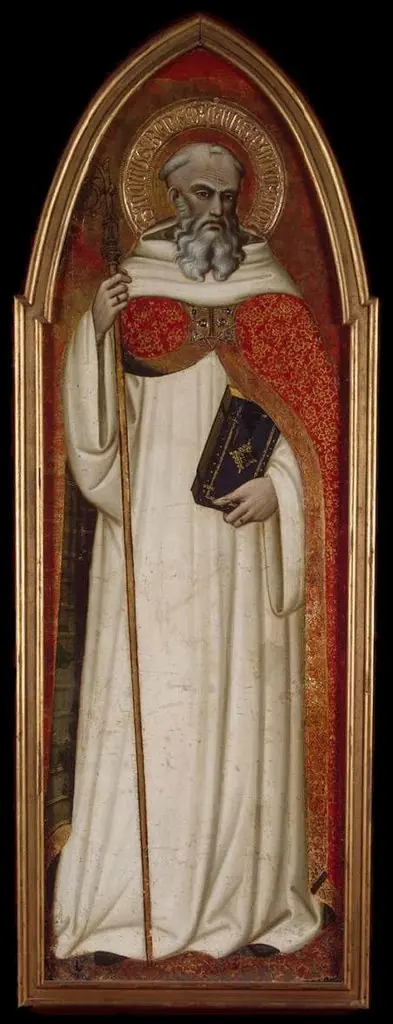 St Benedict (wing of a polyptych)
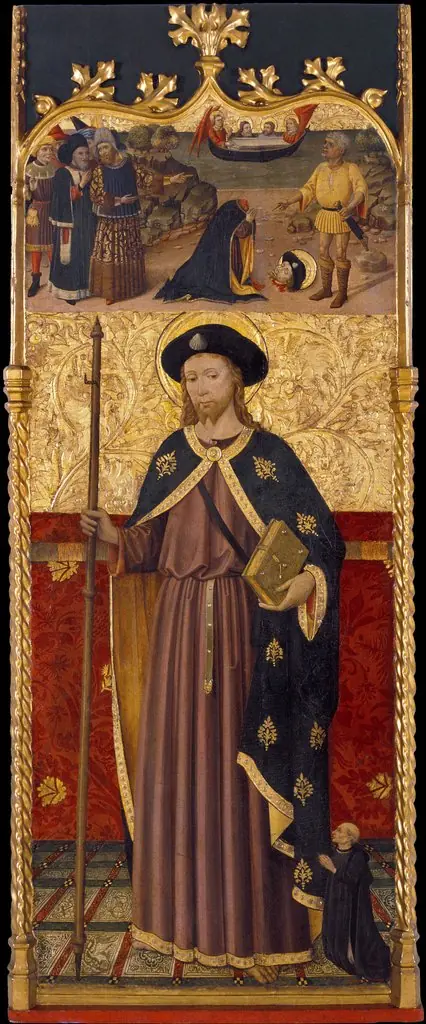 Saint James with a Donor, Decapitation of Saint James
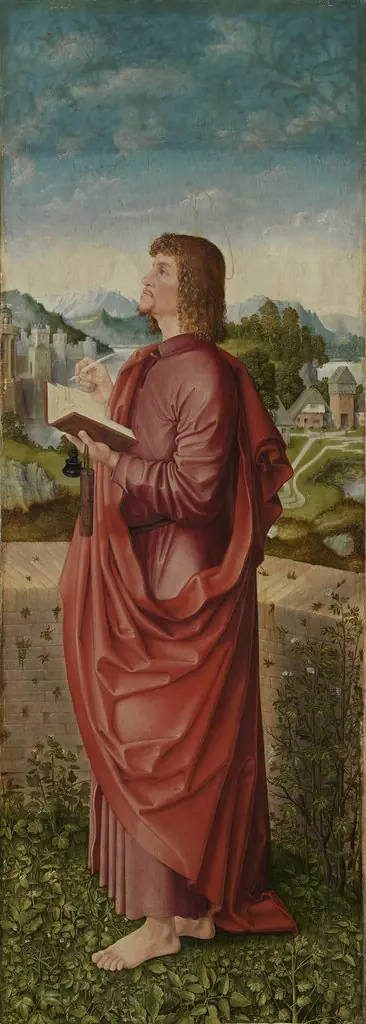 Universitätsaltar: Hl. Johannes Ev. Rückseite: Hl. Margaretha
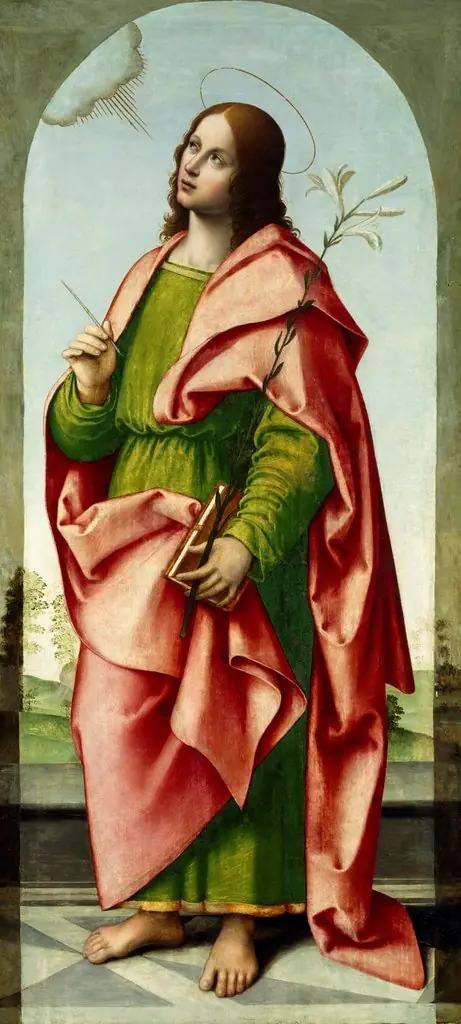 Saint John the Evangelist
 São Luís, Rei de França
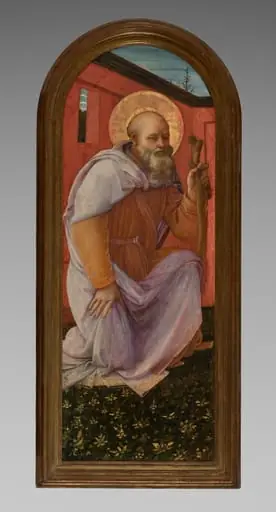 Panel from a Triptych: St. Anthony Abbot
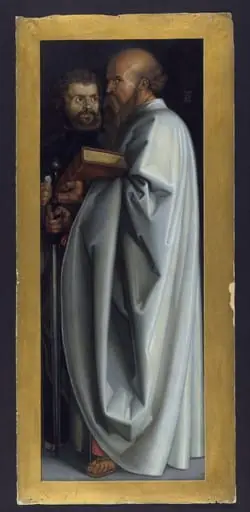 St Mark and St Paul
- Saint John the Baptist in a Landscape