Artwork
Miss Juliana Willoughby
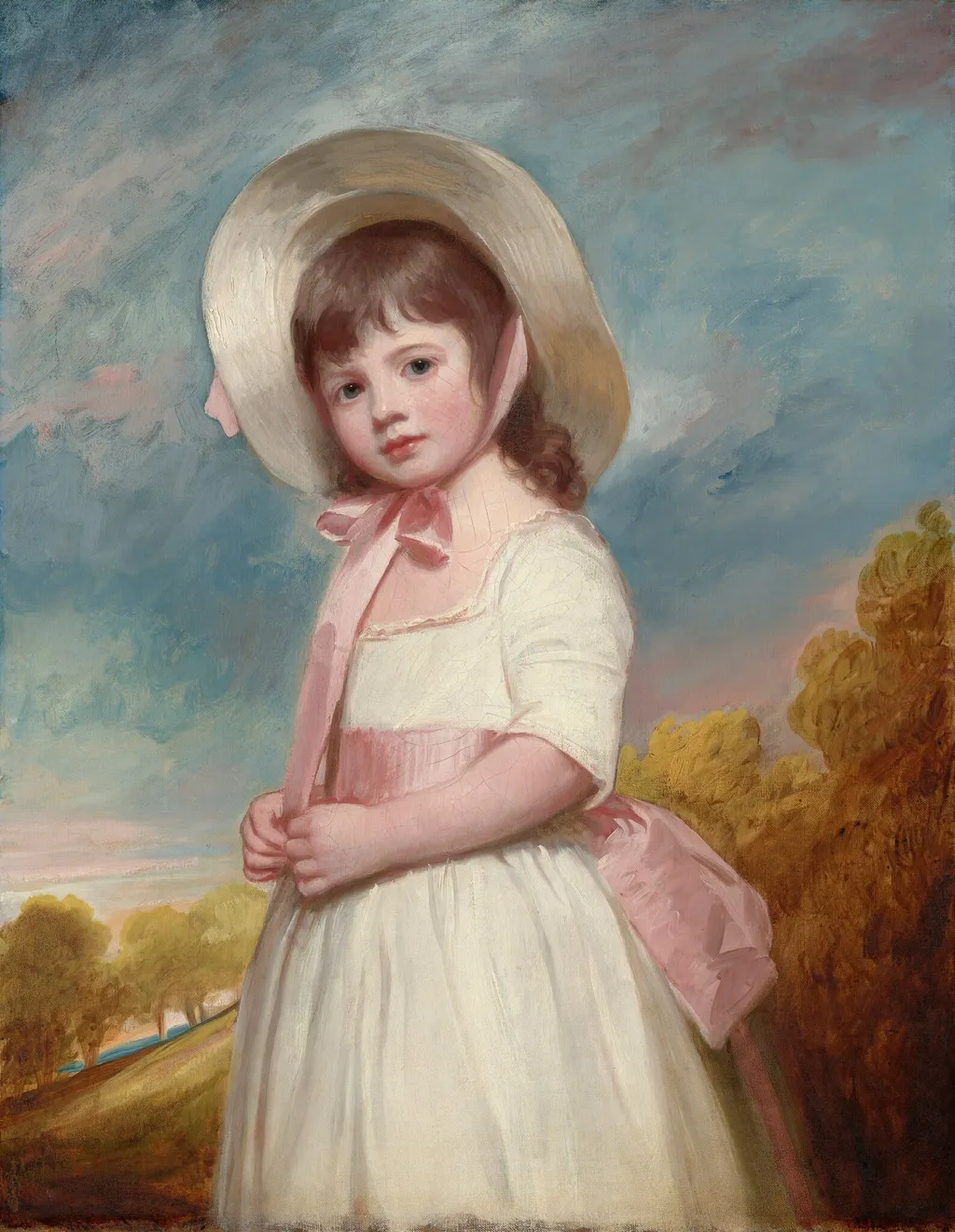
Miss Juliana Willoughby is an oil painting by the Rococo painting artist George Romney. It dates from 1782 and is held in the collection of the National Gallery of Art.
About this work
Technique & Style
George Romney executed Miss Juliana Willoughby in 1782 using oil paint on a canvas support. The work measures 92.1 centimetres in height and 71.5 centimetres in width. As a portrait, the painting adheres to the formal conventions of late 18th-century British portraiture, capturing the sitter with the handling characteristic of Romney's style during this period.
History & Provenance
Miss Juliana Willoughby, painted in 1782 by George Romney, was commissioned by Sir Christopher Willoughby for his daughter.
Miss Juliana Willoughby, painted in 1782 by George Romney, was commissioned by Sir Christopher Willoughby for his daughter. The portrait passed by descent to Sir John Willoughby, 5th Baronet, was sold in 1906 to the London and New York dealer M. Knoedler & Co., purchased by Andrew W. Mellon in February 1907, deeded to the A.W. Mellon Educational and Charitable Trust in 1934, and gifted to the National Gallery of Art in 1937.
The work, measuring 92.1 cm by 71.5 cm, is executed in oil on canvas and is held in the collection of the National Gallery of Art, Washington, D.C., as part of the Andrew W. Mellon collection.
Overview
George Romney's 1782 oil on canvas, Miss Juliana Willoughby, presents a full-length portrait of a young girl. The subject is depicted standing within a natural setting, her gaze directed outward. This work exemplifies the artist's approach to capturing individual likeness while integrating elements of a serene, idealized landscape. The painting is a notable example of British portraiture from the late 18th century.
Subject & Meaning
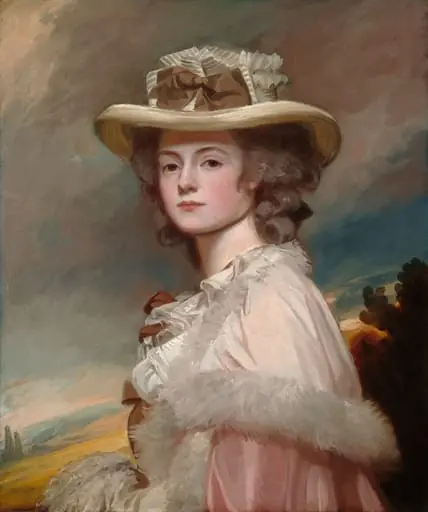
The painting features a young girl, Miss Juliana Willoughby, dressed in a white gown and a broad-brimmed hat, positioned against a backdrop of trees and a blue, cloudy sky. Her dark, curled hair is adorned with a pink ribbon at her neck. She looks directly at the viewer, conveying a sense of calm and youthful innocence. The natural setting contributes to an overall impression of quiet beauty and tranquility.
Context
Miss Juliana Willoughby is situated within the broader context of the Romanticism movement, which emphasized emotion, individualism, and the glorification of nature. George Romney, a prominent British portraitist of his era, shared stylistic commonalities with contemporaries like Thomas Gainsborough. Both artists contributed significantly to the development of a distinct British school of portraiture that often blended formal likeness with evocative natural settings.
Own this work as a print
Artist & collection
Artist
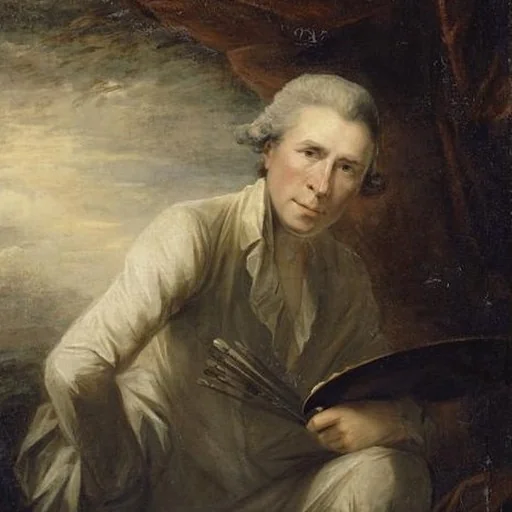
George Romney (26 December 1734 – 15 November 1802) was an English painter. He was the most fashionable artist of his day, painting many leading society figures – including his artistic muse, Emma Hamilton, mistress of Lord Nelson.

 Master John Heathcote
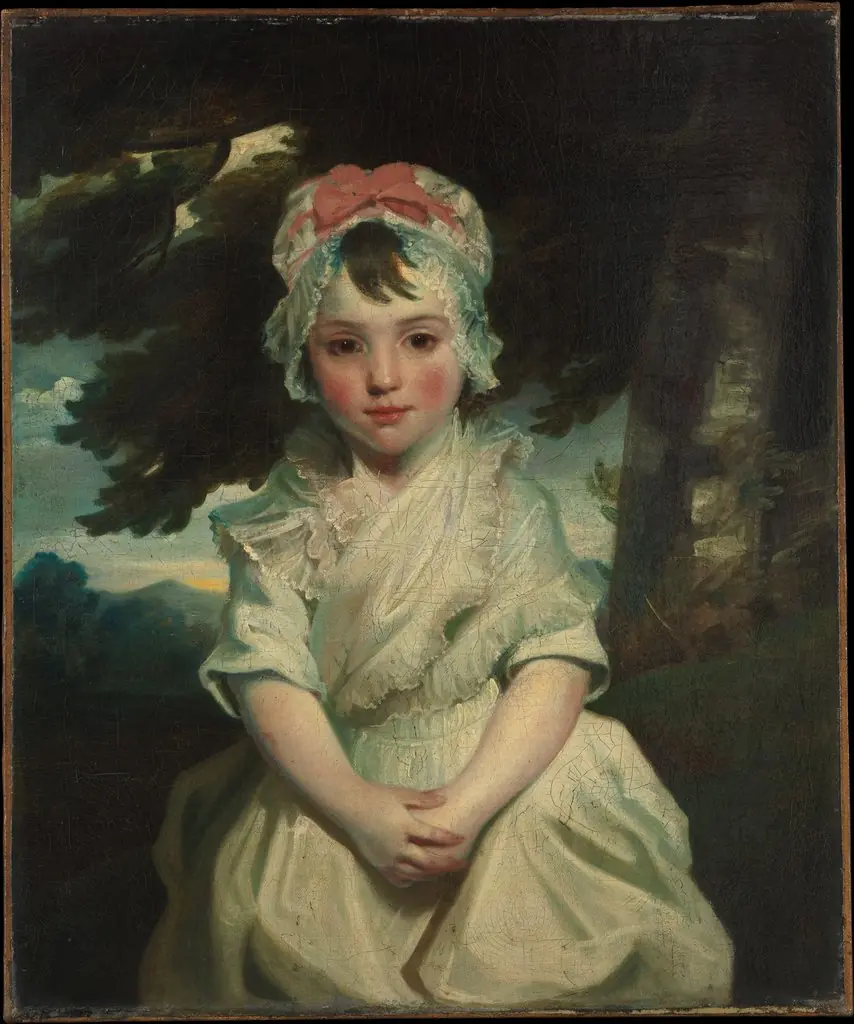 Georgiana Augusta Frederica Elliott (1782–1813), Later Lady Charles Bentinck
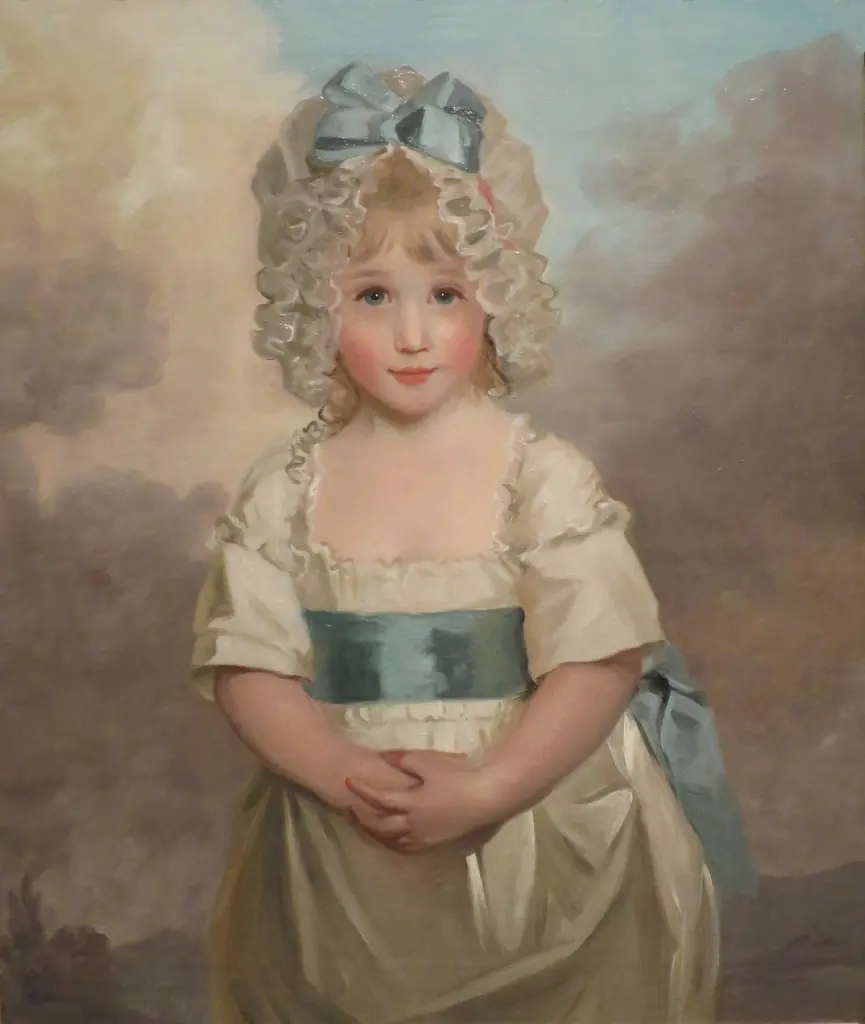 Miss Charlotte Papendick as a Child
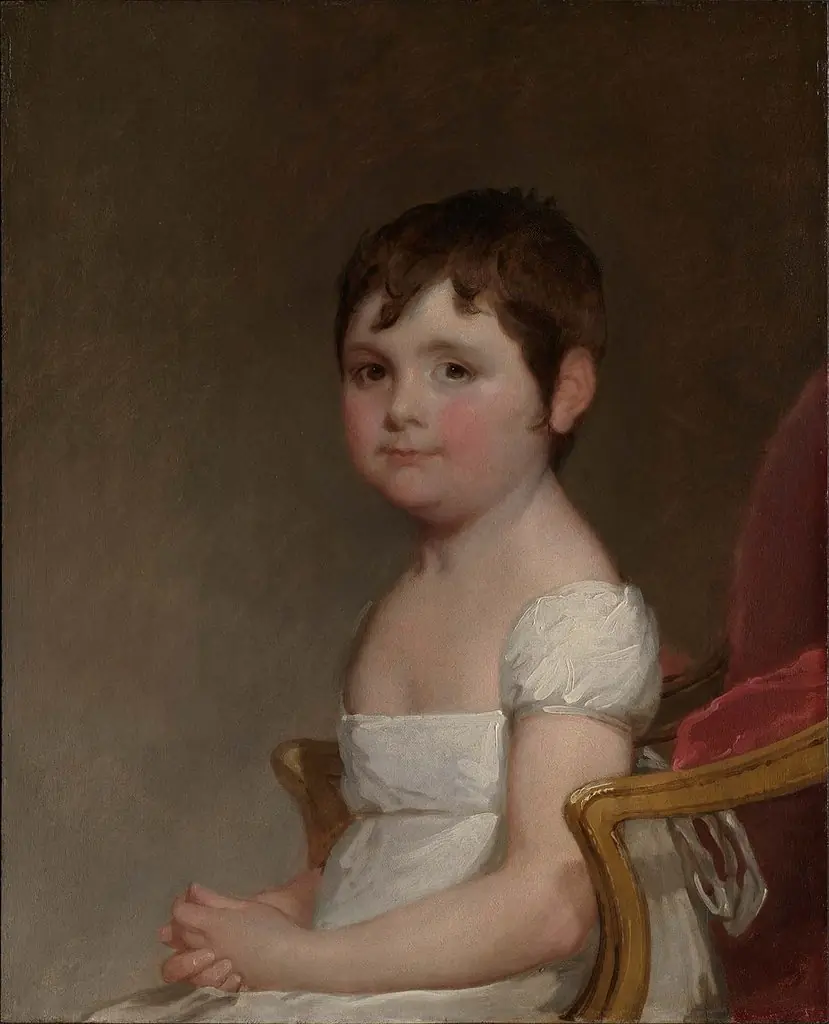 Sally Patten
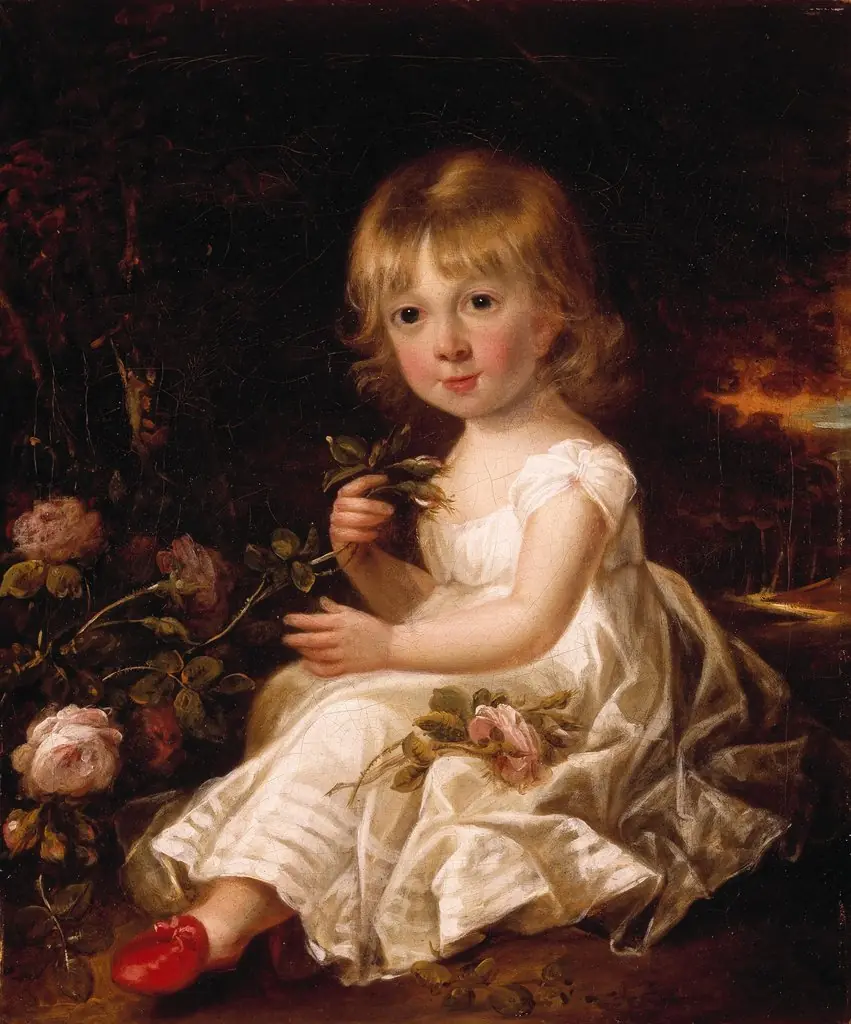 Portrait of a Young Girl
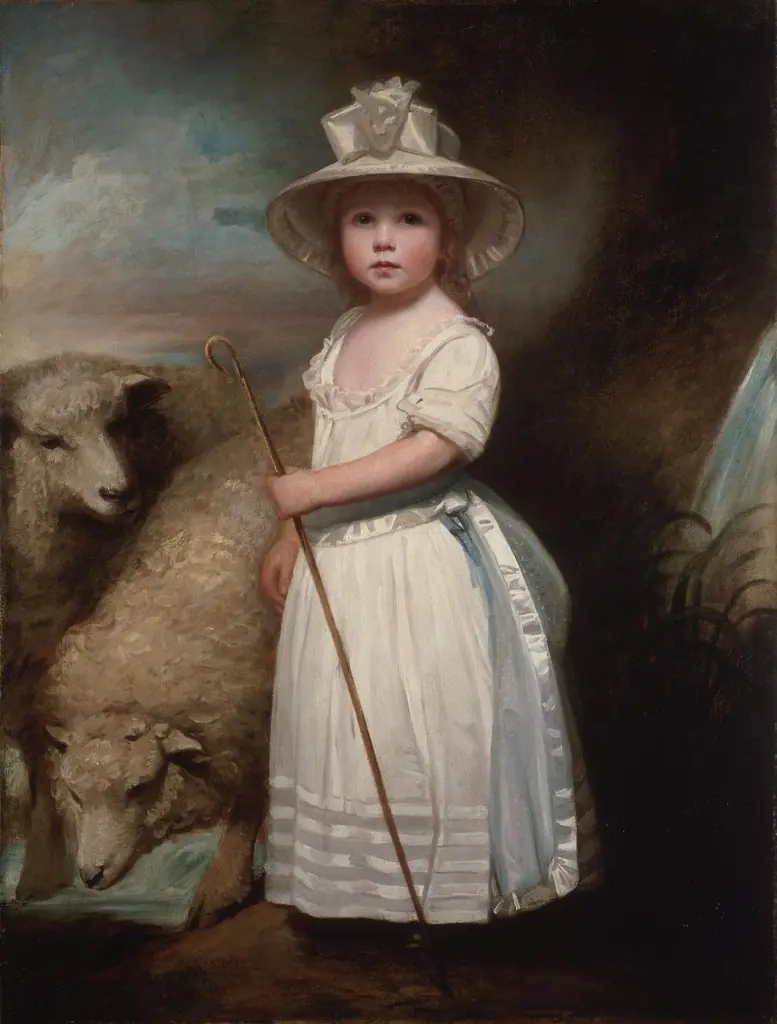 Shepherd Girl (Little Bo-Peep)
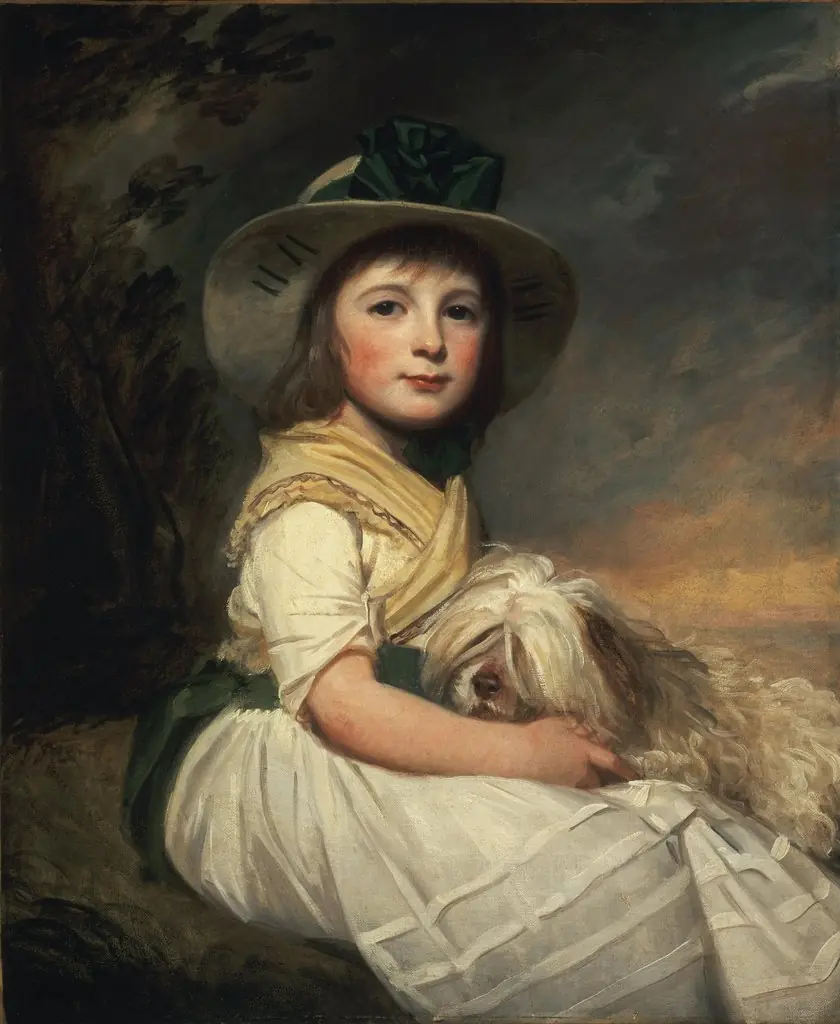 Portrait of Marianne Holbech
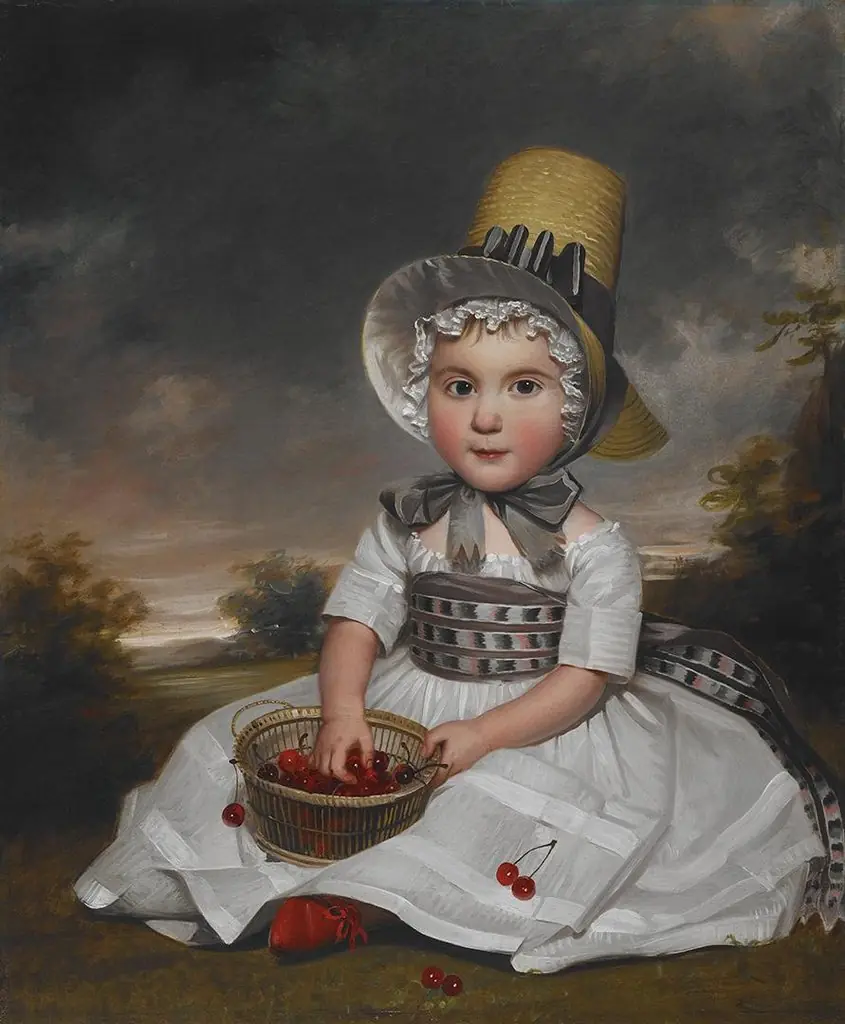 Lady Mary Beauclerk, Daughter of Lord Aubrey and Lady Jane Beauclerk
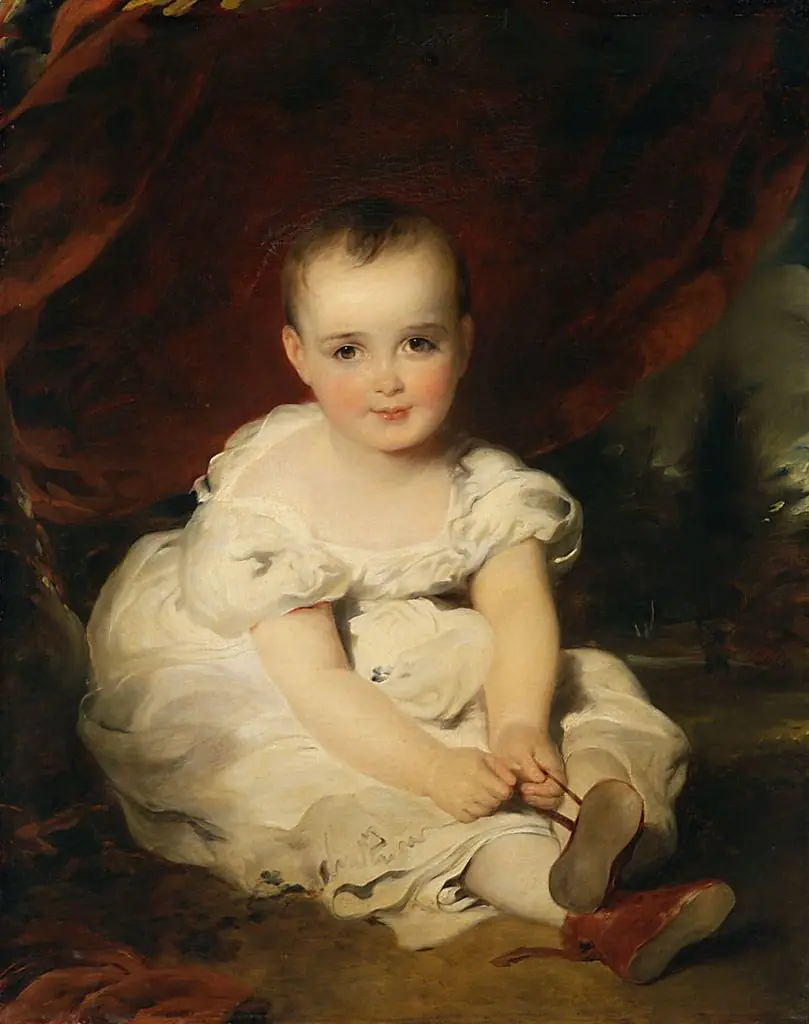 Maria Theresia (1816-1867), daughter of Karl of Nassau-Weilburg
 The Strawberry Girl