Artwork
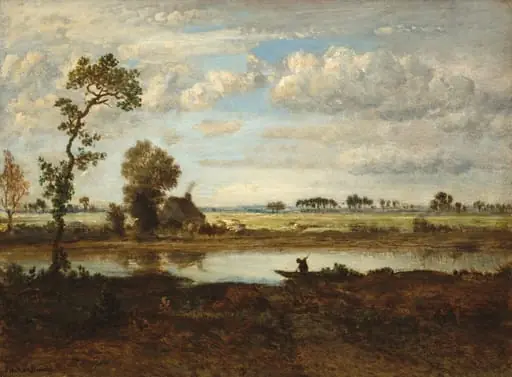
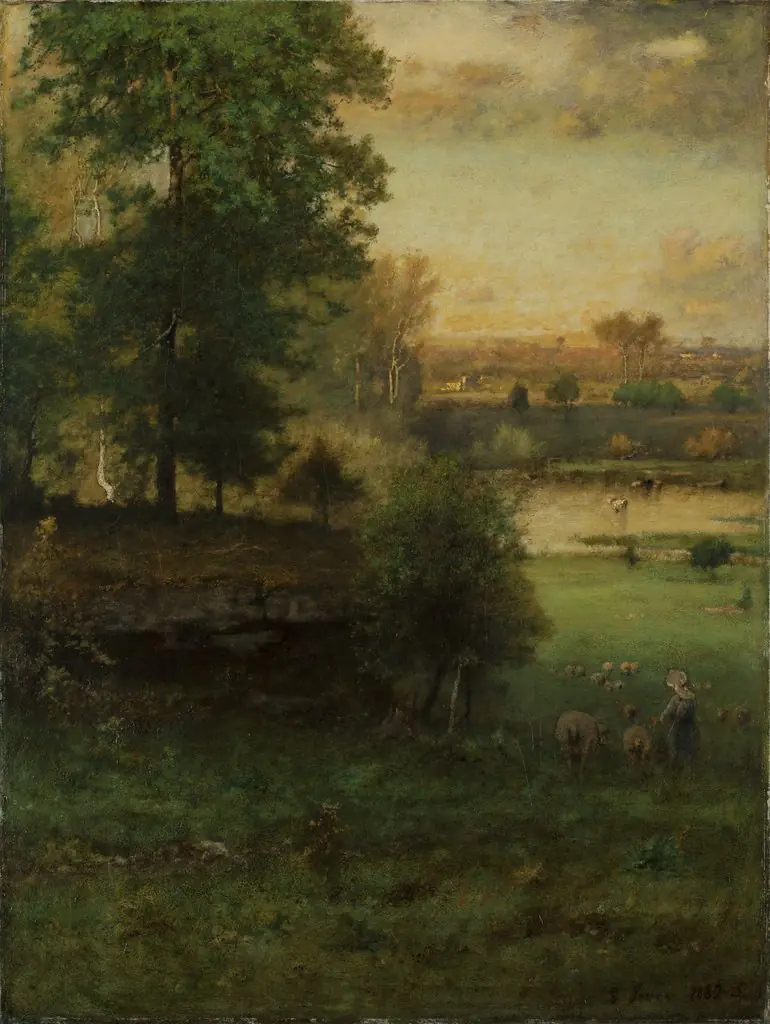
Countryside in Picardy
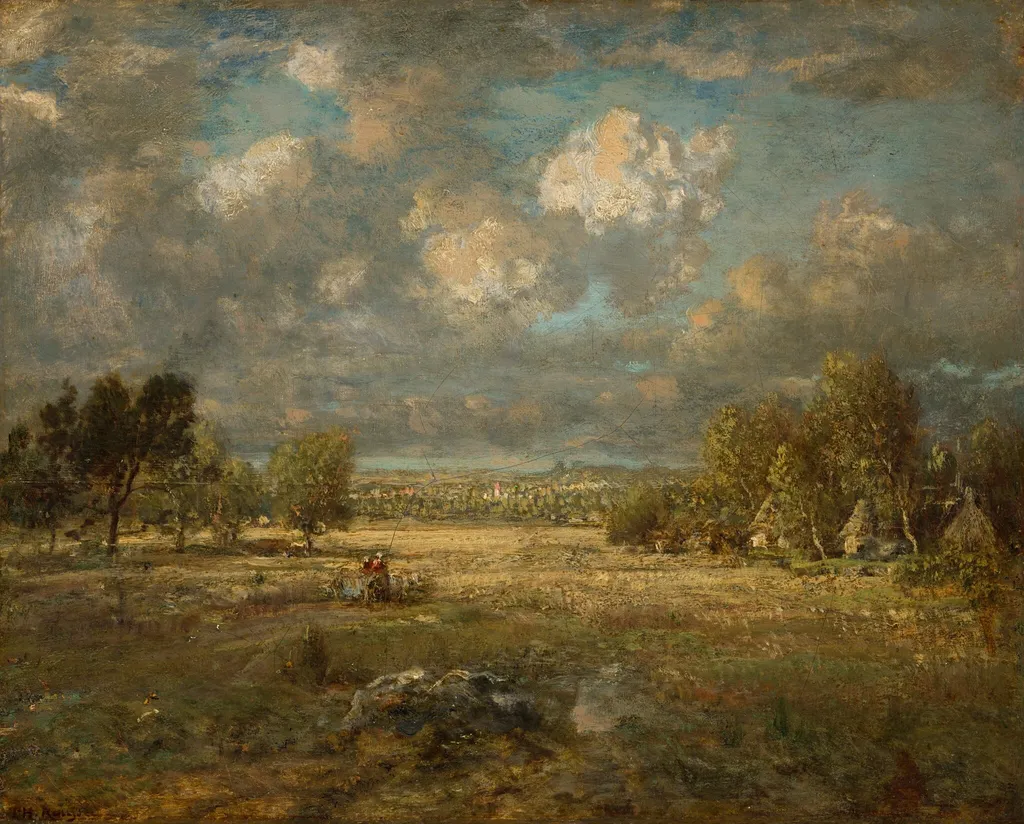
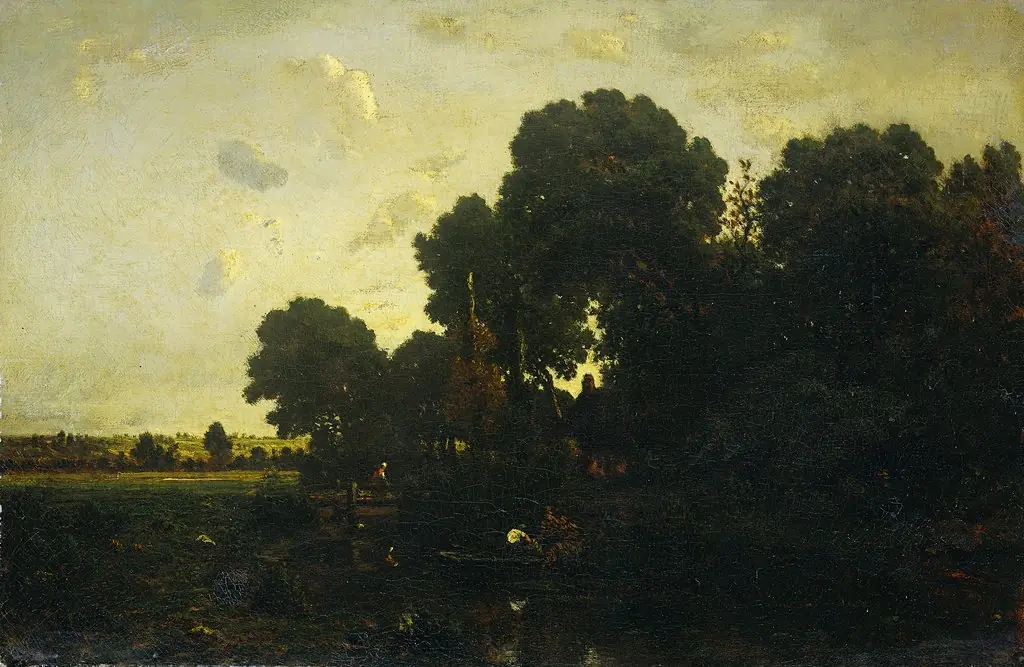
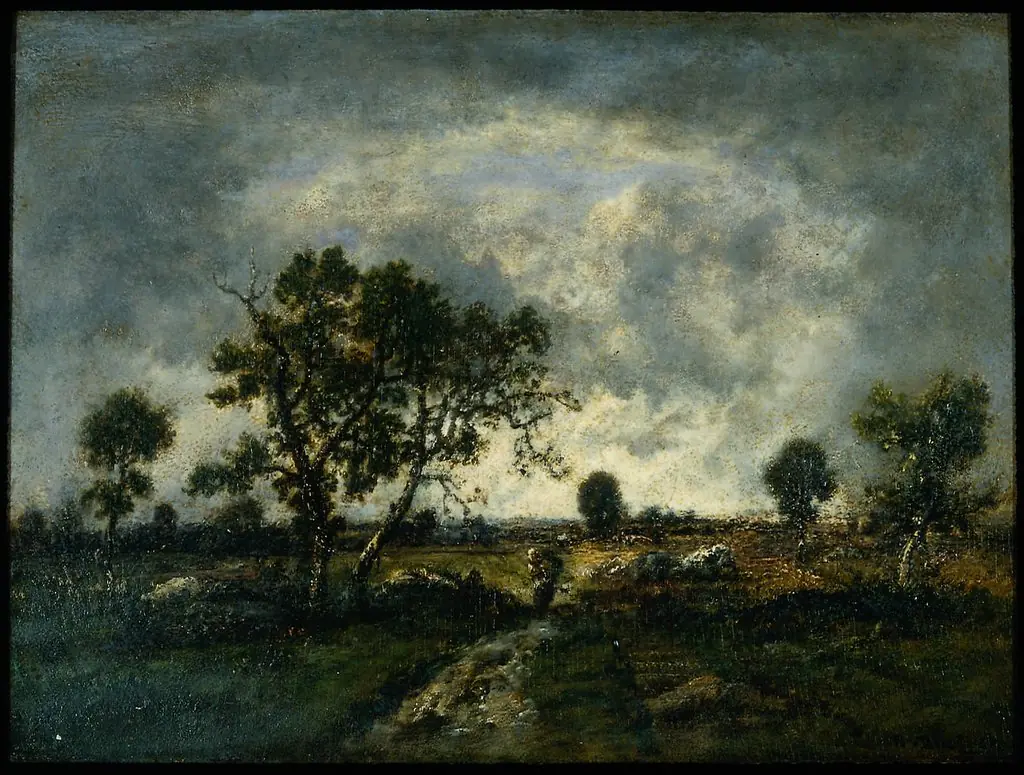
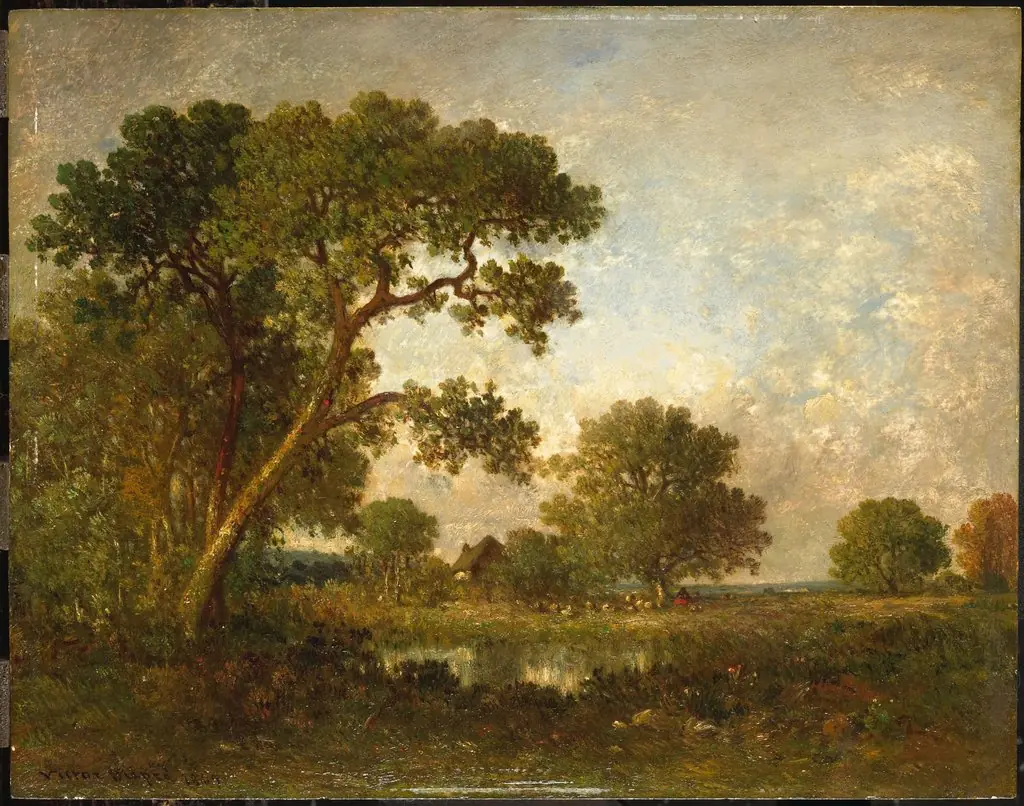
Countryside in Picardy is an oil painting by the Barbizon school artist Théodore Rousseau. It dates from 1860 and is held in the collection of the National Gallery of Art.
- Inscription
- Inscribed:lower left: Th. Rousseau
About this work
Subject & Meaning
The landscape portrays the rolling fields of northern France, emphasizing the ordinary rural terrain rather than idealized pastoral scenes.
The landscape portrays the rolling fields of northern France, emphasizing the ordinary rural terrain rather than idealized pastoral scenes. Rousseau’s focus on natural light and atmospheric detail reflects the realist interest in documenting contemporary countryside conditions, a subject he explored throughout his career to convey the quiet dignity of agricultural life.
The work’s composition, with a modest farmhouse set amid cultivated land, underscores themes of human settlement within the natural environment, suggesting a harmonious relationship between people and the land. This representation aligns with 19th‑century French realist ideals that valued honest depiction of everyday rural scenes.
Rousseau painted the piece in 1860 using oil on canvas, measuring 22.23 cm in height and 27.31 cm in width. It entered the collection of the National Gallery of Art in Washington, D.C., following a bequest from William A. Clark in 1926.
History & Provenance
Countryside in Picardy was painted by Théodore Rousseau in 1860. It first entered a recorded ownership with M. Lefebvre of Roubaix, whose estate sale at Galerie Georges Petit in Paris on 4 May 1896 included the work as lot 43. Shortly afterward, M. Knoedler and Co. of New York acquired it and sold it on 12 May 1896 to the American collector William A. Clark.
After Clark’s death, the painting was bequeathed in April 1926 to the Corcoran Gallery of Art in Washington, D.C. Following the Corcoran’s dissolution, it was transferred in 2015 to the National Gallery of Art, where it remains.
The painting is held by the National Gallery of Art, Washington, D.C., accessioned as 2015.19.1 following its transfer from the Corcoran Gallery of Art in 2015.
It has appeared in one documented exhibition: the 1896 estate sale of M. Lefebvre at the Galerie Georges Petit in Paris, where it was lot 43.
Legacy
The work Countryside in Picardy has been cited as an early influence on the development of plein air painting in the United States, particularly through the collecting practices of William A. Clark, whose bequest helped shape early American museum holdings. Its inclusion in the Corcoran Gallery of Art collection contributed to the institutional recognition of Rousseau’s naturalistic landscapes, a legacy that persisted after the work’s 2015 transfer to the National Gallery of Art, where it remains part of the permanent collection.
The painting’s provenance through M. Lefebvre, Galerie Georges Petit, and subsequent sale to Clark has been documented in auction records, underscoring its early 20th-century visibility in the art market. Its material characteristics, including dimensions of 22.23 cm by 27.31 cm, align with Rousseau’s known working scale during this period.
Overview
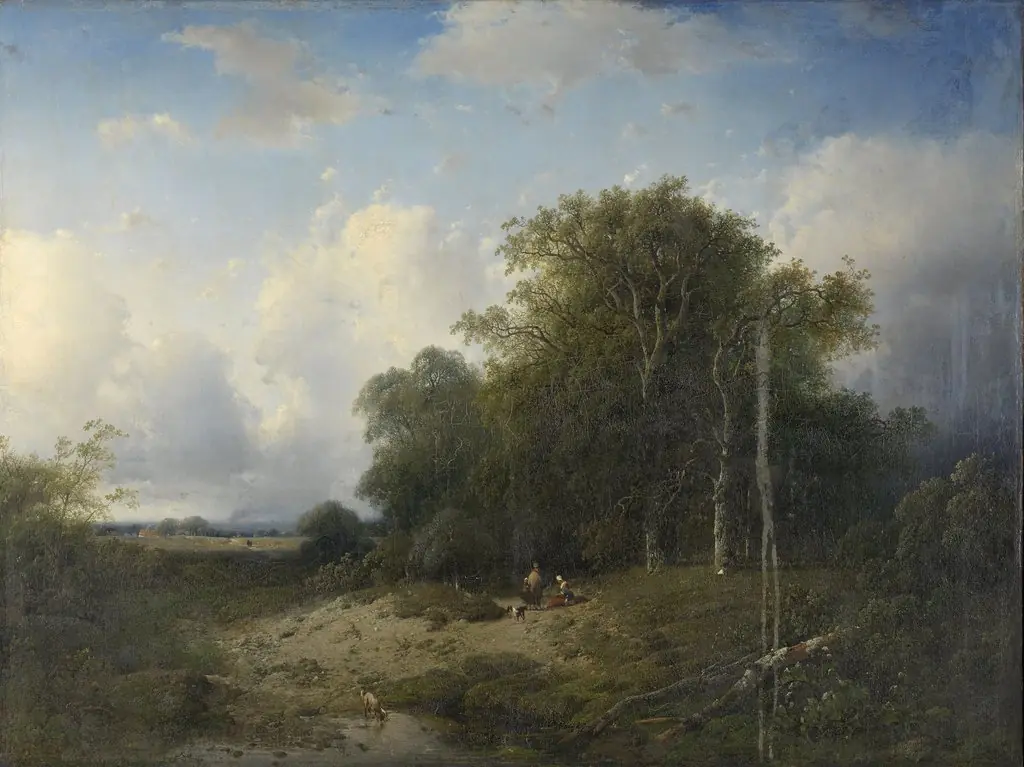
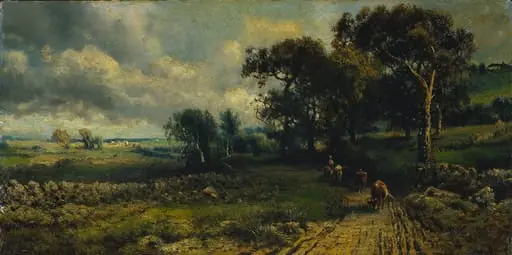
Théodore Rousseau’s oil on canvas titled Countryside in Picardy was completed in 1860. The work presents a broad view of a rural landscape under a cloud‑filled sky, with a cultivated field occupying the foreground and a modest carriage drawn by a horse moving in the distance.
Technique & Style
Rousseau employs a palette that balances muted earth tones with subtle variations of light, creating a sense of atmospheric depth. The handling of brushwork conveys the texture of clouds and foliage without excessive detail, positioning the painting at the intersection of Realist fidelity to subject matter and the emerging interest in light that would later characterize Impressionism.
Context
Created during the mid‑nineteenth century, the painting reflects the broader Realist movement’s focus on depicting contemporary life and the French countryside. Rousseau’s attention to natural light and color also anticipates the concerns of the Impressionist artists who would soon explore similar visual effects in their own work.
Own this work as a print
Artist & collection
Artist
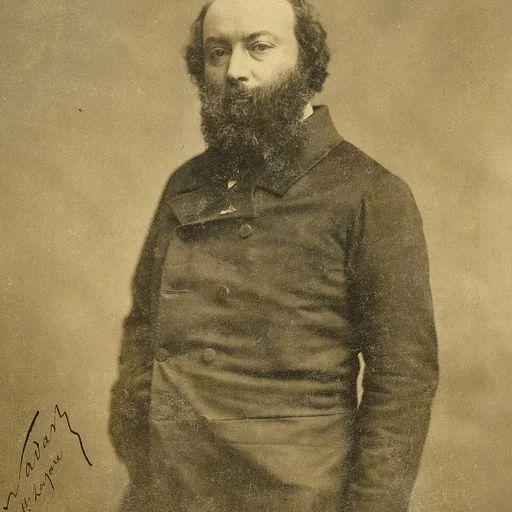
Étienne Pierre Théodore Rousseau (French pronunciation:; 15 April 1812 – 22 December 1867) was a French painter of the Barbizon school.