Artwork
Reminiscences of Qinhuai River
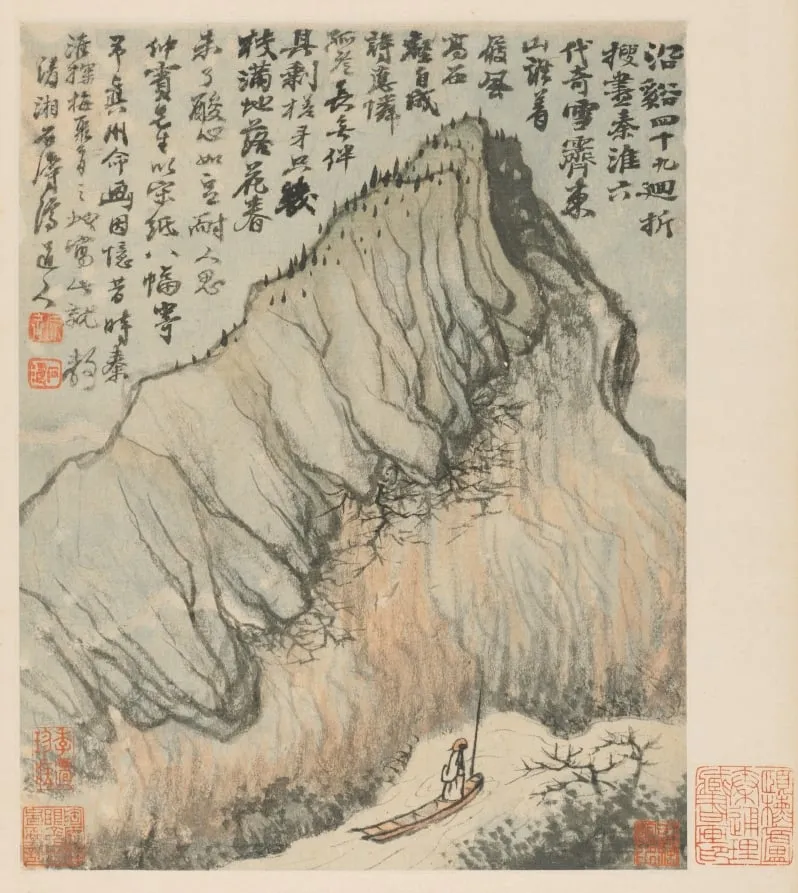
Reminiscences of Qinhuai River is an unspecified painting by the Baroque artist Shitao. It dates from 1674 and is held in the collection of the Cleveland Museum of Art.
- Accession no.
- 1966.31.8
- Credit line
- John L. Severance Fund
About this work
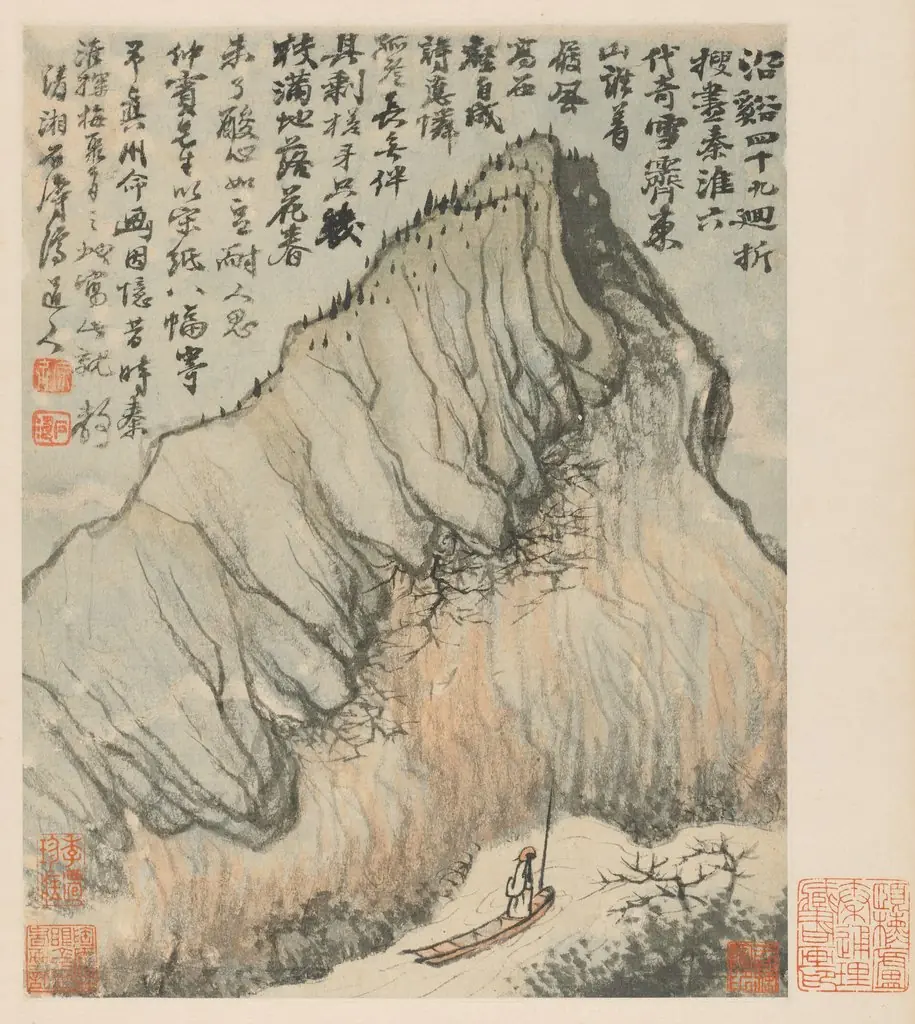
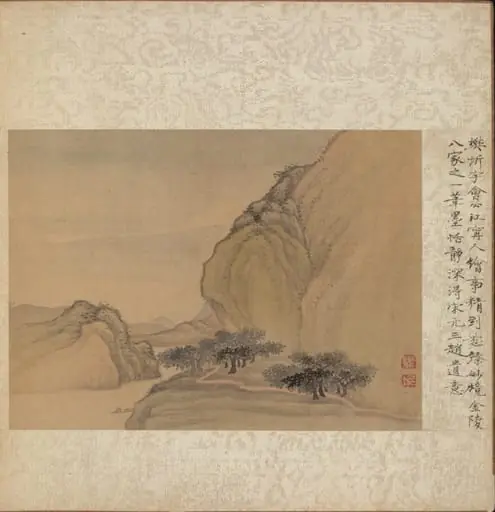
You see a tiny boat on a river, with one person looking up at towering cliffs that seem to lean over the water.
You see a tiny boat on a river, with one person looking up at towering cliffs that seem to lean over the water.
Shitao painted this in 1695 for a friend he traveled with. The cliffs might stand for Nanjing’s long history, overwhelming, like the weight of the past. He lived through the fall of the Ming dynasty, and this scene feels like a quiet moment of reflection.
To see more of this kind of work, look up artist: Shitao (Chinese, 1642–1707).
Overview
The work is a small album leaf painted in 1695, depicting a solitary figure in a boat on the Qinhuai River gazing up at massive, overhanging cliffs. The composition captures a moment of quiet contemplation amid a dramatic landscape, rendered on a compact format typical of Chinese album paintings.
Subject & Meaning
The lone traveler’s upward glance toward the towering rock formations suggests an encounter with the weight of history, evoking the ancient heritage of Nanjing, a city whose past stretches back to the Six Dynasties. The scene invites reflection on the enduring presence of the past within the natural world.
Technique & Style
Executed in the brushwork associated with Shitao, the painting combines delicate ink washes with bold, expressive strokes that outline the cliffs and the boat. The contrast between the fine lines of the figure and the sweeping, almost abstract rendering of the rock masses illustrates the artist’s interest in conveying atmosphere over precise detail.
History & Provenance
Created for a companion who accompanied the artist on a tour of historic sites along the Qinhuai River, the leaf was likely a personal memento. Shitao, born in 1642, produced the piece during his later years while residing in the Jiangsu region, and it later entered collections that document his late Qing period output.
Context
Shitao lived through the collapse of the Ming dynasty and maintained ties to the former imperial lineage, yet he also engaged with the Qing court, meeting Emperor Kangxi twice. This dual affiliation informs the painting’s subtle tension between reverence for a bygone era and the acceptance of a new political reality.
Artist & collection


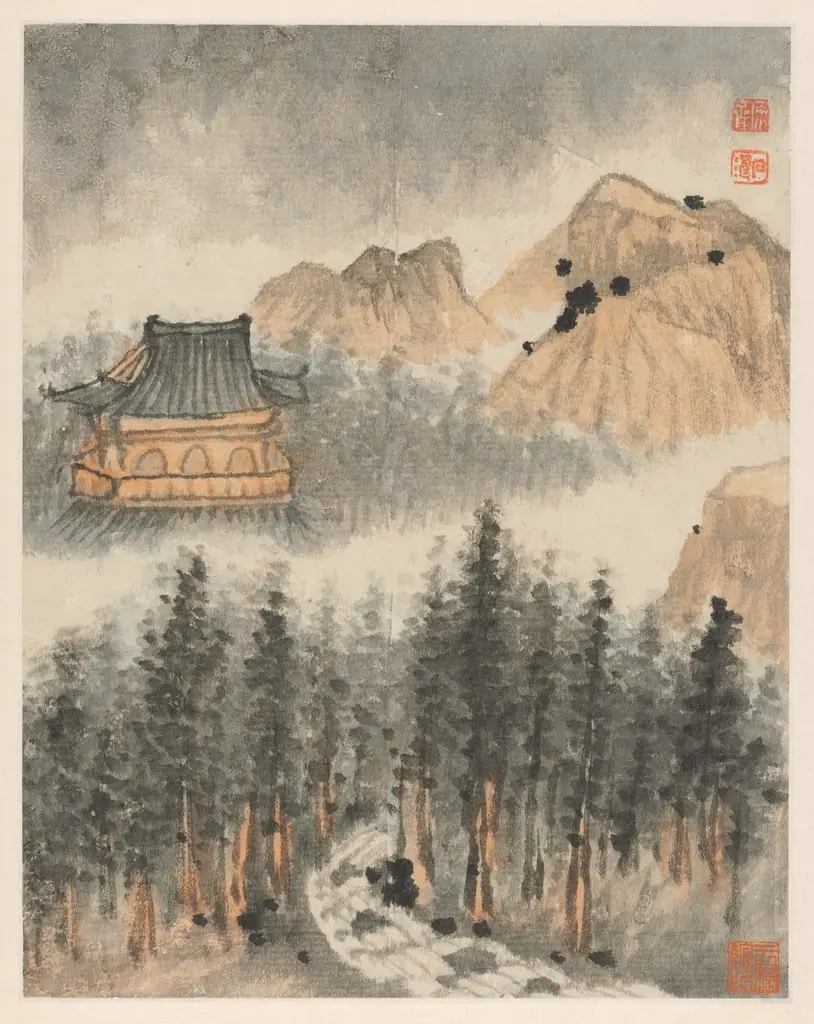
 Album of Miscellaneous Subjects, Leaf 1
 清 吳歷 倣王蒙溪山行旅圖 軸|Travelers among Streams and Mountains
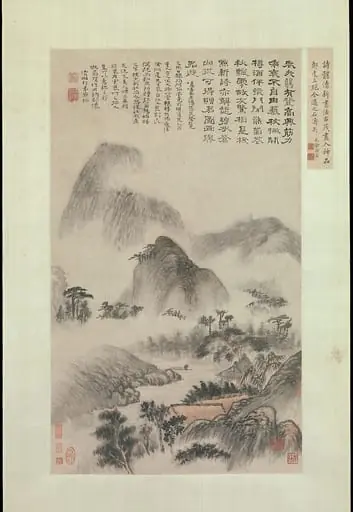 清 石濤(朱若極) 重陽山水圖 軸|Landscape Painted on the Double Ninth Festival
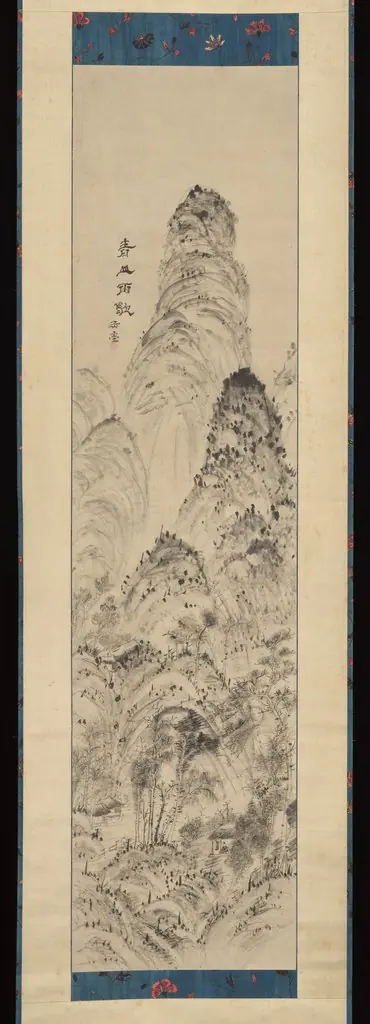 Green Mountains as the Rain Ceases
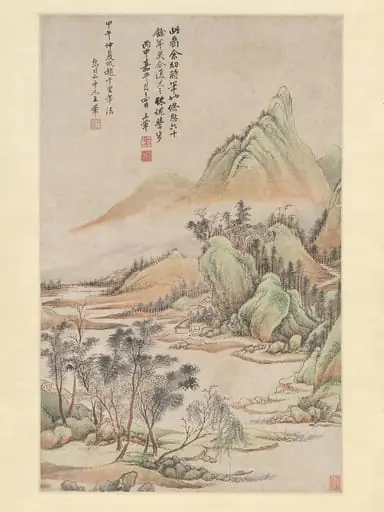 倣趙伯駒山水圖 軸|Landscape in the Style of Zhao Boju (Fang Zhao Boju shanshui)
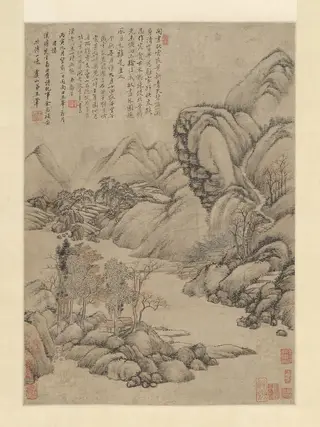 清 王翬 玉峰看月圖 軸|Landscape: Eve of Mid-autumn
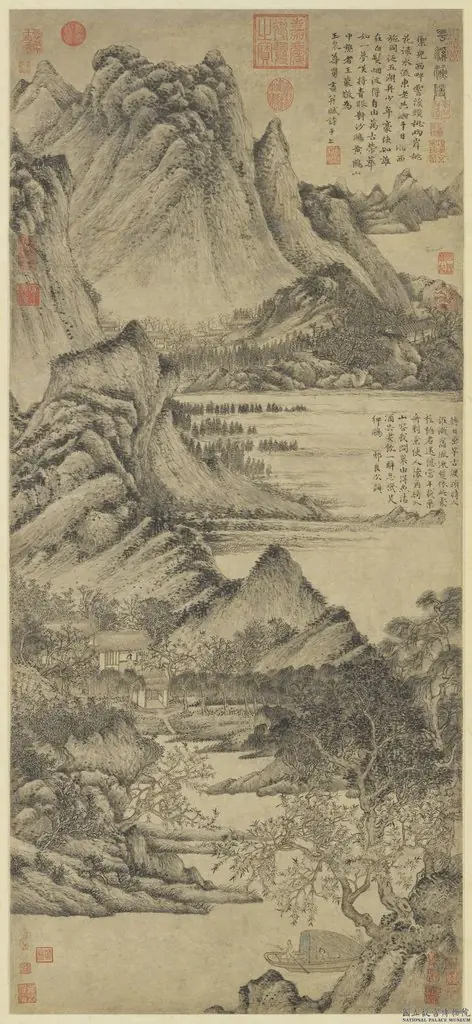 Recluse on a Flowering Stream