Artwork
Susanna
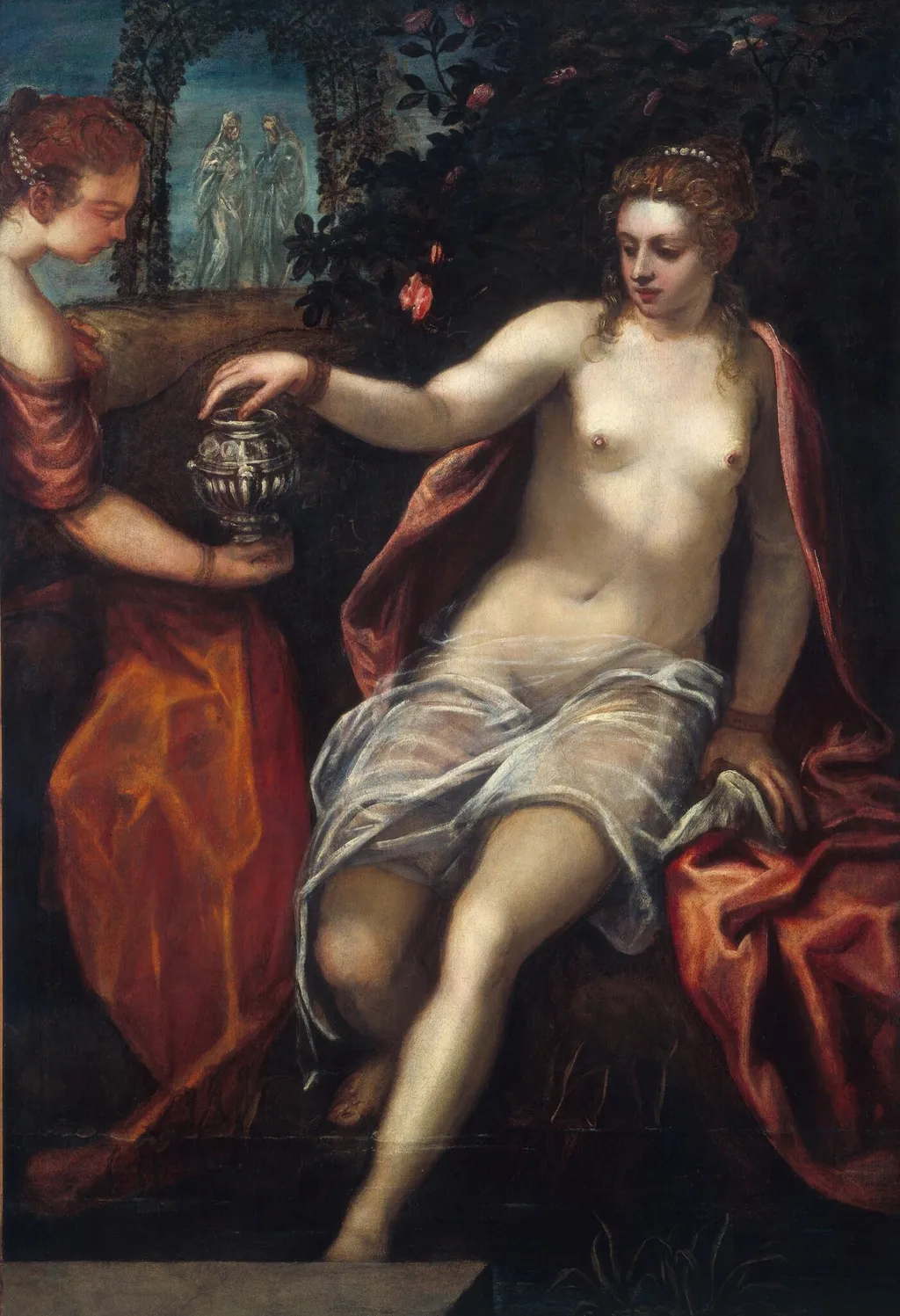
Susanna is an oil painting by the Mannerist artist Domenico Tintoretto. It dates from 1584 and is held in the collection of the National Gallery of Art.
About this work
Subject & Meaning
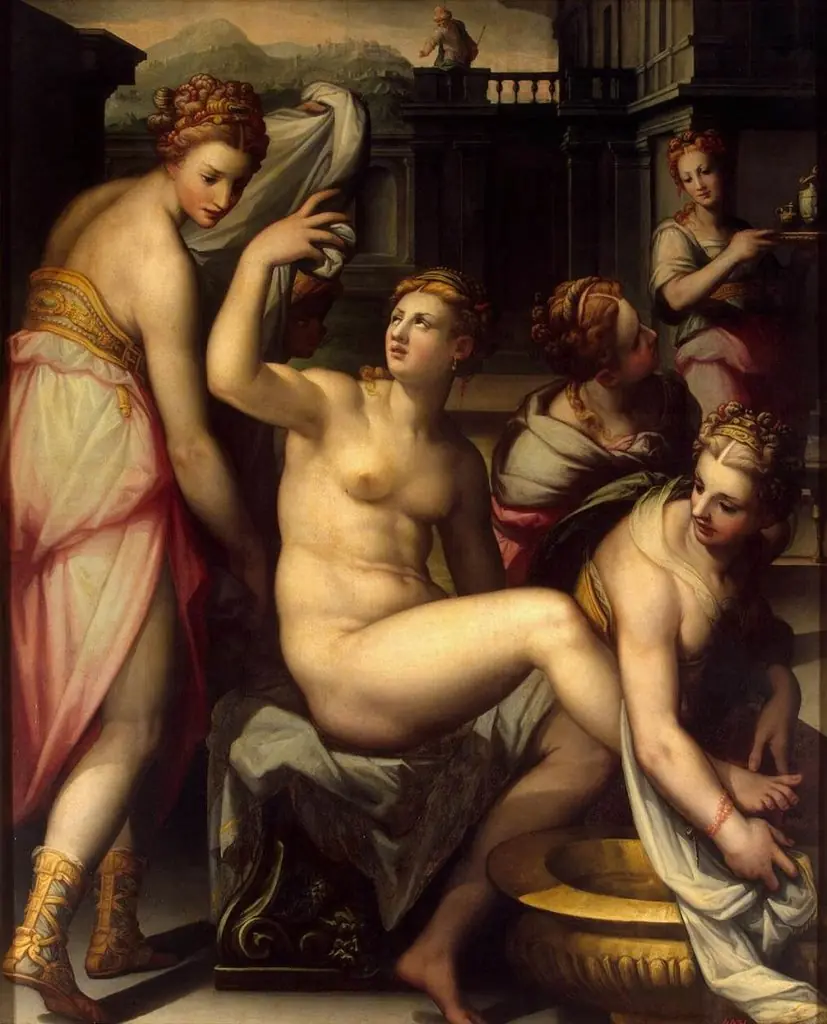
The painting depicts the biblical episode of Susanna and the Elders, showing Susanna in a garden with two elderly men appearing from a pergola.
The painting depicts the biblical episode of Susanna and the Elders, showing Susanna in a garden with two elderly men appearing from a pergola. It was part of a decorative program of Old Testament scenes for Senator Lorenzo Delfino.
As a religious work, it uses the story to comment on virtue and the scrutiny of women, a common moralizing theme in 16th‑century Venetian art. The composition emphasizes the tension between innocence and accusation, reinforcing the moral lesson of the narrative.
History & Provenance
Attributed to Domenico Tintoretto, the painting is dated to 1575. Its earliest documented ownership traces to Senator Lorenzo Dolfin (or Delfino) of Venice, who possessed the work by 1642. This association is supported by a passage in Carlo Ridolfi's 1642 biography of Jacopo Tintoretto, which lists a "Susanna in the garden" among six Old Testament scenes commissioned for Dolfin's residence.
Following the Dolfin collection, the work entered the holdings of George Oakley Fisher at Egremont House in Sudbury, England, by the early 20th century. It subsequently passed through the David M. Koetser Gallery in London and was acquired by Count Alessandro Contini Bonacossi in Florence. The painting was sold to the Samuel H. Kress Foundation in New York in June 1936 and officially entered the National Gallery of Art in Washington, D.C., as a gift from the foundation in 1939.
The painting Susanna is held by the National Gallery of Art in Washington, D.C., where it forms part of the Samuel H. Kress Collection. According to its provenance, the work was sold in June 1936 to the Samuel H. Kress Foundation and entered the NGA as a gift in 1939. The work is accessioned as part of the Kress Collection, although the specific accession number is not provided in the sources. No exhibition history for the work is recorded in the supplied sources.
Context
Attributed to Jacopo Tintoretto and dated to 1575, this painting depicts the biblical narrative of Susanna and the Elders. The work's historical significance is anchored in its identification with a lost ensemble of six Old Testament scenes recorded by Carlo Ridolfi in 1642 as belonging to Senator Lorenzo Dolfin in Venice. Although the other five panels from this specific commission are now lost, this canvas survives as a key example of Tintoretto's religious genre painting from the mid-16th century.
Its provenance traces a path from 17th-century Venetian nobility through major European collectors before entering the collection of the National Gallery of Art in Washington, D.C., in 1939 as a gift from the Samuel H. Kress Foundation.
Legacy
The 1575 canvas by Tintoretto, originally documented in the collection of Senator Lorenzo Delfino and later owned by Alessandro Contini Bonacossi before entering the Kress Foundation, has become a key reference point for studies of Susanna in Renaissance art. Its rare combination of narrative clarity and compositional daring influenced subsequent depictions of the story, shaping scholarly interpretations of how biblical women were visualized in the 16th century. Documentation in the National Gallery of Art’s files, cited by Ridolfi, highlights its early provenance and the artist’s intent to integrate Susanna within a broader Old Testament cycle, a program later emulated by painters seeking to expand biblical storytelling on canvas.
Overview
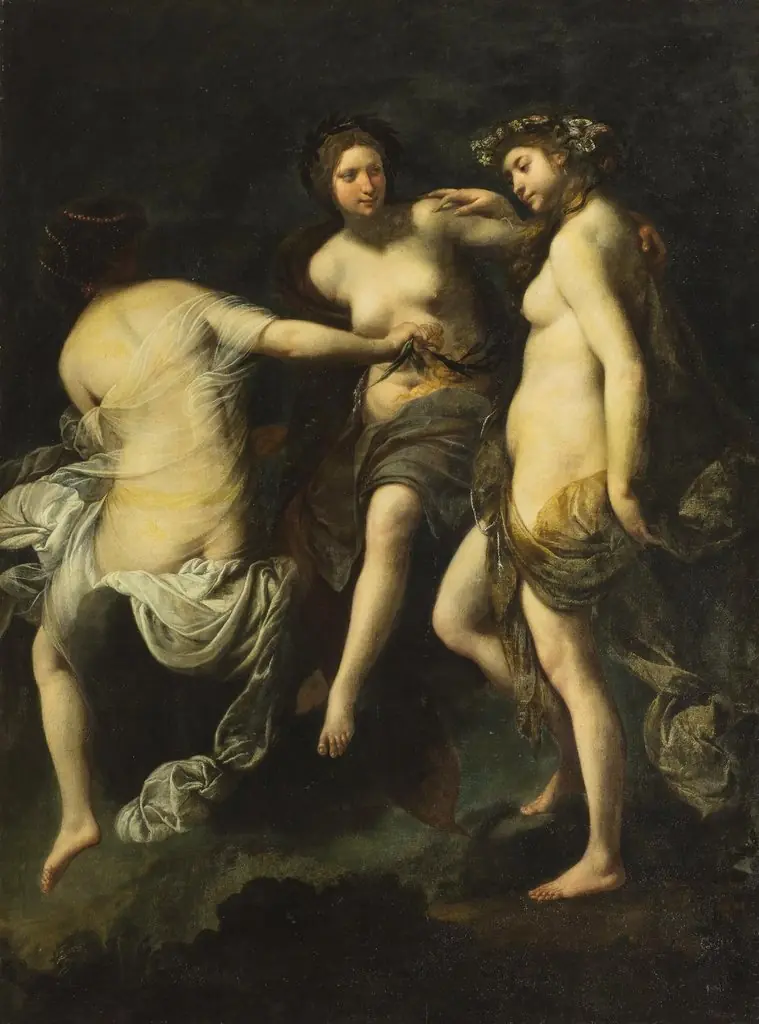
Domenico Tintoretto's painting, Susanna, created around 1584, is an oil on canvas work. It exemplifies the Mannerist style prevalent during the late Renaissance. The composition depicts a quiet, contemplative religious scene, focusing on two female figures.
The artist, son of the renowned Jacopo Tintoretto, employed dramatic lighting and subtle gestures to convey the narrative and emotional depth of the subject matter.
Technique & Style
Executed in the Mannerist tradition, Susanna showcases Domenico Tintoretto's skilled use of chiaroscuro. The strong contrasts between light and shadow define the figures' forms and create a profound sense of three-dimensionality, drawing the viewer's attention to the central interaction. This dramatic lighting also contributes significantly to the painting's quiet and introspective atmosphere, enhancing the emotional resonance of the scene through visual depth and volume.
Own this work as a print
Artist & collection

Artist
Domenico Robusti, also known as Domenico Tintoretto, was an Italian painter from Venice. He grew up under the tutelage of his father, the renowned painter Jacopo Tintoretto.