Artwork
Ceres and Two Nymphs
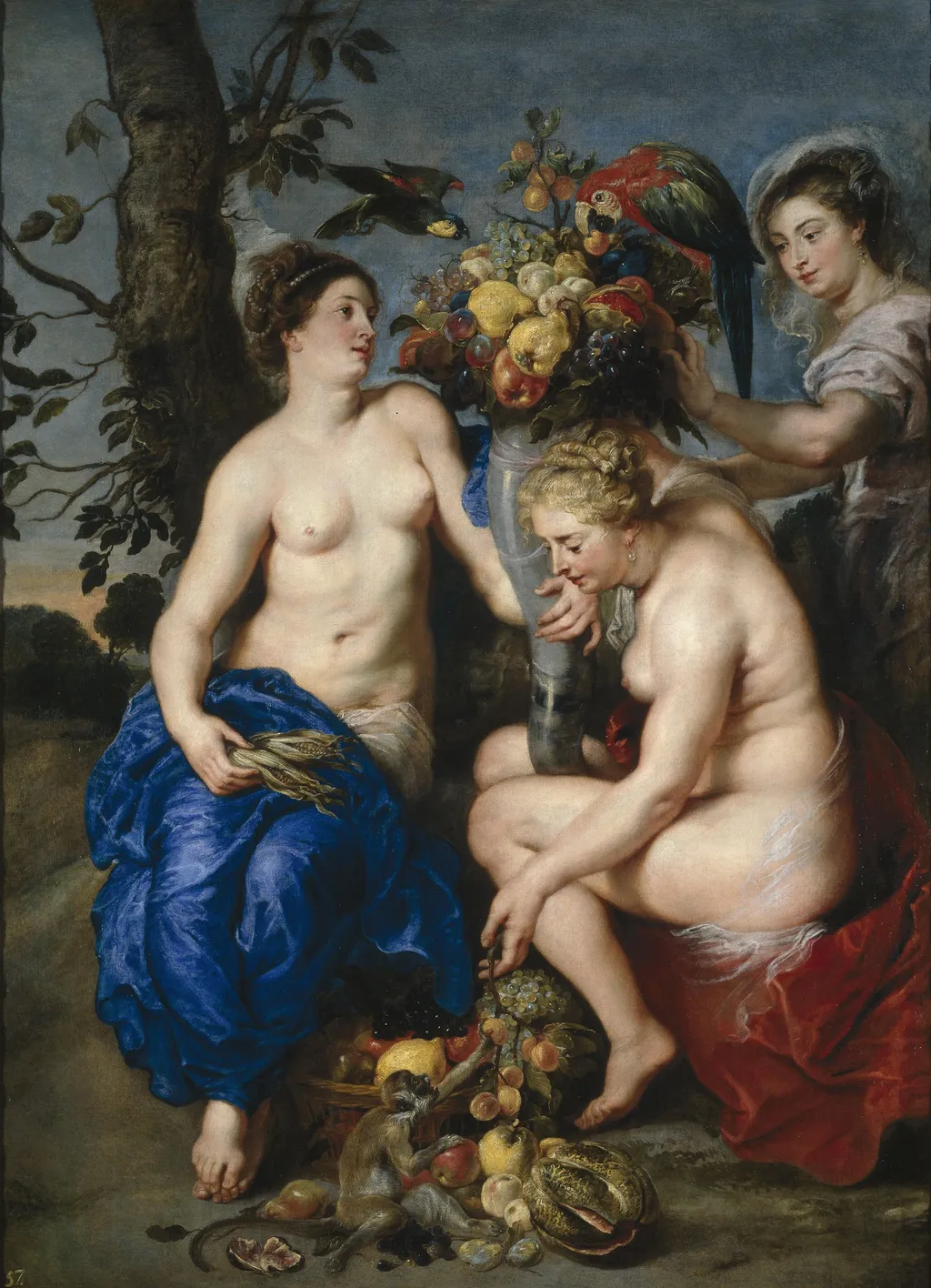
Ceres and Two Nymphs is an oil painting by the Flemish Baroque painting artist Peter Paul Rubens. It dates from 1615 and is held in the collection of the Museo del Prado.
About this work
Subject & Meaning
The painting depicts the Roman goddess Ceres flanked by two nymphs, emphasizing themes of abundance and fertility associated with the harvest.
The painting depicts the Roman goddess Ceres flanked by two nymphs, emphasizing themes of abundance and fertility associated with the harvest. Ceres holds a cornucopia, a traditional attribute symbolizing nourishment and prosperity, while one nymph carries a parrot, a bird linked in European art to exotic bounty. The iconography aligns with classical myths in which Ceres, goddess of agriculture, embodies the earth's generative powers, while the nymphs function as attendants who amplify the scene's pastoral and life-sustaining qualities.
Technique & Style
Ceres and Two Nymphs is executed in oil paint on canvas, a standard medium for Peter Paul Rubens's large-scale mythological works. The painting measures 224.5 cm in height and 166 cm in width. Stylistically, the work depicts the goddess Ceres accompanied by nymphs, featuring symbolic elements such as a cornucopia and a parrot within the composition.
The handling of the medium reflects the Baroque approach to mythological narrative, with Frans Snyders credited as a co-creator alongside Rubens.
History & Provenance
Painted circa 1615, Rubens's Ceres and Two Nymphs depicts the goddess flanked by two nymphs with a cornucopia and parrot, evoking abundance and nature's cycle.
By the early eighteenth century the work had entered the Spanish royal collection, where it was inventoried in 1746 at the Palacio Real de La Granja de San Ildefonso. It remained in Spanish royal holdings until 1821, when it was transferred to the Museo del Prado, Madrid, where it has been exhibited since. The provided sources do not record a specific inventory number or exhibition history for the painting.
Context
The mythological scene depicting the Roman goddess of agriculture alongside attendant figures reflects Baroque explorations of classical abundance and divine plenty. Scholarship emphasizes its synthesis of Rubens's figural mastery with Snyders's animal and plant specialization, creating a richly detailed allegory of terrestrial prosperity. The work's presence at the Museo del Prado underscores its enduring cultural significance, while its technical mastery of oil on canvas exemplifies seventeenth-century innovations in compositional dynamism and textural realism.
Legacy
The mythological composition has been cited as an influential example of Baroque treatments of allegory and the sensual interaction between figures and nature. Its dynamic arrangement of nude and semi-nude forms is characteristic of seventeenth-century Flemish painting, particularly in its tactile rendering of drapery and foliage. The painting's presence in the Museo del Prado collection has allowed sustained scholarly attention, contributing to its reputation as a key example of Rubens's synthesis of mythological narrative with naturalistic detail.
Overview
Painted in 1615 by the Flemish artist Peter Paul Rubens, this oil work belongs to the Baroque period of the Low Countries. It presents a verdant woodland setting populated by three female figures, one of whom carries a wheat sheaf, while a parrot perches nearby. The composition is held by the Museo del Prado, where it forms part of the museum’s Baroque collection.
Own this work as a print
Artist & collection
Artist
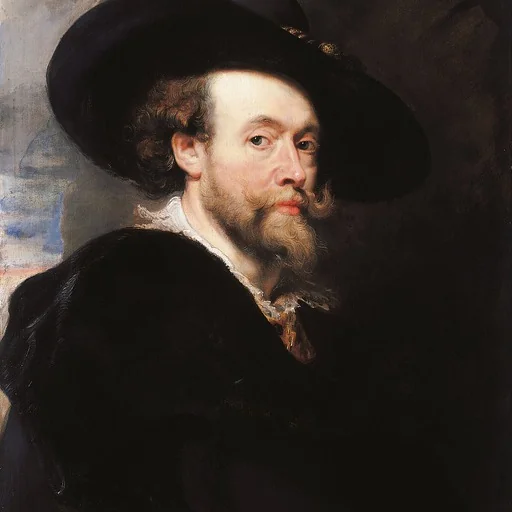
Sir Peter Paul Rubens ( ROO-bənz; Dutch:; 28 June 1577 – 30 May 1640) was a Flemish artist and diplomat.

 Allegory of Fertility
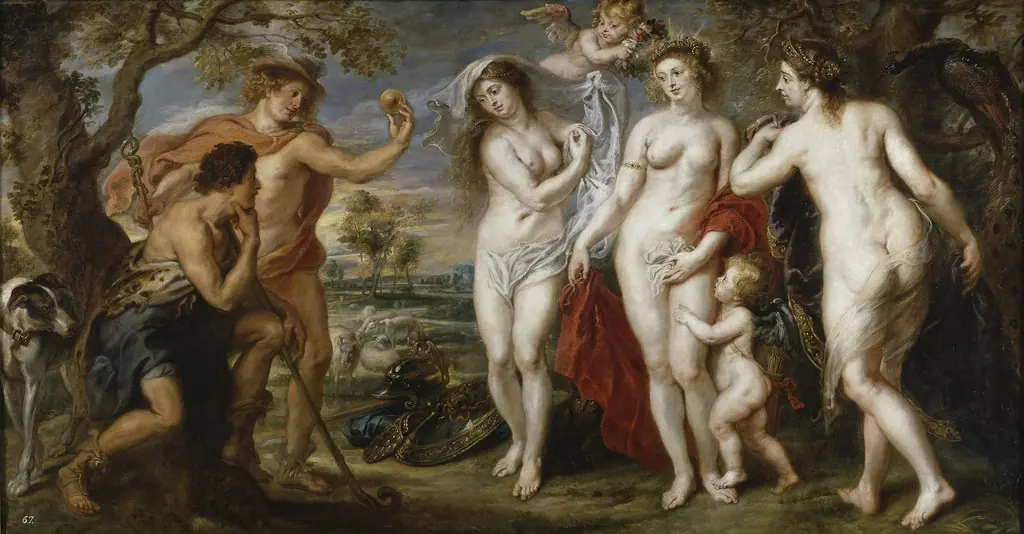 The Judgement of Paris
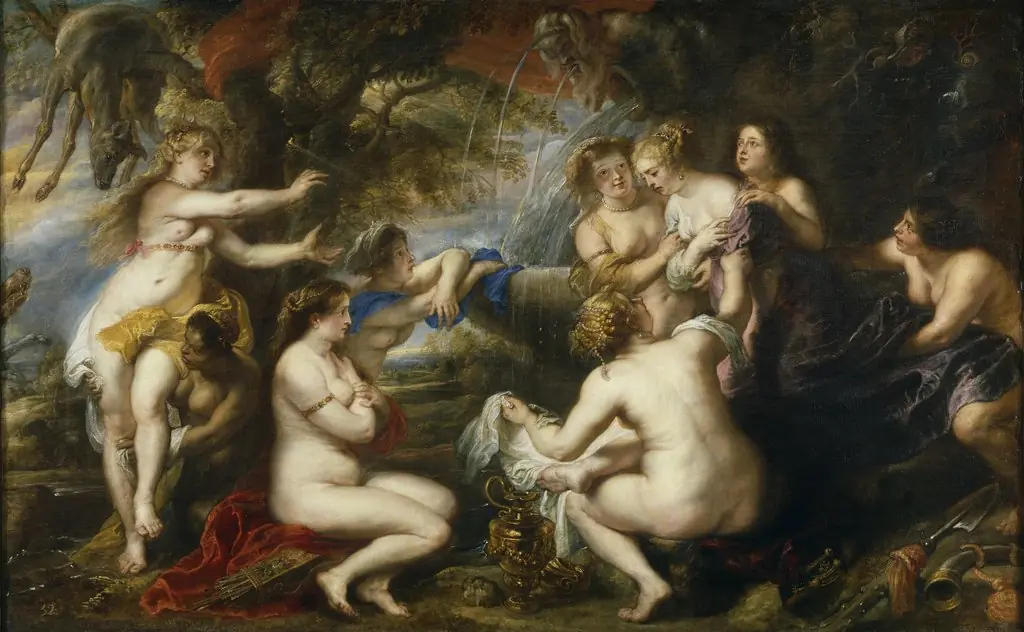 Diana and Callisto
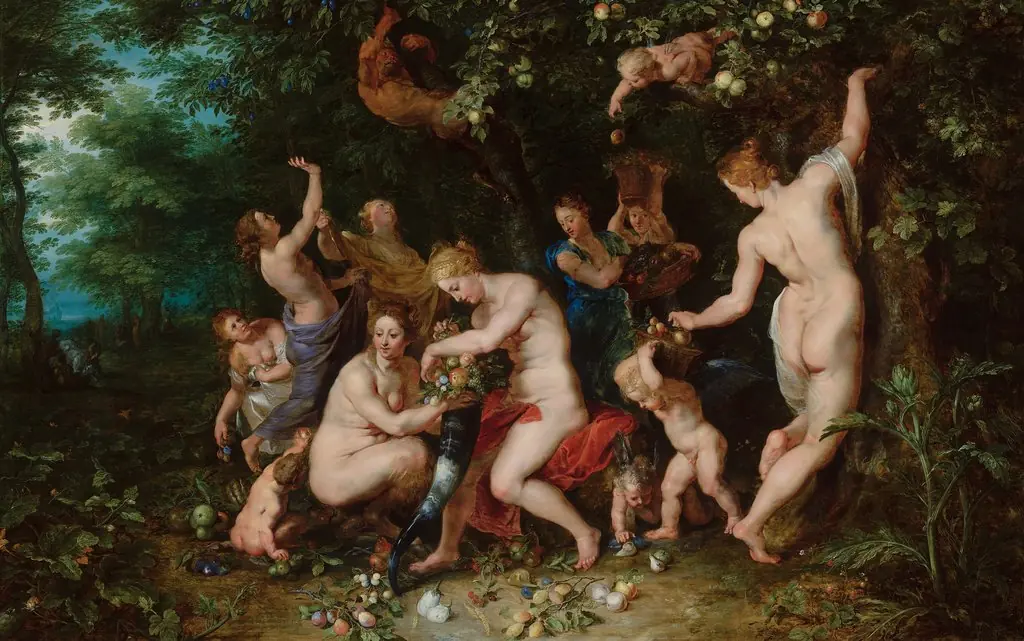 Nymphs filling the horn of plenty
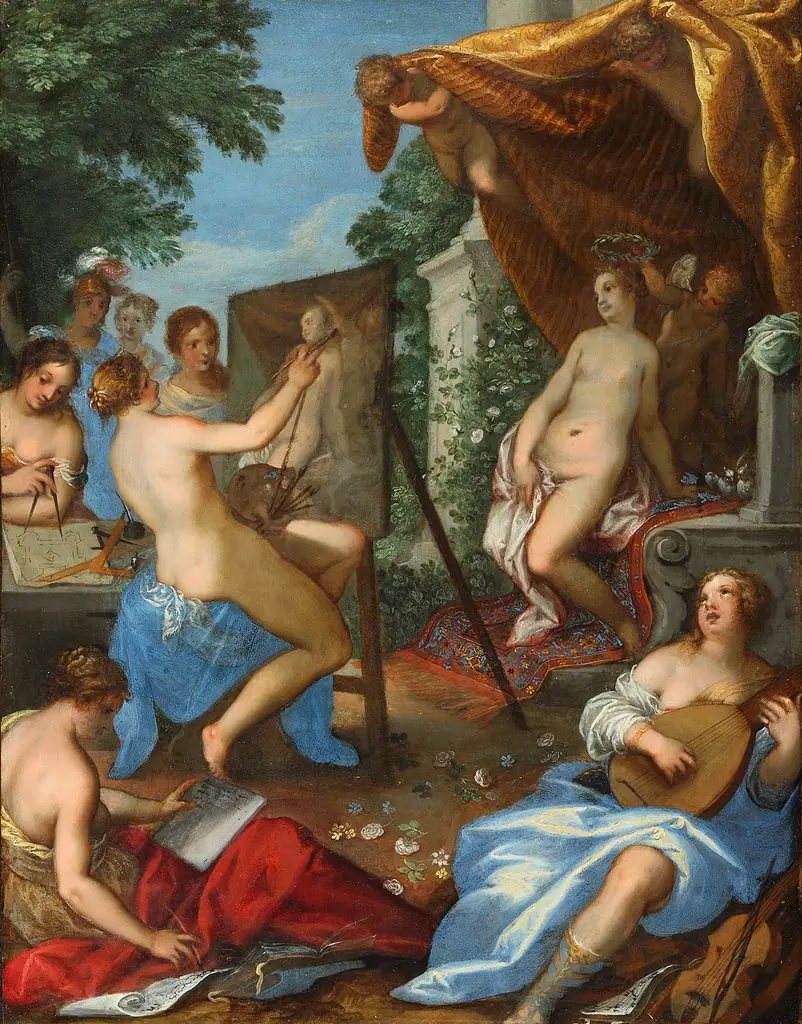 Allegory of Arts with Venus and Pictura painting
 Achelous Defeated by Hercules. The Origin of the Cornucopia. (Allegory of Fruitfulness)
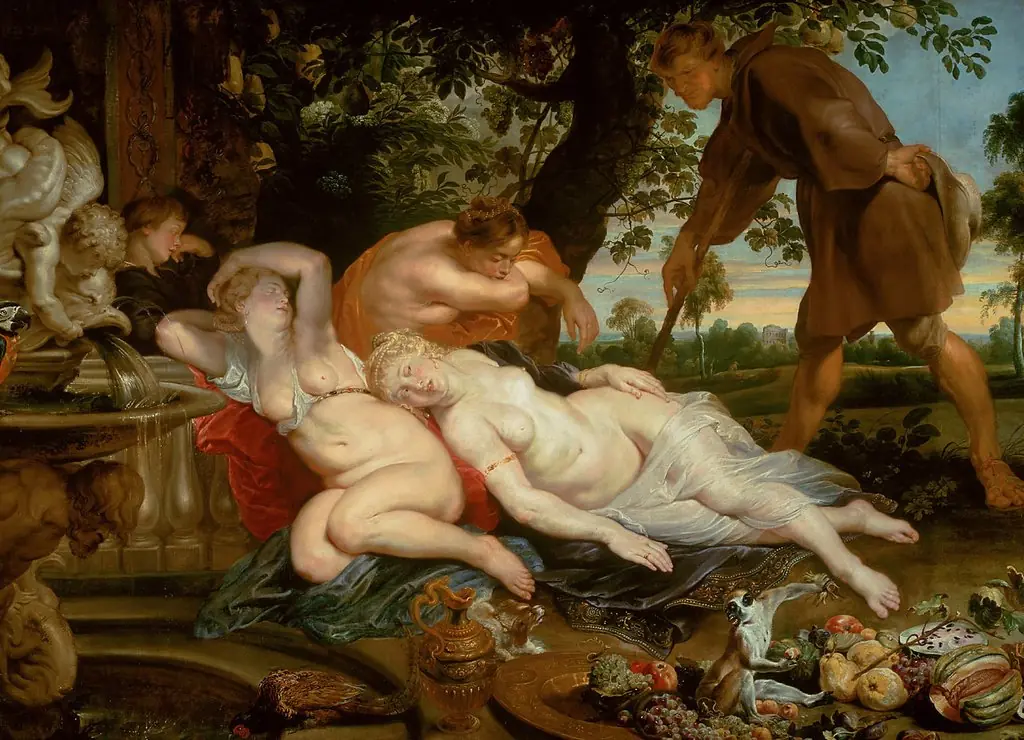 Cimone and Efigenia
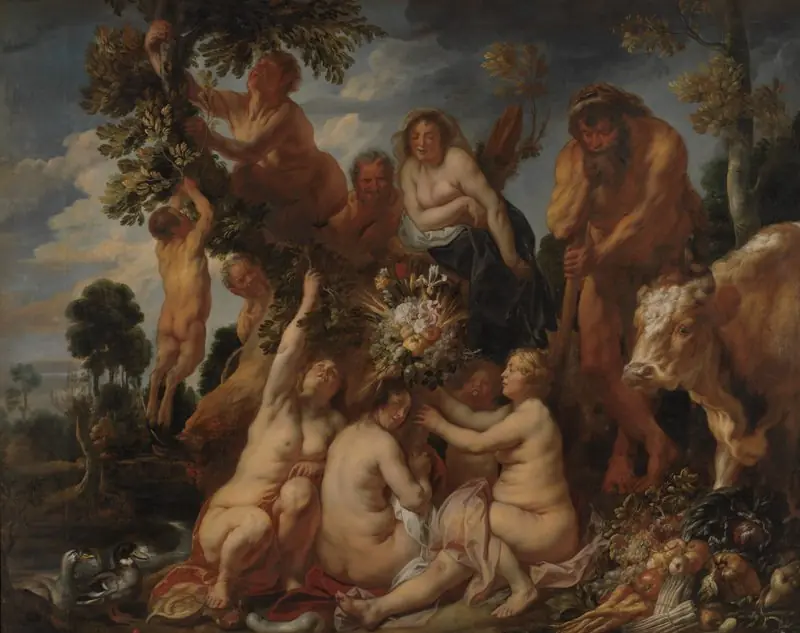 Achelous Defeated by Hercules. The Origin of the Cornucopia. (Allegory of Fruitfulness)