Artwork
Portrait of the Orator Francesco Filetto
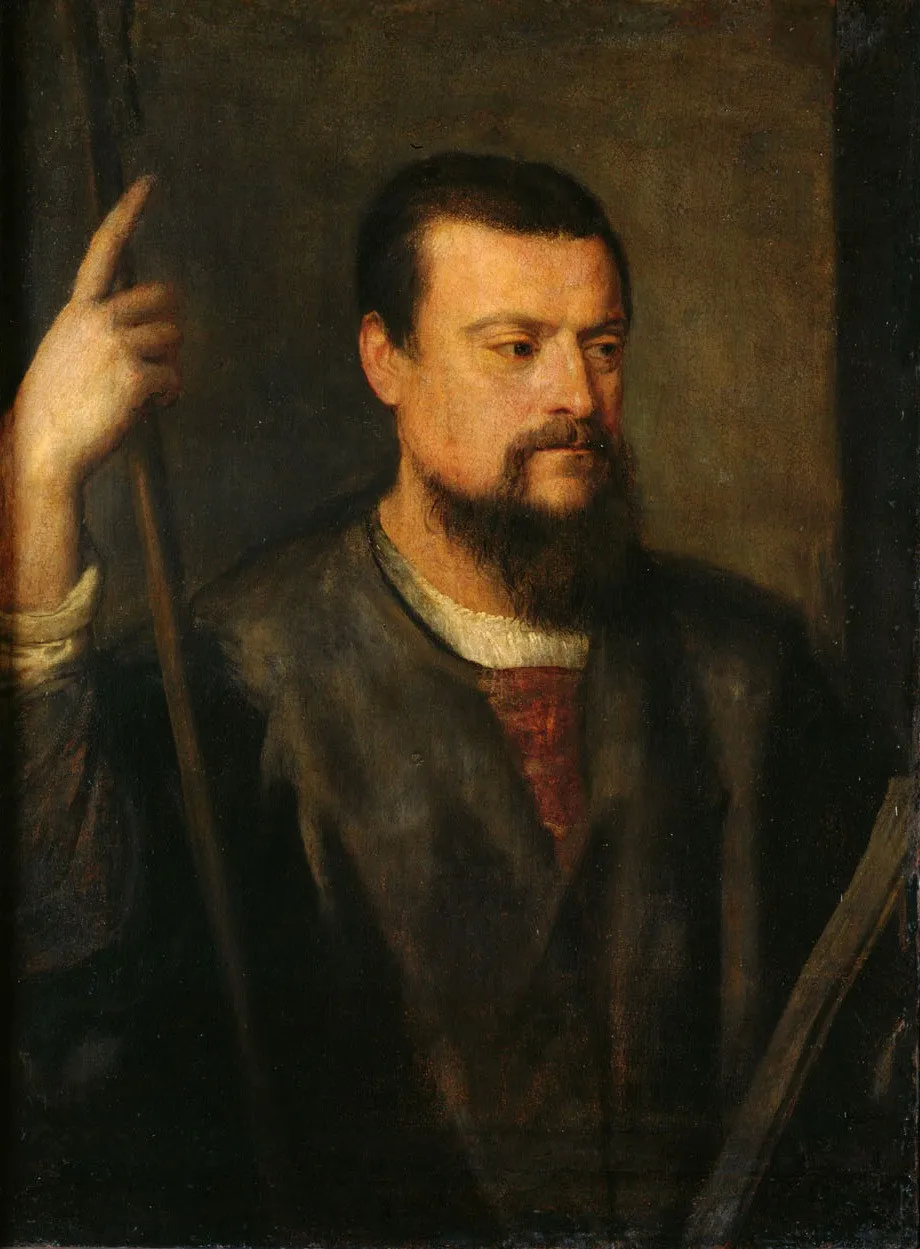
Portrait of the Orator Francesco Filetto is an oil painting by the Mannerist artist Titian. It dates from 1538 and is held in the collection of the Kunsthistorisches Museum.
About this work
Technique & Style
Executed in 1538, this portrait utilizes oil paint applied to a wooden panel support. The work measures 83 cm in height and 63 cm in width. As a formal portrait, the composition focuses on the depiction of the orator Francesco Filetto, capturing the likeness of the male subject through the artist's handling of the medium.
History & Provenance
Portrait of the Orator Francesco Filetto is held by the Kunsthistorisches Museum in Vienna, where it is catalogued under the accession number 2000.
The Portrait of the Orator Francesco Filetto was painted by Titian in 1538, executed in oil on panel. The work depicts an orator and entered the collection of Archduke Leopold Wilhelm of Austria, from whose holdings it subsequently passed to the Kunsthistorisches Museum, where it is currently held.
Portrait of the Orator Francesco Filetto is held by the Kunsthistorisches Museum in Vienna, where it is catalogued under the accession number 2000.123. The work entered the museum's collection through the bequest of Archduke Leopold Wilhelm of Austria, a patron who assembled a significant group of Titian paintings for the imperial Kunstkammer. Its exhibition history includes a 1953 retrospective of Titian at the museum, a 1975 traveling exhibition of Venetian Renaissance masterpieces that toured major European venues, and a 2005 joint display with other portraits of the Archduke’s circle at the Kunsthistorisches Museum’s special exhibition hall.
Legacy
Portrait of the Orator Francesco Filetto, painted by Titian in 1538, remained in the collection of Archduke Leopold Wilhelm of Austria before entering the Kunsthistorisches Museum, where it continues to be studied as a representative example of Venetian portraiture from the 16th century. The work’s compositional treatment of the sitter’s expressive gestures influenced later portraitists who sought to convey intellectual authority through nuanced facial expression and drapery detail. Contemporary scholarship cites its technical mastery of oil paint and its role in establishing conventions that were emulated across Central European court portraiture in the centuries that followed.
Overview
Created in 1538, this oil portrait by Titian presents a seated figure identified as the orator Francesco Filetto. Rendered in a restrained palette, the composition centers on the sitter, whose dignified pose and attire convey his public role. The work exemplifies the artist’s mature period, when he combined portraiture with subtle narrative cues to indicate status.
Subject & Meaning
The man is shown with dark hair, a neatly trimmed beard, and a dark robe layered over a red shirt trimmed with a white collar. In his right hand he grasps a staff, lifted just above the shoulder, a conventional symbol of authority in Renaissance civic life. These visual elements together signal Filetto’s position as a respected speaker or official.
Artist & collection
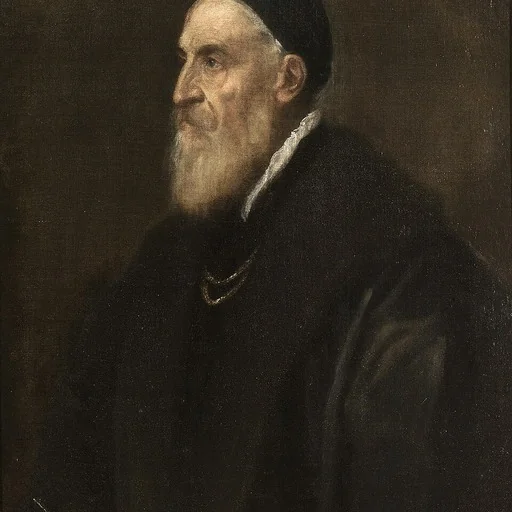
Artist
Tiziano Vecellio (Italian:; c. 1488/1490 – 27 August 1576), Latinized as Titianus, hence known in English as Titian ( TISH-ən), was an Italian Renaissance painter. The most important artist of Renaissance Venetian…


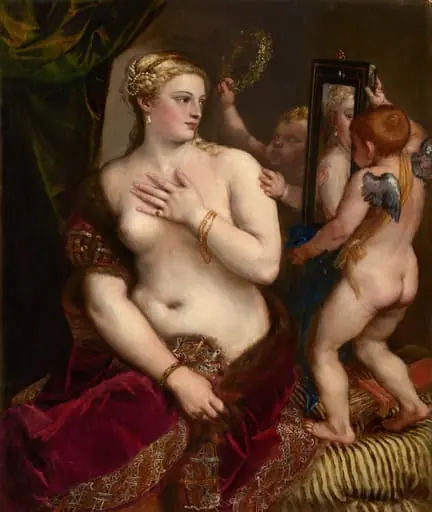


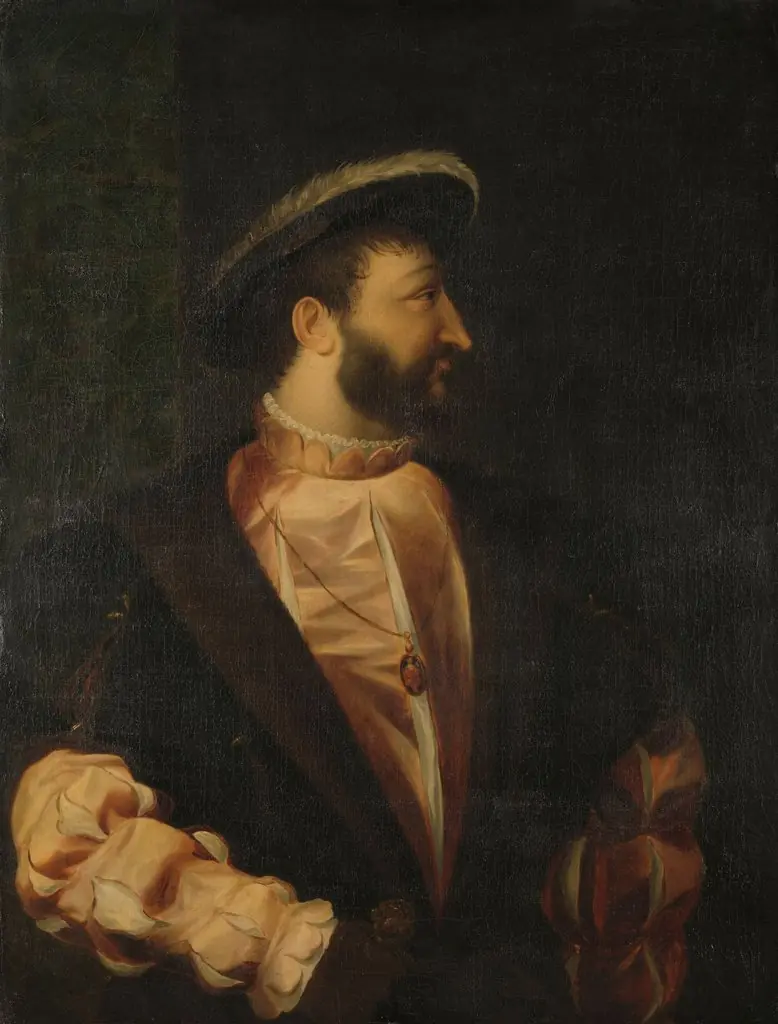
- Portrait of Francis I, King of France
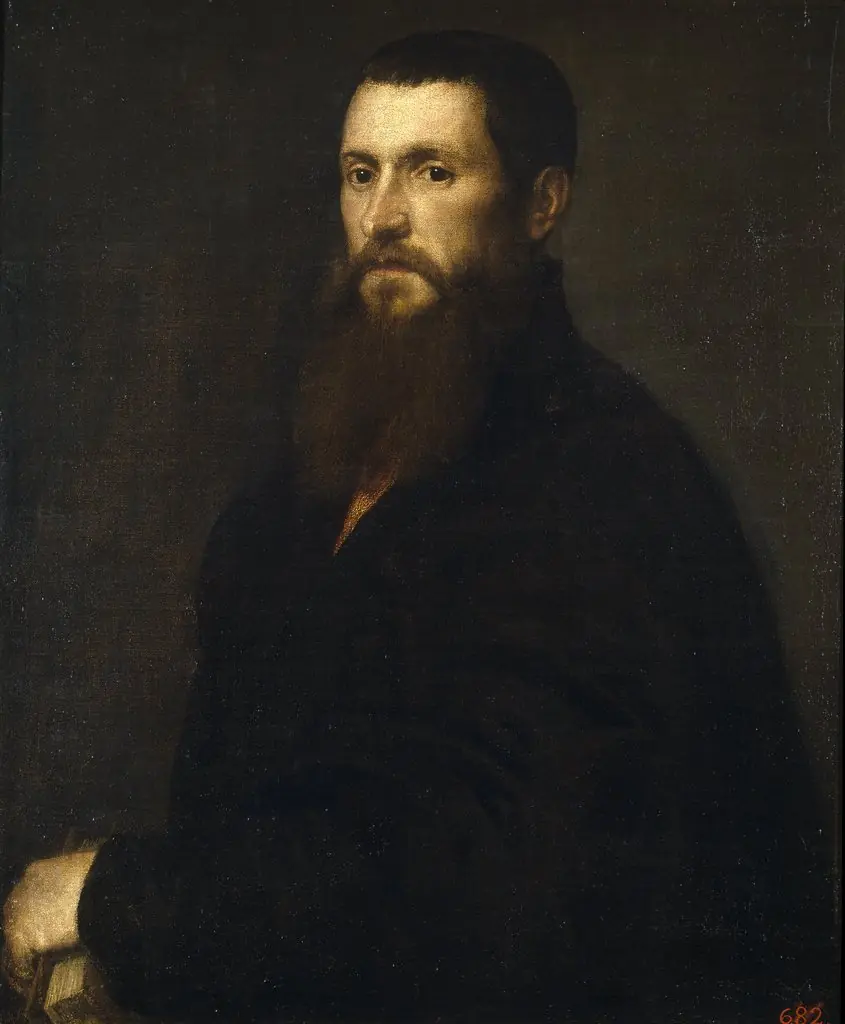 Daniele Barbaro, Patriarch of Aquileia
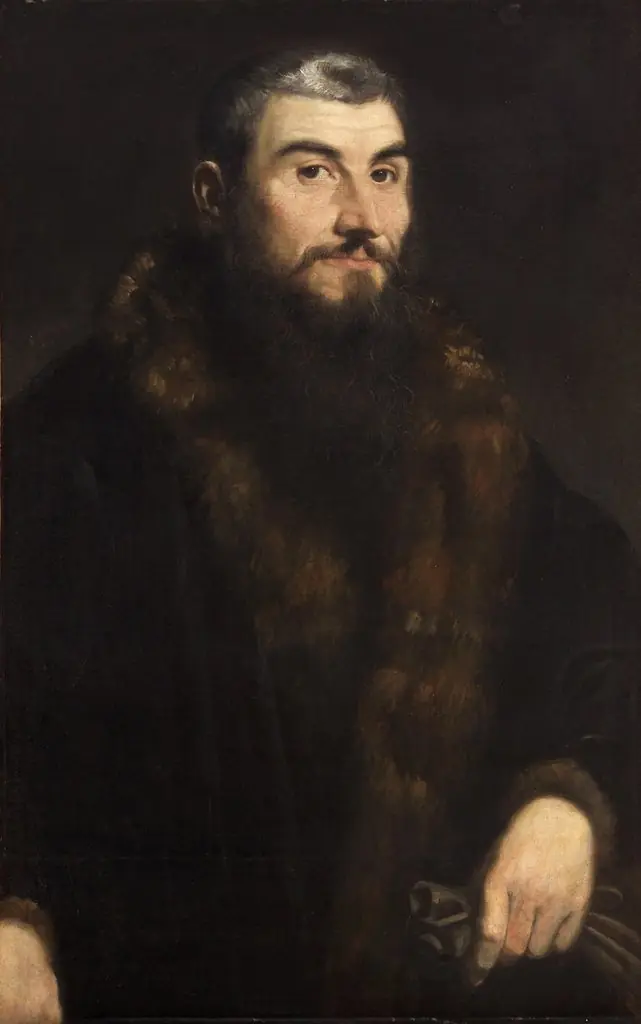 Portrait of a Man in Fur-lined Coat with Gloves
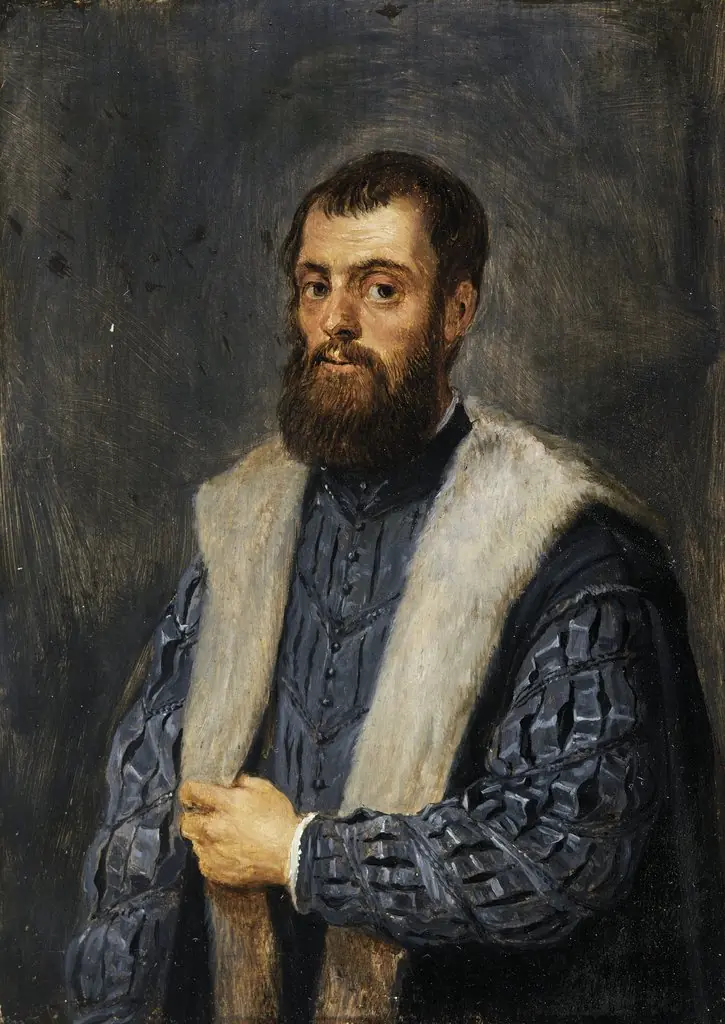 Portrait of a Man
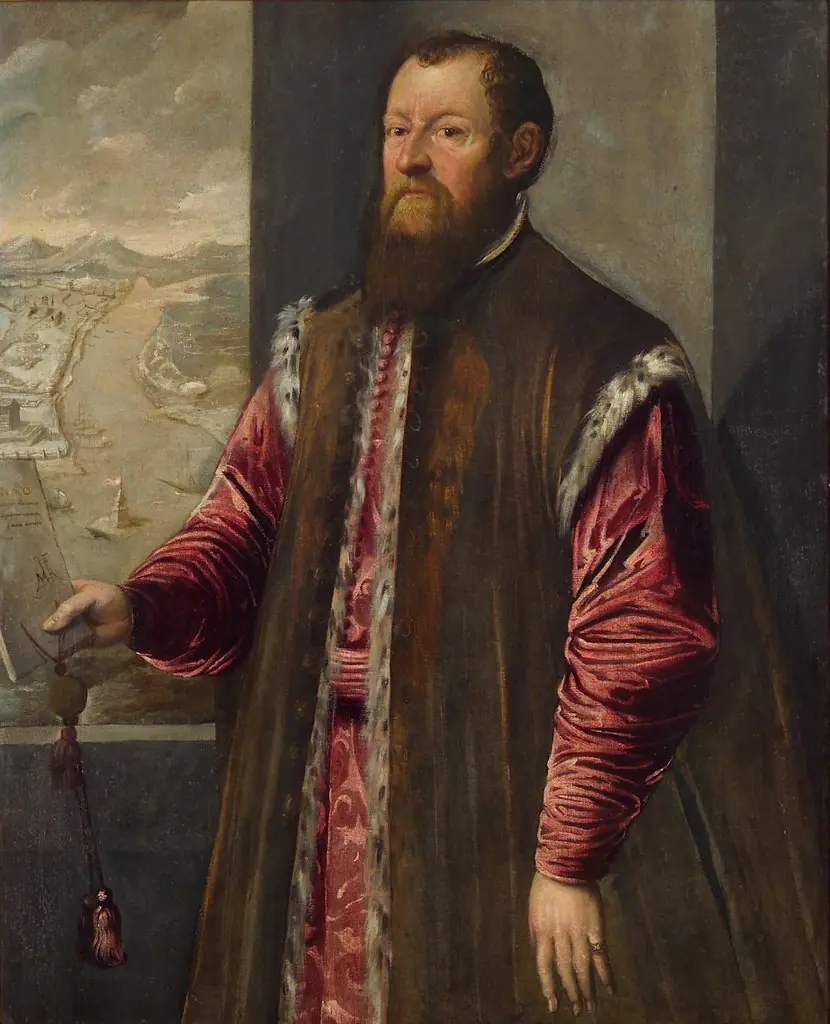 Portrait of Marcantonio Barbaro (1518-1595) as ambassador to Constantinople
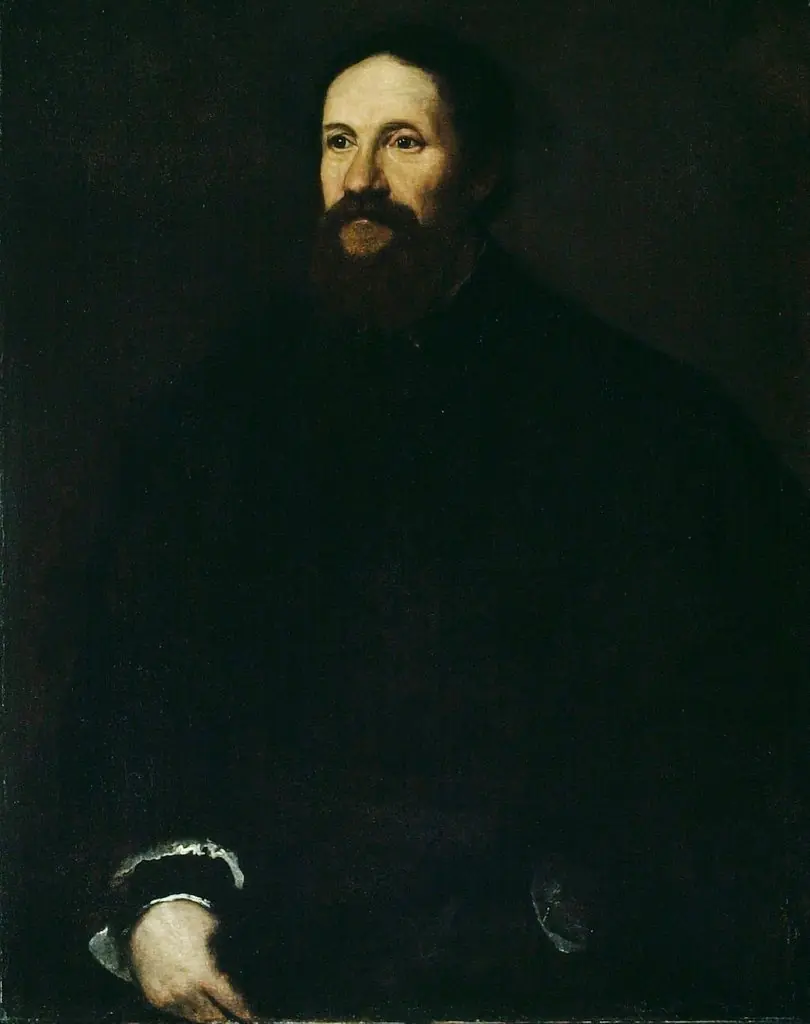 Portrait of a Gentleman
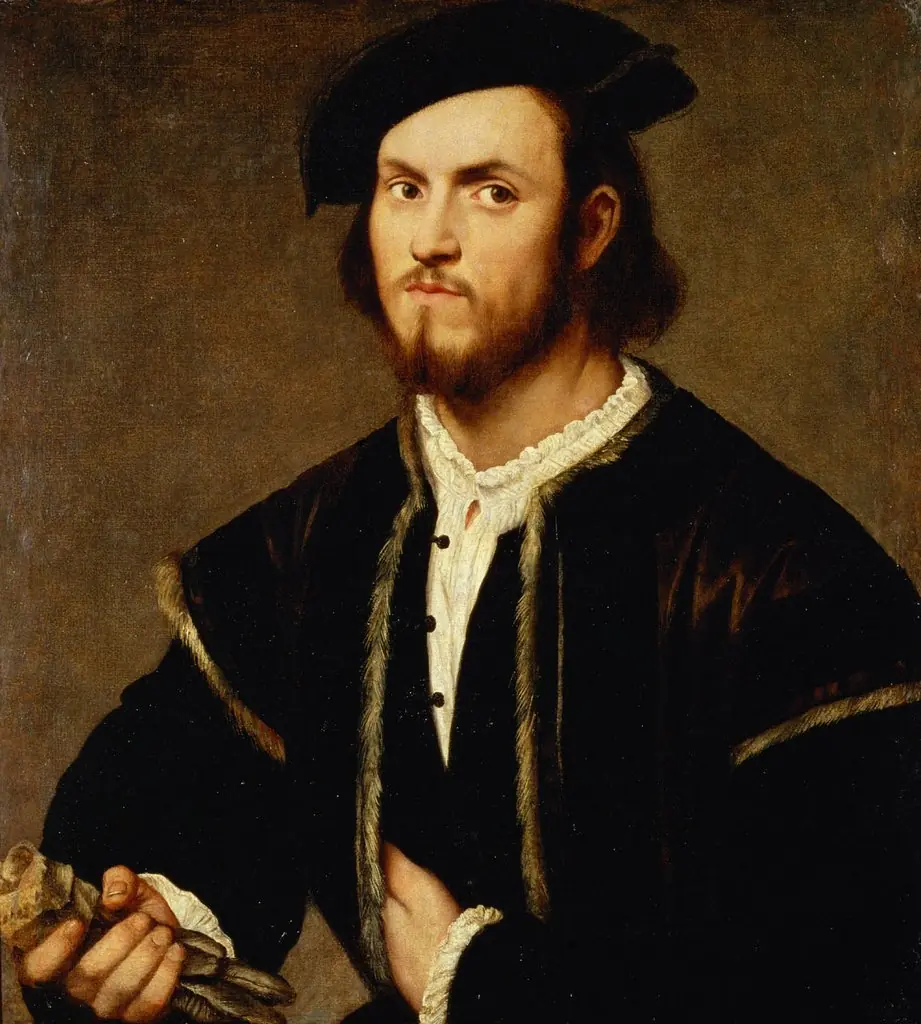 Bildnis eines jungen Mannes mit Barett und Handschuhen
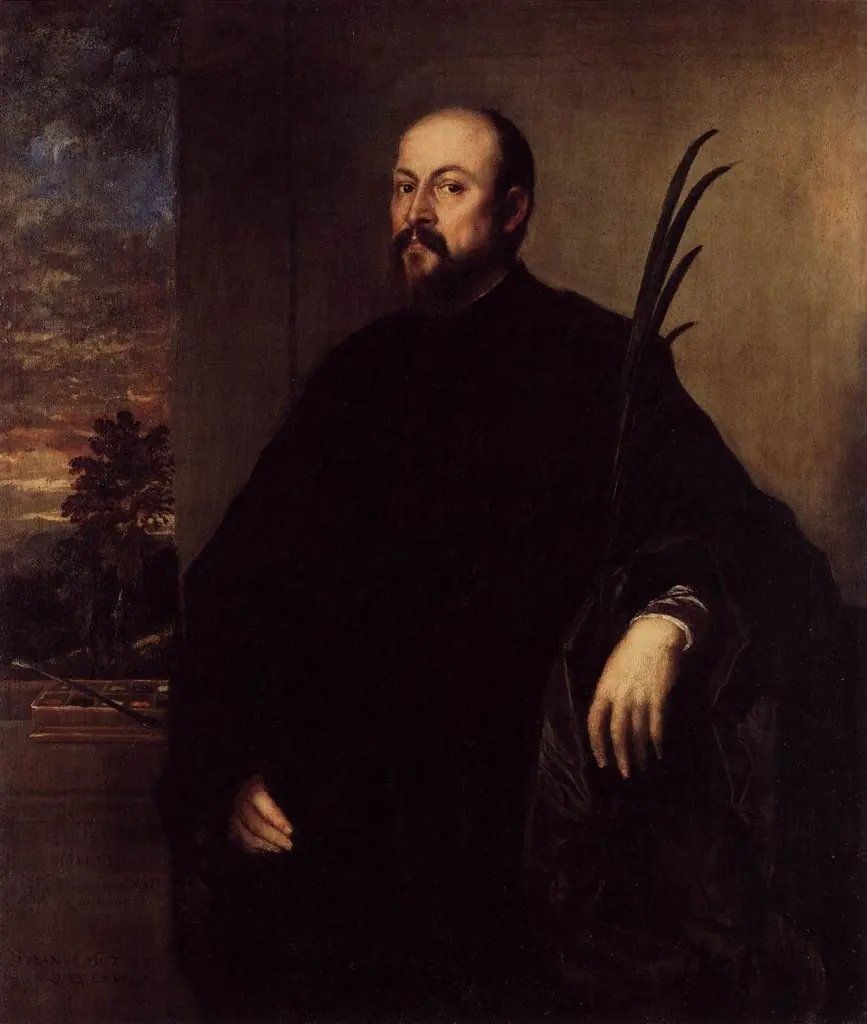 Portrait of the paint-ealer Alvise dalla Scala
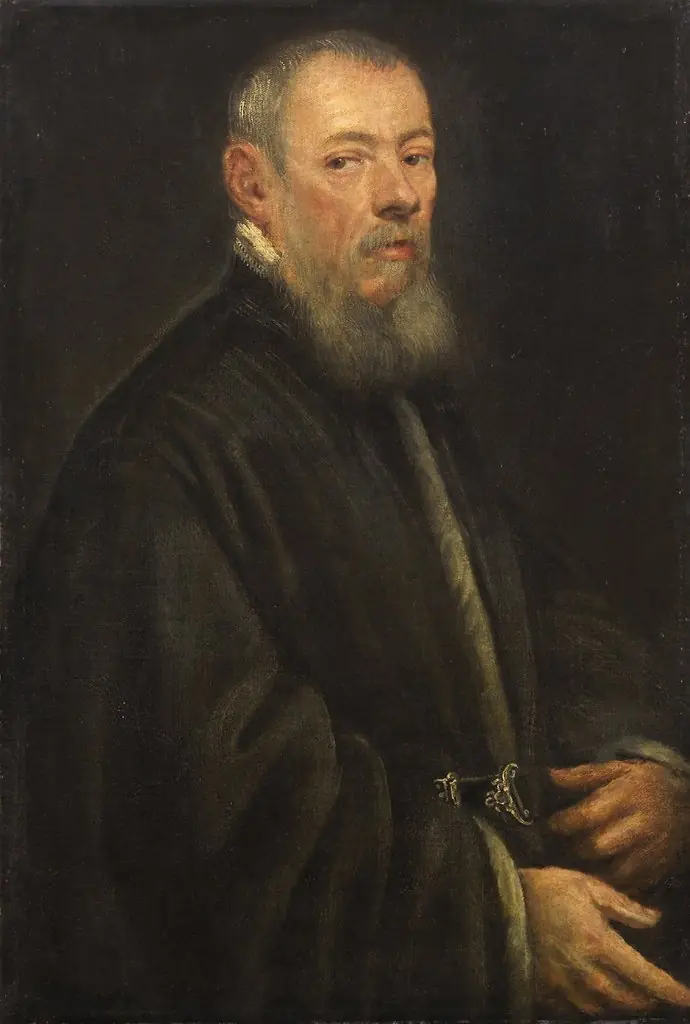 Portrait of a man with a gray beard
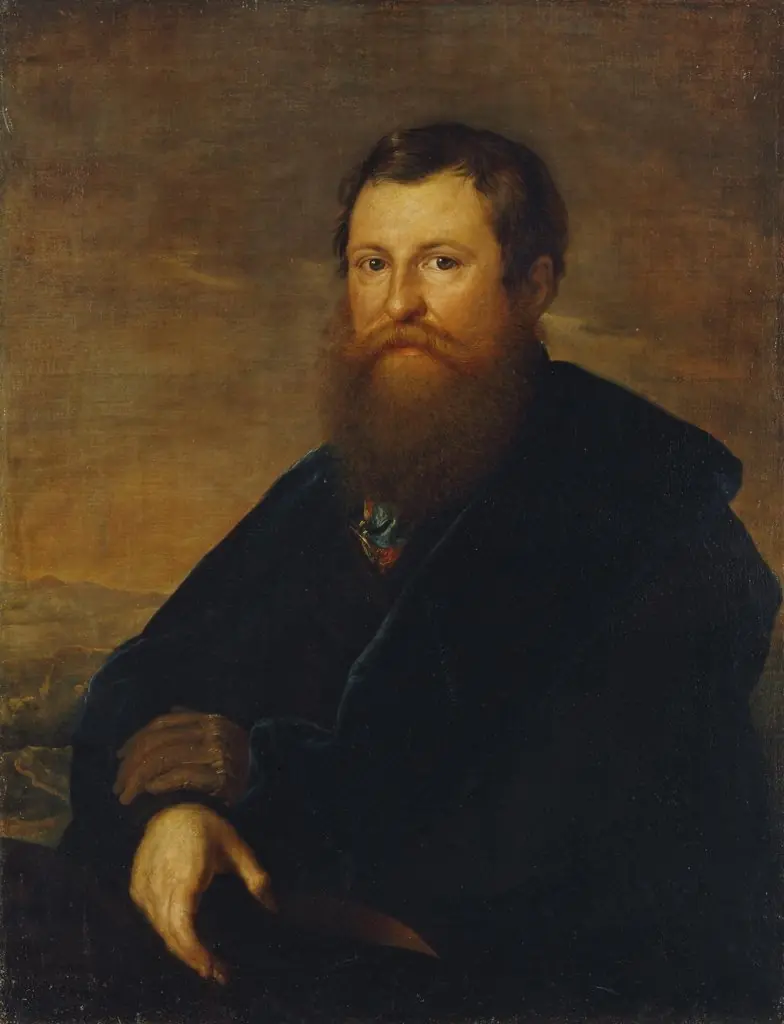 Portrait of the Merchant Alexander Sapozhnikov
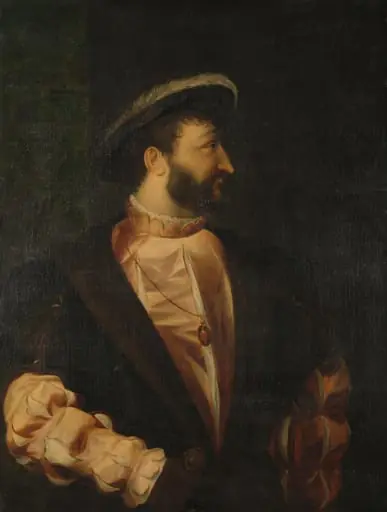 Francis I (1494-1547), King of France
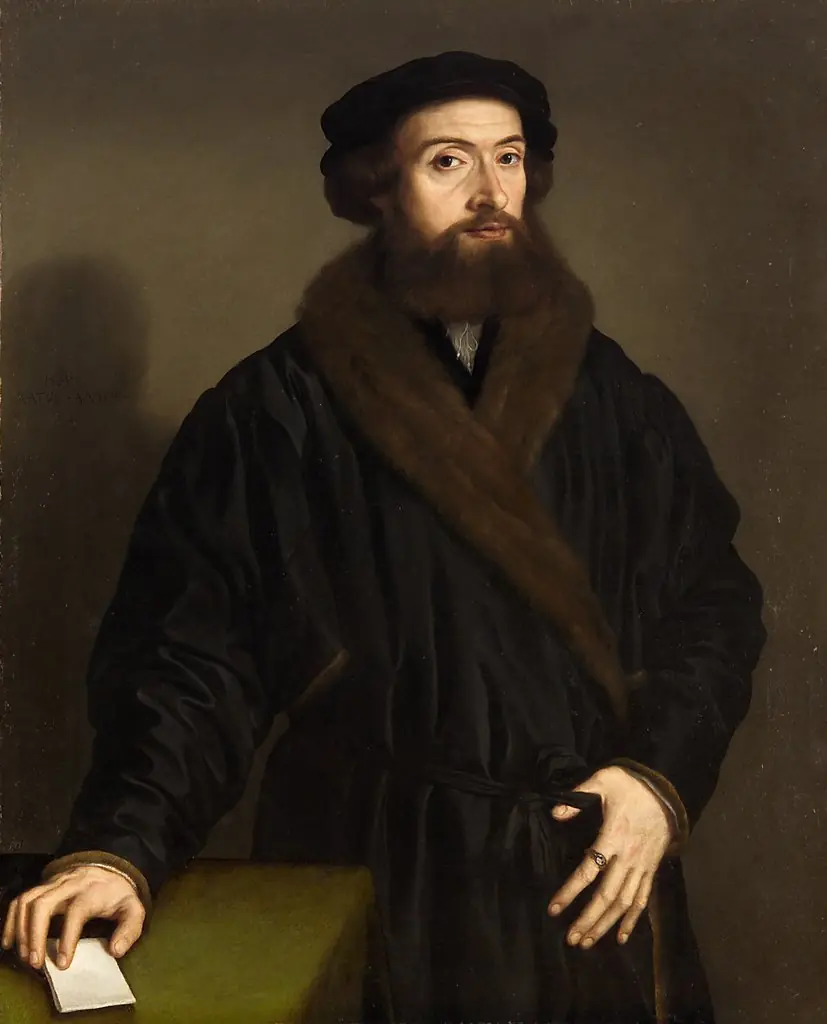 Portrait of a Man in a Beret