Artwork
The Triumph of Love
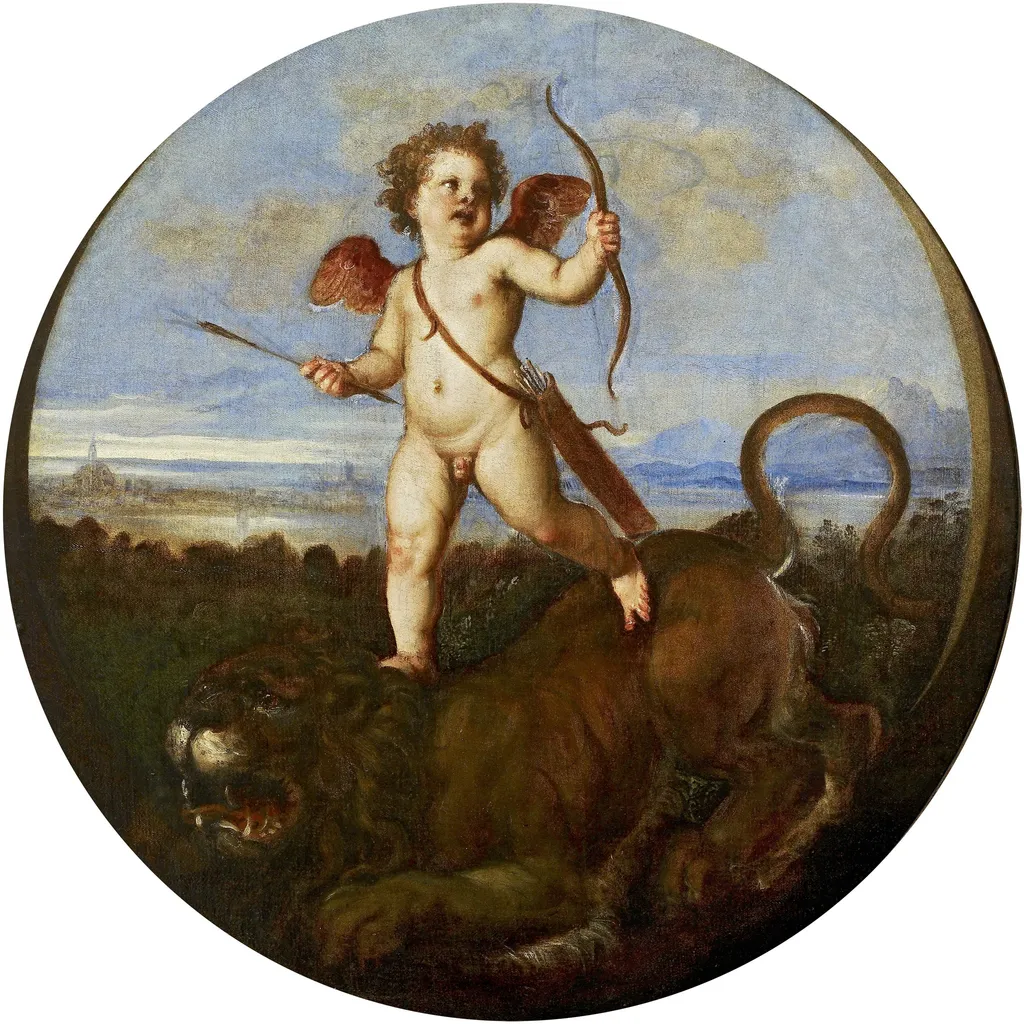
The Triumph of Love is an oil painting by the Mannerist artist Titian. It dates from 1545 and is held in the collection of the Ashmolean Museum.
About this work
Subject & Meaning
The work aligns with Renaissance allegorical traditions, where mythological figures like Cupid embody abstract concepts such as love’s power and inevitability.
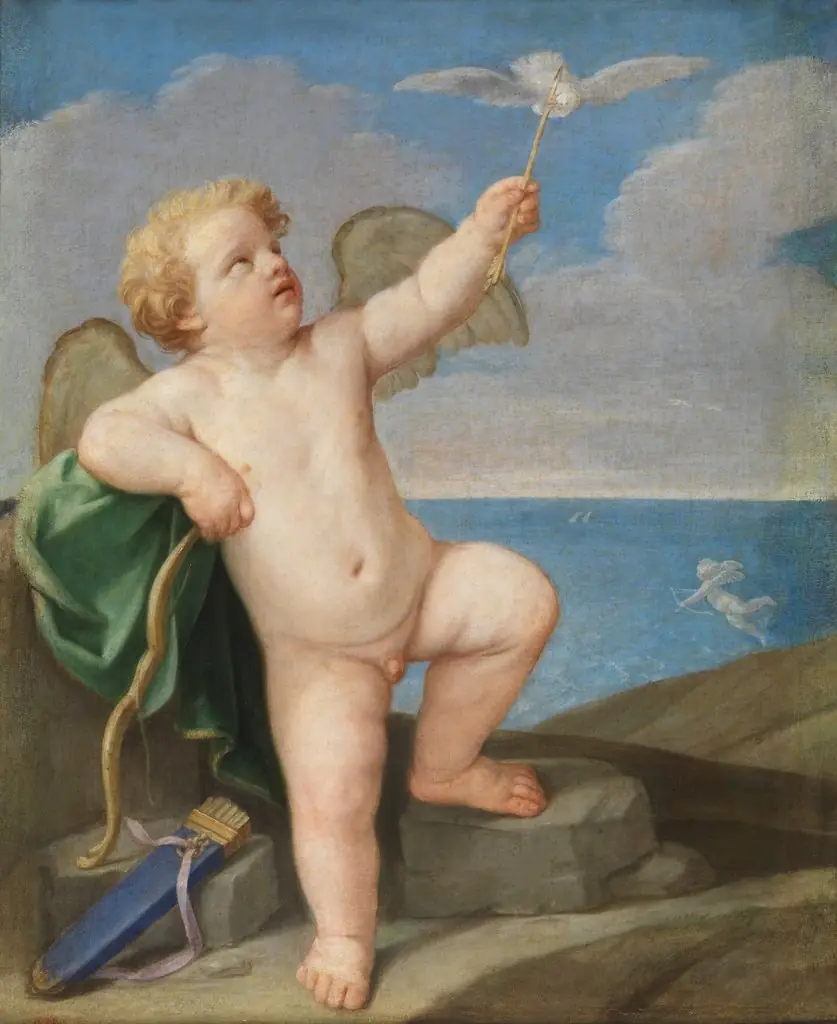
The Triumph of Love depicts a mythological allegory centered on Cupid, whose triumphant procession is the focal point of the composition. Titian’s painting presents Cupid as a central, triumphant figure, often accompanied by symbols of love and desire, including animals such as a lion that traditionally signify passion and strength. The surrounding landscape and classical elements reinforce the allegorical nature of the scene, emphasizing the triumph of love as an overarching, almost victorious force in human experience.
The work aligns with Renaissance allegorical traditions, where mythological figures like Cupid embody abstract concepts such as love’s power and inevitability. The iconography underscores the dominance of amorous passion in the natural and human worlds, a theme resonant with contemporary humanist thought that explored the interplay between classical mythology and lived experience.
Technique & Style
The Triumph of Love is executed in oil paint on a canvas support that has been mounted onto a panel. This composite structure measures 88.3 cm in both height and width, forming a square composition. The work depicts mythological subjects, including Cupid and a lion set against a landscape, consistent with its classification as an allegorical painting.
Created around 1545 by Titian, the piece retains its original dimensions and material configuration as recorded in its museum accession.
History & Provenance
The Triumph of Love was painted around 1545 by Titian.
It entered the Ashmolean Museum in 2008 under Accession Number WA2008.89. The work was accepted by HM Government in lieu of inheritance tax and allocated to the museum. Funding came from multiple sources, including the Art Fund (with a contribution from the Wolfson Foundation), Daniel Katz Ltd, and several private donations coordinated by the Ashmolean’s acquisition campaign.
The painting had previously been exhibited in major displays such as Italian Art and Britain and Titian’s Triumph of Love at the Ashmolean, as well as Titian and the Renaissance in Venice.
The Triumph of Love is held in the collection of the Ashmolean Museum, where it bears the accession number WA2008.89. The work entered the institution in 2008 after being accepted by HM Government in lieu of inheritance tax and subsequently allocated to the museum. Its acquisition was finalized through a purchase supported by the Art Fund, the Wolfson Foundation, Daniel Katz Ltd, and various private donors and friends' groups.
The painting has been featured in several exhibitions, including Italian Art and Britain, Titian's Triumph of Love, and Titian and the Renaissance in Venice.
Context
The Triumph of Love (c. 1545) is a mythological oil painting by Titian that depicts Cupid triumphing over a lion amid an idealised landscape. The work belongs to Titian’s mature period and reflects his mastery of colour and narrative in service of allegorical themes. It is housed in the Ashmolean Museum, where it entered the collection through an acceptance in lieu of inheritance tax in 2008.
The painting has been featured in exhibitions such as Italian Art and Britain and Titian and the Renaissance in Venice, underscoring its significance within both Renaissance art and later British reception of Italian masters.
Legacy
The painting influenced subsequent depictions of mythological allegories, particularly in its compositional balance and treatment of Cupid as a triumphant figure, inspiring later artists to explore similar iconography in the 17th and 18th centuries. Its presence in the Ashmolean Museum's collection has ensured continued scholarly attention to Titian's role in shaping Baroque visual language, as noted in exhibition histories that linked the work to broader Renaissance dialogues about love and power. The Triumph of Love remains a reference point for studies of mythological painting in British museum contexts, reinforcing Titian's reputation as a master of narrative through color and form.
Overview
Created in 1545, this oil painting by Titian, one of the foremost artists of the Venetian Renaissance, illustrates a mythological scene titled The Triumph of Love. The work is presently housed in the Ashmolean Museum and exemplifies the Mannerist tendency toward elegant composition and heightened expression.
Own this work as a print
Artist & collection

Artist
Tiziano Vecellio (Italian:; c. 1488/1490 – 27 August 1576), Latinized as Titianus, hence known in English as Titian ( TISH-ən), was an Italian Renaissance painter. The most important artist of Renaissance Venetian…