Artwork
聖徳太子孝養図 (Shotoku Taishi kōyō zu)"|Prince Shōtoku at Age Sixteen
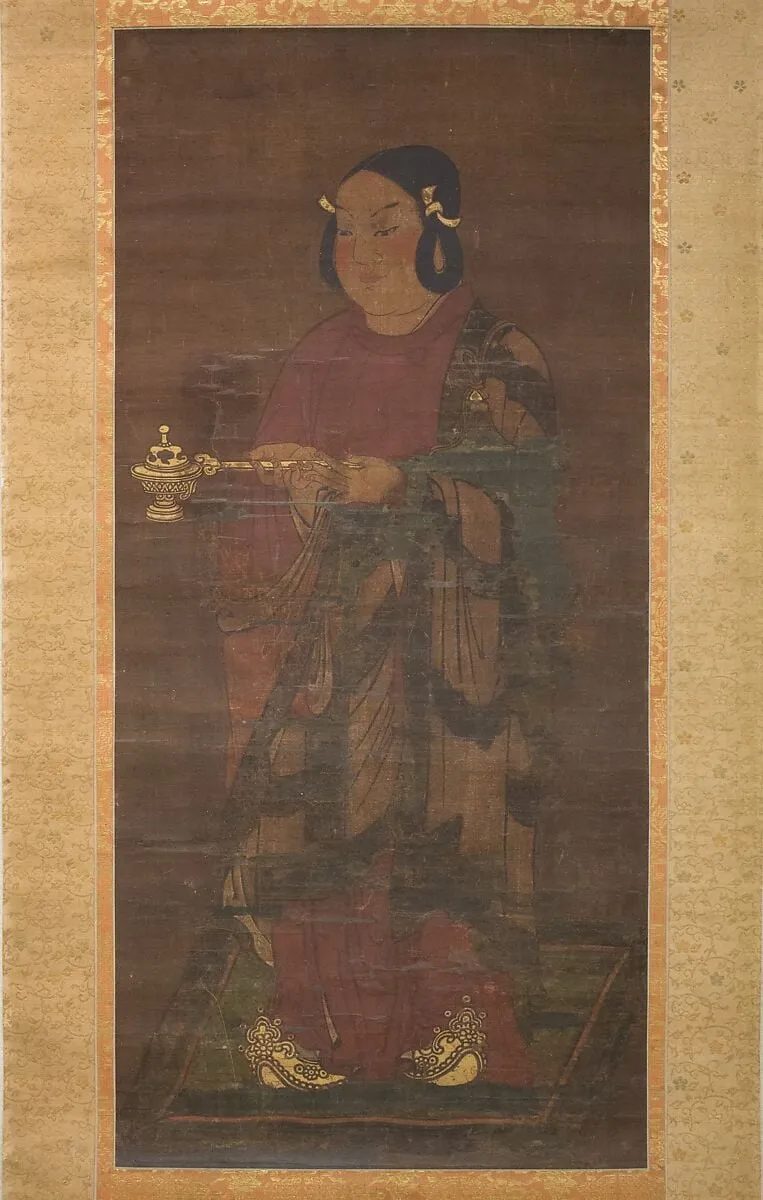
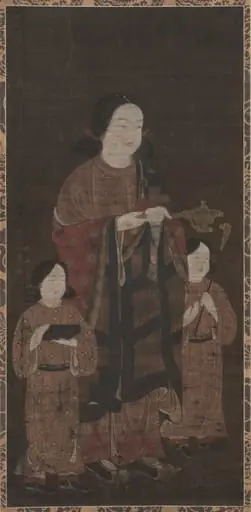
聖徳太子孝養図 (Shotoku Taishi kōyō zu)"|Prince Shōtoku at Age Sixteen is an ink painting by the Tosa School artist Toba Sōjō. It dates from 1364 and is held in the collection of the Metropolitan Museum of Art. Prince Shōtoku at Age Sixteen, also known as Shōtoku Taishi kōyō zu, is a Japanese hanging scroll from 1364.
About this work
History & Provenance
The hanging scroll known as 聖徳太子孝養図 (Prince Shōtoku at Age Sixteen) was created in 1364 by Toba Sōjō, as recorded in its cataloguing data.
The hanging scroll known as 聖徳太子孝養図 (Prince Shōtoku at Age Sixteen) was created in 1364 by Toba Sōjō, as recorded in its cataloguing data. It was produced in Japan, executed in ink, color, and gold on silk, and has been classified as a portrait painting. The work is presently held in the collection of the Metropolitan Museum of Art, where it remains on location.
The available sources do not specify the original commissioner, the circumstances of its creation, or the successive owners through whom it passed before entering the museum's holdings, so the earlier provenance chain cannot be documented from the evidence provided.
The hanging scroll titled "Prince Shōtoku at Age Sixteen" (Shotoku Taishi kōyō zu), attributed to Toba Sōjō and dated to 1364, is held in the collection of the Metropolitan Museum of Art in New York. The work, executed in ink, color, and gold on silk, is classified as a portrait painting of Japanese origin. While the specific inventory or accession number is not detailed in the provided records, the museum's collection listing confirms its presence within their holdings.
The available sources do not document a specific exhibition history for this piece, nor do they provide further details regarding its provenance or acquisition timeline beyond its current location at the Metropolitan Museum of Art.
Overview
Prince Shōtoku at Age Sixteen, also known as Shōtoku Taishi kōyō zu, is a Japanese hanging scroll from 1364. Created by Toba Sōjō, this painting utilizes ink, color, and gold on silk to portray a significant moment in the life of Prince Shōtoku. It captures the young prince engaged in a solemn ritual, distinguished by its vibrant palette and the shimmering application of gold leaf.
Subject & Meaning
The artwork illustrates Prince Shōtoku as a sixteen-year-old, performing an act of filial piety to commemorate his deceased parents. He kneels, holding a smoking censer, an object central to Buddhist rituals of respect and remembrance. This portrayal is notable for depicting him at a youthful age, contrasting with many subsequent images that typically show the prince in his later years.
Technique & Style
Executed as a hanging scroll, the painting employs ink, color, and gold on a silk ground. The composition features the young prince kneeling on a red cushion, holding an incense burner. Two robed figures are depicted bowing deeply behind him.
The extensive use of gold leaf across the silk surface contributes to the scene's luminous quality, enhancing the visual richness and spiritual atmosphere of the depiction.
Context
This representation stands out as one of the earliest known portraits of Prince Shōtoku, a revered figure in Japanese Buddhism and history. Its focus on his youth and an act of devotion offers a particular perspective on his character. Later artistic depictions often emphasized his mature leadership or spiritual wisdom, making this early portrayal distinct in the visual tradition.
Artist & collection

 Kannon
 Kannon
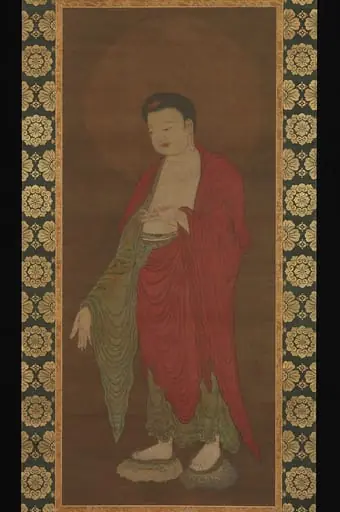 南宋 佚名 阿彌陀佛圖 軸|Buddha Amitabha Descending from his Pure Land
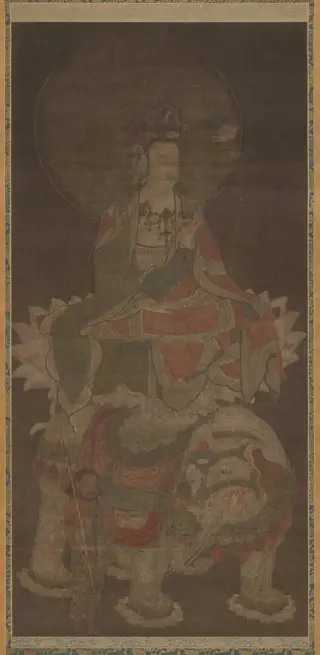 Samantabhadra
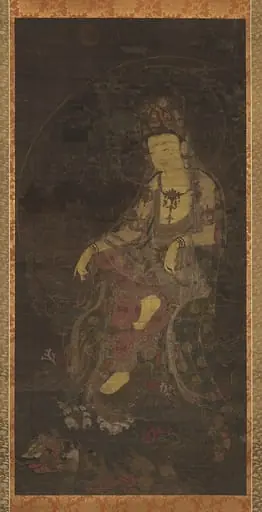 수월관음도 고려|水月觀音圖 高麗|Water-moon Avalokiteshvara
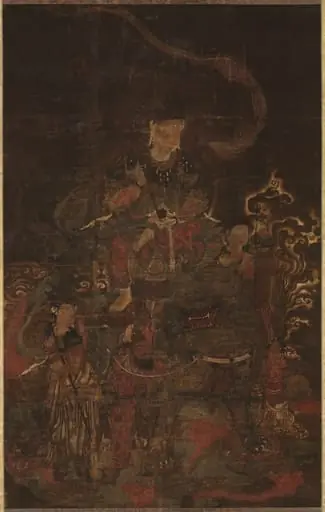 Monju Riding Lion with Attendants
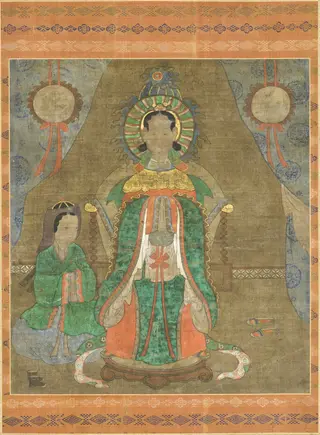 Spirit of a Noble Woman (Probably Princess Pari) and Attendant
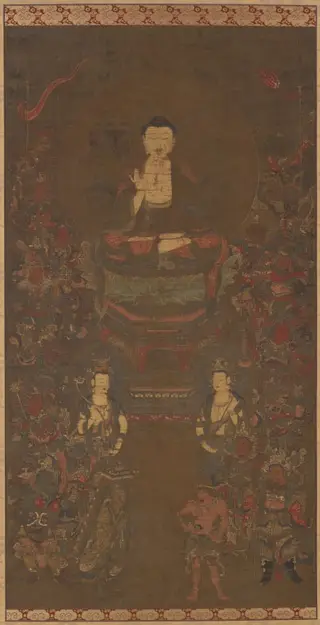 Shakyamuni with the Sixteen Benevolent Deities
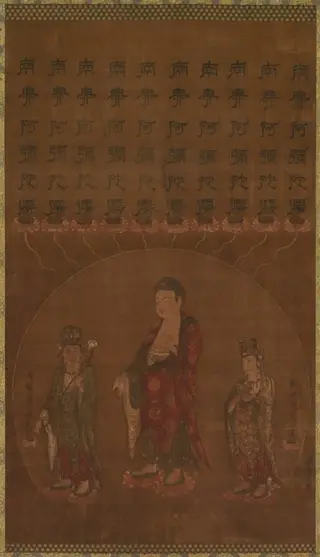 Buddha Amitābha with Two Attending Bodhisattvas
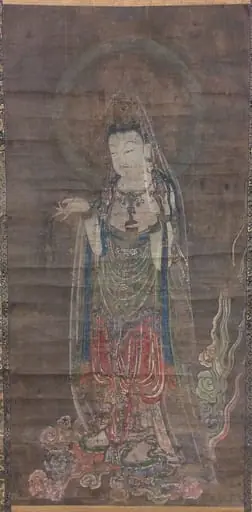 楊柳観音菩薩像 (Yōryū Kannon Bosatsu zō)|The Bodhisattva Willow Kannon (Avalokiteshvara)