Artwork
William Rogers
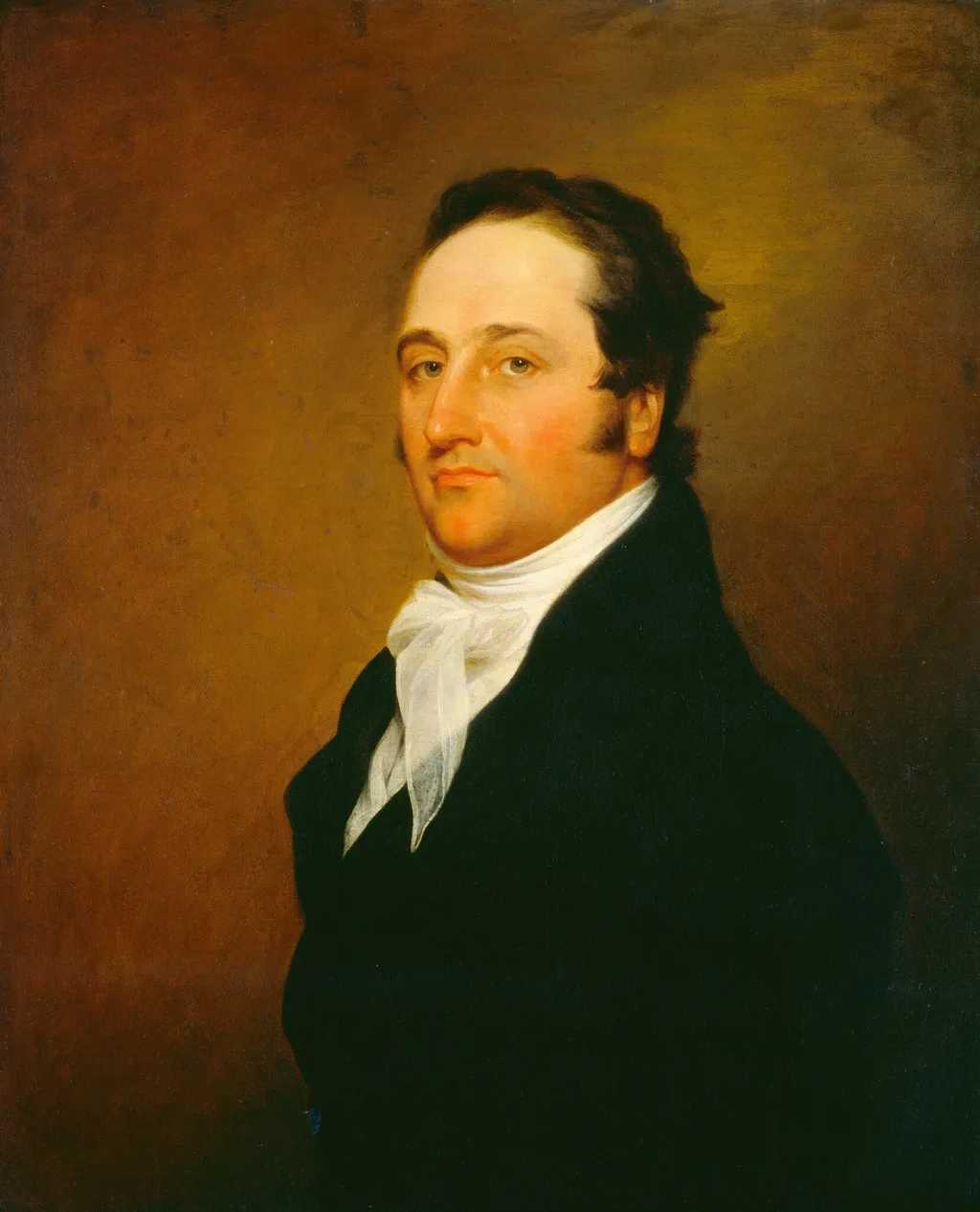
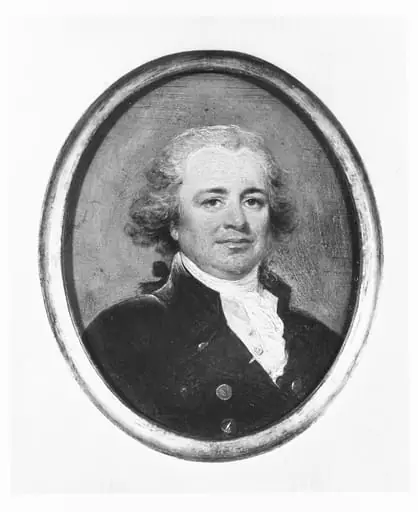
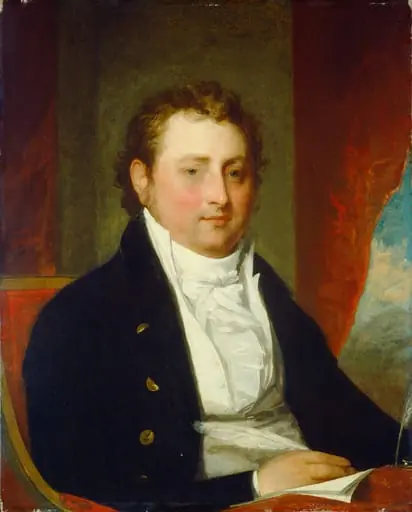
William Rogers is an oil painting by the American Impressionist artist John Trumbull. It dates from 1806 and is held in the collection of the National Gallery of Art.
About this work
Technique & Style
The work is classified as a painting and is executed in oil paint on canvas support, in keeping with Trumbull's standard portrait practice of the period.
William Rogers is an oil on canvas painting executed by John Trumbull in 1806. The work is classified as a painting and is executed in oil paint on canvas support, in keeping with Trumbull's standard portrait practice of the period. Its dimensions are modest in scale, measuring 77.5 by 63.5 centimeters, a format consistent with an intimate bust- or half-length likeness rather than a full-length commission.
History & Provenance
Painted by John Trumbull in 1806, the portrait of William Rogers descended through the sitter's family before entering the art market in the early twentieth century. The sitter's adopted daughter, Anne Béloste Taylor of Albany, New York, held the work until her death in 1832, after which it passed to her daughter Maria Taylor Hunt of Utica, New York. Maria's nephew, Maunsell Van Rensselaer, and his wife Isabella Mason Van Rensselaer, of Albany and Huntington, New York, subsequently owned the painting.
It was consigned to D.B. Butler & Co. in New York and sold on 16 April 1921 to Thomas B. Clarke of New York. Following Clarke's death, the portrait was sold as part of his collection on 29 January 1936 through M. Knoedler & Co. to The A.W. Mellon Educational and Charitable Trust in Pittsburgh, before being gifted to the National Gallery of Art in 1947.
Mid-nineteenth-century authors such as Henry T. Tuckerman and John F. Weir listed Ward Hunt rather than his wife Maria as the owner, a common convention for family portraits of the period.
The painting was held by the sitter's adopted daughter Anne Béloste Taylor and her descendants until 1921, when it was sold to Thomas B. Clarke; it remained in Clarke's estate until 1936 when it was sold through M. Knoedler & Co. to the A.W. Mellon Educational and Charitable Trust; in 1947 it was gifted to the National Gallery of Art, where it is accessioned under the inventory number 1947.12.15 and has been part of the gallery's permanent collection on public display.
Context
Critical reception and scholarship have long recognized the portrait as a significant example of early American portraiture, situating it within John Trumbull's broader artistic legacy and the development of portrait painting in the United States. The work entered the National Gallery of Art in 1947 as part of the Andrew W. Mellon collection, reflecting its importance in American art history and its role in shaping institutional collections.
Scholarly attention has focused on the portrait's provenance and its transmission through prominent New York families, underscoring its cultural significance beyond mere artistic merit. The painting's dimensions of 77.5 cm by 63.5 cm and its medium of oil on canvas align with Trumbull's practice in the early 19th century, contributing to its identification and study within the artist's oeuvre.
Legacy
John Trumbull's portrait of William Rogers has been recognized for its role in early American portraiture, influencing later interpretations of Revolutionary-era subjects through its formal composition and historical narrative. The painting's provenance reflects a continuous lineage of ownership within prominent New York families, underscoring its significance in American art history. Its inclusion in major collections such as the National Gallery of Art has reinforced its standing as a representative work of the period.
The work has been frequently referenced in scholarly analyses of Trumbull's artistic legacy and early American portraiture traditions.
Overview
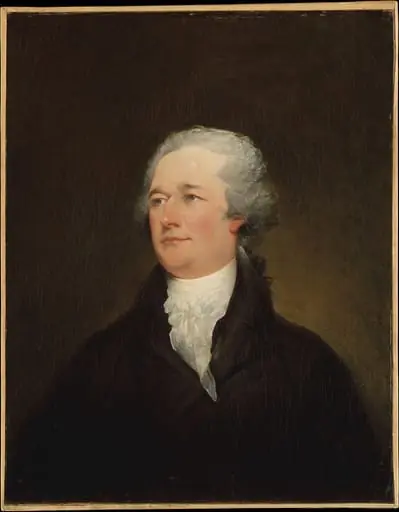
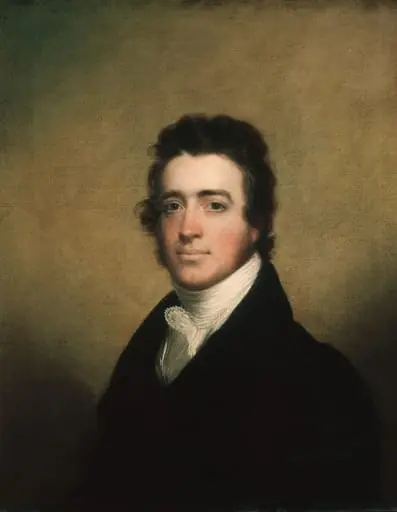
John Trumbull’s 1806 oil on canvas, titled William Rogers, presents a formal portrait of a gentleman in a dark coat and white cravat. The figure is rendered against a uniform warm‑brown backdrop that isolates his features, emphasizing a composed, serious expression. The composition is restrained, with the sitter’s left hand placed on his chest and his gaze directed outward, creating a quiet yet compelling presence.
Subject & Meaning
The work depicts William Rogers, a man of the early nineteenth‑century American elite, identifiable by his short dark hair, clean‑shaven jaw, and dignified posture. The straightforward pose and steady eye contact suggest a sense of personal integrity and civic virtue, qualities often associated with the emerging republican ideals of the post‑Revolutionary period.
Own this work as a print
Artist & collection

Artist
John Trumbull (June 6, 1756 – November 10, 1843) was an American painter and military officer best known for his historical paintings of the American Revolutionary War, of which he was a veteran.