Artwork
明 佚名 觀音羅漢圖 扇|Guanyin and the sixteen luohans
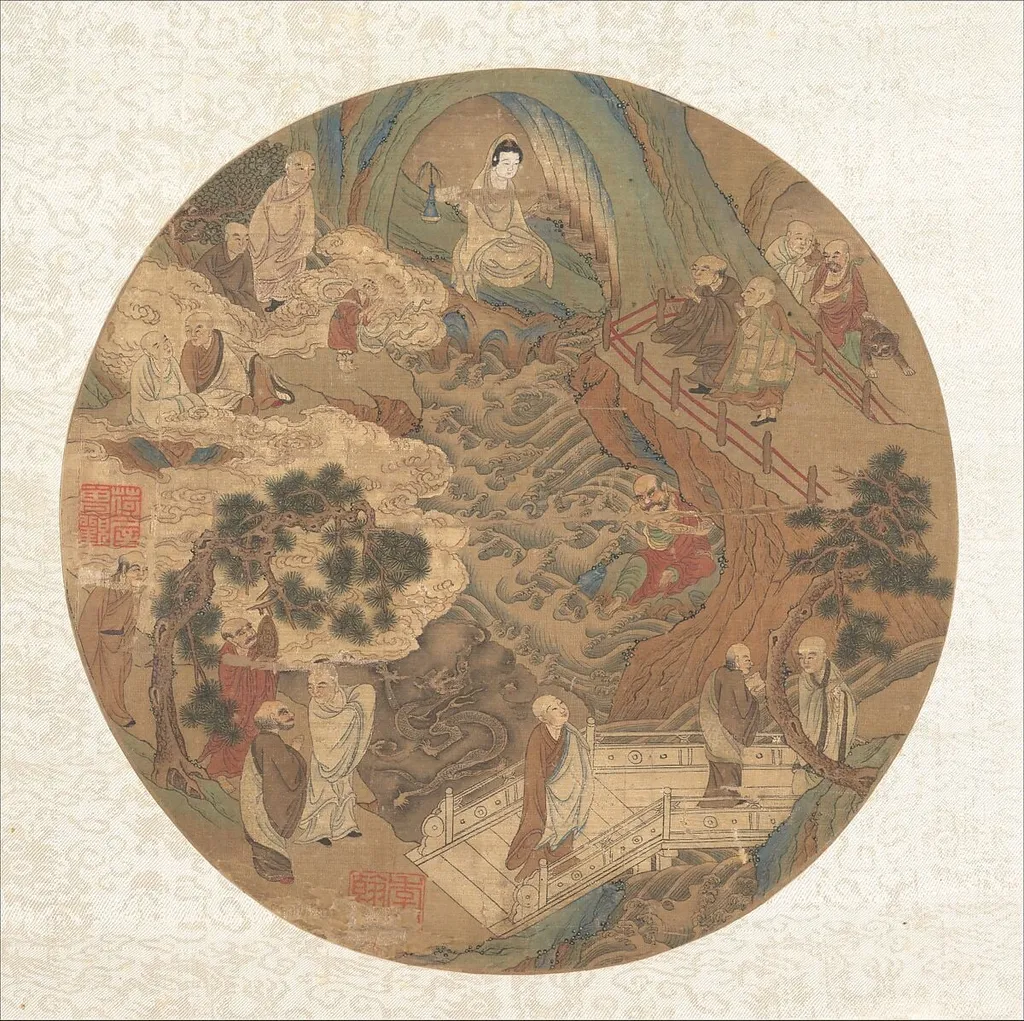
明 佚名 觀音羅漢圖 扇|Guanyin and the sixteen luohans is an ink painting. It dates from 1572 and is held in the collection of the Metropolitan Museum of Art. This painting, titled Guanyin and the Sixteen Luohans, is executed on a round fan, subsequently mounted as an album leaf.
About this work
Guanyin and the sixteen luohans painted on a round fan, later mounted as an album leaf. The Buddhist figures sit within a natural landscape, worked in ink, color, and gold on silk. Made in China around 1572 by an unknown artist.
Subject & Meaning
The presence of the Bodhisattva alongside the luohans symbolises the intersection of compassion and enlightened wisdom within the Buddhist pantheon.
This Ming dynasty painting, dated to 1572, depicts the Bodhisattva Guanyin accompanied by figures identified as sixteen luohans, set within a landscape that includes a bridge. As a religious work executed in ink, color, and gold on silk, the composition centres on the veneration of these Buddhist sages. The presence of the Bodhisattva alongside the luohans symbolises the intersection of compassion and enlightened wisdom within the Buddhist pantheon.
The inclusion of a man and a woman among the depicted figures suggests the interaction between the divine and the human realms or the universal accessibility of salvation. While the specific iconographic details of individual luohans are not elaborated in the available records, the grouping itself represents a traditional assembly of arhats who protect the Dharma, framed here by the benevolent presence of Guanyin.
Technique & Style
The painting is executed in ink, polychrome pigments and gold leaf on a silk support, forming a round fan that is mounted as an album leaf; this medium emphasises the delicate brushwork and luminous surface typical of Ming-era religious art. The composition depicts Guanyin flanked by sixteen luohans, a bridge and attendant figures, arranged in a balanced vertical layout that highlights the sacred narrative. The work's formal qualities include subtle color gradients, restrained line work and gilt accents that reinforce its devotional function. It is part of the Metropolitan Museum of Art collection, documented as originating in China in 1572.
History & Provenance
The work titled Guanyin and the Sixteen Luohans was produced in 1572 in China by an anonymous painter. It is a round fan mounted as an album leaf executed in ink, color, and gold on silk, depicting the Bodhisattva, a bridge, a man, and a woman. The piece entered the collection of the Metropolitan Museum of Art, where it remains on display. Its creation reflects typical devotional practices of the Ming period, though specific commission details are not recorded.
Context
The fan-shaped painting dated 1572 depicts the bodhisattva Guanyin surrounded by sixteen luohans, reflecting Buddhist devotional practice in late Ming China. Its execution in ink, color, and gold on silk aligns with elite religious artworks of the period, produced in China. Scholars note that the piece exemplifies the synthesis of Chinese brush techniques with devotional subject matter, illustrating how anonymous artists contributed to the visual vocabulary of Ming Buddhist art. The work is housed in the Metropolitan Museum of Art.
Overview
This painting, titled Guanyin and the Sixteen Luohans, is executed on a round fan, subsequently mounted as an album leaf. Created using ink, color, and gold on silk, it depicts Buddhist figures integrated within a natural setting. The artwork is notable for its blend of traditional Chinese iconography with unexpected stylistic elements, suggesting a broader cultural exchange.
![Paintings after Ancient Masters: A Lohan [after Guanxiu]](https://artifactworldgallery.com/img/chen-hongshou--paintings-after-ancient-masters-a-lohan-after-guanxiu--74d8f5a3d653f674-w320.webp)
Artist & collection

 明 佚名 樓閣江帆圖 團扇|Village and Temples in Jiangnan
 Untitled
 Untitled
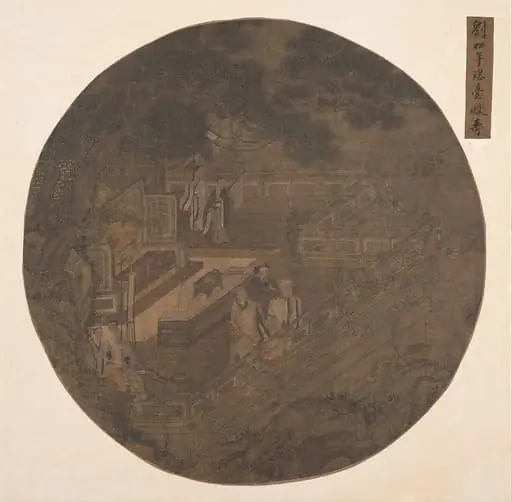 明 佚名 瑤臺獻壽圖 扇|Paying homage to Xiwangmu, the Queen Mother of the West
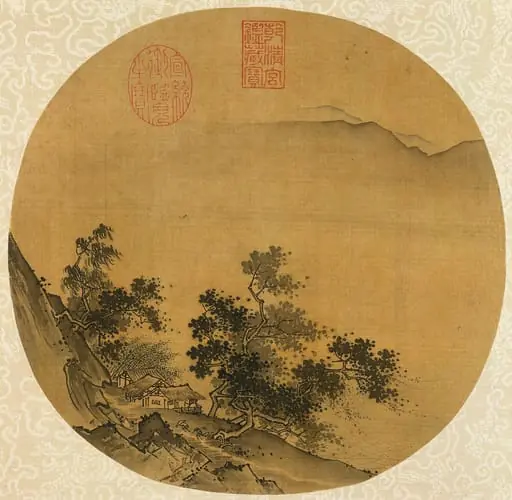 南宋 佚名 倣夏珪 冒雨尋莊圖 團扇|Returning Home in a Driving Rain
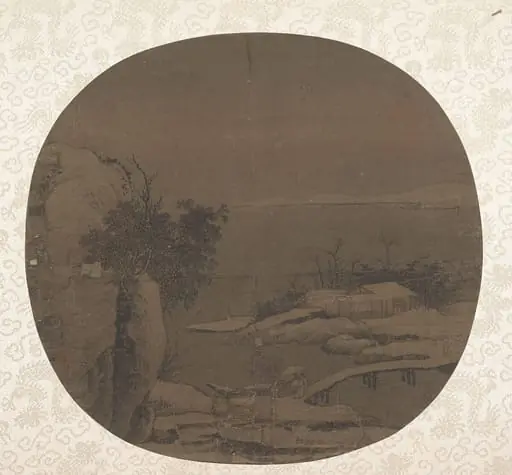 明? 佚名 舊傳燕文貴 雪橋送別 扇|Bridge in Snow
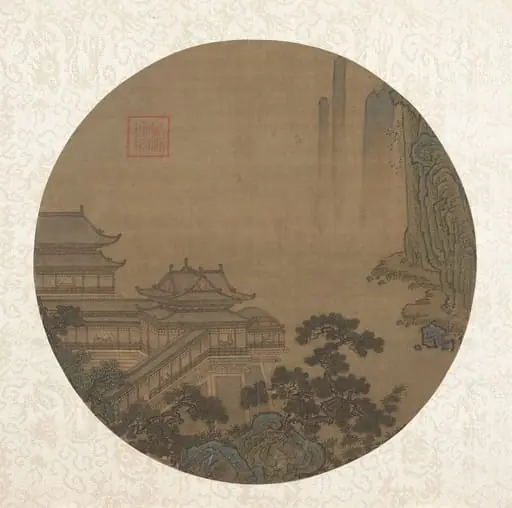 明/清 佚名 仙山樓閣圖 團扇頁|Palace
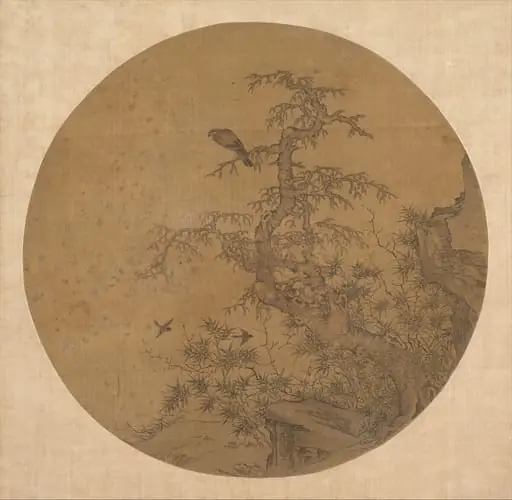 元/明 佚名 古木竹禽圖 團扇|Old Tree, Bamboo, and Birds
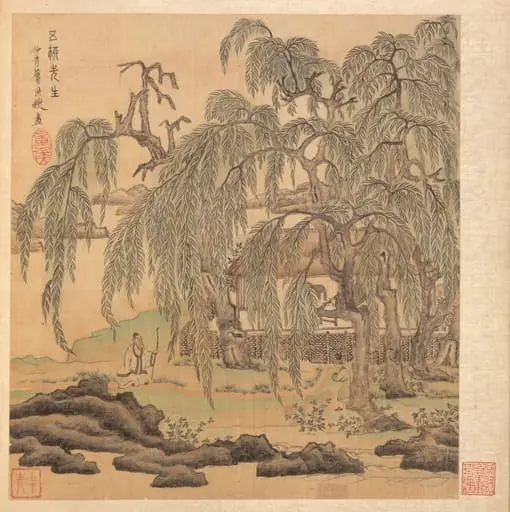 Paintings after Ancient Masters: Mr. Five Willows (Wuliu), Tao Yuanming
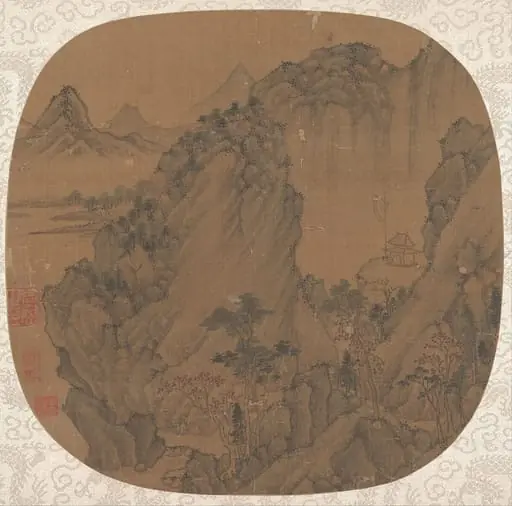 Untitled