Artwork
Untitled
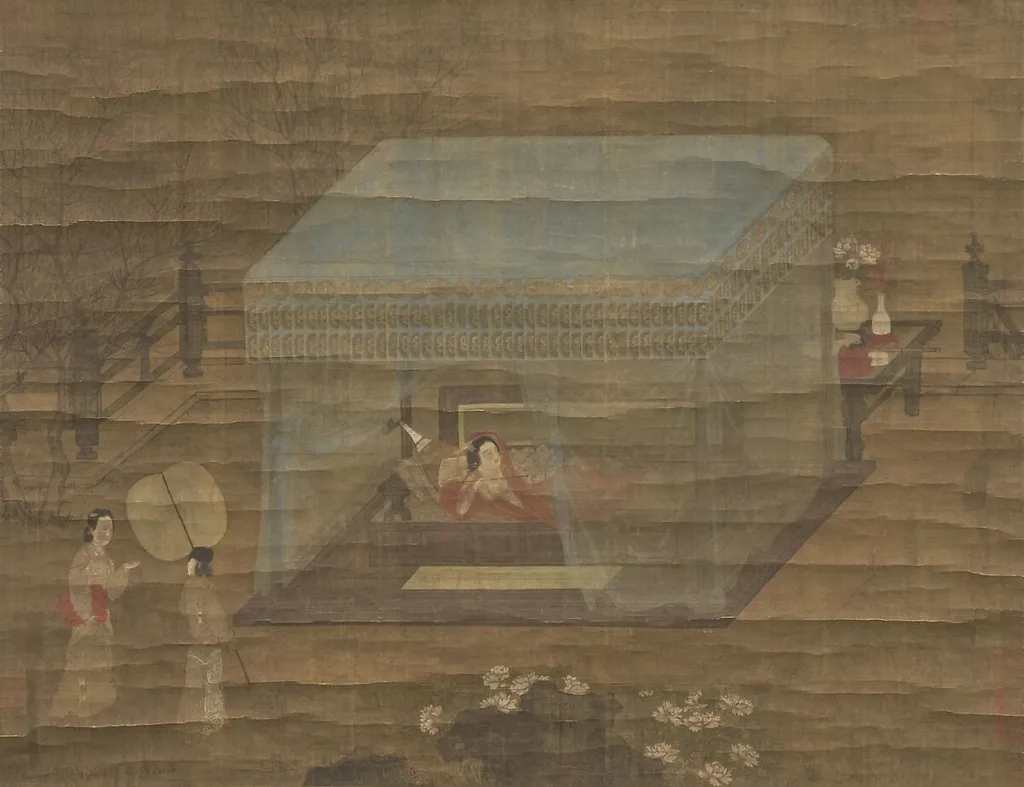
Untitled is an ink painting by the Ming dynasty painting artist After Qian Xuan. It dates from 1639 and is held in the collection of the Metropolitan Museum of Art.
About this work
Subject & Meaning
The composition centers on a woman situated near a bed, establishing a domestic interior as the primary subject.
Created in 1639 by an anonymous artist working in the style of Qian Xuan, this hanging scroll portrays a genre scene set within a Chinese pavilion or tent structure. The composition centers on a woman situated near a bed, establishing a domestic interior as the primary subject. While the specific narrative context or symbolic intent behind the figure's presence is not explicitly detailed in available records, the work functions as a representation of daily life or private moments within an architectural setting.
The inclusion of these specific elements, the bed, the temporary or semi-permanent shelter, and the solitary female figure, defines the iconography of the piece as a depiction of intimate, everyday existence rather than a mythological or historical event.
Technique & Style
Executed as a hanging scroll, this work is rendered in ink and color on silk, a traditional East Asian format combining a flexible woven support with pigments applied in monochrome ink alongside chromatic washes. The composition measures 58.7 by 76.2 centimeters, a horizontal proportion consistent with the hanging-scroll format. Produced in China in 1639 as a copy after Qian Xuan, the painting belongs to the genre-scene tradition and depicts a bed, pavilion, tent, and woman, suggesting the careful handling of architectural and figural motifs typical of after-works in this lineage.
The silk support would have required delicate mounting and conservation, and the work is now held in the collection of the Metropolitan Museum of Art.
History & Provenance
The work, titled Untitled and attributed to an artist working after Qian Xuan, was created in 1639 in China. Executed as a hanging scroll using ink and color on silk, the piece was produced by an anonymous painter. It currently resides in the collection of the Metropolitan Museum of Art.
The specific commissioning details and the complete chain of ownership prior to its acquisition by the museum are not detailed in the available records. The work depicts a scene featuring a woman, a bed, a pavilion, and a tent, consistent with the genre scene classification. Its physical dimensions are recorded as 58.7 cm in height and 76.2 cm in width.
The painting is held in the collection of the Metropolitan Museum of Art. Created in 1639, the work measures 58.7 cm in height and 76.2 cm in width. While specific inventory or accession numbers are not provided in the available records, the institution is confirmed as the current location and custodian of the piece. The available sources do not document any specific exhibition history for this work.
Legacy
The painting, dated 1639 and classified as a genre scene, portrays a woman within a pavilion and has been part of the Metropolitan Museum of Art’s collection since its inception. Its inclusion in a major museum has made it a reference work for scholars examining gender and domestic space in 17th‑century Chinese art. The attribution to the circle of Qian Xuan and its visual program have influenced later studies of similar scrolls, shaping interpretations of women’s roles in Chinese painting.
Overview
This "Untitled" hanging scroll, created in 1639, is attributed to an artist working in the manner of Qian Xuan. Executed with ink and color on silk, the painting presents a detailed genre scene. It offers a glimpse into a specific cultural setting, characterized by its architectural and domestic elements, and the presence of figures.
Artist & collection
Artist
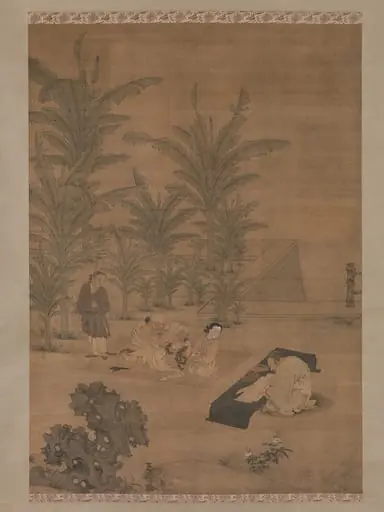
Working after Qian Xuan, the painter rendered scenes of the past in fine detail. The Brocade Hall scroll shows scholars in a misty garden, their robes crisp against the silk. Look closely and one scholar steals a glance…

- 明 杜堇 伏生授經圖 軸|The Scholar Fu Sheng Transmitting the Book of Documents
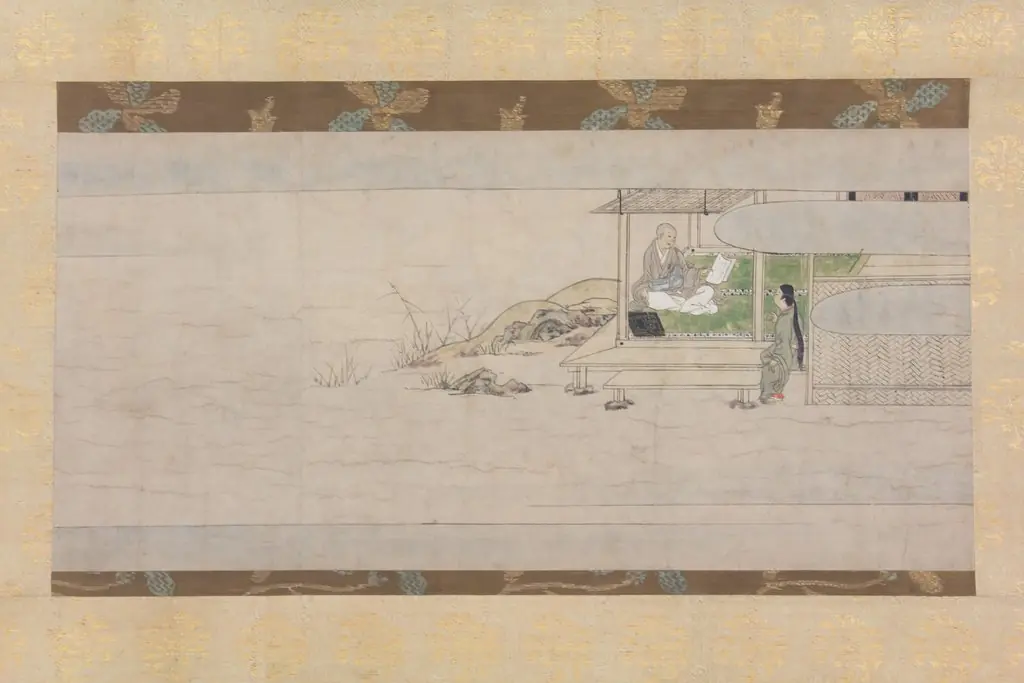 Scene from A Long Tale for an Autumn Night
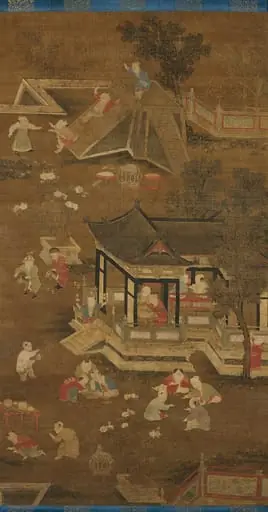 元末明初 佚名 絹本設色 嬰戯圖 軸|Children playing in the palace garden
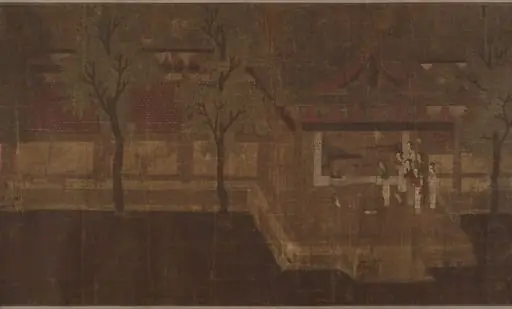 明/清 佚名 傳蕭照 中興瑞應第七圖 卷|Pavilion with Figures
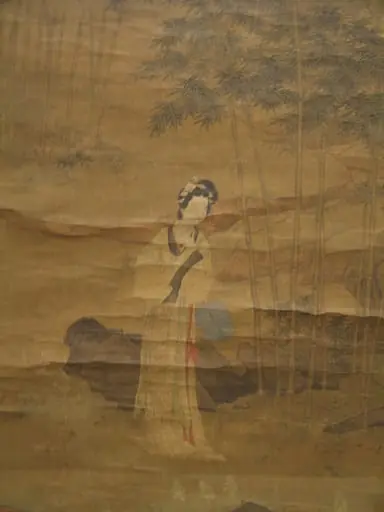 明 沈碩 仿仇英文玉圖 軸|Lady in a Bamboo Grove after Qiu Ying
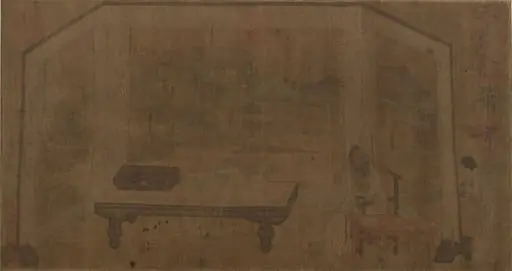 宋/明? 佚名 仿王齊翰 挑耳圖 卷|Library Scene
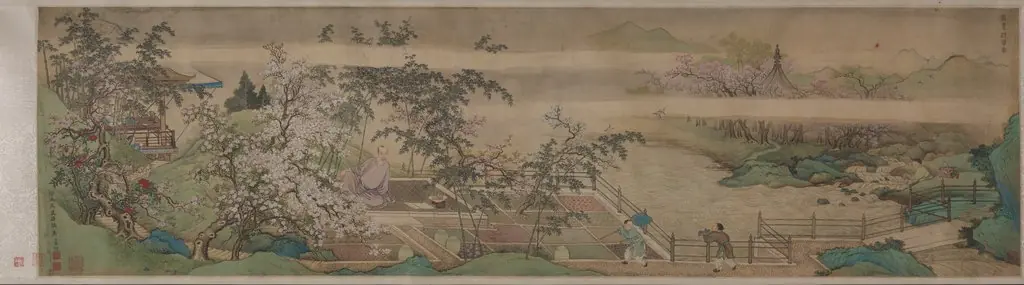 Cleansing Medicinal Herbs in the Stream on a Spring Day
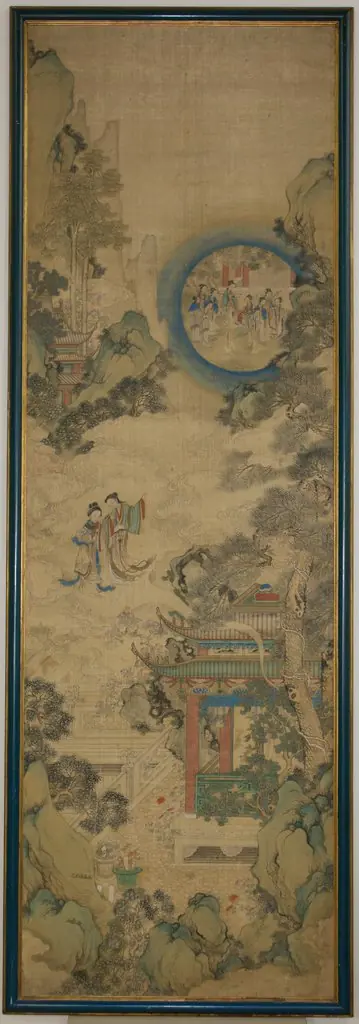 Three scenes from festivals of the twelve months
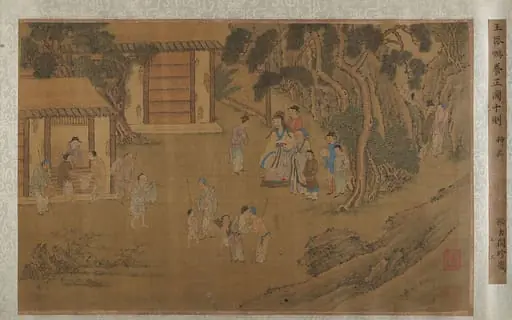 明/清 佚名 舊傳王振鵬 養正圖 卷|Family Training
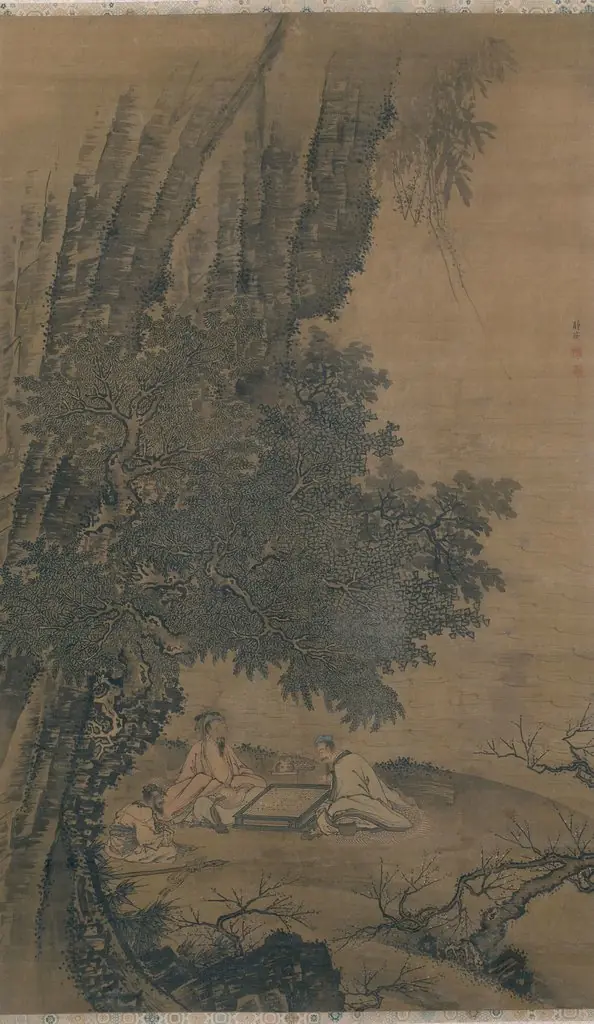 Landscape with Daoist Immortals Playing Weiqi
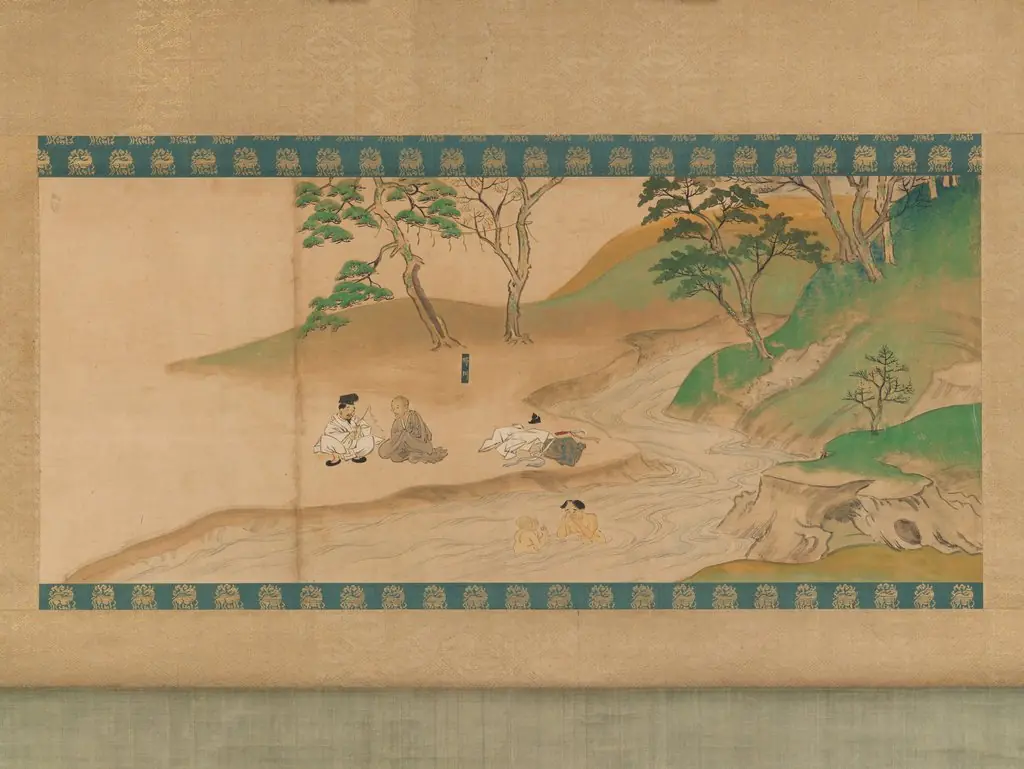 Section of Jin'o-ji Engi Emaki (Konin Shonin E-den)
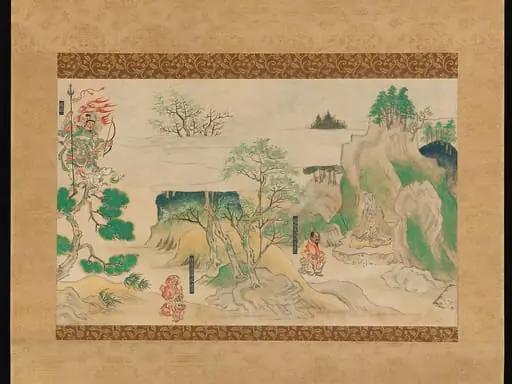 神於寺縁起絵巻断簡|Scene from The Illustrated Legends of Jin’ōji Temple