Artwork
明/清 佚名 傳蕭照 中興瑞應第七圖 卷|Pavilion with Figures
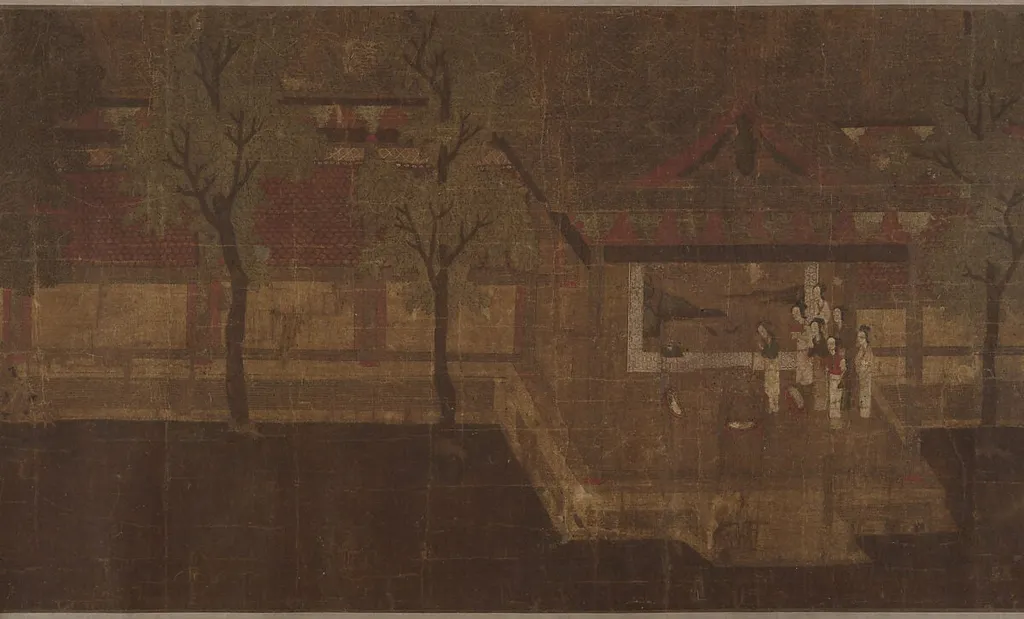
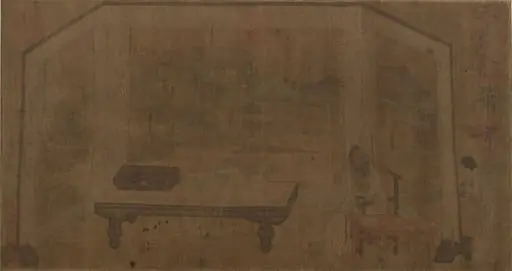
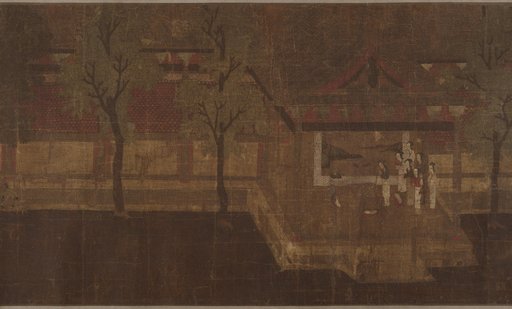
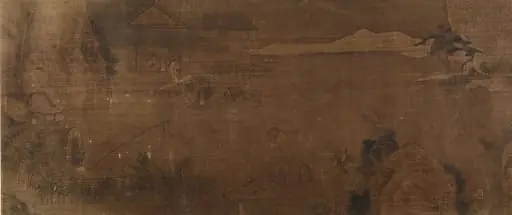
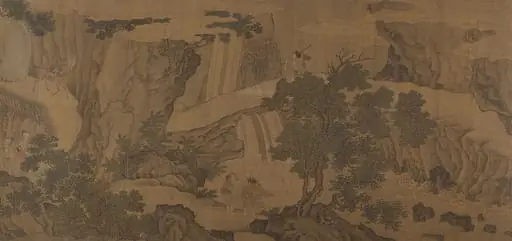
明/清 佚名 傳蕭照 中興瑞應第七圖 卷|Pavilion with Figures is an ink painting by the Song dynasty painting artist After Xiao Zhao. It dates from 1092 and is held in the collection of the Metropolitan Museum of Art. This handscroll, rendered in ink and color on silk, presents a detailed genre scene.
About this work
Technique & Style
4 cm in width, a proportion that allows for the arrangement of architectural elements, figures, and landscape features along a continuous ground.
Executed as a handscroll in ink and color on silk, the painting follows the traditional format of Chinese narrative painting, with its elongated horizontal composition suited to sequential viewing. The work measures 32.4 cm in height by 131.4 cm in width, a proportion that allows for the arrangement of architectural elements, figures, and landscape features along a continuous ground. Silk as a support demands careful handling and a controlled brush technique, and the use of color alongside monochrome ink suggests layered washes and fine outlining typical of figural and architectural rendering.
Held in the Metropolitan Museum of Art, the scroll is classified as a genre scene depicting a pavilion, women, and a game, indicating that the painterly focus is on refined interior and figural detail rather than broad landscape.
Legacy
The handscroll, catalogued as "Pavilion with Figures" and attributed to an anonymous follower of Xiao Zhao, entered the Metropolitan Museum of Art's collection, a placement that signals its scholarly recognition as an important example of Qing-era genre painting. Its inclusion in a premier public museum has contributed to ongoing discussions of how anonymous workshops transmitted stylistic motifs across East Asian art, reinforcing the work's lasting reputation within the field of Chinese painting studies.
Overview
This handscroll, rendered in ink and color on silk, presents a detailed genre scene. It depicts a pavilion bustling with women engaged in board games and conversation within a garden setting. Although the artist remains anonymous, the work is traditionally attributed to Xiao Zhao, a painter active during the Southern Song dynasty. The scroll itself dates to the Ming or Qing period, likely reflecting an earlier composition.
Subject & Meaning
The painting is titled "Auspicious Signs of the Restoration, Seventh Picture," indicating its place within a larger series. Its primary purpose was to commemorate a significant historical event: the brief resurgence of power by the Song imperial court. The depiction of leisurely activities within the pavilion thus serves to illustrate a period of restored order and prosperity, reflecting the positive omens associated with the court's renewed authority.
History & Provenance
While the scroll's precise creator is unknown, it carries an attribution to Xiao Zhao, a court painter from the Southern Song dynasty. This suggests the Ming or Qing period work is either a copy or a reinterpretation of an earlier composition, possibly by Xiao Zhao himself or from his artistic circle. The anonymity of the actual artist highlights the tradition of transmitting established compositions across generations in Chinese painting.
Artist & collection

 Untitled
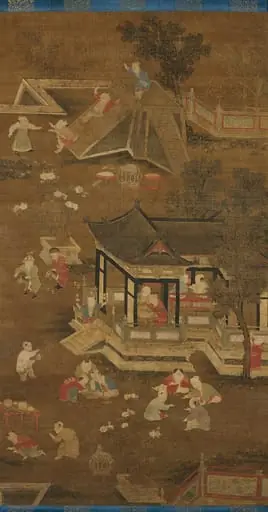 元末明初 佚名 絹本設色 嬰戯圖 軸|Children playing in the palace garden
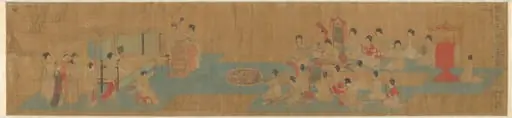 United by Music 合樂圖
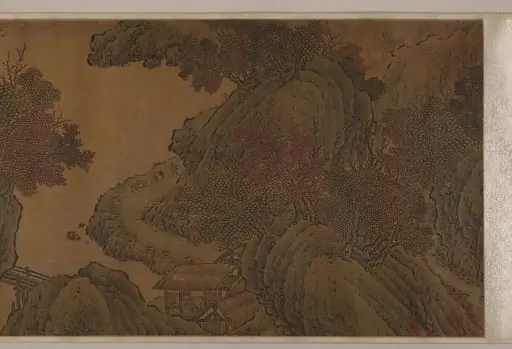 清 佚名 舊傳范寬 煙嵐秋曉圖 卷|Autumn Landscape
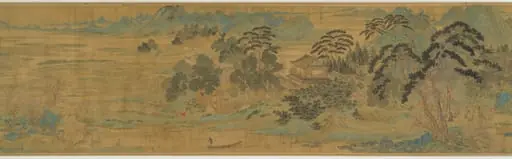 The Peach Blossom Spring 桃花源圖
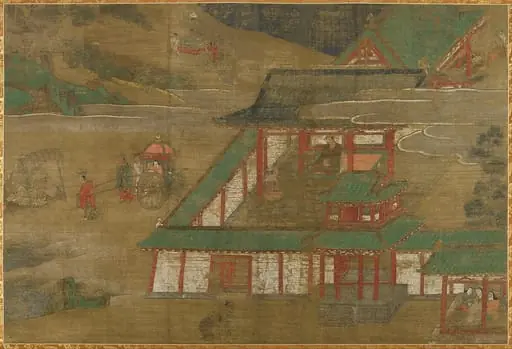 仏伝図|Scene from the Life of the Buddha
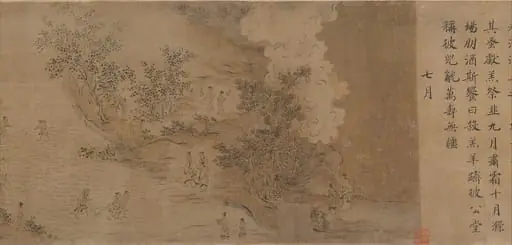 南宋 馬和之 詩經豳風圖 卷|Odes of the State of Bin
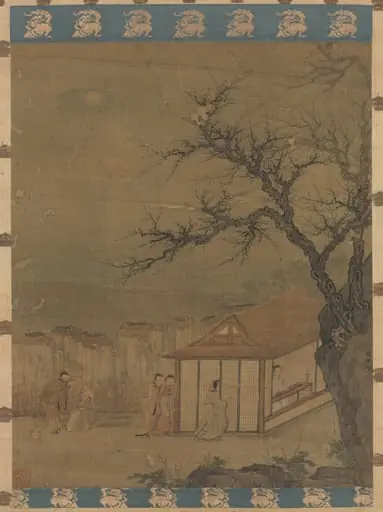 Listening to the Qin
 The Peach Blossom Spring
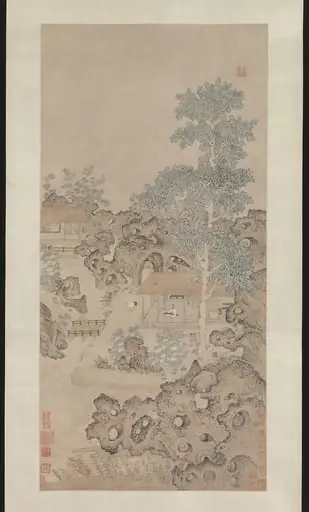 明 佚名 琴鶴圖 軸|Playing the zither for a crane
 明 佚名 游仙圖 卷|Daoist Immortals in a Landscape
- 宋/明? 佚名 仿王齊翰 挑耳圖 卷|Library Scene