Artwork
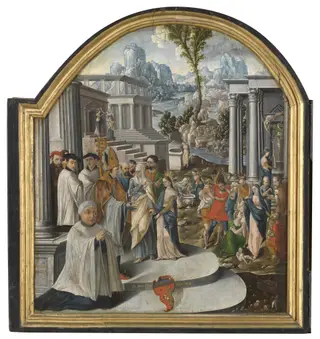
A Sermon on Charity (possibly the Conversion of Saint Anthony)
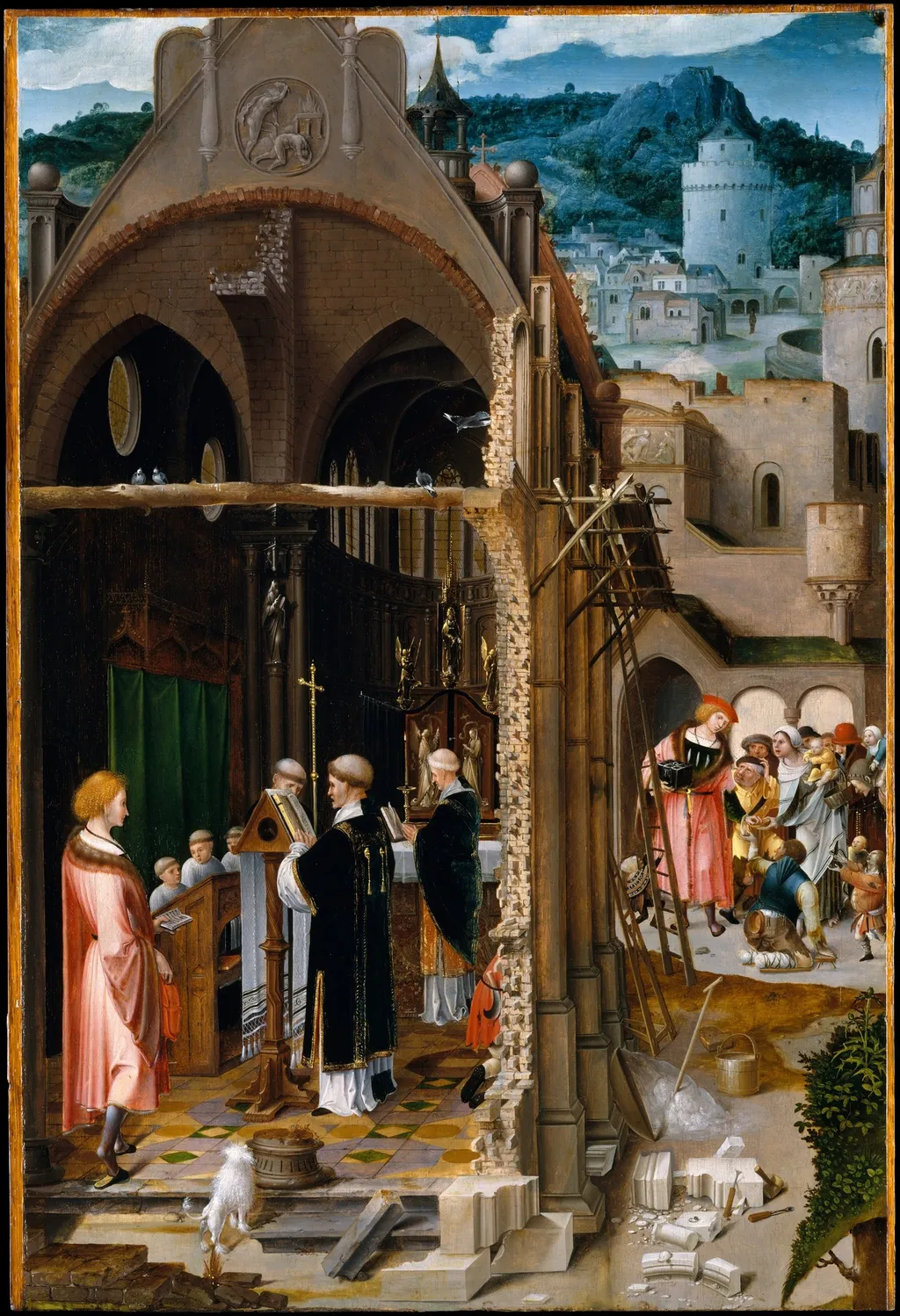
A Sermon on Charity (possibly the Conversion of Saint Anthony) is an oil painting. It dates from 1600 and is held in the collection of the Metropolitan Museum of Art.
About this work
Behind an unfinished brick wall in sixteenth-century Antwerp, a robed figure listens to the Gospels while the poor receive alms on the other side. Painted by an anonymous Antwerp Mannerist around 1520, the panel uses the dividing wall to separate ritual from action, echoing the Biblical Humanists, who held that Christian living mattered more than ceremony alone.
Technique & Style
These elements are arranged within an architectural space to convey the sacred subject matter through the specific material qualities of oil on panel.
Executed in 1600, this religious work is an oil painting applied to a wooden panel support. The piece measures 85.1 cm in height and 58.4 cm in width. Stylistically, the composition is attributed to the Antwerp Mannerist tradition, reflecting the practices of Netherlandish painters of that era.
The visual narrative depicts an interior church setting populated by several figures, including Anthony the Great, a woman engaged in reading, a child, a dog, and other men. These elements are arranged within an architectural space to convey the sacred subject matter through the specific material qualities of oil on panel.
Context
The work titled A Sermon on Charity (possibly the Conversion of Saint Anthony) is an early‑17th‑century oil painting on panel, measuring roughly 85 × 58 cm, that represents a religious scene attributed to a Netherlandish Antwerp Mannerist artist. Its iconography includes Saint Anthony the Great accompanied by a man, a woman, a child, a dog and a church interior, reflecting Counter‑Reformation interests in charitable themes. The painting entered the collection of the Metropolitan Museum of Art, where it remains on view, and is catalogued as a religious work of the period.
Its stylistic proximity to other Antwerp mannerist productions situates it within the broader trajectory of Northern European religious art circa 1600.
Overview
This oil-on-wood panel, created by an anonymous Netherlandish artist in the Antwerp Mannerist style around 1520–25, presents a complex religious narrative. Titled A Sermon on Charity, it may also depict the pivotal moment of Saint Anthony's conversion. The artwork is characterized by a distinctive compositional split, visually and thematically dividing scenes of religious observance from acts of compassion.
Subject & Meaning
The painting's central theme revolves around Christian virtue, specifically charity. One interpretation identifies the scene as Saint Anthony the Great's decision to renounce his wealth after hearing the Gospels. Alternatively, the work functions as a broader visual exhortation on charitable giving.
A prominent, unfinished brick wall deliberately bisects the composition, separating formal liturgical practices on one side from the direct act of almsgiving on the other.
History & Provenance
This painting entered the collection of the Metropolitan Museum of Art in 1908. It was acquired through the Rogers Fund and is cataloged under the object number 08.183.2. Its journey into the museum's holdings marks a significant point in its public history, making it accessible for study and display.
Artist & collection

 The Dream of Pope Sergius
 Marienaltar: Tempelgang Mariae
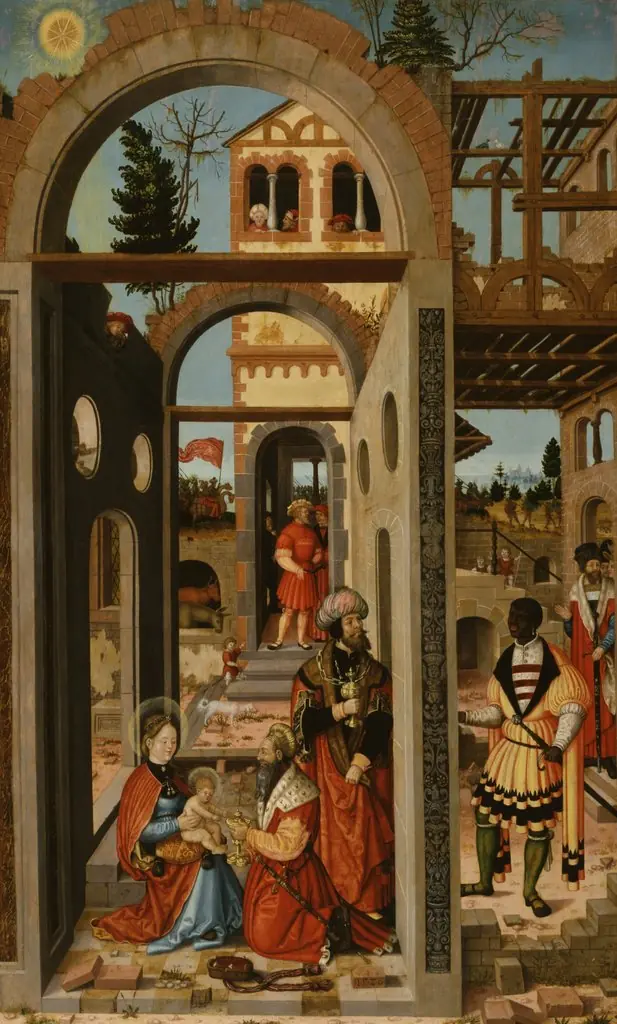 Adoration of the Three Kings
 The Life of Saint Genevieve
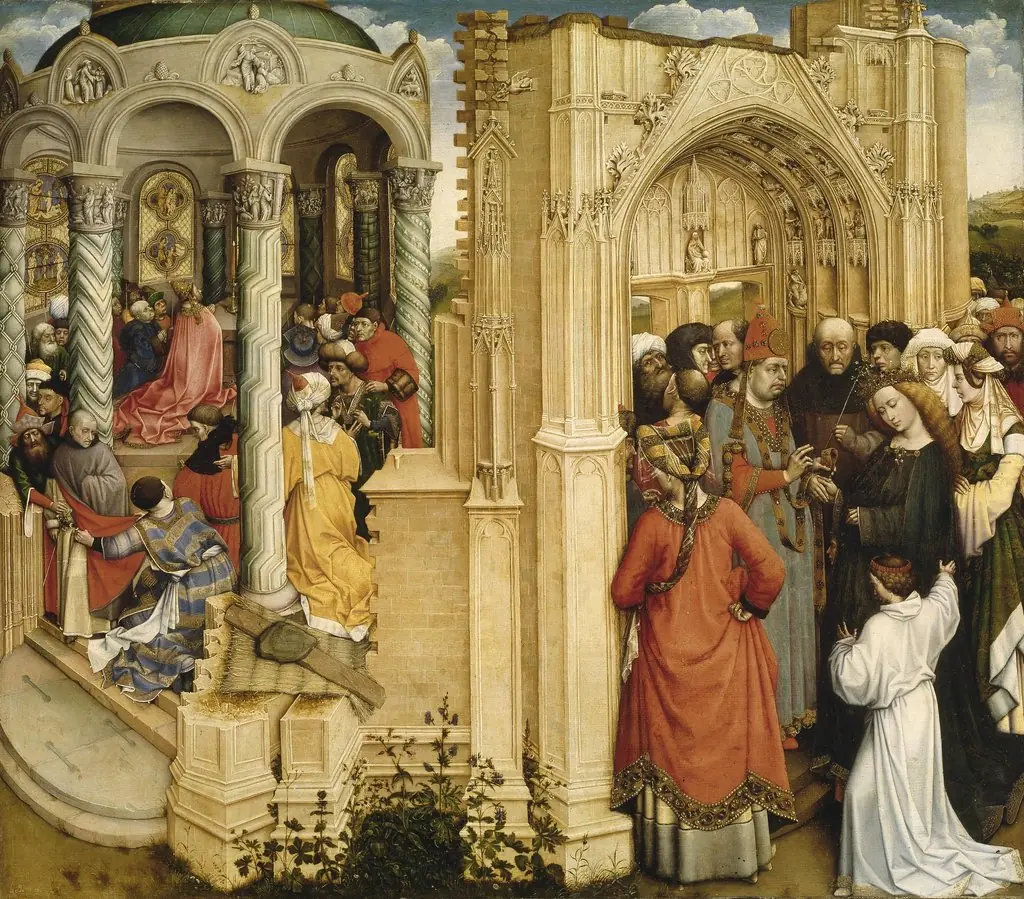 The miracle of the flowering rod (left); the marriage of Mary and Joseph (right)
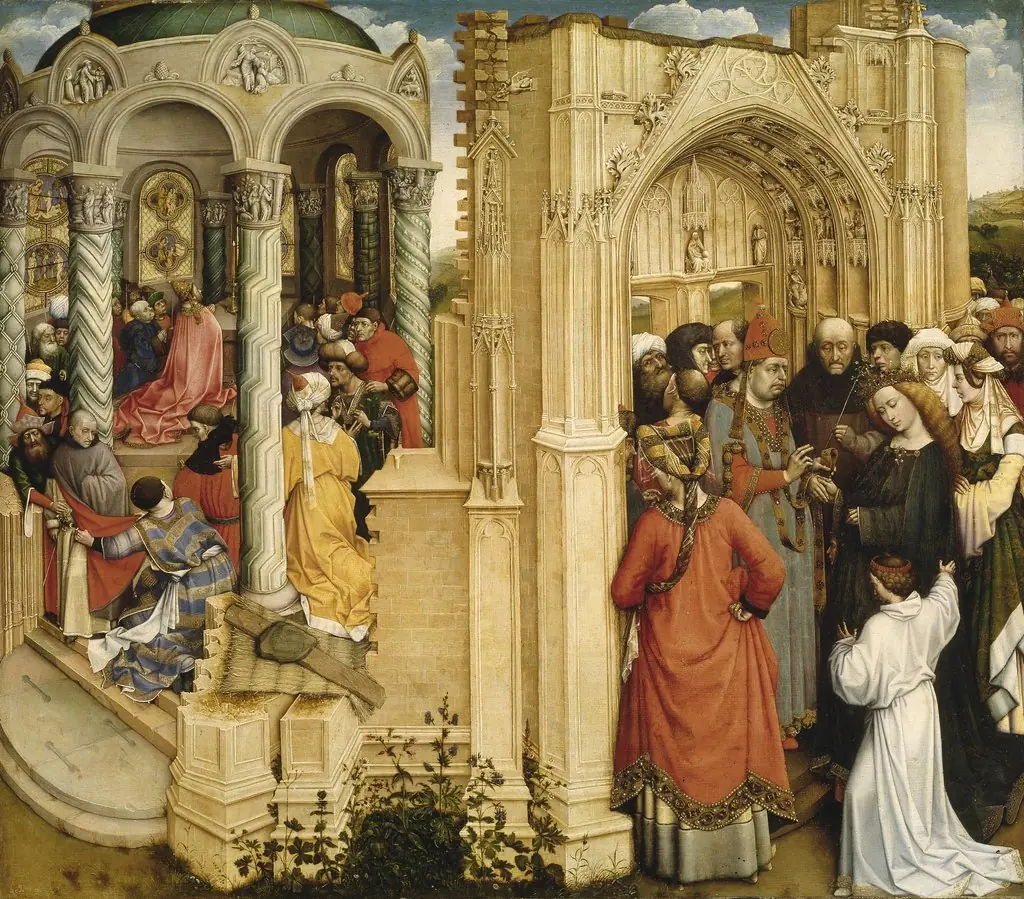 Marriage of the Virgin
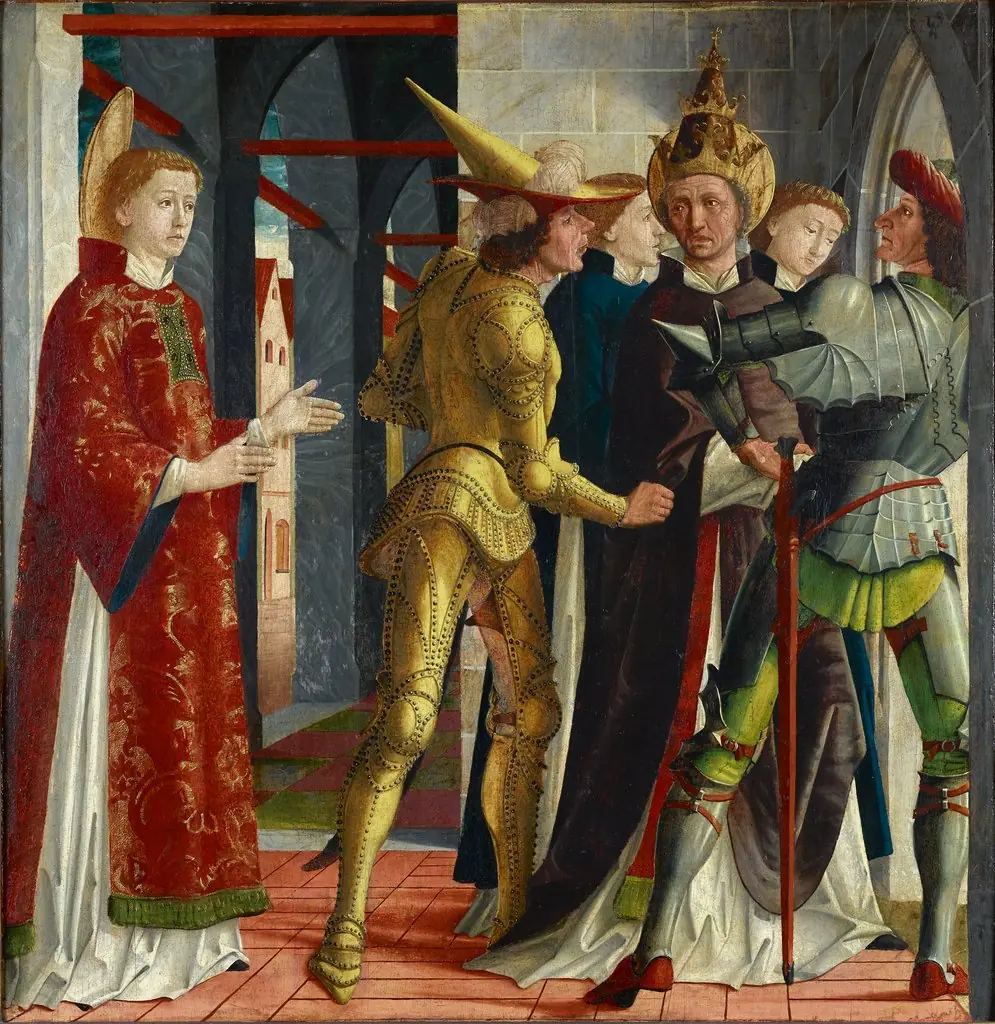 Pope Sixtus II. bids farewell to St. Lawrence
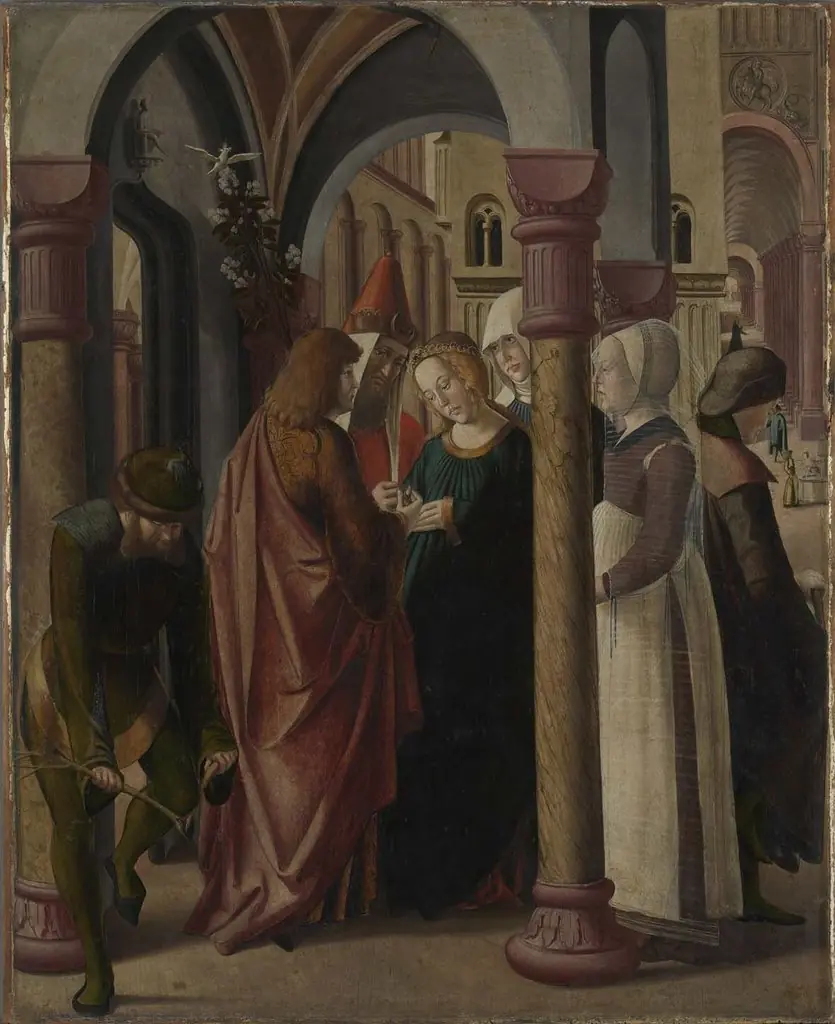 Marienaltar: Vermählung Mariae
 The Life of Saint Apollonia
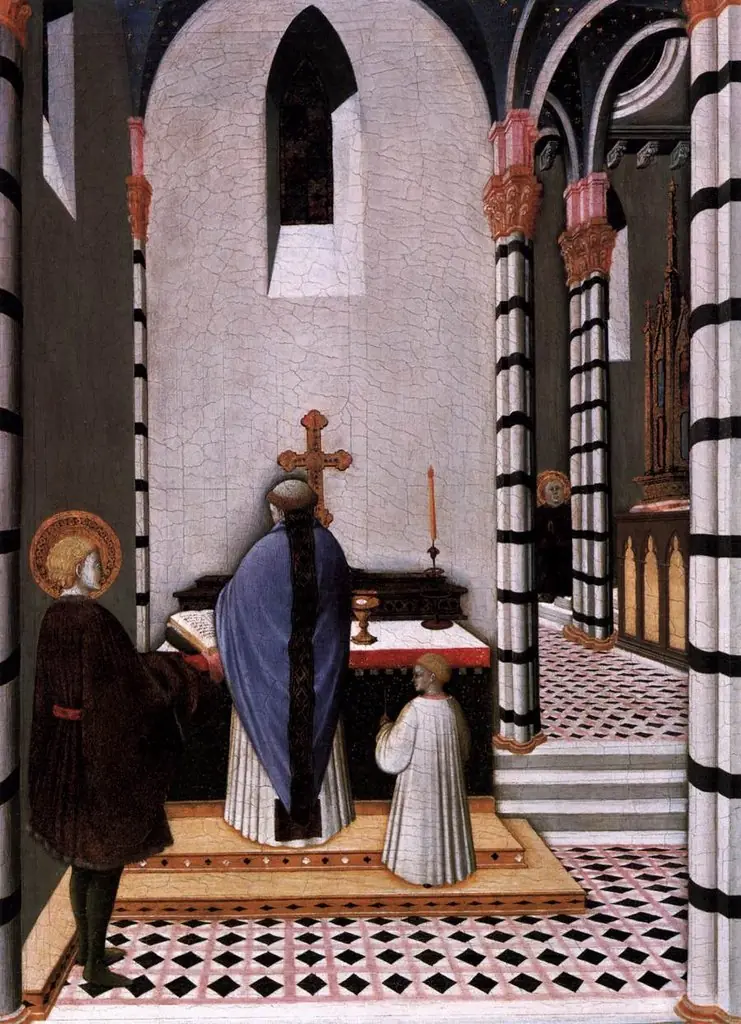 St Anthony at Mass Dedicates His Life to God