Artwork
Binnenplaats van het Oost Indisch Huis te Amsterdam
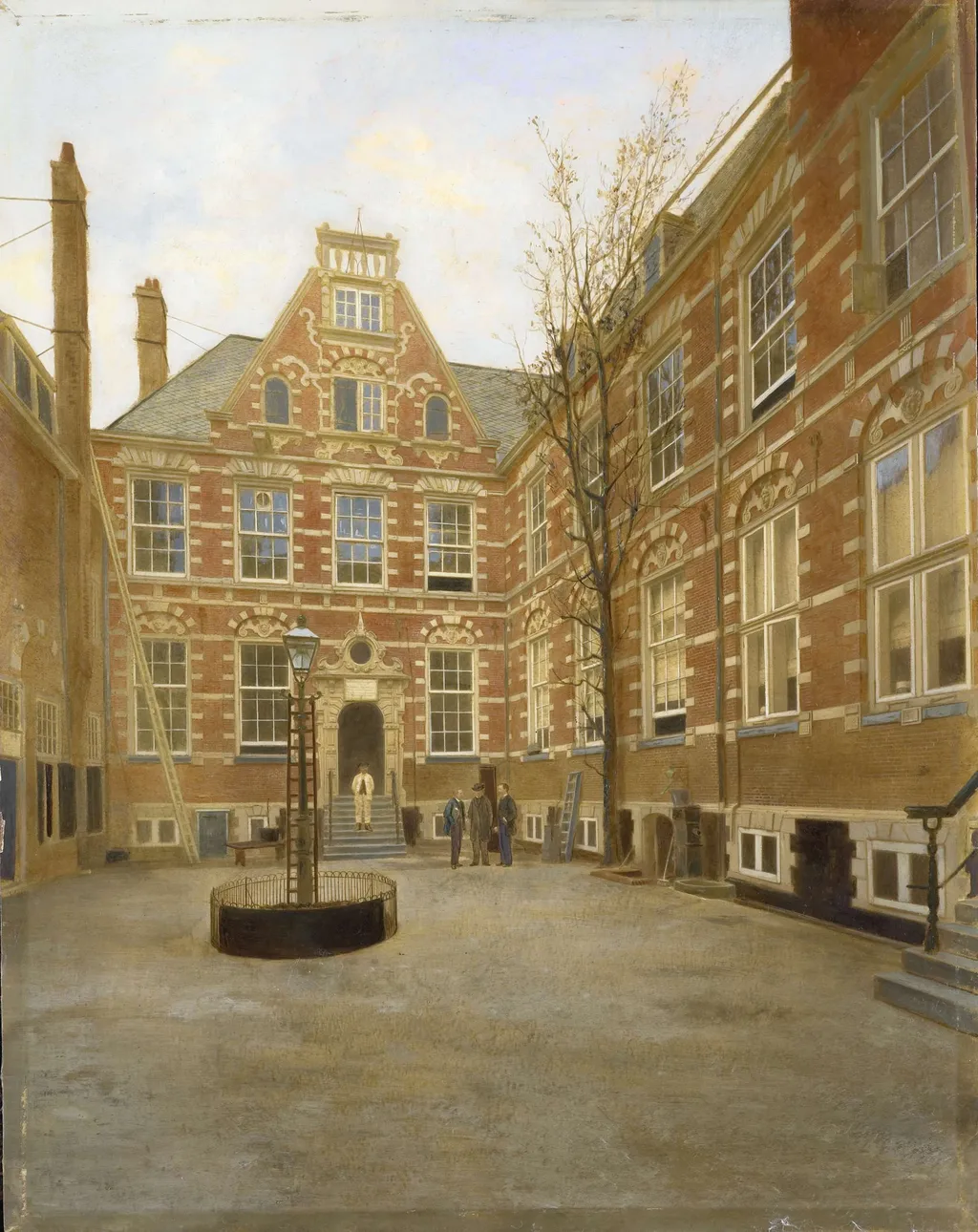
Binnenplaats van het Oost Indisch Huis te Amsterdam is an oil painting by the Impressionist artist Unknown. It dates from 1875 and is held in the collection of the Rijksmuseum.
About this work
Subject & Meaning
By choosing this subject, the artist engaged with a tradition of commemorative cityscapes that preserved Amsterdam's mercantile heritage.
The painting depicts the courtyard of the Oost-Indisch Huis in Amsterdam, the former headquarters of the Dutch East India Company (VOC). Rendered in oil on panel, the work offers a topographical view of this historically significant commercial site, documenting its architectural character as a center of Dutch overseas trade.
By choosing this subject, the artist engaged with a tradition of commemorative cityscapes that preserved Amsterdam's mercantile heritage. The Oost-Indisch Huis functioned as the operational heart of one of the most powerful trading enterprises of the early modern period, and its depiction in 1875 reflects late nineteenth-century interest in recording the city's historic built environment before further urban change.
Technique & Style
Created in 1875, this work is an oil painting executed on a wooden panel. The piece measures 43 cm in height and 34 cm in width. Stylistically, the composition focuses on the architectural depiction of the Oost-Indisch Huis in Amsterdam, capturing the specific courtyard setting of the historic building.
The application of oil paint on panel suggests a traditional approach to recording urban scenes during this period, prioritizing structural detail within a compact format.
History & Provenance
The work was painted in Amsterdam in 1875 as an anonymous interior view of the East India House, commissioned by the Royal Dutch Antiquarian Society for the Rijksmuseum collection. It is executed in oil on panel and measures 43 cm by 34 cm. The painting entered the museum's holdings shortly after its creation and has remained in the Rijksmuseum collection to the present day.
Overview
The work depicts an open courtyard attached to a brick structure, its façade marked by numerous windows, a prominent entrance and a flight of stairs. A solitary, leaf‑less tree stands on the right side, while three figures in period dress converse near the building’s threshold. The sky above is a light, cloud‑dotted blue, giving the scene a calm, everyday atmosphere.
Context
The East India House served as the headquarters of the Dutch East India Company, a hub of trade and administration in the 17th and 18th centuries. Courtyard scenes such as this were common in Dutch genre painting, reflecting interest in everyday civic spaces and the people who inhabited them.
Artist & collection









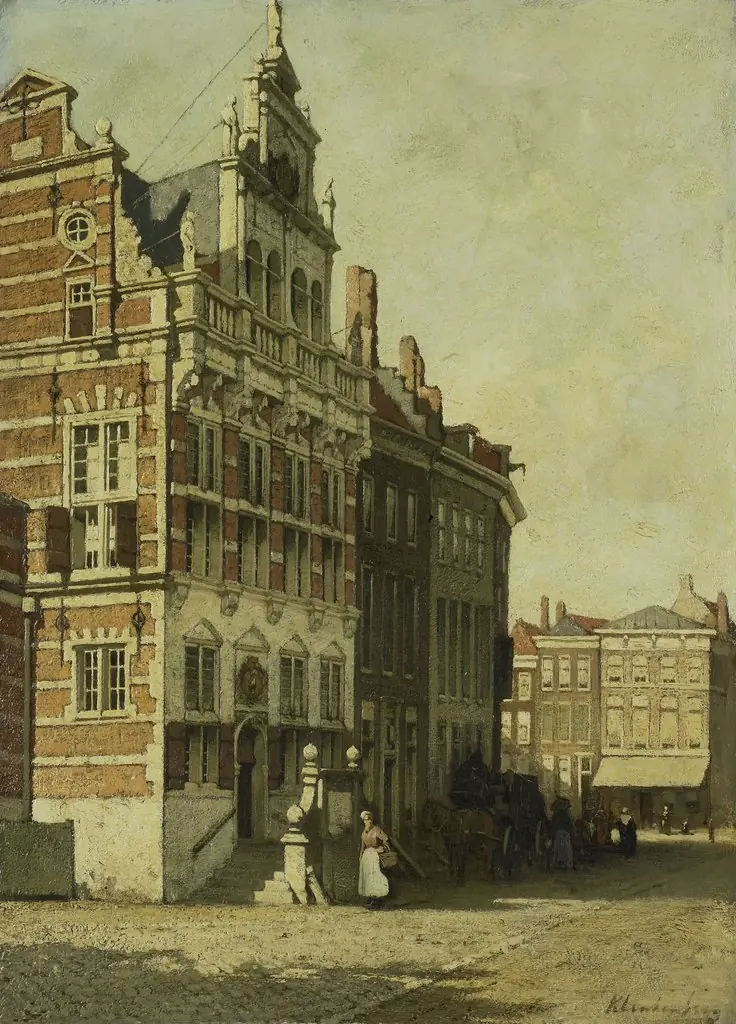 The Town Hall, The Hague
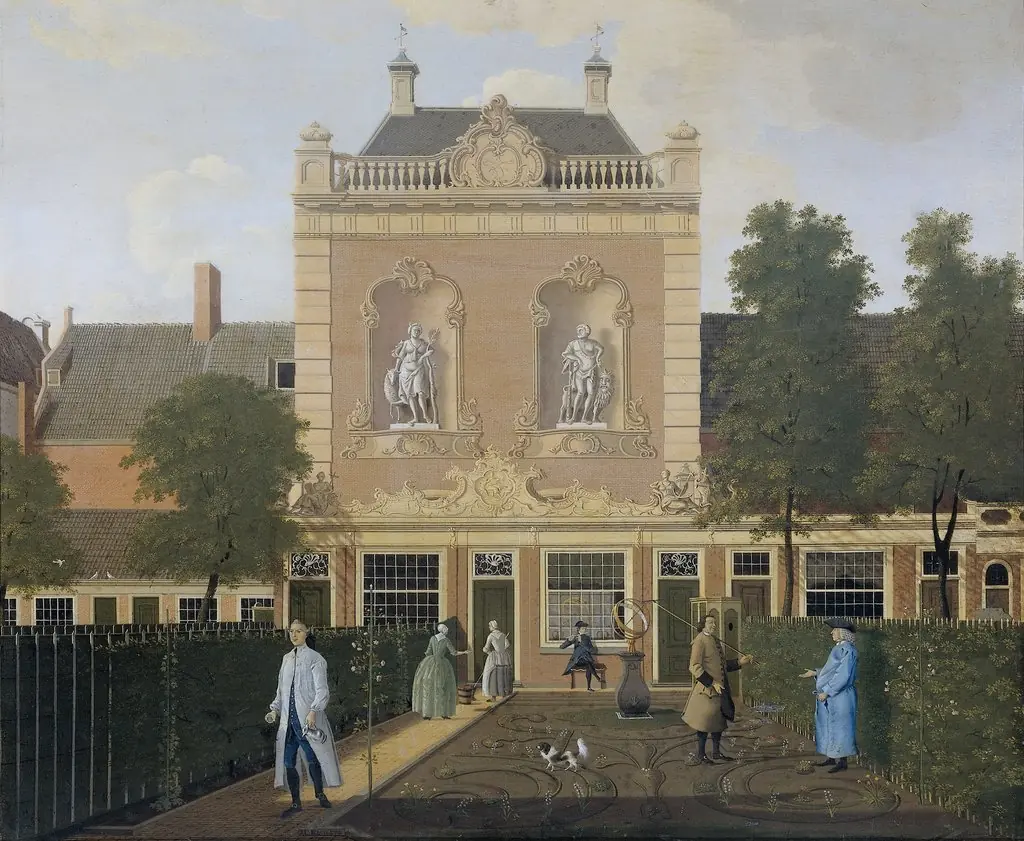 The Garden and Coach House of 524 Keizersgracht in Amsterdam
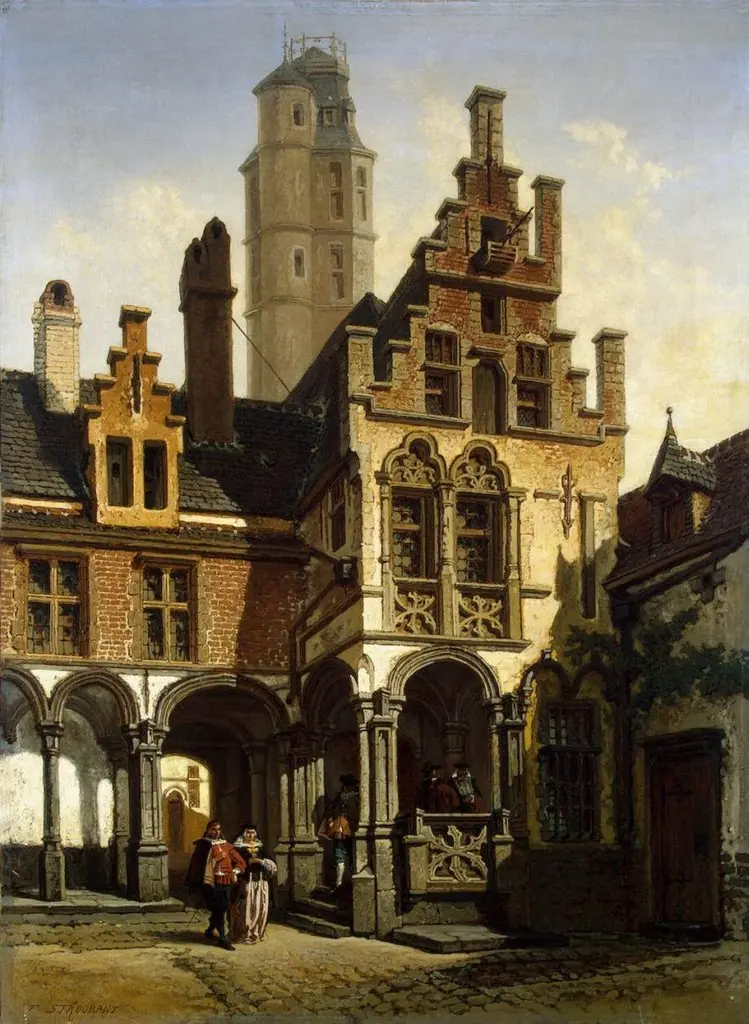 Old House of Marguerite of Austria in Malines
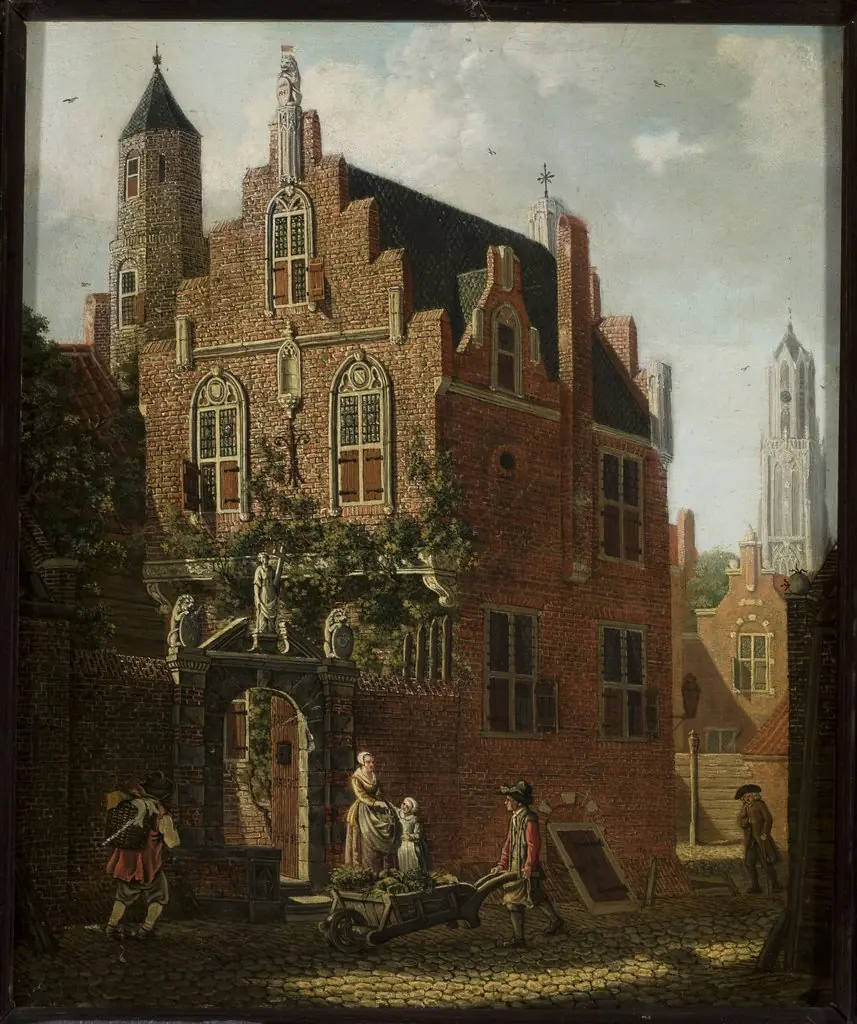 View of the city
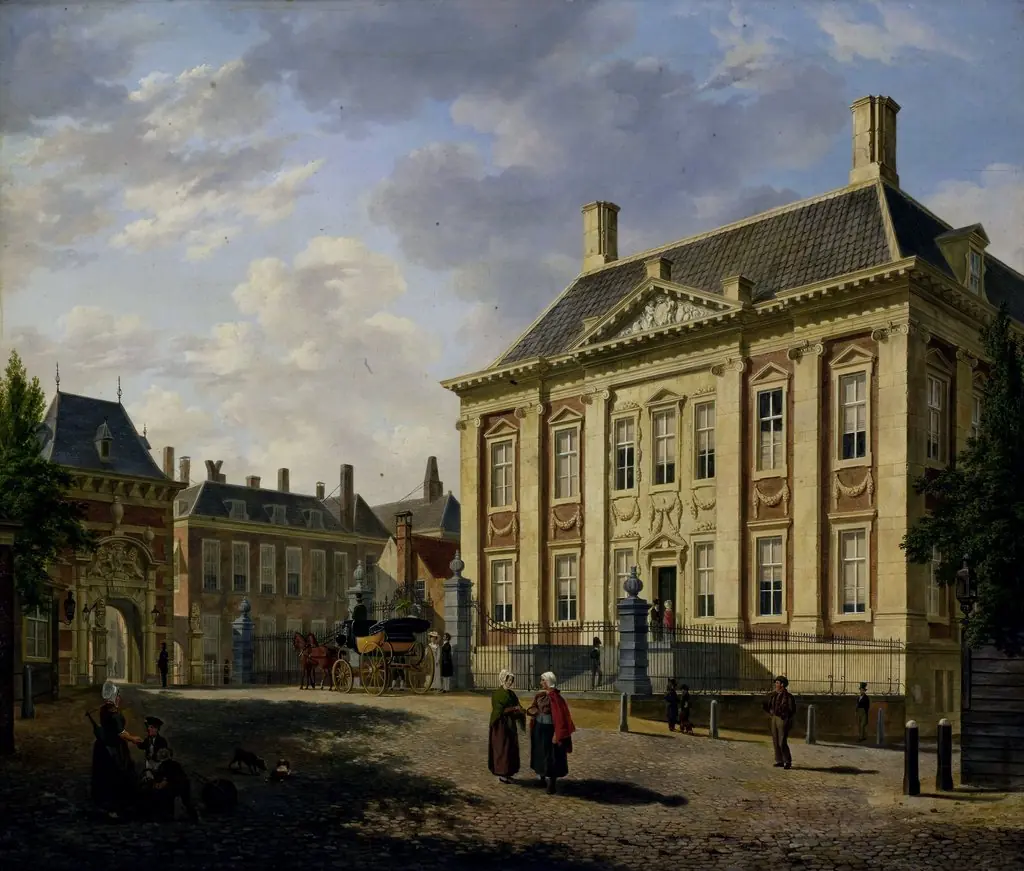 Mauritshuis in The Hague
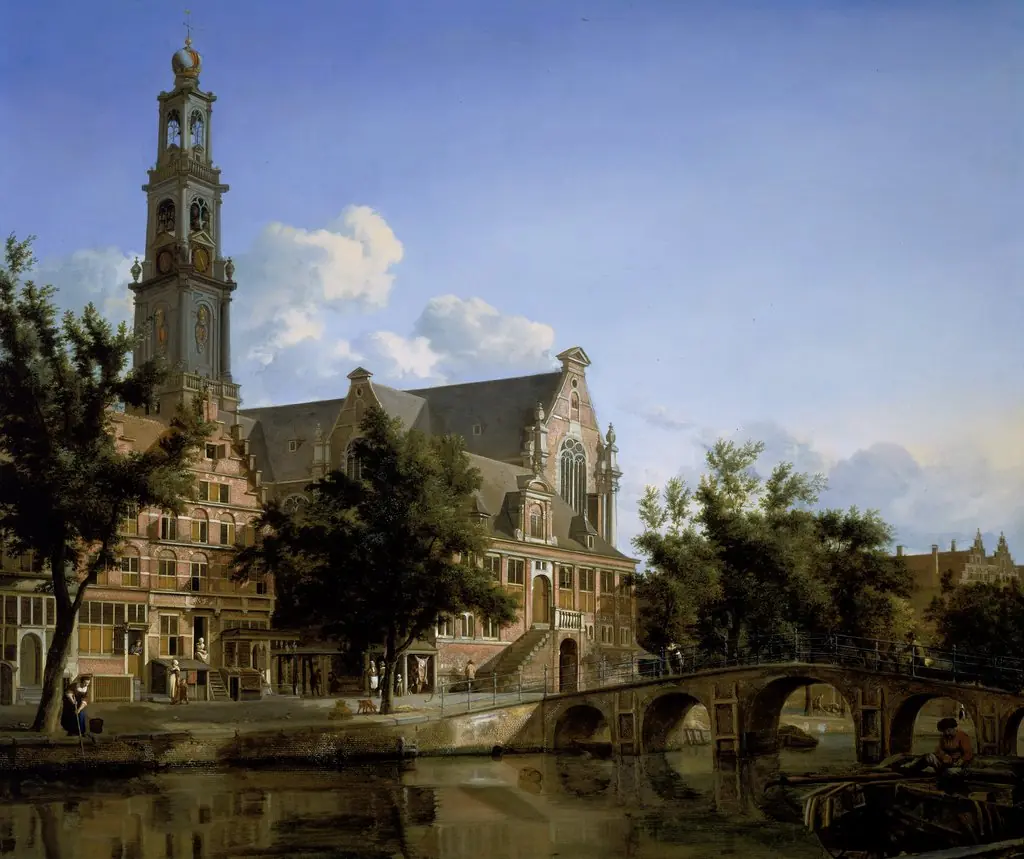 View of the Westerkerk, Amsterdam
 The Latin school on the Singel, Amsterdam
 The Gevangenpoort and the Plaats, The Hague
 De tuin en het koetshuis van Keizersgracht 524 in Amsterdam