Artwork
Cornelis van Aerssen van Sommelsdijck, governor of Surinam
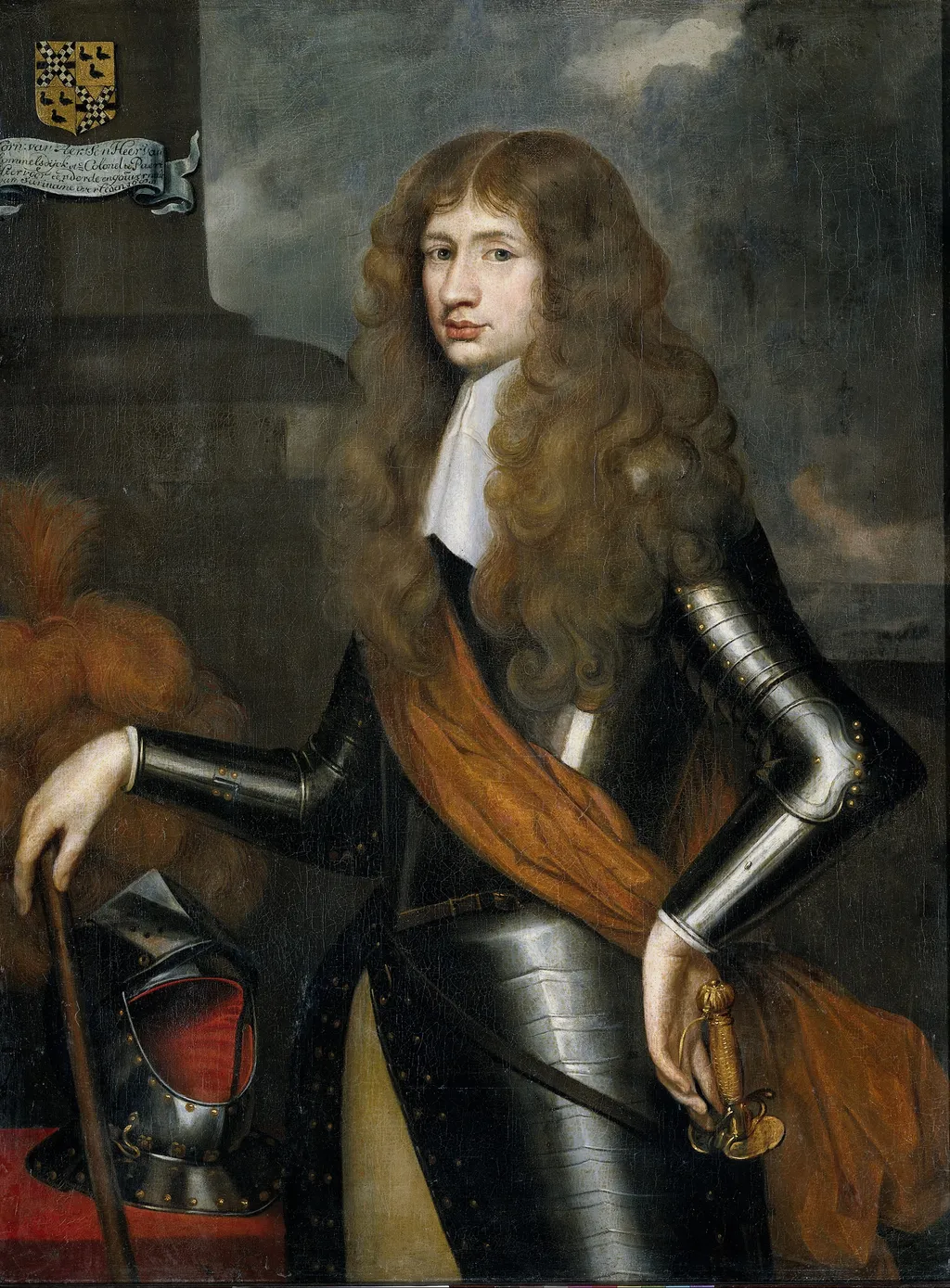
Cornelis van Aerssen van Sommelsdijck, governor of Surinam is an oil painting. It dates from 1690 and is held in the collection of the Rijksmuseum. The work is an oil painting portraying a gentleman in elaborate armor, sword in hand, set against a darkened backdrop.
About this work
Technique & Style
The stylistic qualities reveal a restrained palette and careful attention to surface detail, characteristic of Dutch colonial portraiture.
The work is an oil painting executed on canvas, reflecting typical 17th-century portraiture conventions. Its handling shows precise brushwork that delineates the sitter’s attire and dignified posture, while the formal composition emphasizes a balanced arrangement of figure and background. The stylistic qualities reveal a restrained palette and careful attention to surface detail, characteristic of Dutch colonial portraiture.
History & Provenance
The portrait was painted in 1680 in the Northern Low Countries, commissioned by the sitter himself as governor of Surinam. It was created on canvas using oil paint and originally entered the collection of Helene Ditmars before being acquired by the Rijksmuseum, where it remains on display.
The portrait of Cornelis van Aerssen van Sommelsdijck is held in the collection of the Rijksmuseum. The work, executed in oil on canvas around 1680, depicts the governor of Surinam. While the museum houses the painting, the provided sources do not list a specific inventory or accession number for this object. Additionally, no exhibition history is recorded in the available documentation.
Context
Cornelis van Aerssen van Sommelsdijck served as governor of the Dutch colony of Surinam in the late 17th century, a role that placed him within the colonial administration that managed plantation economies and enslaved labor. Contemporary scholarship situates his portrait among elite colonial officials whose visual representations reinforced European authority in the Americas. The work is housed in the Rijksmuseum collection and was acquired by Helene Ditmars, reflecting the transatlantic networks of art collecting in the Dutch Republic.
Its dimensions of 121 cm by 91 cm and oil-on-canvas technique align with portrait conventions of the period. Art historical analysis situates the painting within the broader corpus of Dutch colonial portraiture, highlighting its significance as a visual record of power and identity in the Atlantic world.
Overview
The work is an oil painting portraying a gentleman in elaborate armor, sword in hand, set against a darkened backdrop. A red helmet lies at his side, and a heraldic shield is positioned in the upper left corner. The figure’s curly hair and solemn expression are highlighted by a focused light, while the surrounding space remains in shadow.
Subject & Meaning
The portrait likely represents Cornelis van Aerssen van Sommelsdijck, who served as governor of Surinam. His opulent attire and the inclusion of a coat of arms underscore his status and authority, while the sword suggests martial responsibility. The restrained, serious demeanor conveys the gravitas associated with colonial administration in the early modern period.
Artist & collection

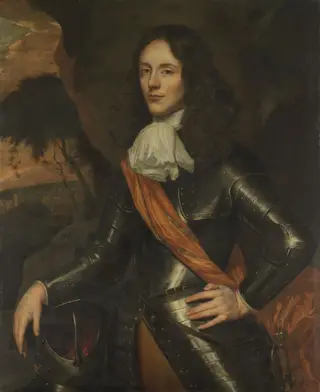 Portrait of James, 4th Lord Cranstoun (in or after 1643-85/88)
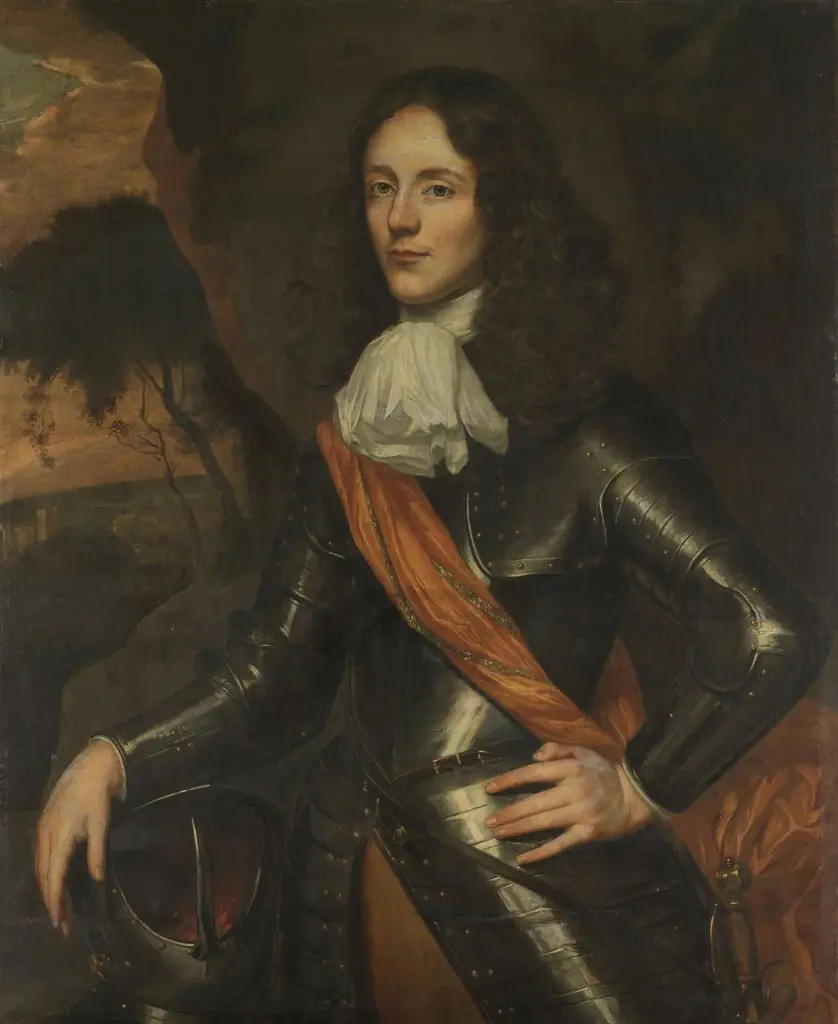 A military officer
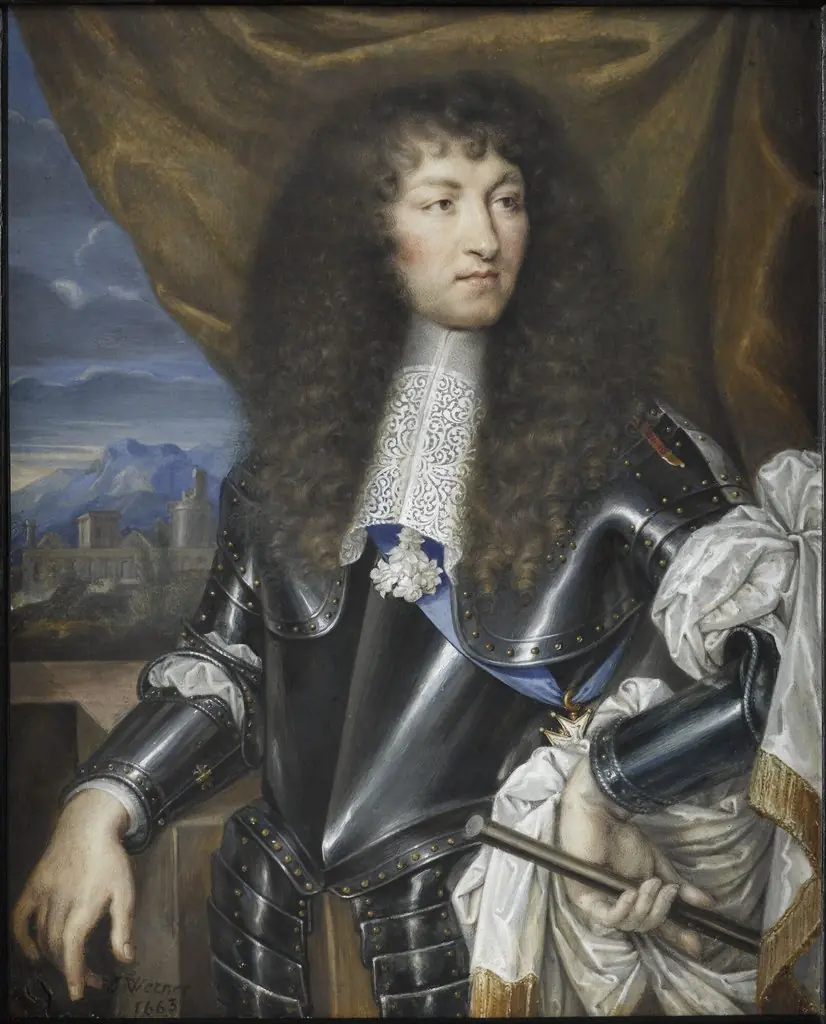 Louis XIV in Armor
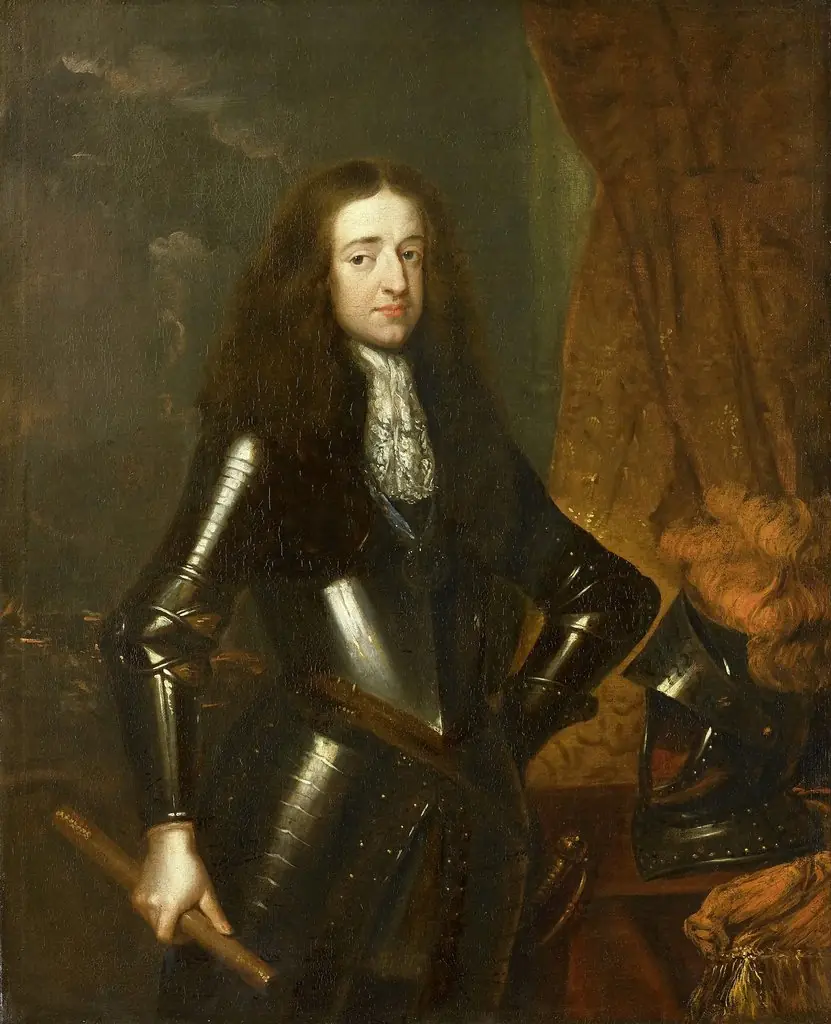 Portrait of Willem III (1650-1702), Prince of Orange and since 1689, King of England
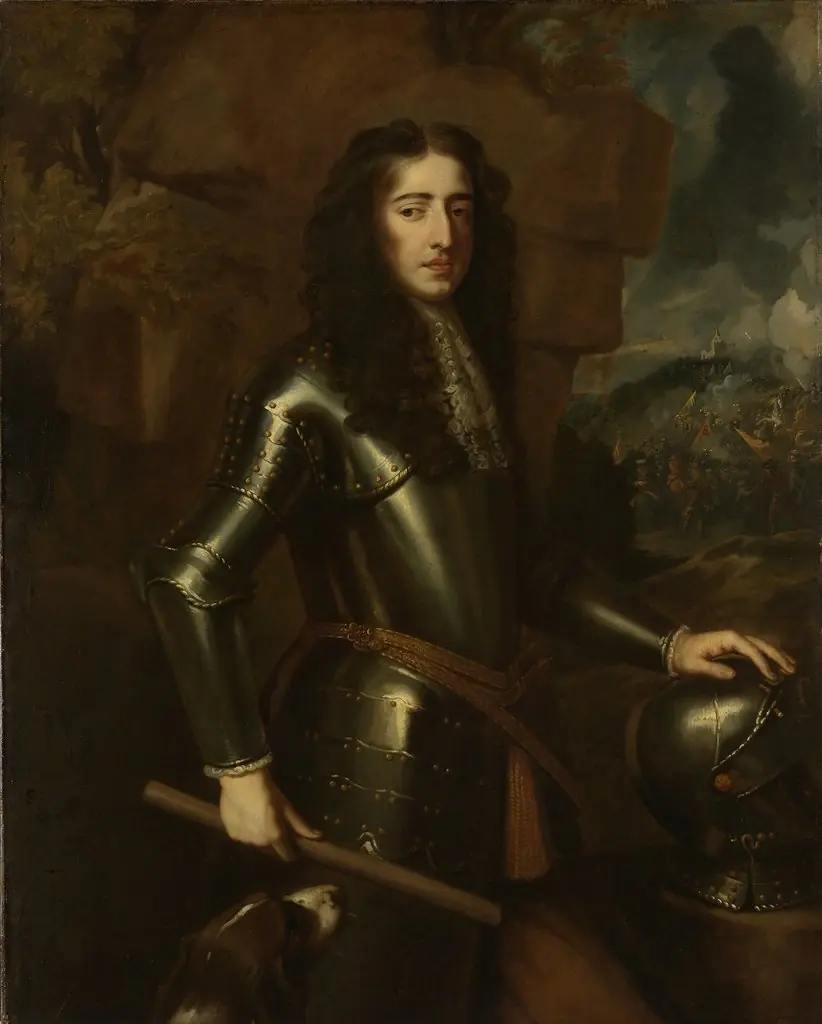 Portrait of William III, Prince of Orange, Stadtholder, after 1689 King of England
 Portrait of Willem III (1650-1702), Prince of Orange and since 1689, King of England
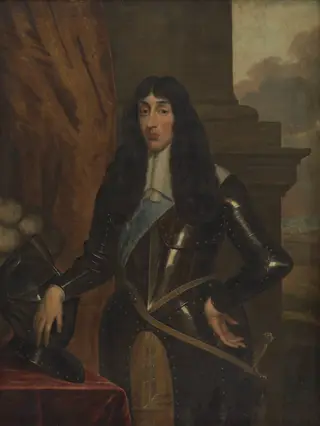 Portrait of Prince Henry of England
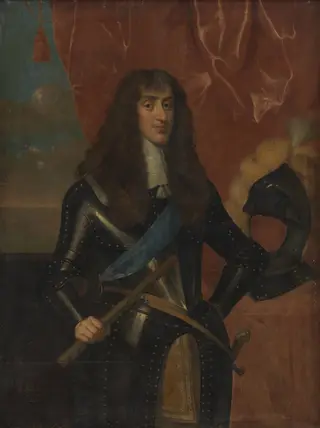 Prince James of England
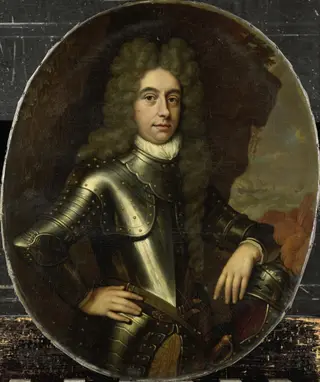 Portrait of Harmen Lijnslager, Secretary of the Admiralty of Amsterdam
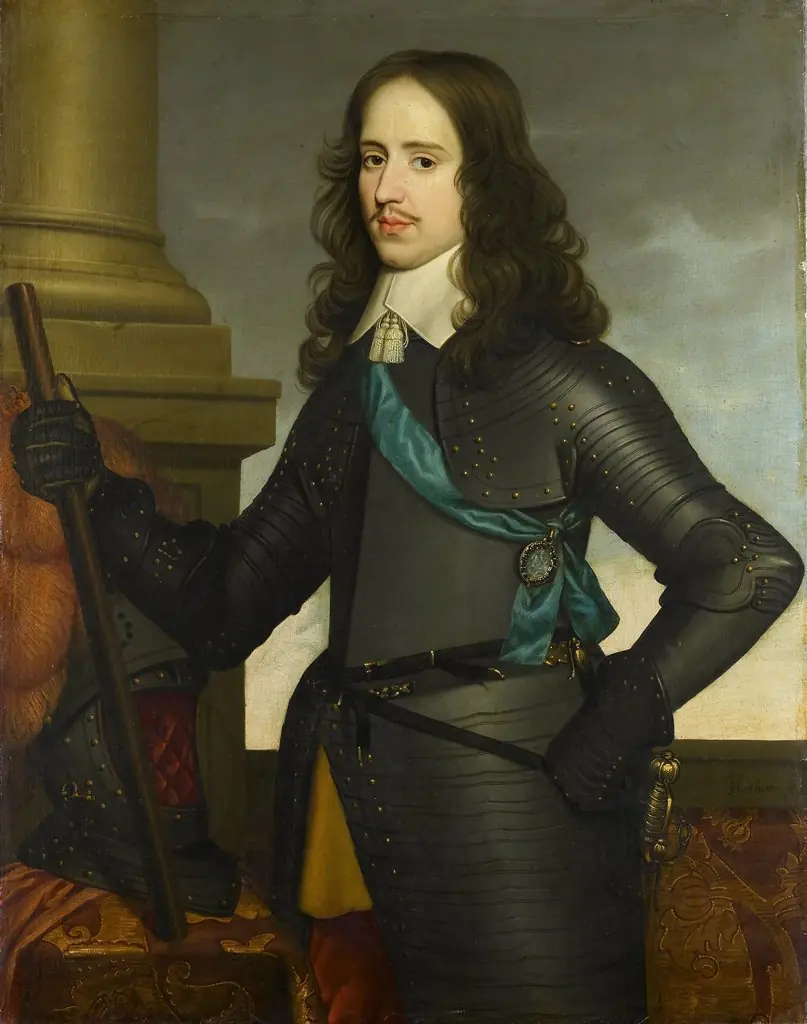 Portrait of Willem II (1626-50), Prince of Orange