Artwork
Hanuman
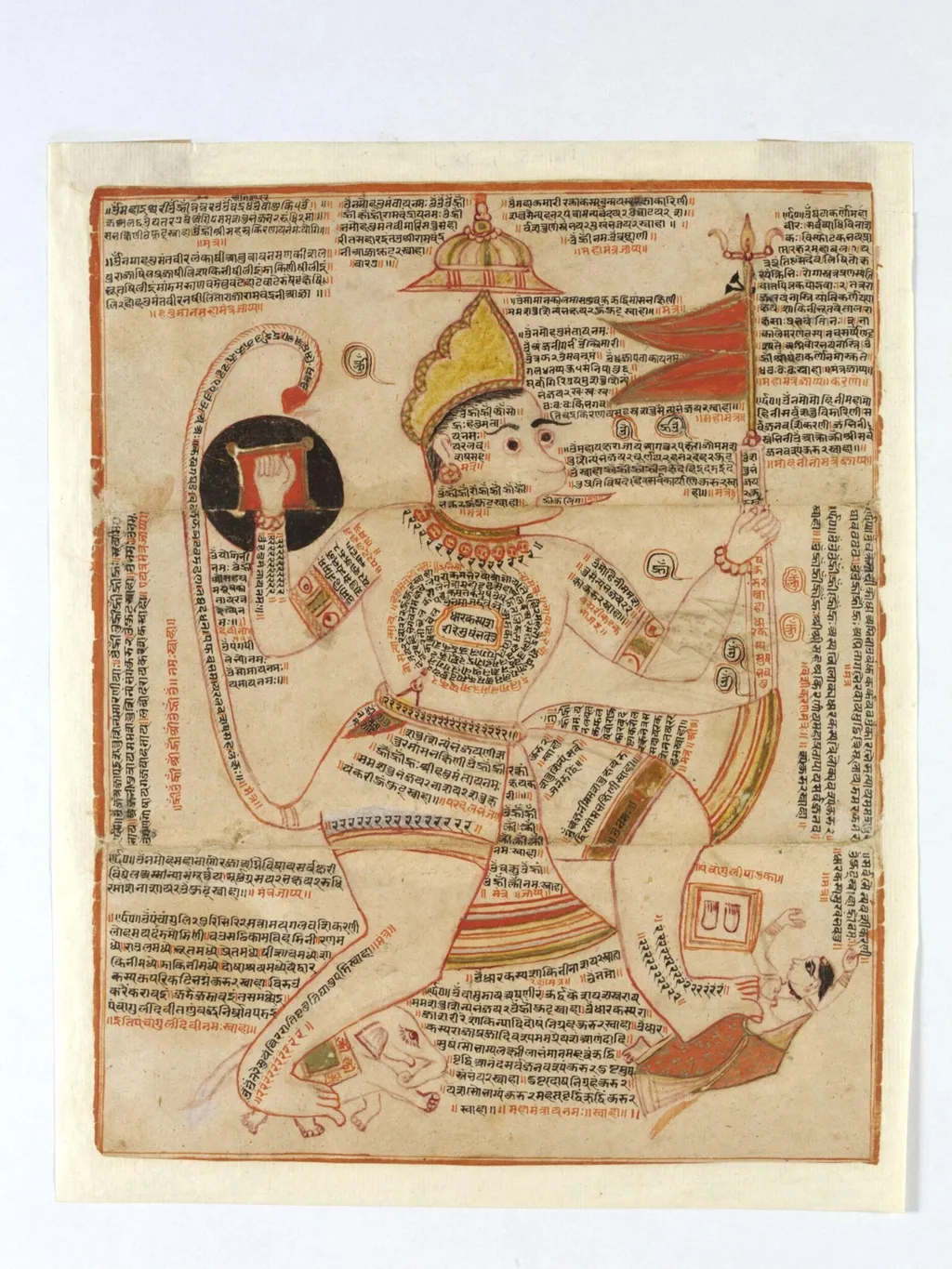
Hanuman is a paint painting by Unknown. It dates from 1850 and is held in the collection of the Victoria and Albert Museum.
About this work
Overview
Created in 1850, this watercolour on paper presents Hanuman in a tantric form, rendered as a geometric yantra. The figure stands atop a lion, adorned with a golden crown and vivid red details. His posture is dynamic, one arm raised, the other holding a disc bearing a face. The surface is densely covered with Devanagari script, integrating text and image into a single devotional object.
Subject & Meaning
The surrounding script likely contains mantras or narrative verses, transforming the painting into a ritual instrument rather than a mere illustration.
Hanuman, here depicted as a divine yantra, merges iconography with esoteric symbolism. The shield and flag suggest protection and devotion, while the disc with a face may represent a cosmic or divine entity. The lion beneath him signifies power and sovereignty.
The surrounding script likely contains mantras or narrative verses, transforming the painting into a ritual instrument rather than a mere illustration.
Technique & Style
The artist employed fine brushwork to render intricate details in watercolour, using earth tones with selective bright highlights for emphasis. The composition is tightly packed, with the central figure surrounded by meticulously aligned Devanagari characters. This fusion of figurative representation and textual overlay reflects a regional tradition where sacred writing and image are inseparable in spiritual practice.
History & Provenance
This work originates from northern India during the mid-19th century, a period when tantric visual traditions flourished alongside colonial influence. Likely commissioned for private worship, it reflects the persistence of indigenous devotional practices. Its survival suggests it was carefully preserved, possibly within a temple or scholarly household, though its exact early ownership remains undocumented.
Context
In 19th-century India, tantric art often blended Hindu deities with symbolic geometry and sacred script. Hanuman, revered for strength and devotion, was a frequent subject in such forms. This painting aligns with regional practices in Rajasthan and the Punjab Hills, where artists integrated textual elements into visual worship objects, serving both meditative and protective functions within domestic or ritual settings.
Legacy
Works like this contributed to the continuity of tantric visual culture in colonial India, preserving pre-colonial aesthetic and spiritual systems. Today, such paintings are studied as artifacts of religious syncretism and artistic precision. Institutions like the Victoria and Albert Museum hold comparable pieces, helping to contextualize this tradition within broader South Asian visual heritage.
Artist & collection









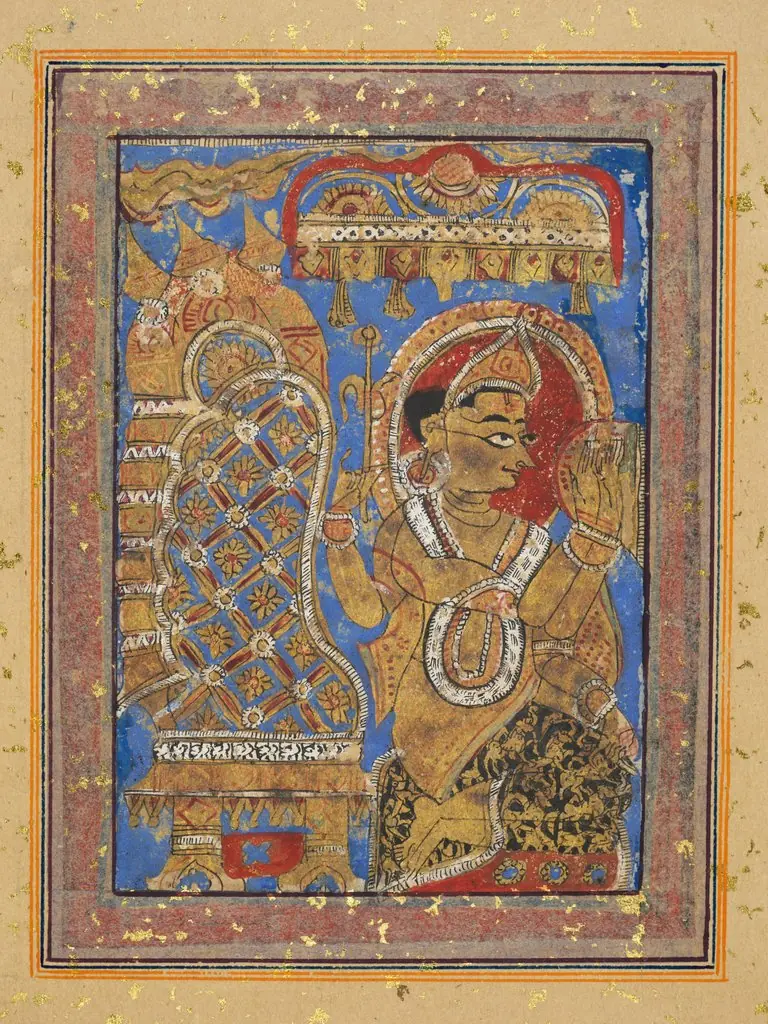 Painting from a Kalpa-sutra: Indra Praises the Embryo of Mahavira in the Womb of the Brahman Woman Devananda
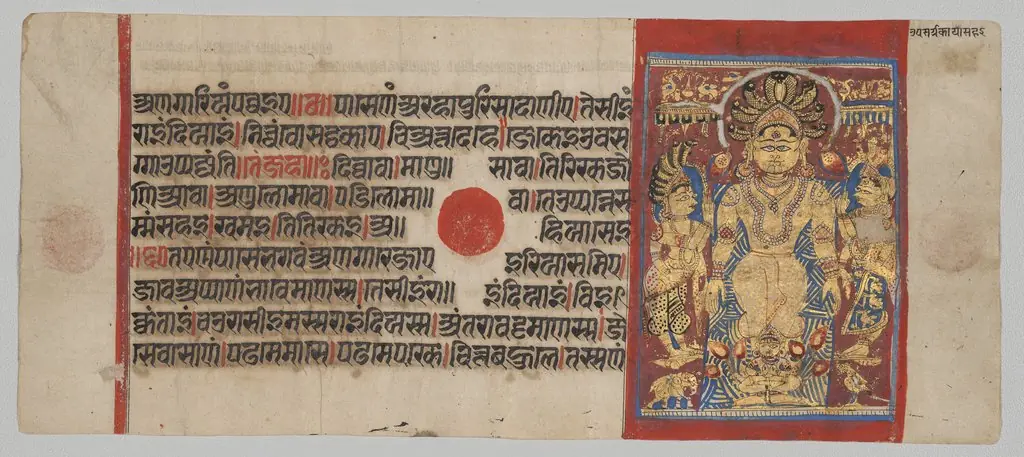 Parshva Undergoes Physical Trials, Folio 46 (recto), from a Kalpa-sutra
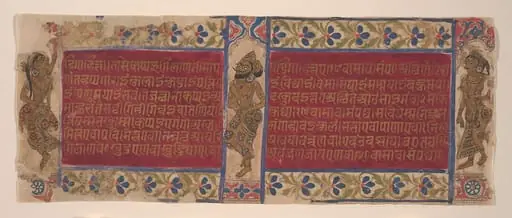 Untitled
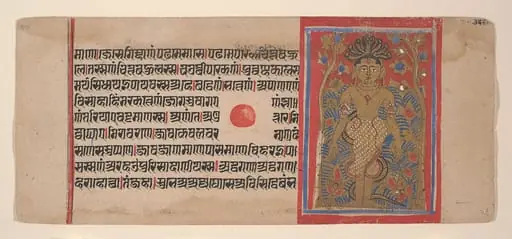 Untitled
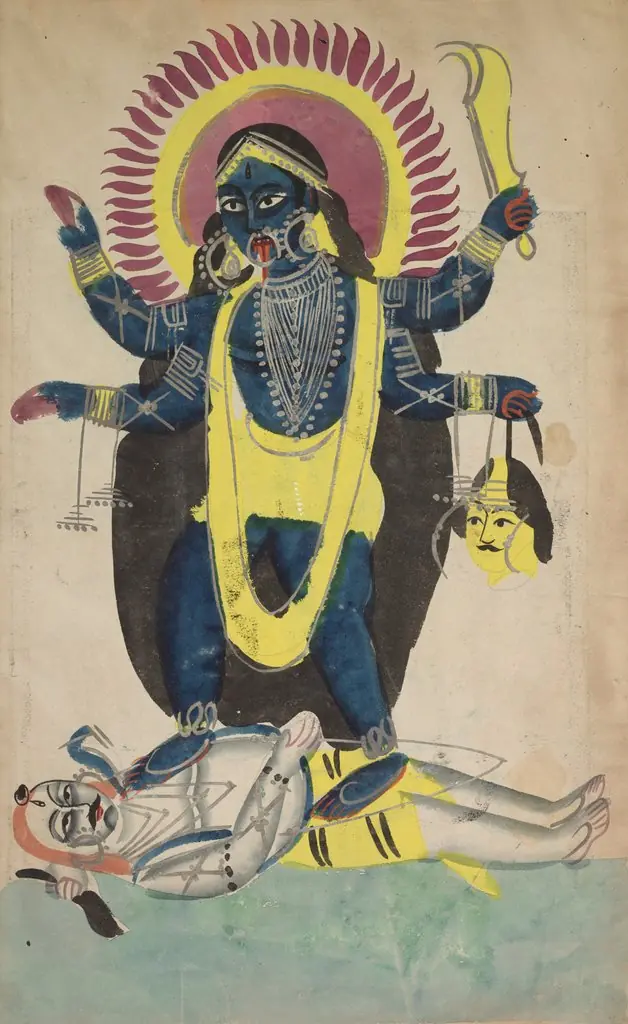 Leaf from a Kalighat album: Two Aspects of Kali
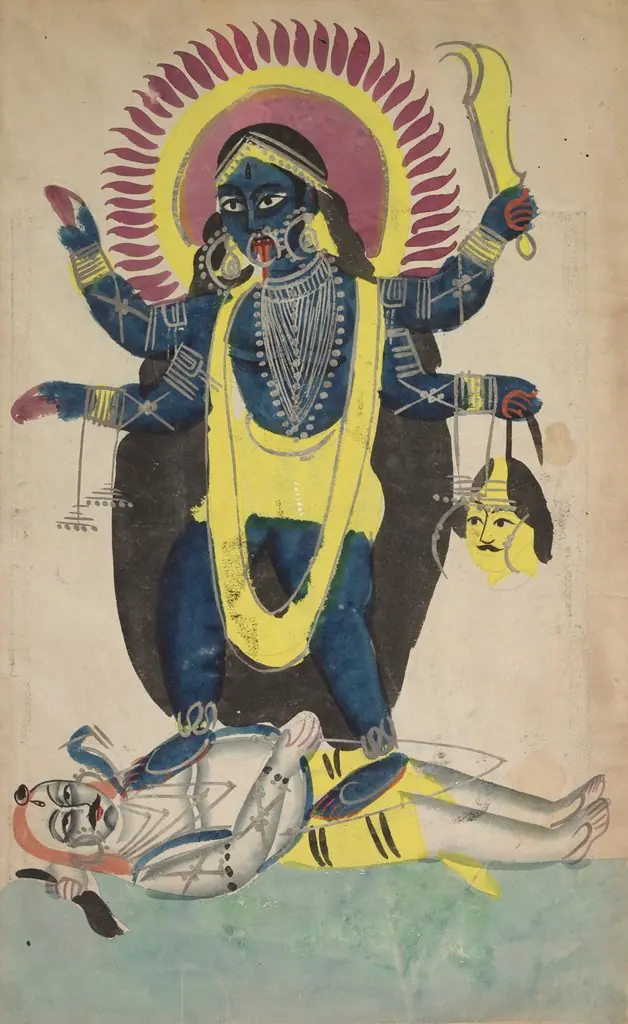 Kali Dancing on Shiva (recto), from a Kalighat album
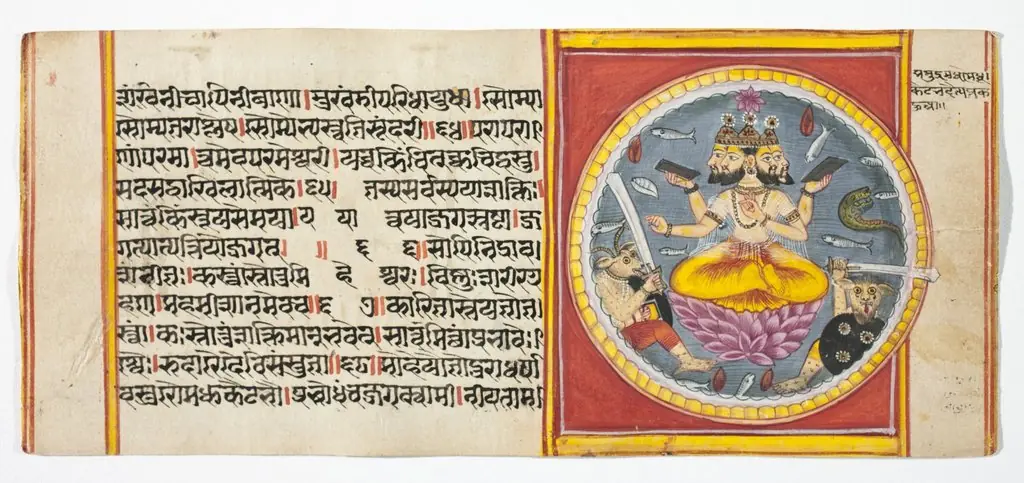 Legend of Durga
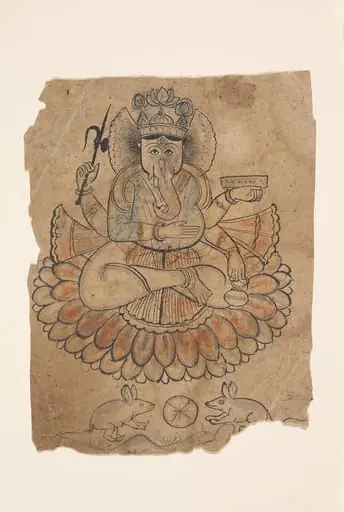 Untitled
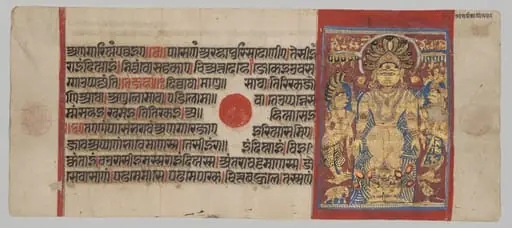 Parshva Undergoes Physical Trials, Folio 46 (recto), from a Kalpa-sutra
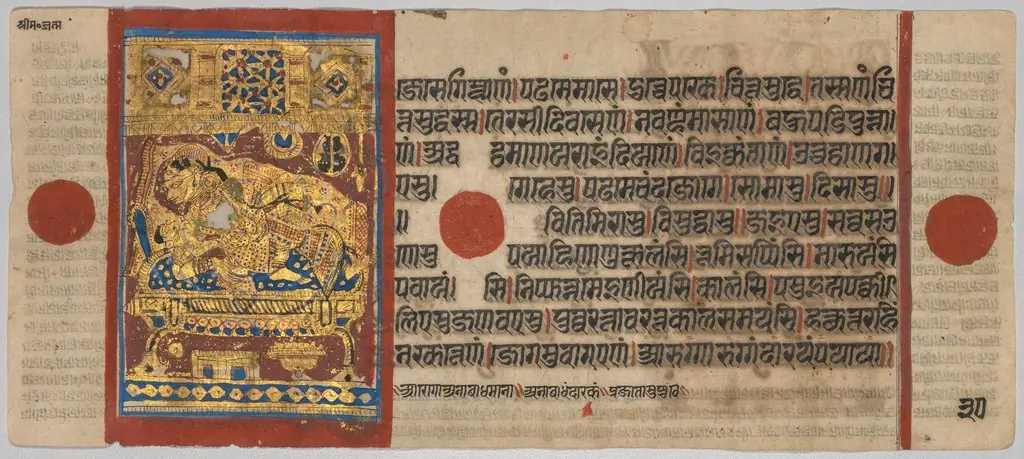 Kalpa-sutra Manuscript with 24 Miniatures: Birth of Rsabhanatha
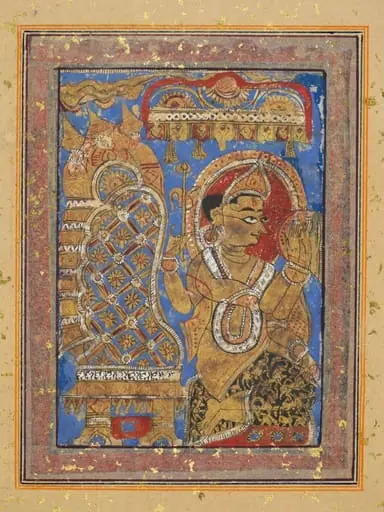 Painting from a Kalpa-sutra: Indra Praises the Embryo of Mahavira in the Womb of the Brahman Woman Devananda
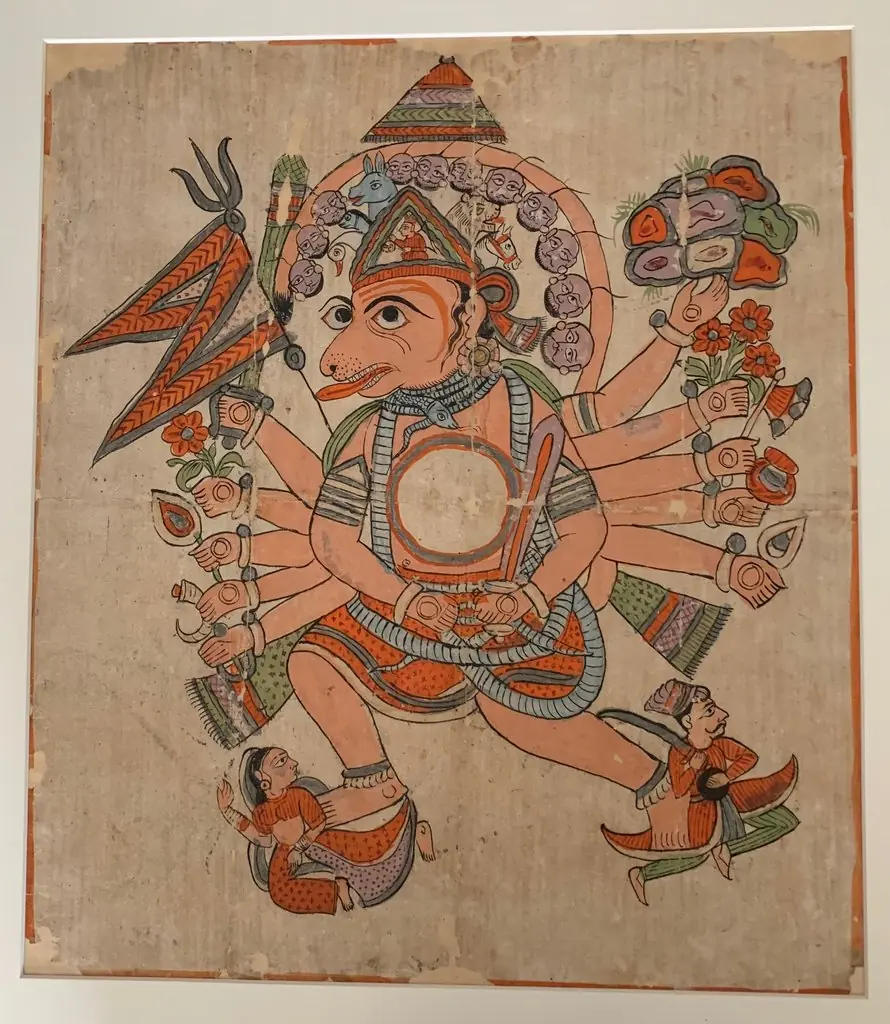
- Hanuman in His Tantric Five-Headed Pancha Mukha Form