Artwork
Heart of Mid Lothian
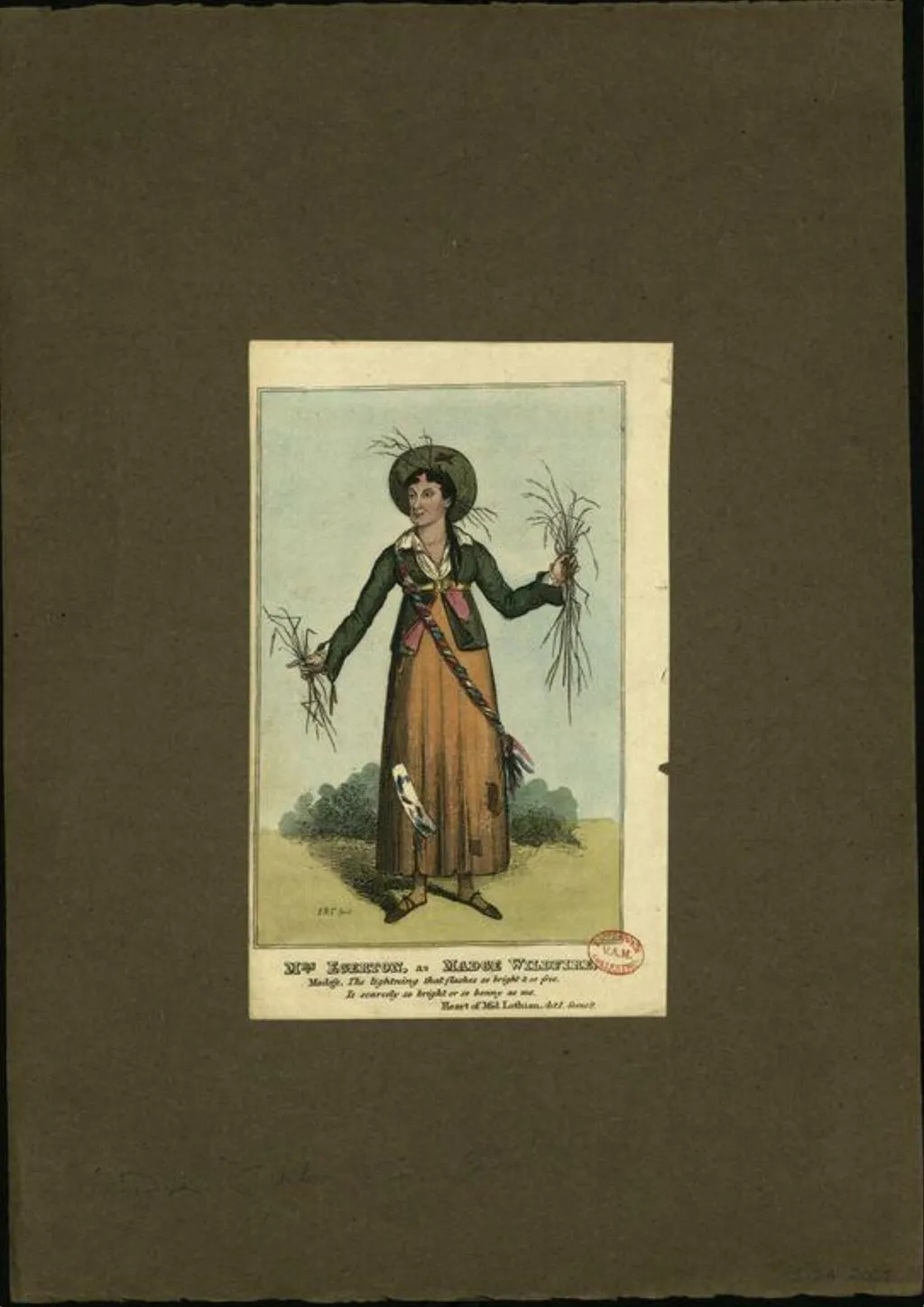
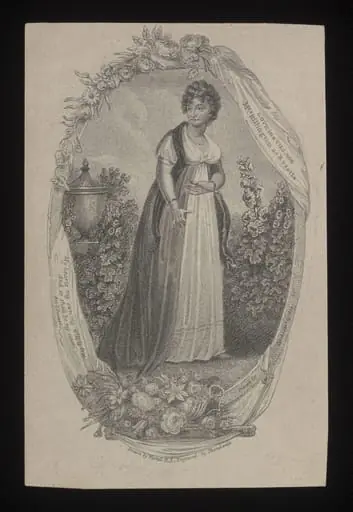
Heart of Mid Lothian is a print by the Romanticist artist Unknown. It dates from 1821 and is held in the collection of the Victoria and Albert Museum.
About this work
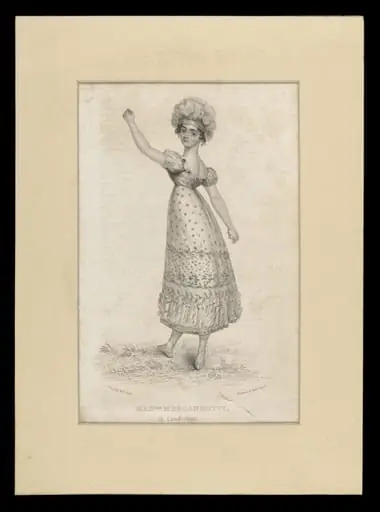
This print shows a woman in old clothes standing in a forest. Her arms are tied behind her back. A man in a long coat watches from behind a tree.
The scene comes from a play called Heart of Mid Lothian. It was performed in London in 1821. The woman’s name is Madge Wildfire. She’s a character in the story.
Look up the Victoria and Albert Museum to see more prints like this.
Overview
Egerton as the character Madge Wildfire, rendered in the theatrical style popular in early 19th-century British print culture.
This coloured print captures a moment from the 1821 stage adaptation of Sir Walter Scott’s novel The Heart of Mid-Lothian, performed at London’s Theatre Royal, Drury Lane. It portrays actress Mrs. Egerton as the character Madge Wildfire, rendered in the theatrical style popular in early 19th-century British print culture. The image serves as a record of a specific performance, intended for public consumption and memory.
Subject & Meaning
Madge Wildfire, a spirited and morally complex figure from Scott’s novel, is shown bound and isolated in a wooded setting, reflecting her vulnerability and defiance. The man observing from behind a tree suggests surveillance or impending intervention, aligning with the play’s themes of justice, class, and personal loyalty. The scene condenses narrative tension into a single visual moment, emphasizing emotional gravity over realism.
Technique & Style
The print employs hand-coloured etching or engraving, typical of theatrical portraits of the era. Details in costume and setting are rendered with precision to support character recognition, while the background remains loosely suggested. The use of muted tones and delicate line work reflects the conventions of Regency-era printmaking, prioritizing clarity and dramatic effect over painterly depth.
History & Provenance
Produced shortly after the play’s July 1821 premiere, the print was likely sold as a souvenir to audiences or distributed to promote the production. Its survival suggests it was collected by theatre enthusiasts or preserved in private collections. The Victoria and Albert Museum holds similar works, indicating its place within a broader archive of British theatrical ephemera from the period.
Context
The early 1820s saw a surge in stage adaptations of Scott’s novels, driven by public fascination with Scottish history and romanticized folk figures. Madge Wildfire, as a bold, unconventional woman, offered a rare female role with psychological depth. Theatrical prints like this one helped extend the reach of these performances beyond the auditorium, shaping public perception of literary characters.
Legacy
This print contributes to the visual record of 19th-century British theatre, illustrating how literature was translated into popular spectacle. While the performance itself is now lost, such images preserve the physicality and emotional tone of stage portrayals. They remain valuable for scholars studying the intersection of literature, performance, and print media in the Romantic era.
Artist & collection