Artwork
Kasuga Deer Mandala
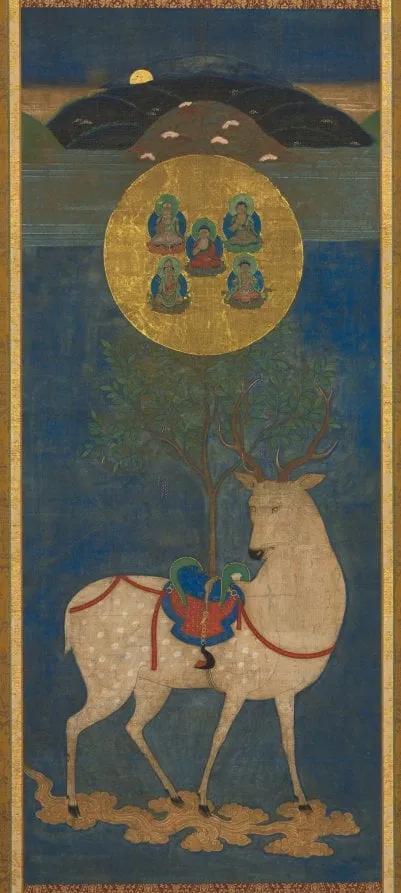
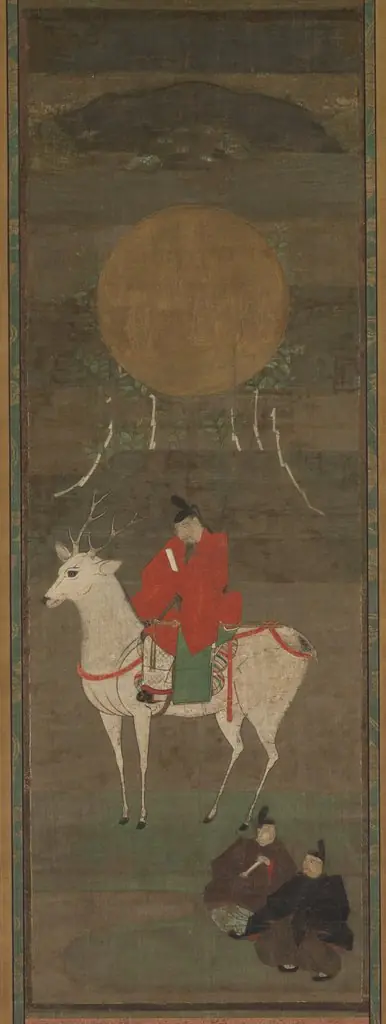
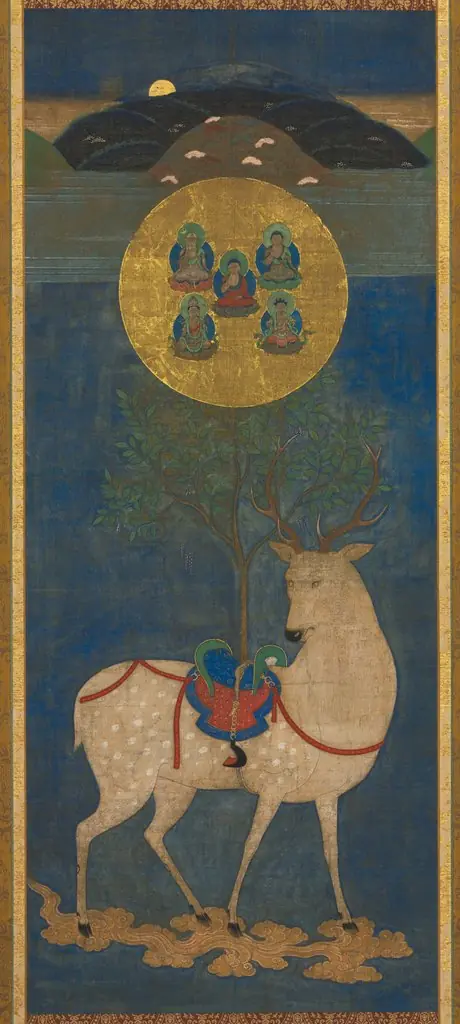
Kasuga Deer Mandala is an unspecified painting by the Joseon dynasty painting artist Unknown. It dates from 1418 and is held in the collection of the Cleveland Museum of Art. This Japanese painting depicts a sacred scene centered around a spotted deer, symbolically associated with the Kasuga Grand Shrine in Nara.
- Accession no.
- 1988.19
- Credit line
- Leonard C. Hanna Jr. Fund
About this work
Overview
This Japanese painting depicts a sacred scene centered around a spotted deer, symbolically associated with the Kasuga Grand Shrine in Nara. The composition combines elements from both Shinto and Buddhist traditions.
Subject & Meaning
The deer, revered as the vehicle of the deity Takemikazuchi no Mikoto, rides a cloud bearing a Sakaki tree branch adorned with wisteria. A golden mirror suspended above cradles the five Buddhist manifestations of Kasuga's deities, highlighting the syncretism of Shinto and Buddhist beliefs.
Technique & Style
While specific artistic techniques are not detailed, the use of vibrant colors for the saddle and wisteria, alongside the golden mirror, suggests a deliberate emphasis on visual symbolism and spiritual luminosity.
History & Provenance
Created for personal devotional purposes, the painting's exact date and artist remain unspecified, though its themes strongly affiliate it with the religious practices surrounding the Kasuga Grand Shrine.
Context
This work reflects the historical blending of Shinto and Buddhist practices in Japan, particularly in the representation of Kasuga deities through Buddhist manifestations (honjibutsu) within a distinctly Shinto context.
Legacy
The painting serves as a visual record of religious syncretism in Japan, illustrating how different belief systems intertwined in artistic and devotional practices, contributing to the cultural heritage of the Kasuga Grand Shrine.
Artist & collection