Artwork
Kitty Clyde
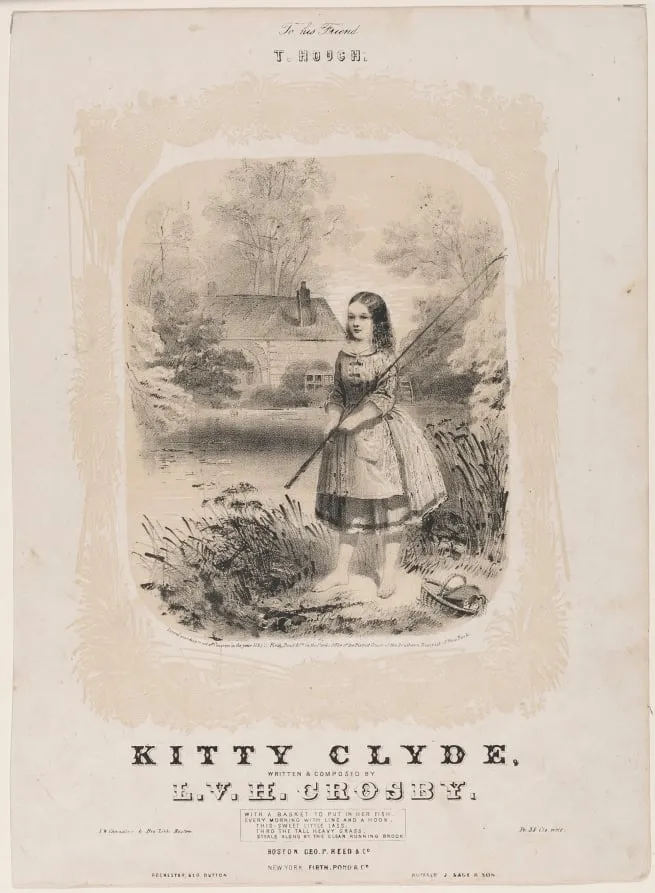
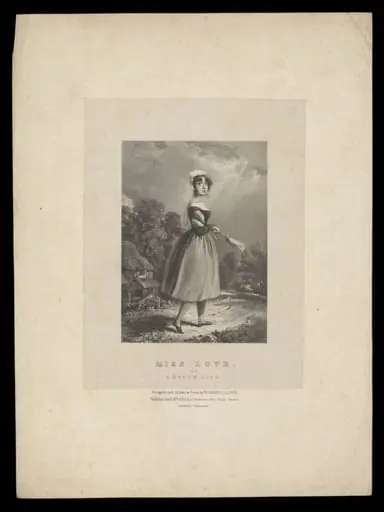
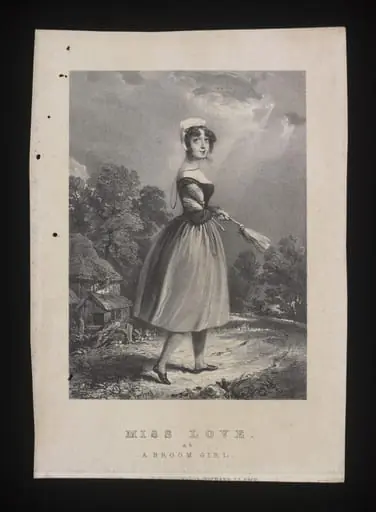
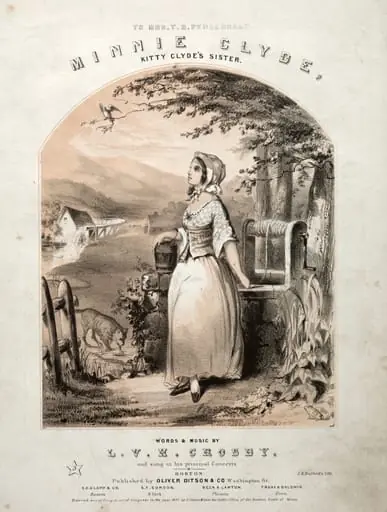
Kitty Clyde is a print by the Impressionist artist Unknown. It dates from 1854 and is held in the collection of the Cleveland Museum of Art. This hand-drawn print depicts a young girl in a long dress and apron, standing in a grassy field with a house and trees behind her.
- Accession no.
- 1942.894
- Credit line
- Gift of Leo Weidenthal
About this work
Overview
This hand-drawn print depicts a young girl in a long dress and apron, standing in a grassy field with a house and trees behind her.
This hand-drawn print depicts a young girl in a long dress and apron, standing in a grassy field with a house and trees behind her. She holds a broom as if it were a spear, suggesting a blend of domestic routine and imaginative play. The image bears signs of age, faded ink, uneven lines, and loose shading, indicating it was produced with simple tools and likely intended for popular circulation rather than fine art display.
Subject & Meaning
The girl, identified as Kitty Clyde, appears caught between childhood labor and fantasy. Her posture with the broom evokes a mock-heroic stance, possibly referencing a folk song of the same name. The scene does not idealize her role but presents it plainly, hinting at the quiet resilience of rural children engaged in chores.
The title links her to a broader cultural narrative, grounding the image in oral tradition rather than formal storytelling.
Technique & Style
The image is rendered in a rough, unpolished hand-drawn style with visible ink lines and uneven shading. There is no attempt at perspective or refined detail; instead, forms are suggested with minimal strokes. This approach aligns with vernacular illustration of the 19th century, where functionality and accessibility outweighed aesthetic polish. The texture and wear suggest it was printed from a woodcut or lithographic stone, then widely distributed.
History & Provenance
The print likely originated in the mid- to late 1800s, tied to the circulation of popular songs in broadsheet or chapbook form. Its faded condition and simple production point to mass reproduction for working-class audiences. The inclusion of the song title implies it was used as a visual accompaniment to lyrics, possibly sold as a keepsake or educational item. No known institutional collection records exist for this specific print.
Context
This image reflects a period when rural childhood labor was common and often depicted in popular media. The blending of domestic tasks with imaginative play mirrors how children in agrarian communities navigated responsibility and fantasy. Similar illustrations appeared in songbooks and almanacs, serving both entertainment and moral instruction.
The style echoes broader trends in American folk art, where realism was expressed through simplicity rather than technical precision.
Legacy
Though not part of the fine art canon, this print contributes to the visual record of everyday life in 19th-century America. Its unrefined aesthetic anticipates later movements that valued authenticity over polish, such as American Realism. It remains a quiet artifact of how ordinary people engaged with culture, through song, image, and the quiet dignity of daily routines.
Artist & collection