Artwork
Krishna reaching for the moon
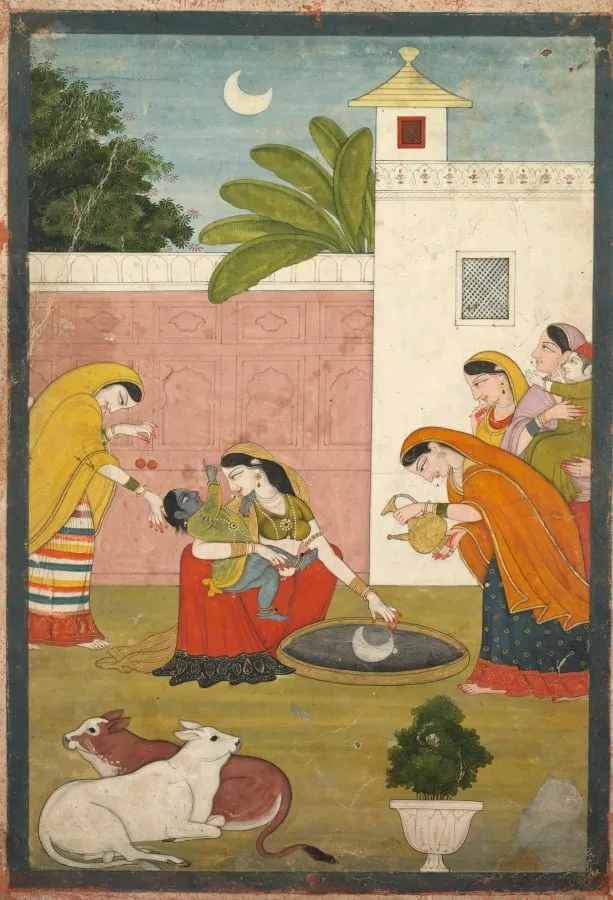
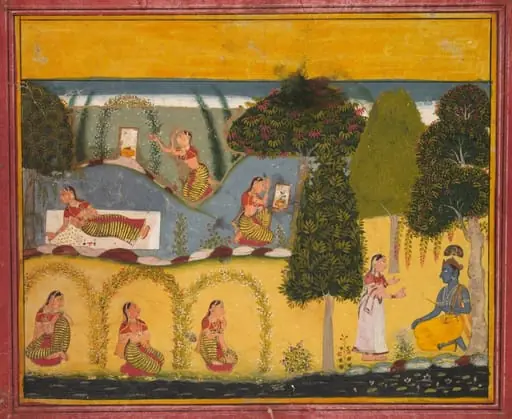
Krishna reaching for the moon is an unspecified painting by the Pahari Painting artist Unknown. It dates from 1820 and is held in the collection of the Cleveland Museum of Art. This painting depicts a quiet, domestic moment set against a symbolic celestial backdrop.
- Accession no.
- 1971.80
- Credit line
- Andrew R. and Martha Holden Jennings Fund
About this work
Overview
This painting depicts a quiet, domestic moment set against a symbolic celestial backdrop. A group of women in vivid garments gather near a pink structure, attended by cows and a potted tree. The crescent moon in the sky and the presence of a child suggest a narrative rooted in Hindu lore, though the scene is rendered without dramatic tension, favoring stillness and ritualized gesture.
Subject & Meaning
The imagery alludes to a legend in which the infant Krishna reaches for the moon, interpreted as a divine act of longing or play. The women, possibly gopis or attendants, engage in nurturing acts, offering fruit, holding the child, pouring water, echoing devotional care. The moon, though distant, anchors the scene in spiritual symbolism, linking earthly devotion to cosmic order.
Technique & Style
The painting employs flat, unmodulated colors and minimal shading, emphasizing pattern and form over illusionistic depth. Outlines are clear, figures are stylized, and spatial depth is suggested through overlapping rather than perspective. This approach aligns with regional Indian miniature traditions, rejecting Western naturalism in favor of symbolic clarity and decorative harmony.
History & Provenance
The work likely originates from a Pahari or Rajasthani court atelier in the late 18th or early 19th century, a period when devotional themes were commonly illustrated for royal patrons. Its preservation suggests it was valued within a collector’s circle, possibly as part of a manuscript or album, though its exact origin and early ownership remain undocumented.
Context
While Romanticism in Europe emphasized emotion and nature, this painting reflects a parallel Indian aesthetic where spirituality and daily ritual intertwine. Its calm composition and symbolic elements resonate with bhakti traditions, where personal devotion manifests through intimate, everyday acts. The absence of dramatic lighting or movement distinguishes it from contemporary Western trends.
Legacy
This work contributes to a broader corpus of Indian miniature painting that preserved religious narratives through visual poetry. Though not widely known outside regional collections, it exemplifies how devotional stories were rendered with quiet dignity, influencing later revivals of traditional styles in early 20th-century Indian art movements.
Artist & collection









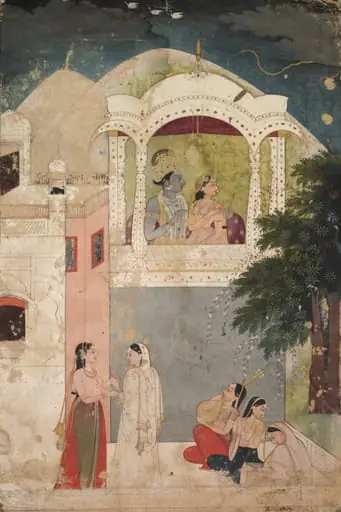
- Radha and Krishna seated on a balcony
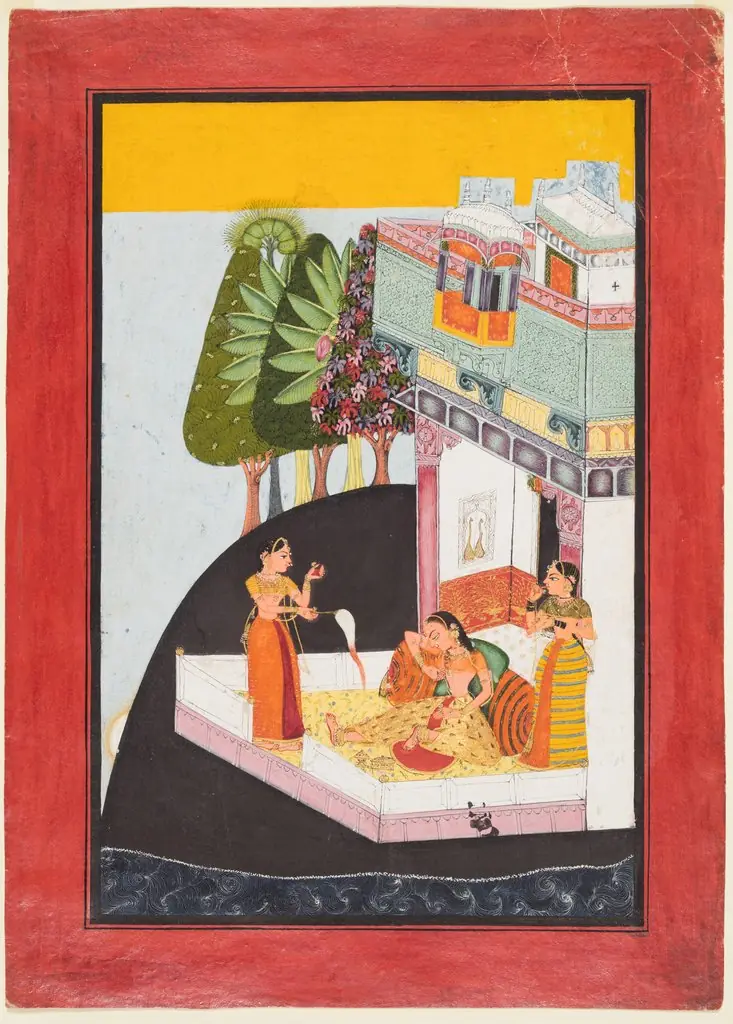
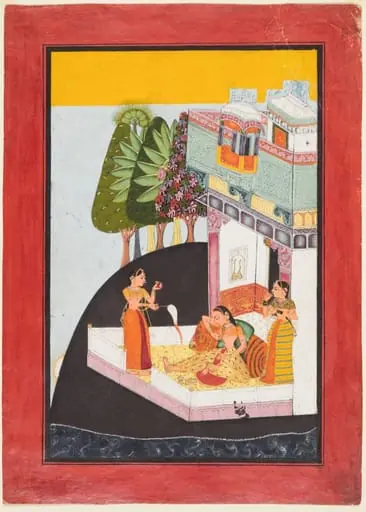 A Disconsolate Lady on a Terrace with Attendants
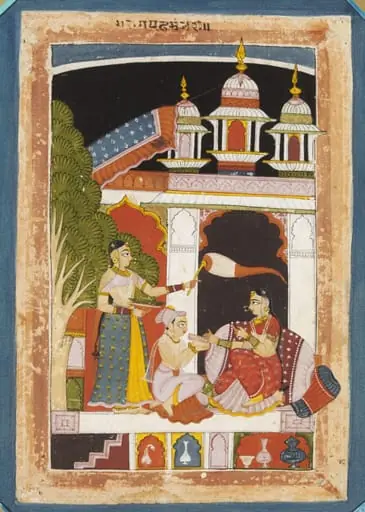 Patamanjari Ragini
 The Morning Toilette
 A Disconsolate Lady on a Terrace with Attendants
 Taking of the toll, Dana-Lila
 Krishna and Radha
 Untitled
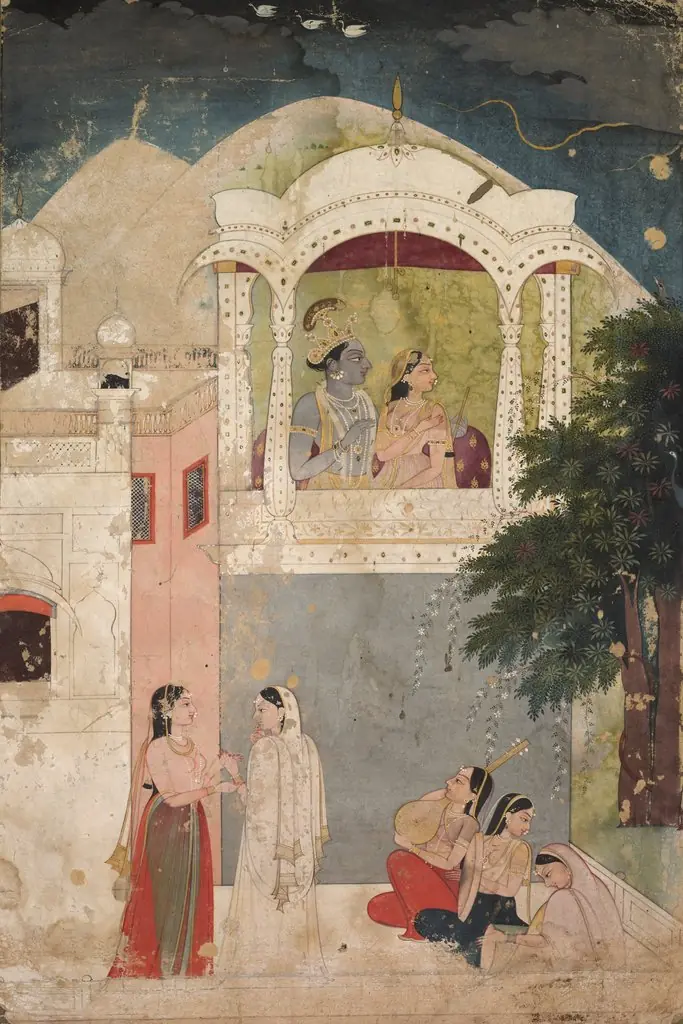 Radha and Krishna Seated on a Balcony
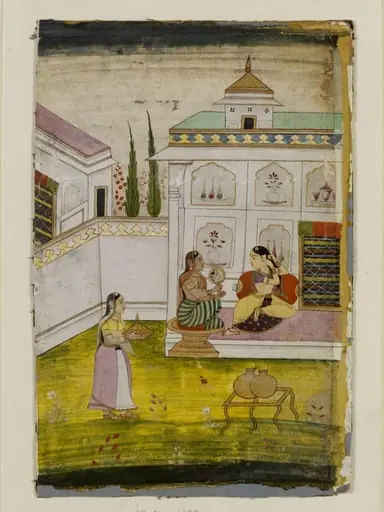 Vilaval Ragini
 Untitled
 Radha Awaiting Reconciliation with Krishna, from a Gita Govinda of Jayadeva