Artwork
Loth și fiicele sale
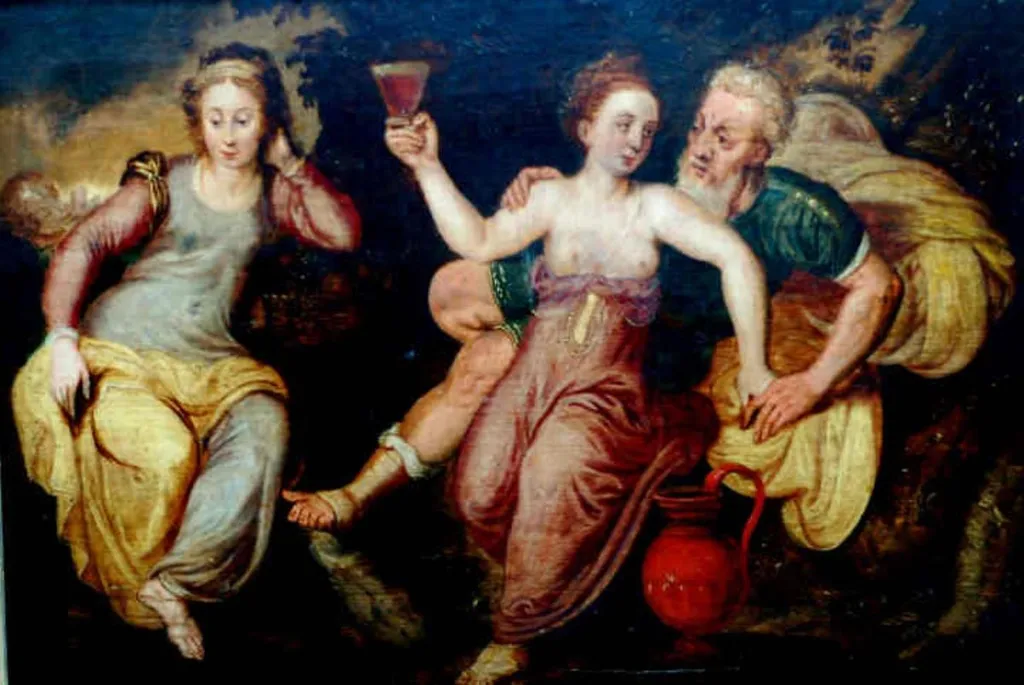
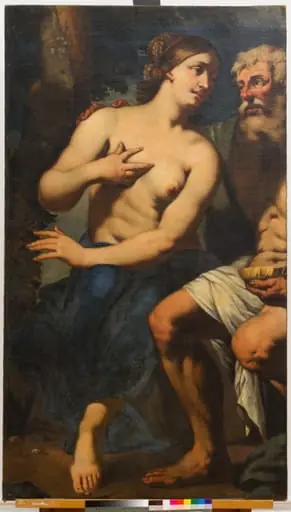
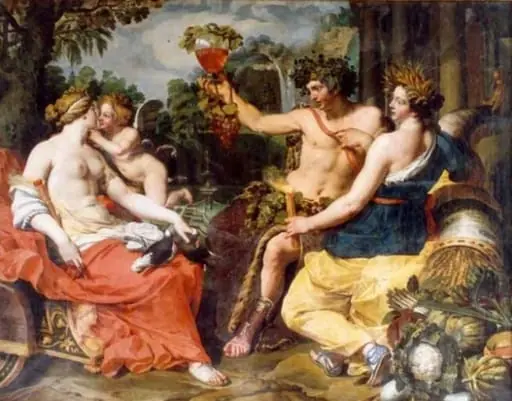
Loth și fiicele sale is an unspecified painting by Unknown. It dates from 1850 and is held in the collection of the Art museum of Craiova. The work presents a compact group of four figures illuminated against a dark, smoky background.
About this work
Overview
A woman clutching a mirror, another pouring wine from a red vessel, a man supporting himself on a staff, and a winged figure standing nearby compose the scene.
The work presents a compact group of four figures illuminated against a dark, smoky background. A woman clutching a mirror, another pouring wine from a red vessel, a man supporting himself on a staff, and a winged figure standing nearby compose the scene. Their garments are rendered in vivid gold, blue and pink tones, while the surrounding space remains in deep shadow, creating a stark visual contrast.
Subject & Meaning
The composition juxtaposes everyday activity with a hint of the supernatural. The act of pouring wine, a symbol of hospitality or celebration, is set alongside a mirrored figure and a winged presence, suggesting themes of reflection, transience, and perhaps divine or mythic intervention. The relaxed posture of the wine‑pourer contrasts with the more solemn bearing of the other participants, inviting speculation about narrative tension.
Technique & Style
The artist employs a pronounced chiaroscuro effect, concentrating light on the faces and hands of the figures while the surrounding environment recedes into darkness. This manipulation of illumination emphasizes texture in the flowing fabrics and the gleam of the mirror and jug. The palette combines saturated primary hues with metallic gold, enhancing the three‑dimensionality of the forms within a limited, dramatic space.
Context
Although the precise origin of the piece is unclear, its visual language aligns with Baroque sensibilities that favored dramatic lighting and theatrical groupings. The inclusion of a winged figure recalls allegorical or religious motifs common in 17th‑century European painting, while the domestic act of wine‑serving grounds the scene in a more intimate, secular setting.
Artist & collection