Artwork
Madonna and Child
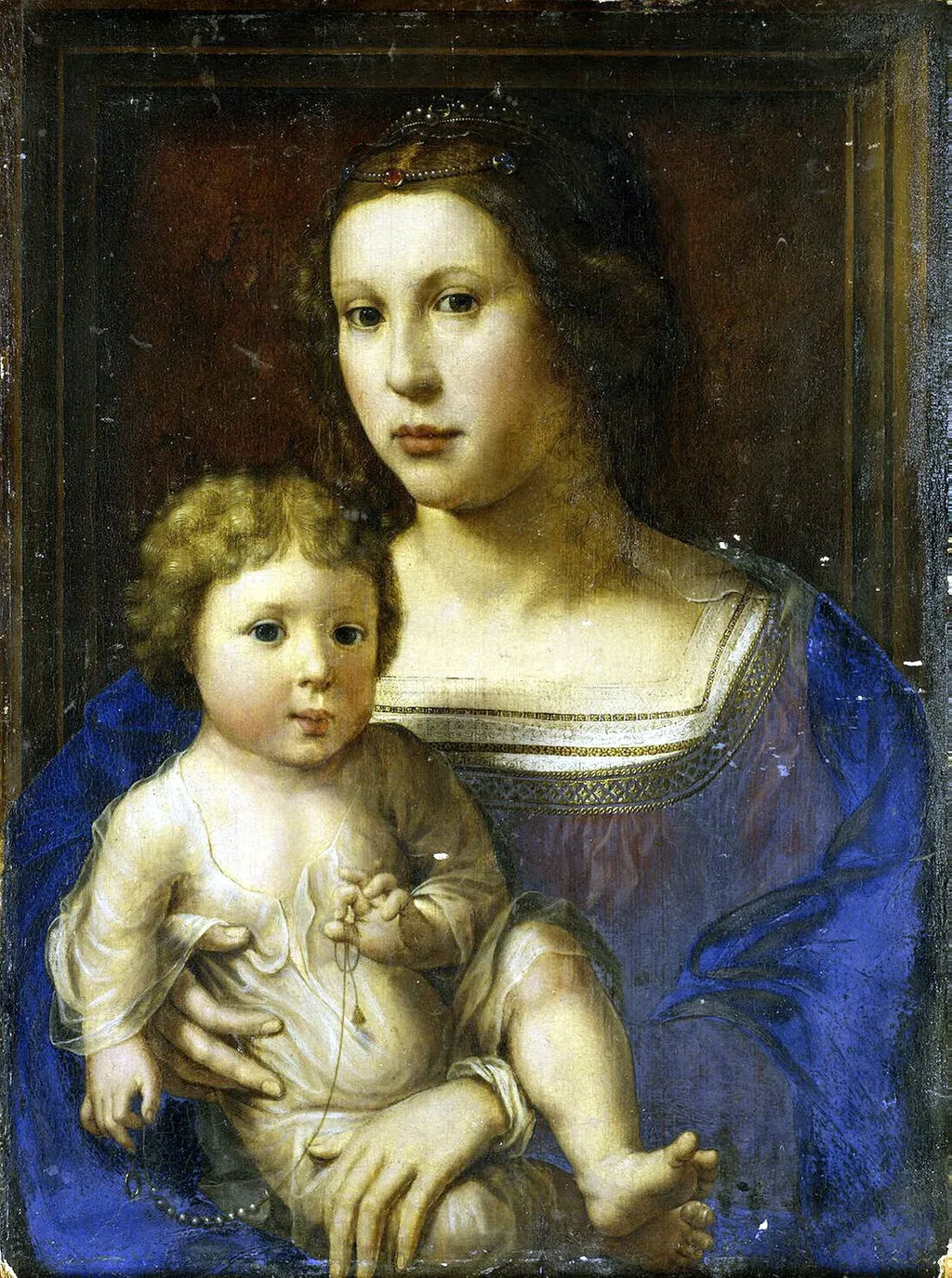
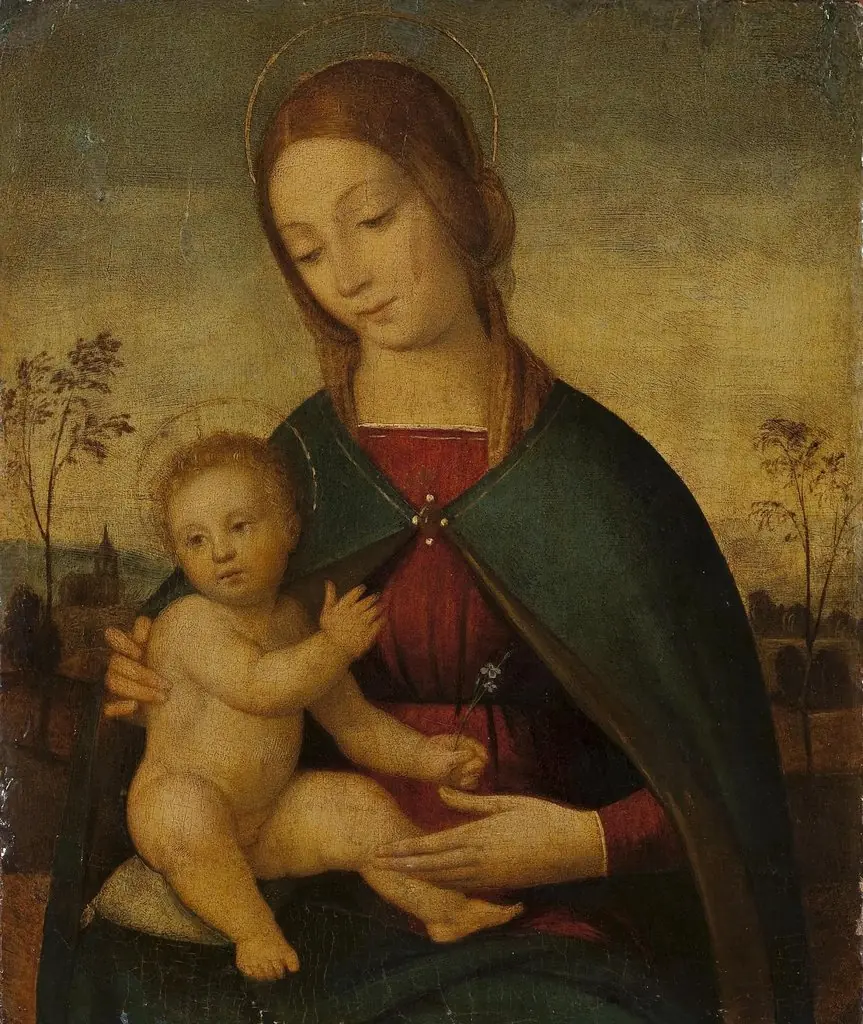
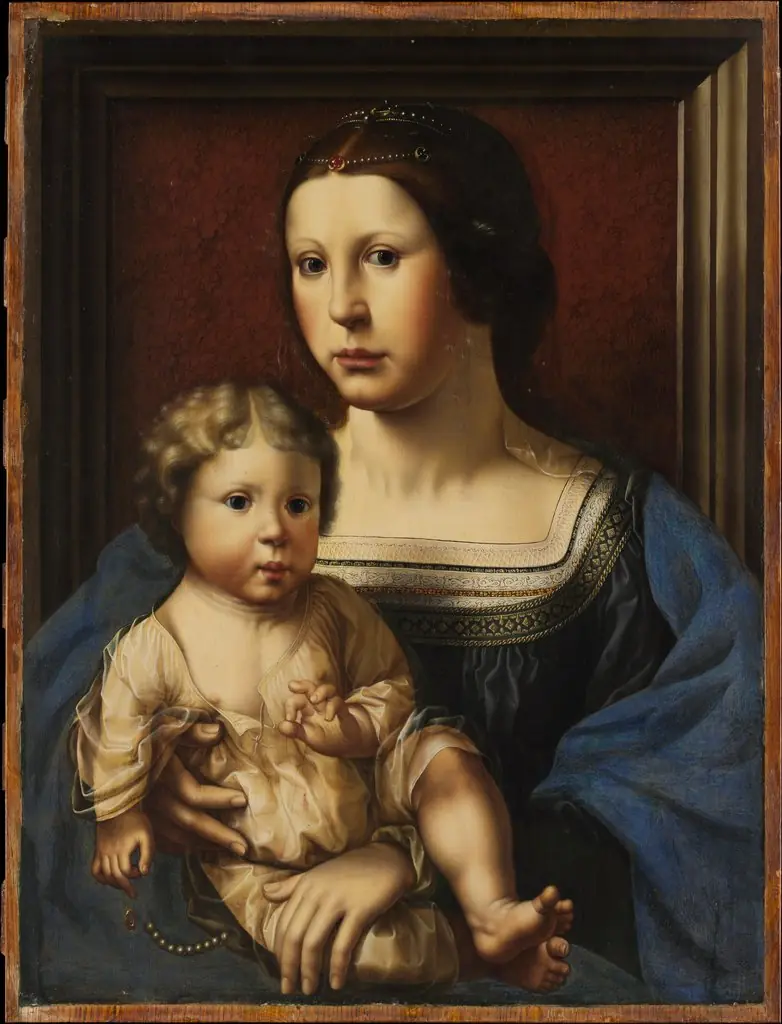
Madonna and Child is an oil painting by the Mannerist artist Unknown. It dates from 1550 and is held in the collection of the Hermitage Museum. This oil painting presents a seated woman cradling an infant, both gazing directly toward the viewer.
About this work
Subject & Meaning
As a work in this genre, it represents a central theme of Christian iconography focused on the maternal bond between Mary and the infant Jesus.
The painting is a religious artwork whose main subject is the Madonna and Child, depicting the Virgin Mary and the Christ Child. As a work in this genre, it represents a central theme of Christian iconography focused on the maternal bond between Mary and the infant Jesus. Created in the Netherlands in 1550, the composition is a copy after a work by Jan Gossaert, reflecting the enduring devotional significance and artistic replication of this subject in 16th-century religious art.
Technique & Style
The painting employs oil on panel, a medium widely used in 16th-century Netherlandish works for its luminous depth and slow drying time. The support is a wooden panel, consistent with contemporaneous practices in the Netherlands, onto which the artist applied thin, translucent glazes to build up subtle tonal variations and a sense of volume.
Stylistically, the composition adheres to the religious genre, depicting the Virgin Mary and the Christ Child in a frontal arrangement typical of devotional imagery. The figures’ serene expressions and softly modeled forms suggest an engagement with High Renaissance ideals filtered through Northern European conventions. Handling appears deliberate, with careful attention to linear contours and delicate transitions of light.
History & Provenance
The painting entered the Hermitage Museum’s holdings as a work copied after Jan Gossaert, with its creation attributed to the mid-sixteenth century, specifically circa 1550. The panel measures 44 cm in height and 32.2 cm in width and is catalogued as a religious composition depicting the Madonna and Child. Its Dutch origin situates it within the Northern Renaissance tradition, reflecting the stylistic influence of Gossaert’s compositions during that period.
Context
Created in 1550, this oil-on-panel painting represents a specific instance of the Madonna and Child theme within the Netherlands. The work is identified as a copy after a composition by the Early Netherlandish master Jan Gossaert, situating it within a tradition of reproducing significant religious images. Currently held in the Hermitage Museum, the piece measures 44 cm in height and 32.2 cm in width.
Its attribution as a derivative work highlights the 16th-century practice of replicating established religious motifs, distinguishing it from an original invention by the copying artist.
Overview
This oil painting presents a seated woman cradling an infant, both gazing directly toward the viewer. The figure of the woman is cloted in a dark blue garment with a gold‑trimmed bodice, while the child is depicted without a shirt, clutching a string that ends in a small object. The composition is set against a uniform, dark background that isolates the pair and emphasizes their expressions.
Artist & collection