Artwork
Martyrdom of Saint Hippolytus
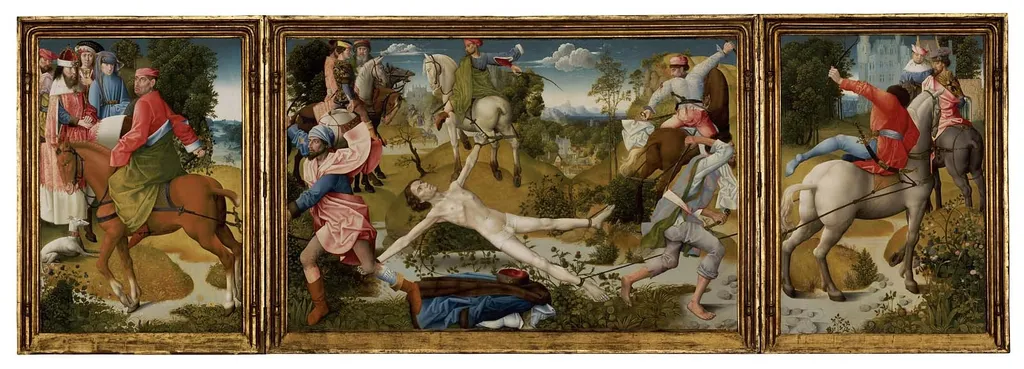
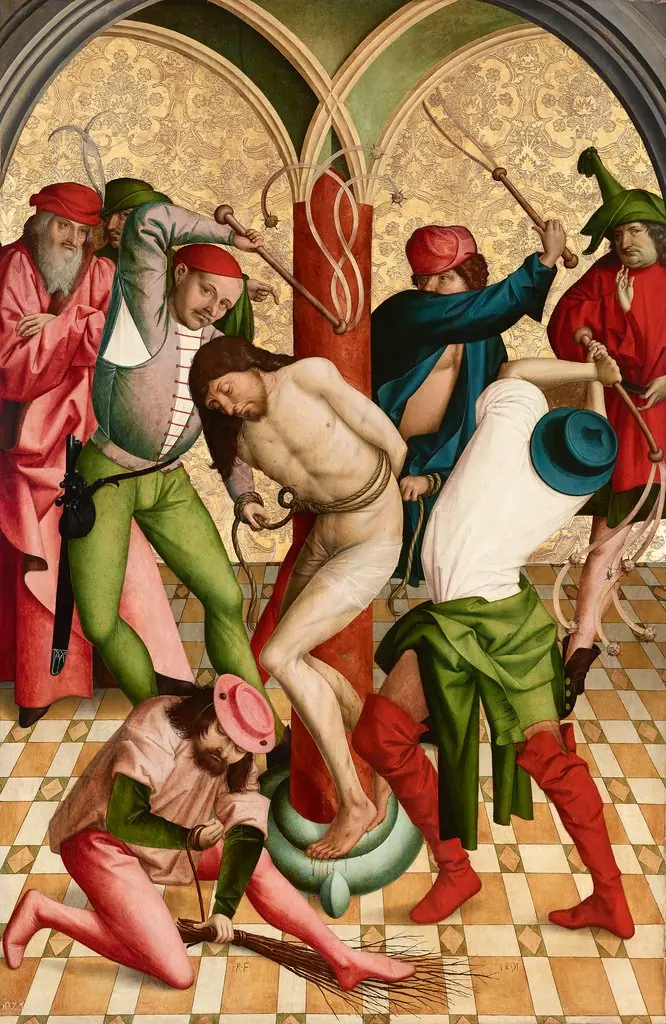
Martyrdom of Saint Hippolytus is an oil painting by the Early Renaissance artist Unknown. It dates from 1498 and is held in the collection of the Museum of Fine Arts Boston. The work, executed in oil, depicts a tumultuous episode populated by numerous figures on horseback and on foot.
About this work
Overview
The work, executed in oil, depicts a tumultuous episode populated by numerous figures on horseback and on foot. At its core lies a supine man whose limbs are splayed, suggesting he is being dragged amid a frenzied crowd. Spectators in vivid red and blue garments observe the scene from their mounts, while a distant landscape of hills, trees and a castle recedes in the background.
Subject & Meaning
The central figure appears to be Saint Hippolytus at the moment of his martyrdom, his exposed body conveying both vulnerability and the violence of his persecution. The surrounding combatants, rope‑bearers and armed men, intensify the narrative of conflict, while the onlookers in bright robes may represent witnesses to the saint’s suffering, underscoring themes of sacrifice and witness.
Technique & Style
The painter employs chiaroscuro, contrasting illuminated faces and garments with deep shadows to model volume and direct the viewer’s eye toward the central drama. Light falls selectively, creating a near‑luminescent effect on certain surfaces while leaving other areas in darkness, thereby enhancing spatial depth and emotional intensity within the crowded composition.
Context
Set against a pastoral horizon punctuated by a remote fortress, the scene situates the martyrdom within a recognizable, albeit idealized, landscape. The inclusion of cavalry and armed figures reflects contemporary notions of power and authority, linking the saint’s ancient narrative to the visual language of the artist’s own era.
Legacy
Through its dynamic arrangement and dramatic lighting, the painting contributes to the visual tradition of depicting martyrdoms as both historical events and moral exemplars. Its treatment of light and movement has informed subsequent religious compositions that aim to balance narrative clarity with emotional resonance.
Artist & collection









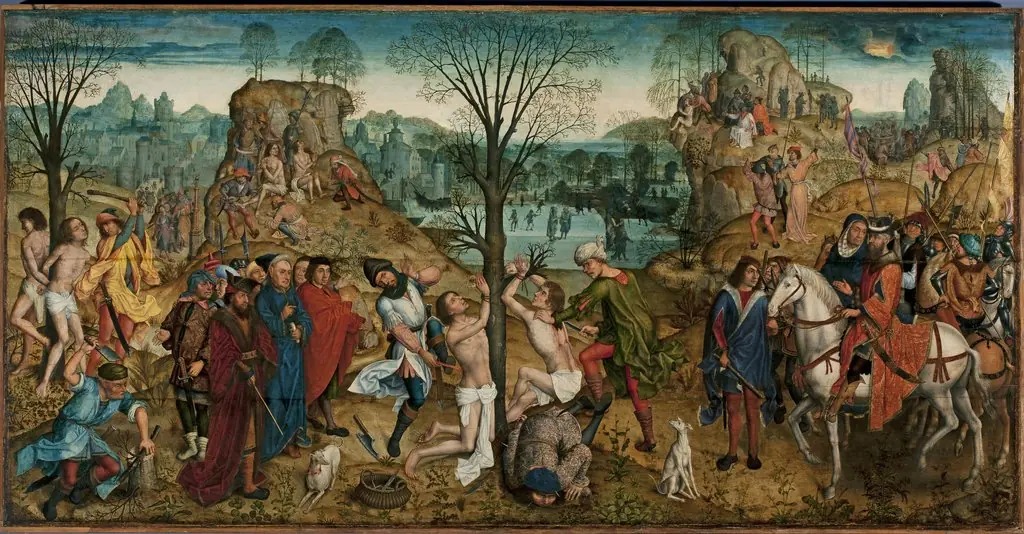 Martyrdom of St. Crispin and Crispinian
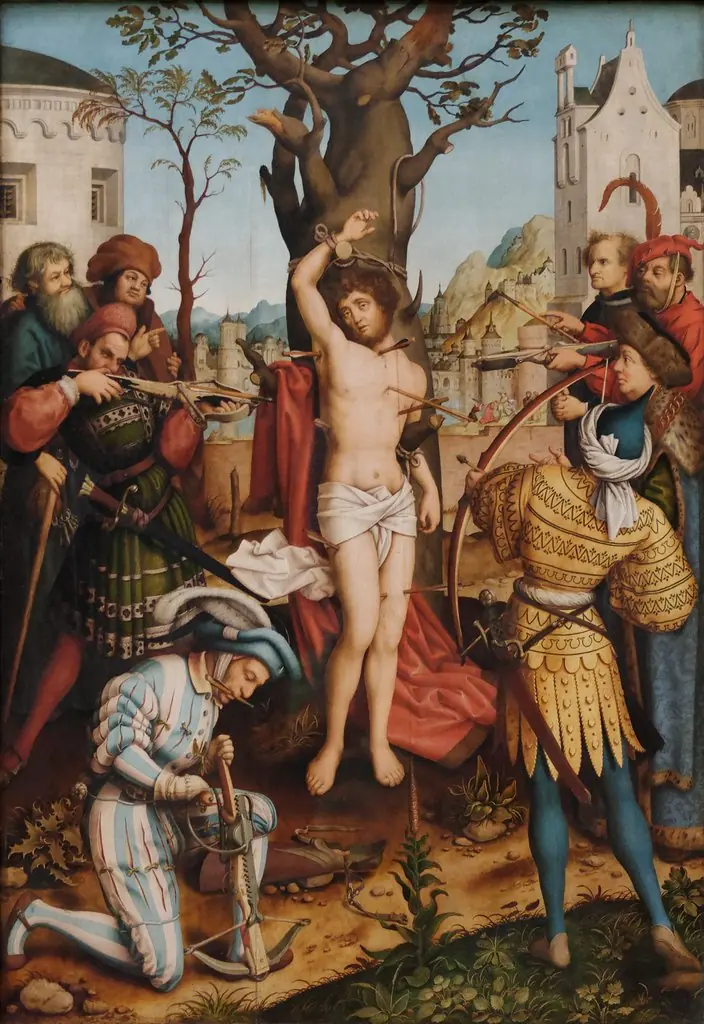 St. Sebastian Altar: The Martyrdom of St. Sebastian
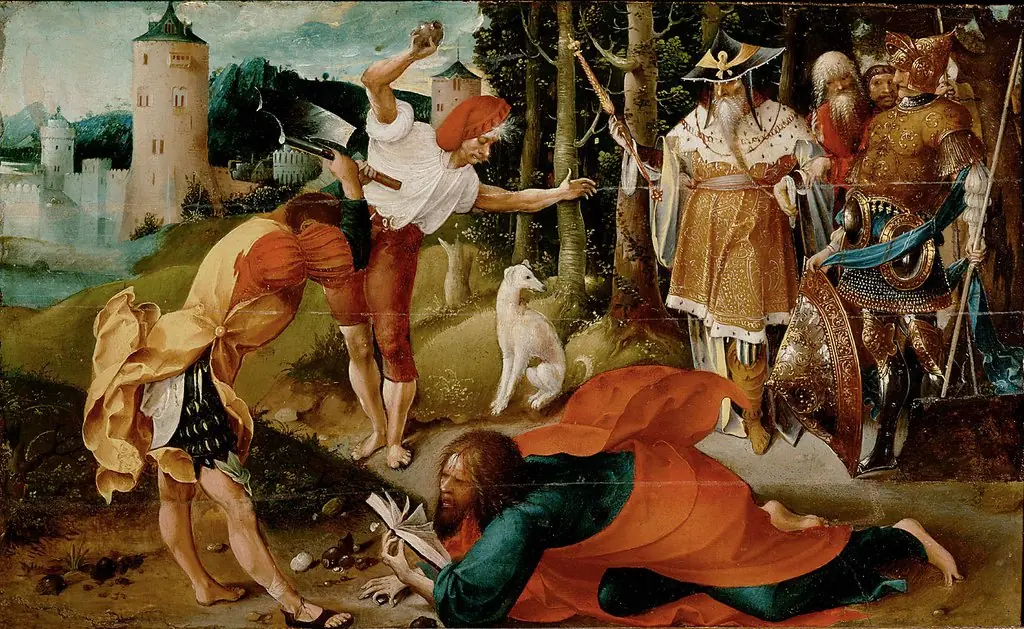 Marter des Apostels Matthias
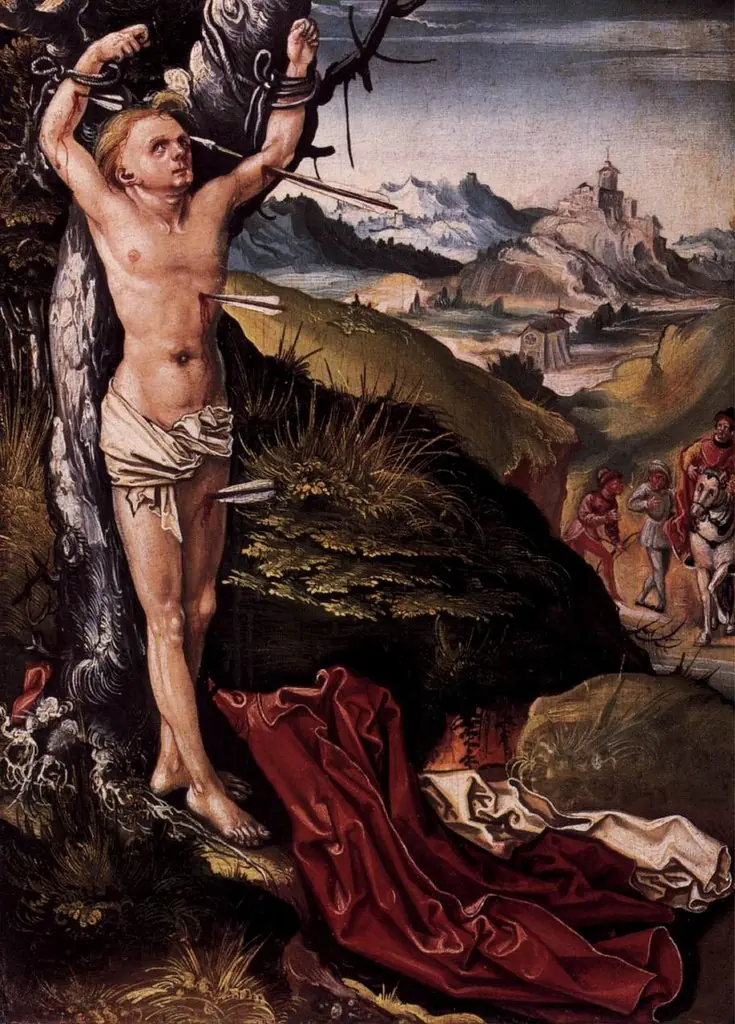 The Martyrdom of Saint Sebastian
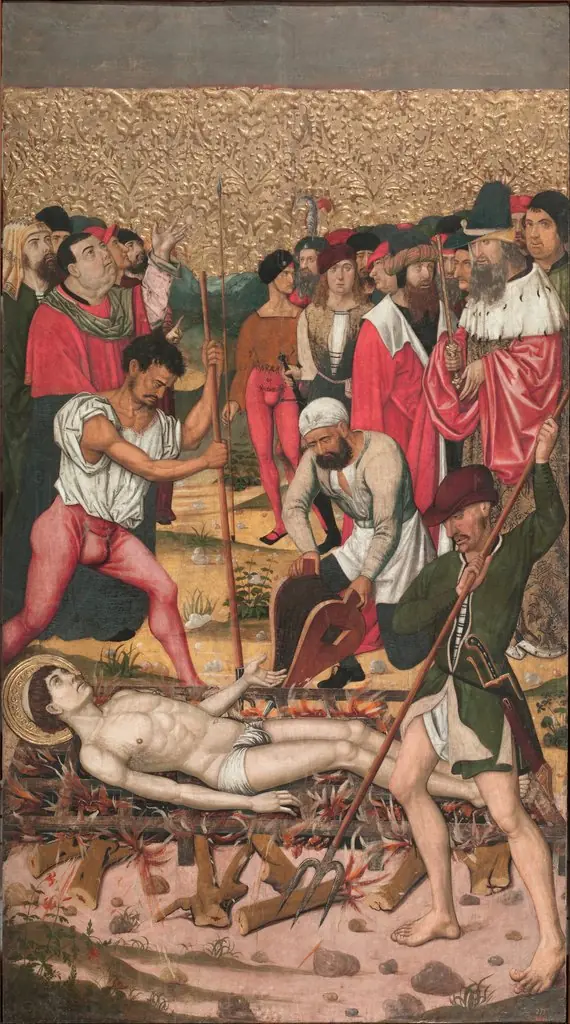 Saint Vincent on the Gridiron
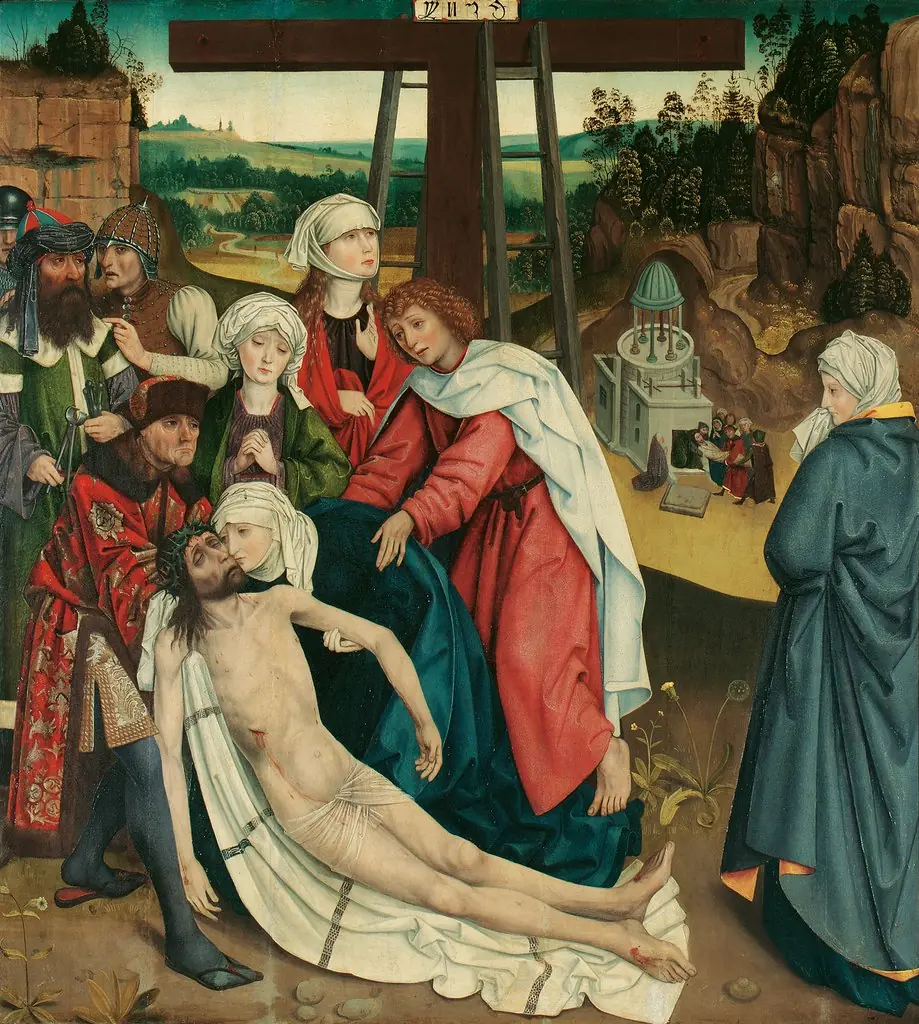 Lamentation of Christ
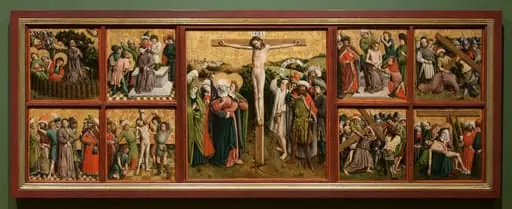 Altarpiece with The Passion of Christ
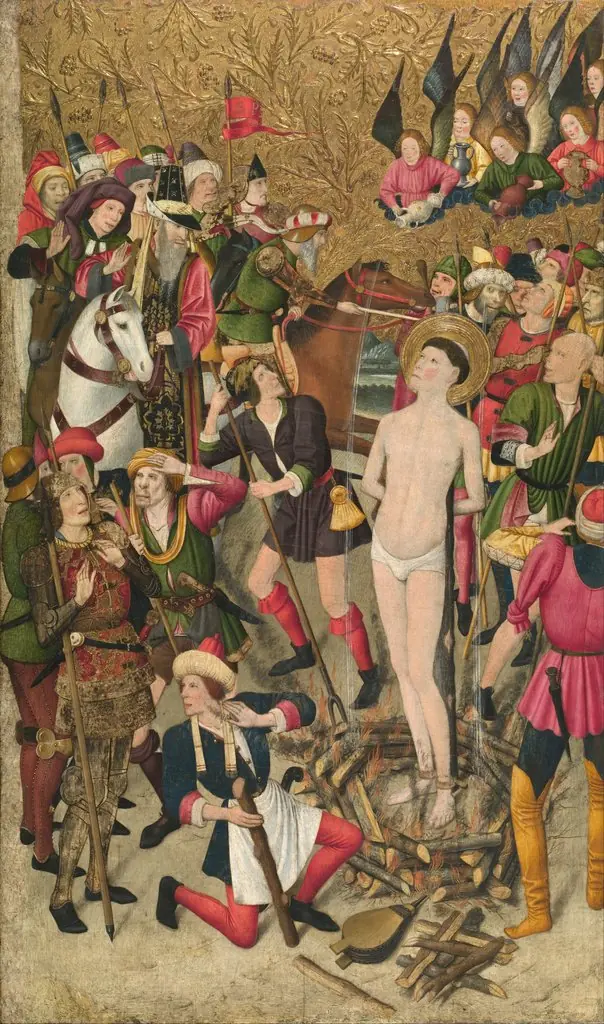 Saint Vincent at the Stake
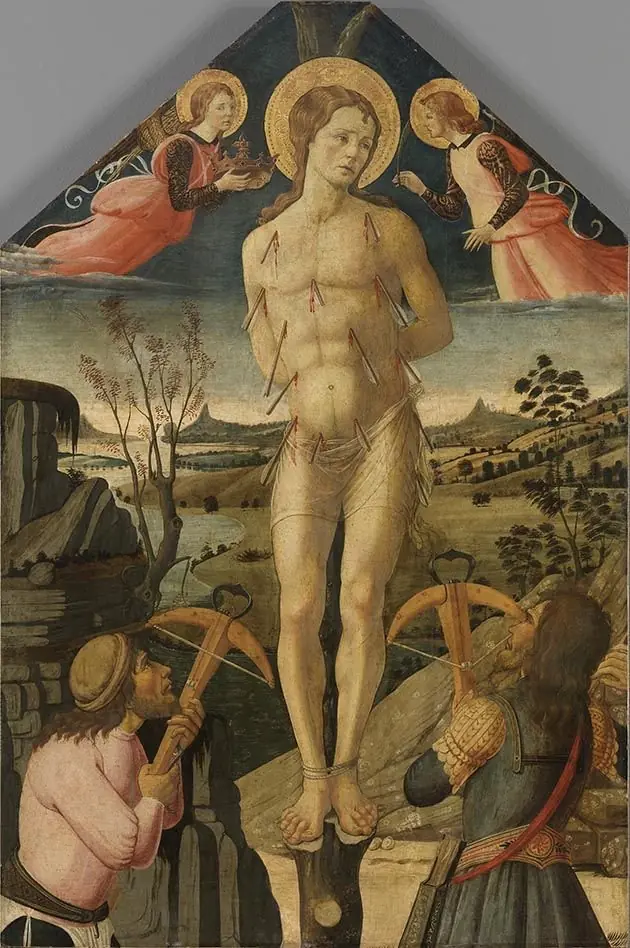 The martyrdom of Saint Sebastian
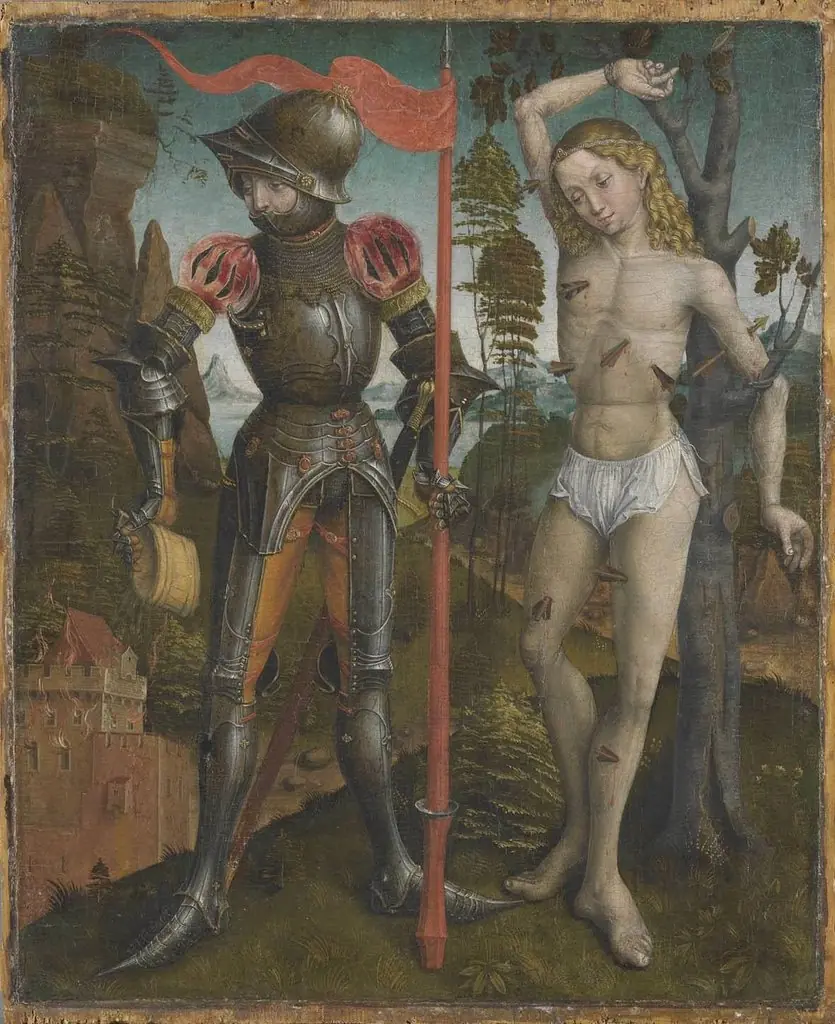 Die hll. Florian und Sebastian
 Geißelung Christi
- Martyrdom of Saint Hippolyte