Artwork
Monogram of Christ combined with Instruments of the Passion
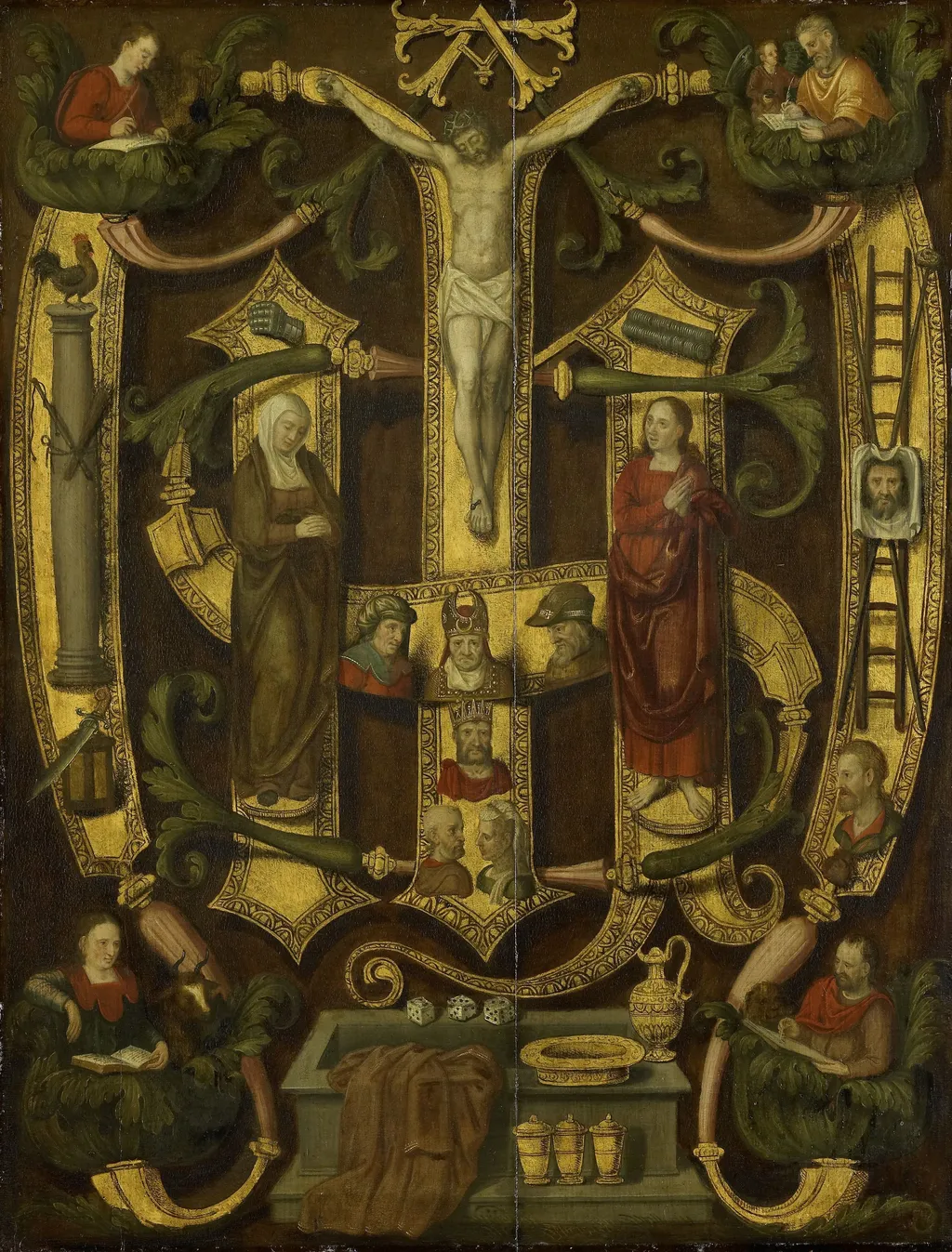
Monogram of Christ combined with Instruments of the Passion is an oil painting by the Mannerist artist Unknown. It dates from 1560 and is held in the collection of the Rijksmuseum.
About this work
Technique & Style
The work measures 59 centimeters in height by 46 centimeters in width and is classified as a religious painting from the 16th century.
Oil paint was applied to a wooden panel in the Southern Netherlands around 1560, creating a religious composition that combines a monogram of Christ with symbolic instruments of the Passion. The work measures 59 centimeters in height by 46 centimeters in width and is classified as a religious painting from the 16th century. Its surface exhibits fine brushwork and restrained tonal modeling characteristic of early Netherlandish devotional art, with the monogram and Passion symbols rendered in precise, symbolic detail.
The painting has been part of the Rijksmuseum collection and was previously housed in the Museum Catharijneconvent, where it was studied as an example of anonymous devotional output from the period.
History & Provenance
The work was created in 1560, executed in oil paint on panel, and produced in the Southern Netherlands. It is classified as an anonymous religious painting, with no artist attribution recorded in the available documentation. The painting's documented institutional ownership places it in the collection of the Rijksmuseum, with an associated holding at the Museum Catharijneconvent, and its current location is the Rijksmuseum.
No information is available regarding an earlier ownership chain, a commissioning party, or any intermediate provenance prior to its accession by these institutions.
The creation history is limited to the recorded inception date of 1560 and its geographic origin in the Southern Netherlands, a region associated with significant sixteenth-century devotional painting production. No records of the original patron, the circumstances of its commission, or its early custodial history have been preserved in the consulted sources.
The painting Monogram of Christ combined with Instruments of the Passion is held in the collection of the Rijksmuseum in Amsterdam. It is also associated with the Museum Catharijneconvent, indicating a shared or historical link between these two institutions regarding the work. The artwork, created around 1560, is cataloged within the Rijksmuseum's holdings.
No specific inventory or accession numbers are provided in the available records. Furthermore, the sources do not document any exhibition history for this piece, leaving its display record unverified.
Legacy
The painting's composition of a Christogram intertwined with Passion instruments became a recurring visual motif in Counter-Reformation art, particularly in the Southern Netherlands. Its symbolic synthesis influenced later religious works that sought to visually encode Christ's suffering through embedded iconography. The piece's presence in the Rijksmuseum collection has ensured continued scholarly attention to this hybrid devotional strategy, linking it to broader trends in Counter-Reformation visual theology. Contemporary assessments highlight its significance as an example of complex iconographic program development in 16th-century Flemish painting.
Overview
This oil painting depicts a densely detailed crucifixion scene, featuring a central figure on the cross surrounded by various symbolic elements and figures.
Subject & Meaning
The painting includes a crucified Christ with a crown of thorns, flanked by small portraits of men, likely donors or witnesses, and accompanied by a mourning woman and a kneeling figure. Corner figures hold objects associated with the Passion.
Artist & collection









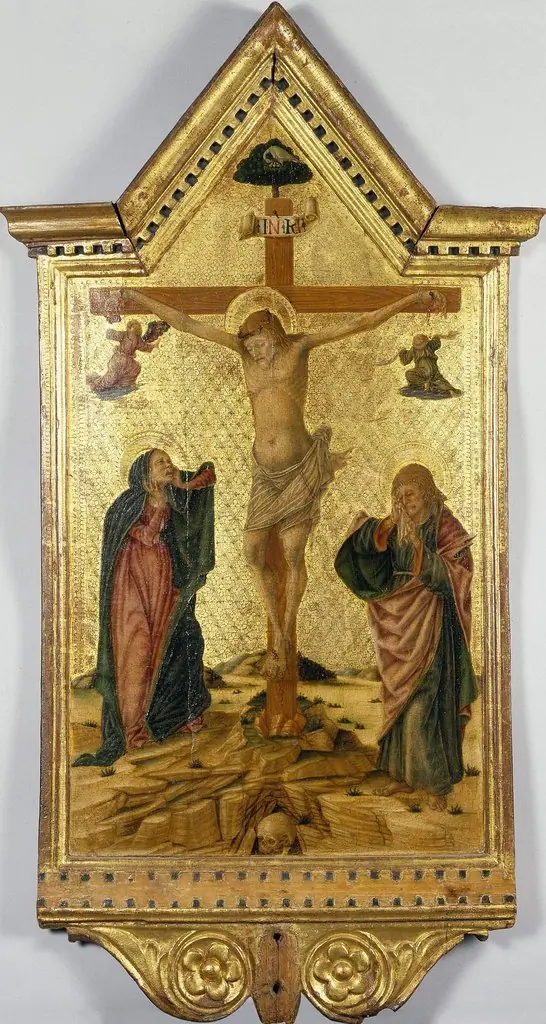 Crucifixion with the Virgin and St John
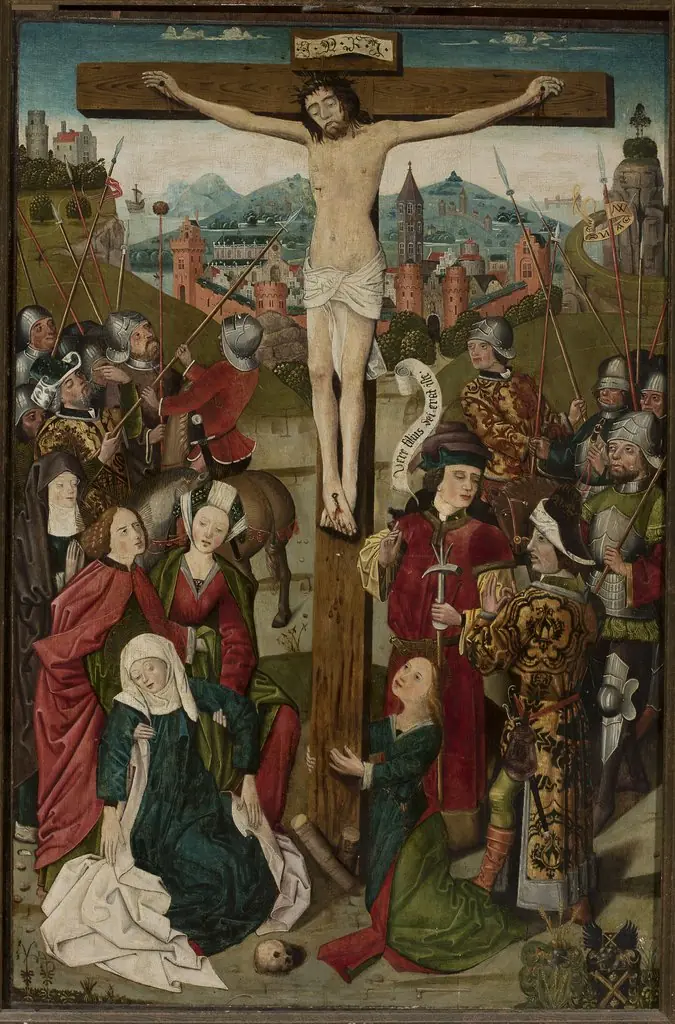 Crucifixion of Christ
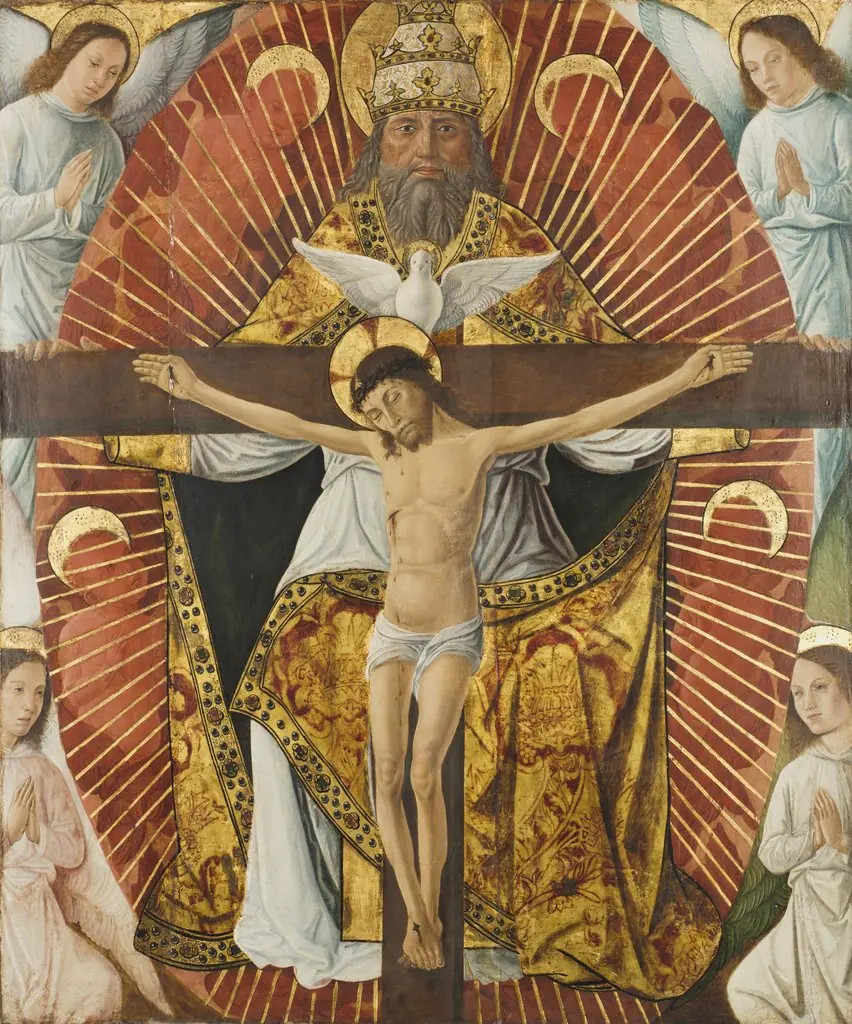 The Trinity
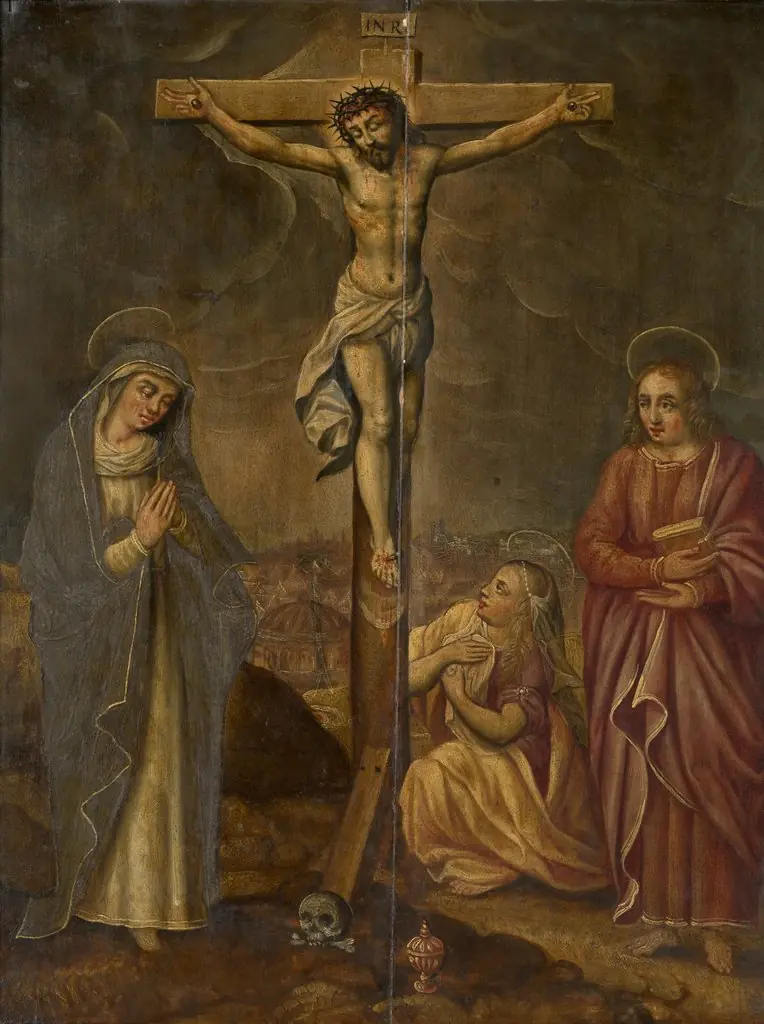 Calvary
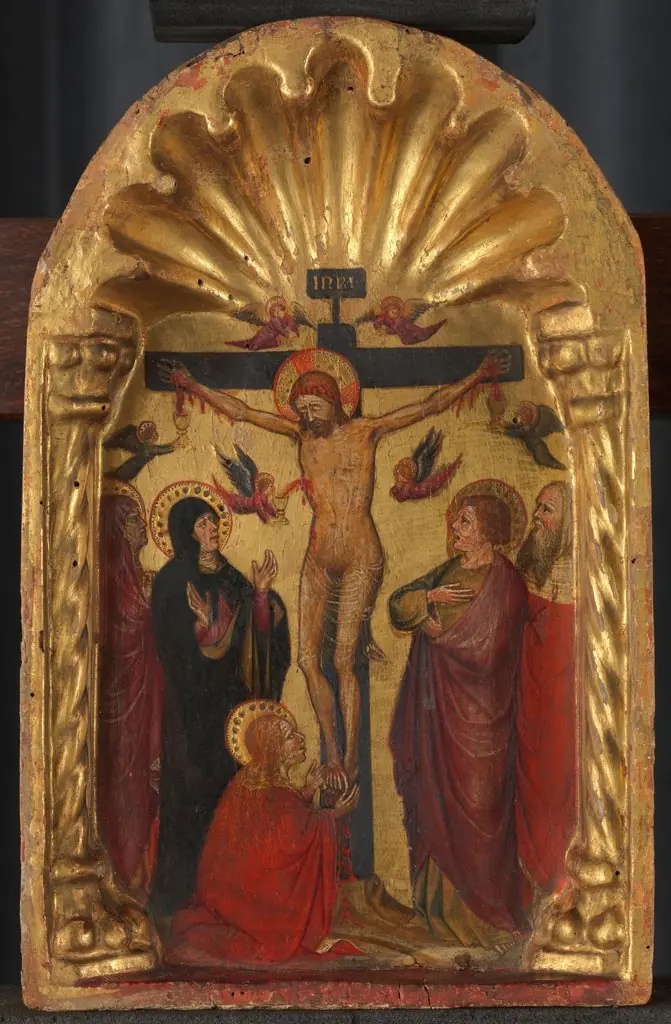 Crucifixion
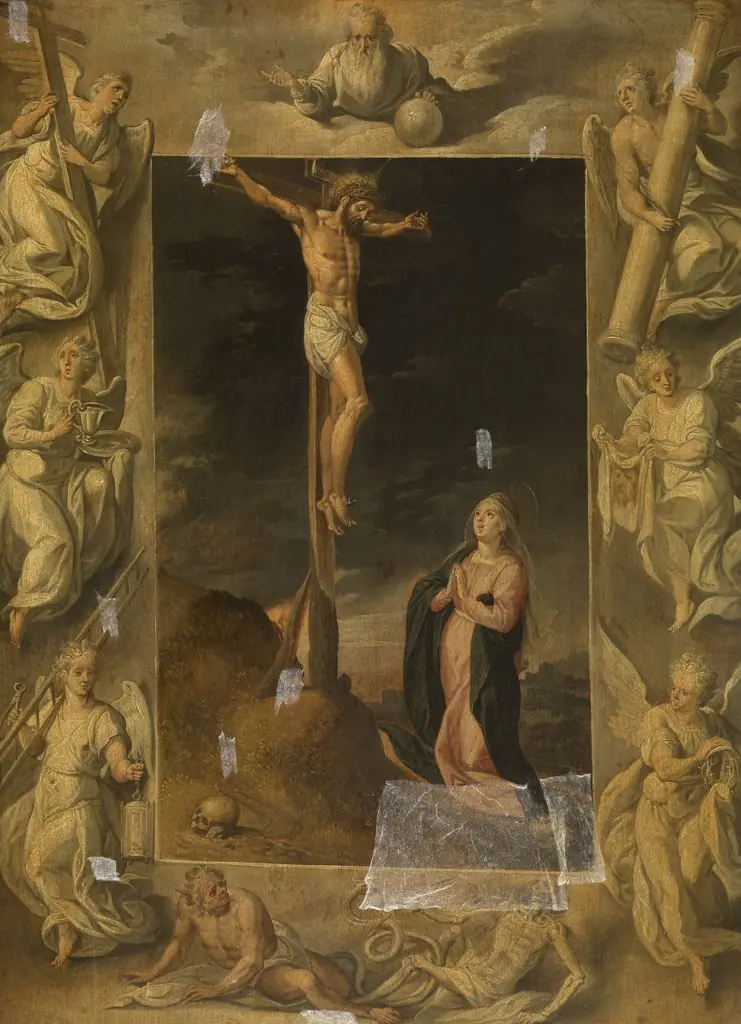 Christ on the Cross with Saint Mary Magdalene
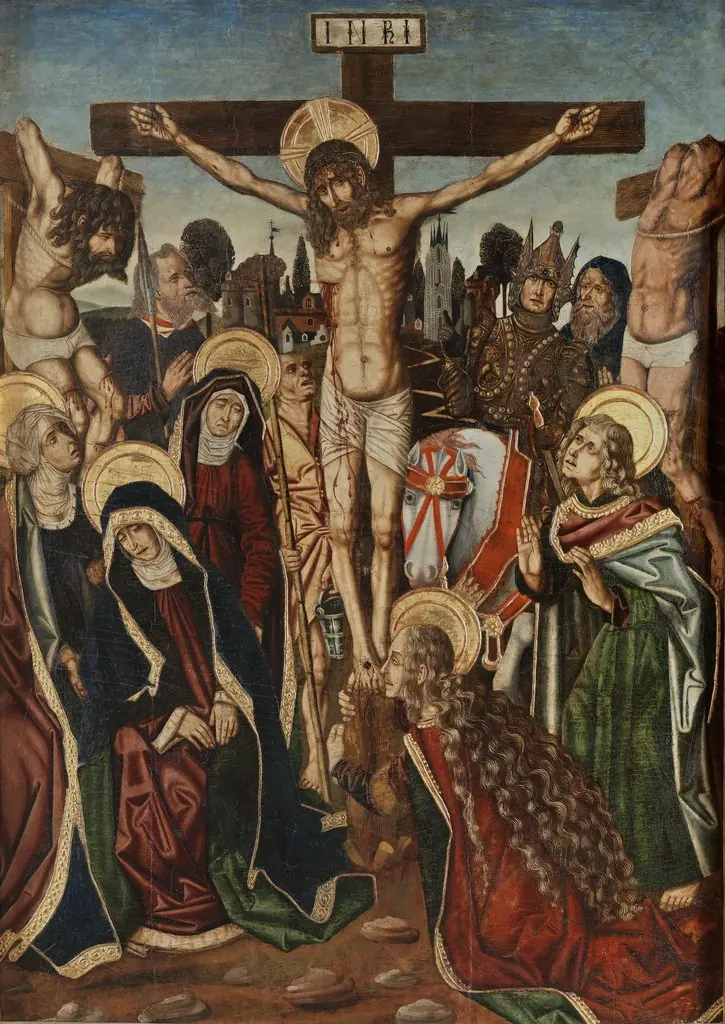 The Crucifixion
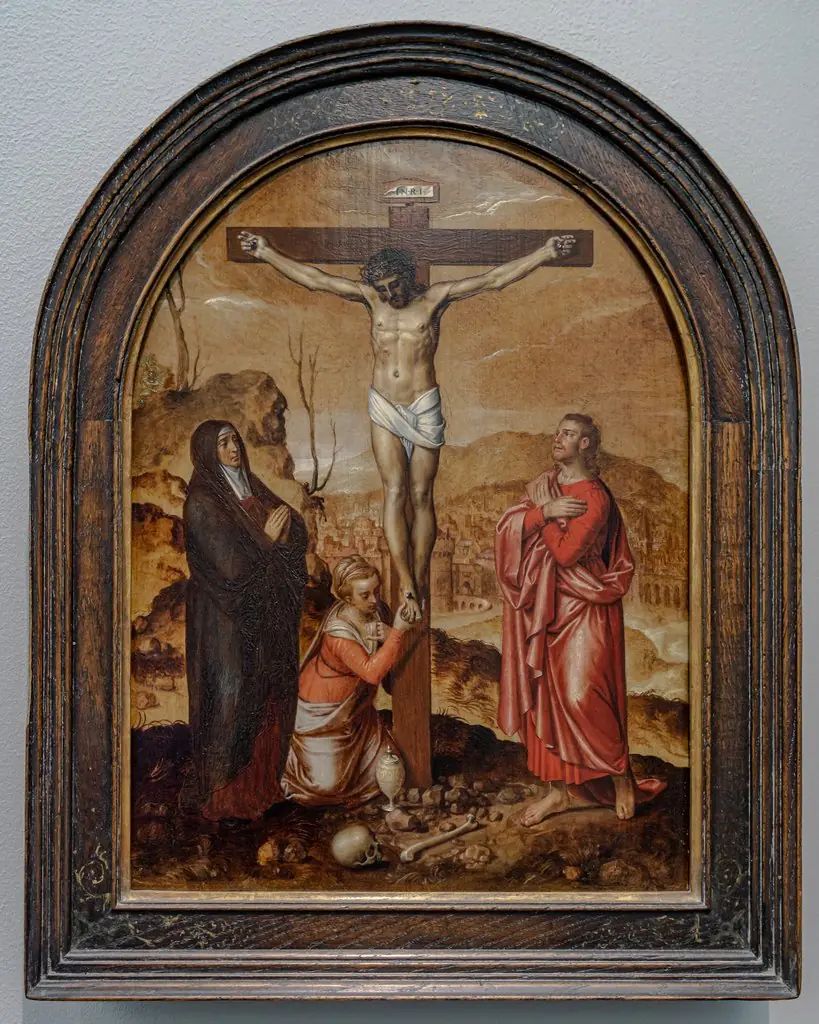 Crucifixion
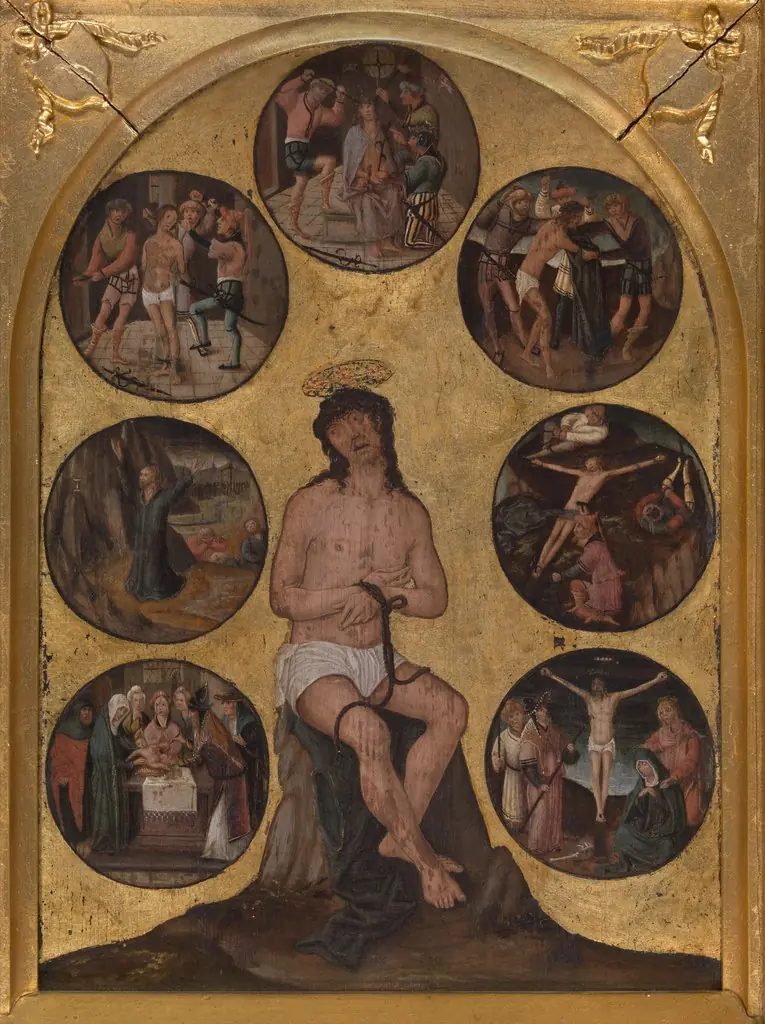 Christ sitting on the Cold Stone and other Scenes of the Passion
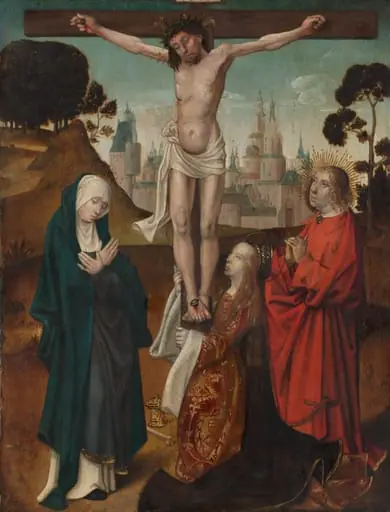 Crucifixion
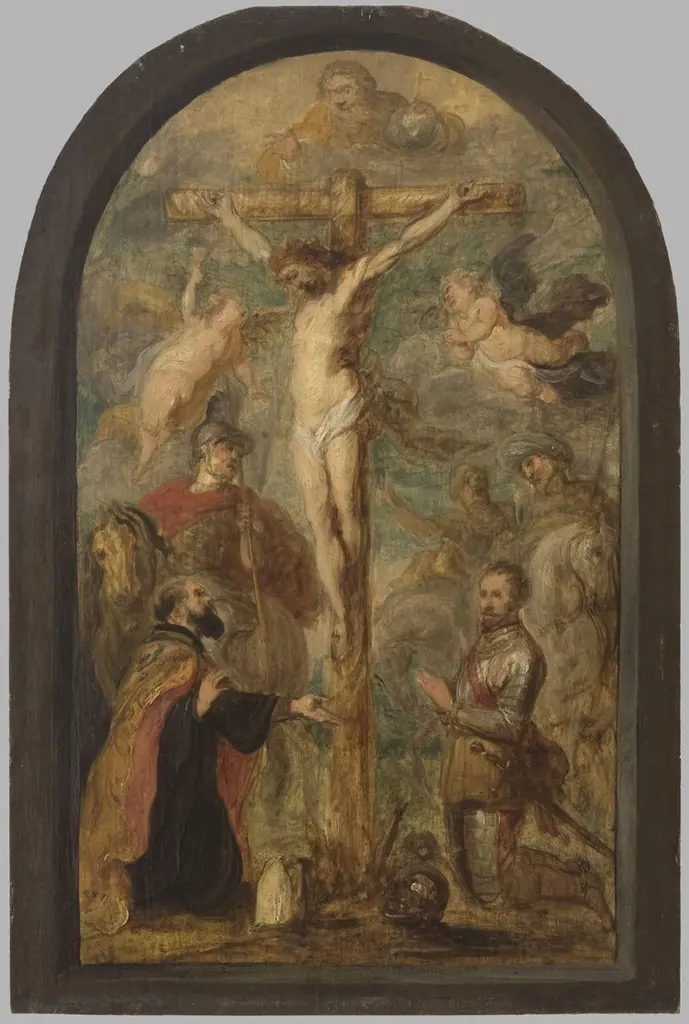 The Crucifixion, with a Bishop, a Saint, and a Donor in Armor
- The Passion of Christ