Artwork
Mona Lisa
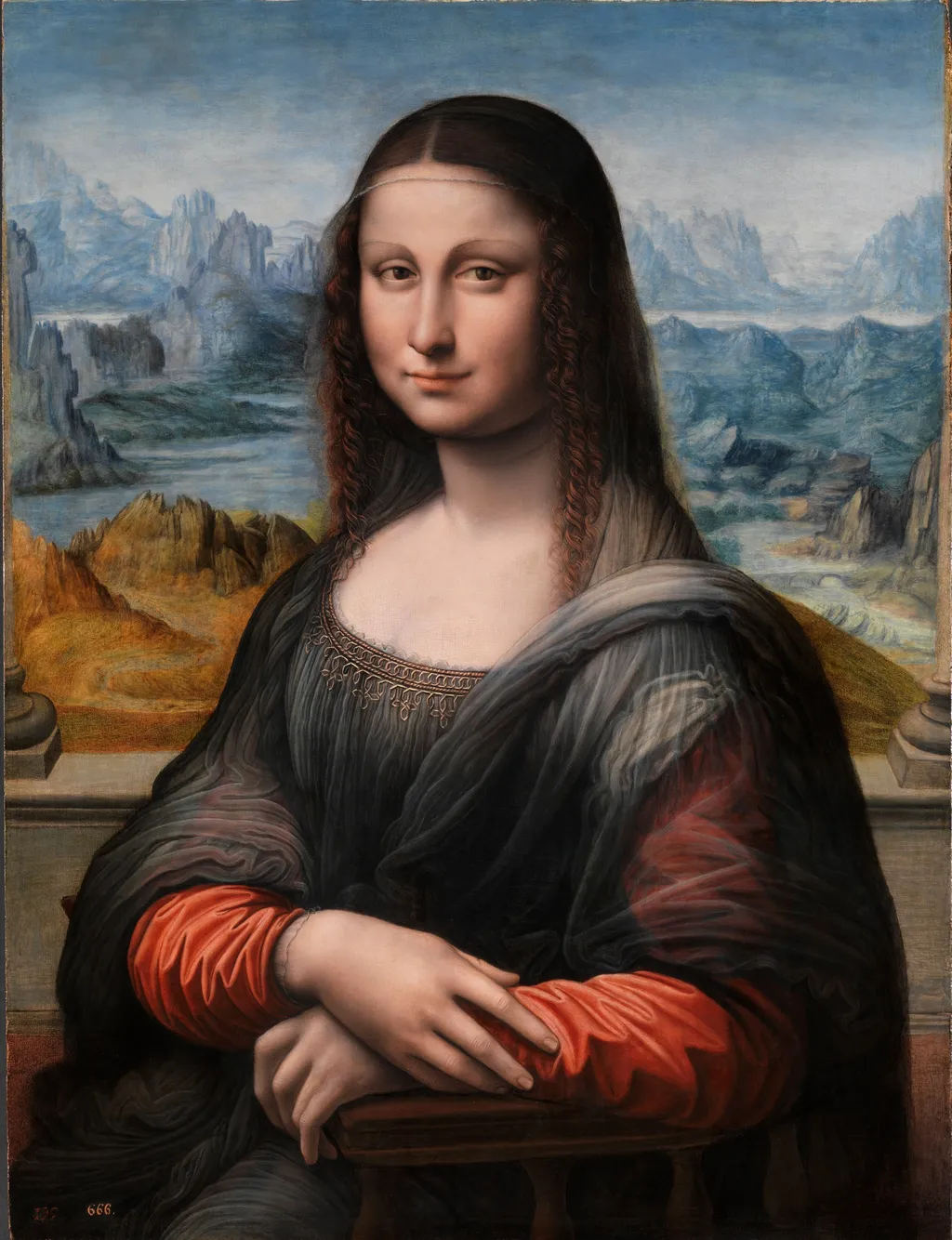
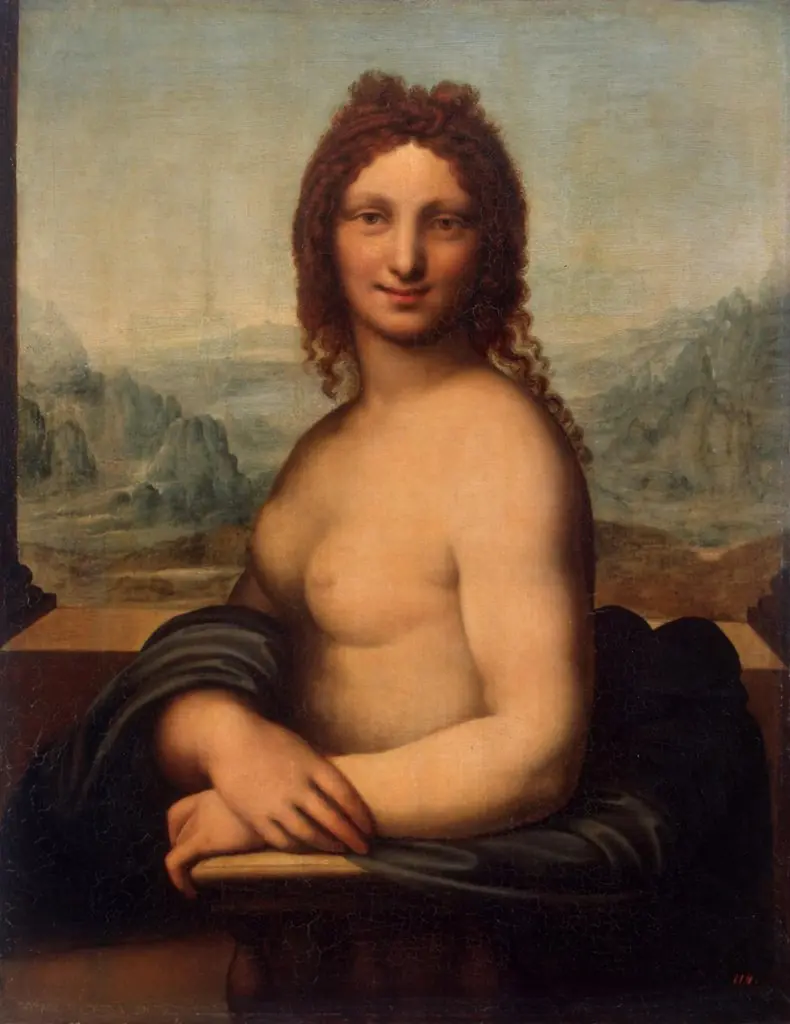
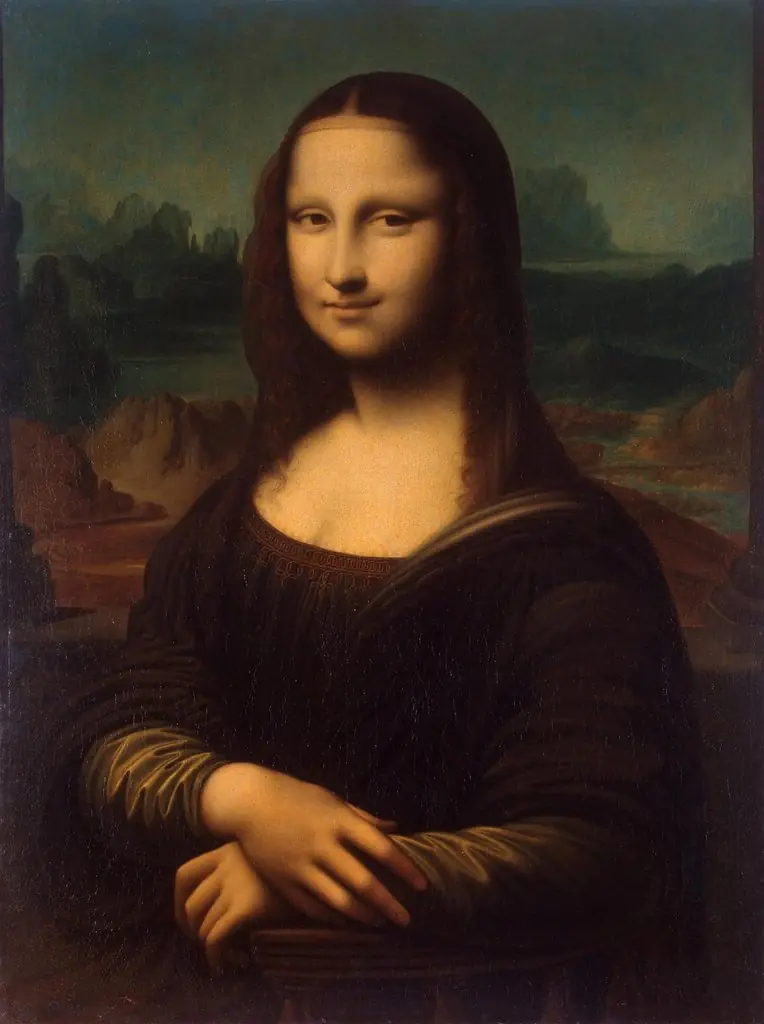
Mona Lisa is an oil painting by the High Renaissance artist Unknown. It dates from 1511 and is held in the collection of the Museo del Prado.
About this work
Subject & Meaning
Technical analysis reveals that the subject originally possessed fine eyebrows, which are absent in the Louvre version, and wore a veil over her left shoulder.
The work depicts Lisa del Giocondo, the wife of Francesco del Giocondo. Technical analysis reveals that the subject originally possessed fine eyebrows, which are absent in the Louvre version, and wore a veil over her left shoulder. The restoration uncovered a Tuscan landscape background previously hidden by black overpaint applied after 1750. The figure appears younger and more vibrant than in the original, offering insights into the sitter's appearance at approximately twenty years of age. While the composition mirrors Leonardo da Vinci's masterpiece, the execution lacks his characteristic sfumato, presenting a more linear and compact style. The painting represents a contemporary studio copy, likely created under the master's supervision, which preserves details of the clothing and setting that have faded or been obscured in the famous original.
Technique & Style
The Prado version of the Mona Lisa is executed in oil paint on a walnut panel, measuring approximately 76 by 57 cm. Technical analysis revealed an underlayer consisting of an orange-toned ground topped with lead white, a preparation method consistent with Leonardo da Vinci's workshop practices for walnut supports. Unlike the Louvre original, which suffers from yellowed varnish and cracking, this copy remains in excellent condition, preserving details such as the subject's eyebrows, the chair's backrest, and the veil over the shoulder.
Restoration between 2011 and 2012 removed a black background layer added after 1750, uncovering a Tuscan landscape similar to the original. Infrared reflectography and radiography demonstrated that the underlying drawing and subsequent compositional corrections mirror those of the Louvre painting exactly, indicating simultaneous creation. However, the brushwork is described as more linear, compact, and continuous, lacking the characteristic sfumato of Leonardo's mature style.
History & Provenance
The Prado's Mona Lisa has been part of the Museo del Prado collection in Madrid since 1819, following its acquisition from the Spanish Royal Collection. It was first documented in a 1666 inventory of the Royal Alcázar as 'Mujer de mano de Leonardo Abince' and had been owned by Ferdinand VII of Spain before entering the royal collection. The painting was long considered an anonymous 16th-century copy but was restored between 2011 and 2012 after being loaned to the Louvre for the exhibition 'Leonardo's Last Masterpiece: The Sainte Anne' (29 March to 25 June 2012). Restoration revealed its landscape background and confirmed its creation in Leonardo's workshop alongside the Louvre's original, likely by an apprentice such as Francesco Melzi or Salaì. Infrared reflectography showed identical underdrawings with corrections matching those in the Louvre version, proving contemporaneous execution. The work is painted on walnut panel (76.3 cm height, 57 cm width) with lapis lazuli and red lacquer, distinguishing it from typical workshop copies. It has been exhibited at the Prado since 1819 and was temporarily displayed at the Louvre in 2012.
Context
The Prado's Mona Lisa has been part of the museum's collection since its founding in 1819, initially regarded as an anonymous 16th-century copy but later recognized as the earliest known studio replica of Leonardo's Louvre original. Restoration between 2011 and 2012 revealed its painted-on wooden panel, walnut support, and original landscape beneath a later black varnish layer dating to after 1750. Technical analysis including infrared reflectography confirmed the work was created in Leonardo's workshop simultaneously with the Louvre version, showing identical underdrawings and shared compositional corrections. The painting's superior preservation, due to its thicker walnut panel, allowed clearer visibility of details like the landscape, hair, veil, and chair compared to the Louvre original.
Artist & collection









![Ginevra de' Benci [obverse], by Leonardo da Vinci](https://artifactworldgallery.com/img/leonardo-da-vinci--ginevra-de-benci-obverse--afb6ec3a3e65f392-w320.webp)