Artwork
Portrait of Ferdinand Carolus Gonzaga Duke of Mantua (1652-1708)
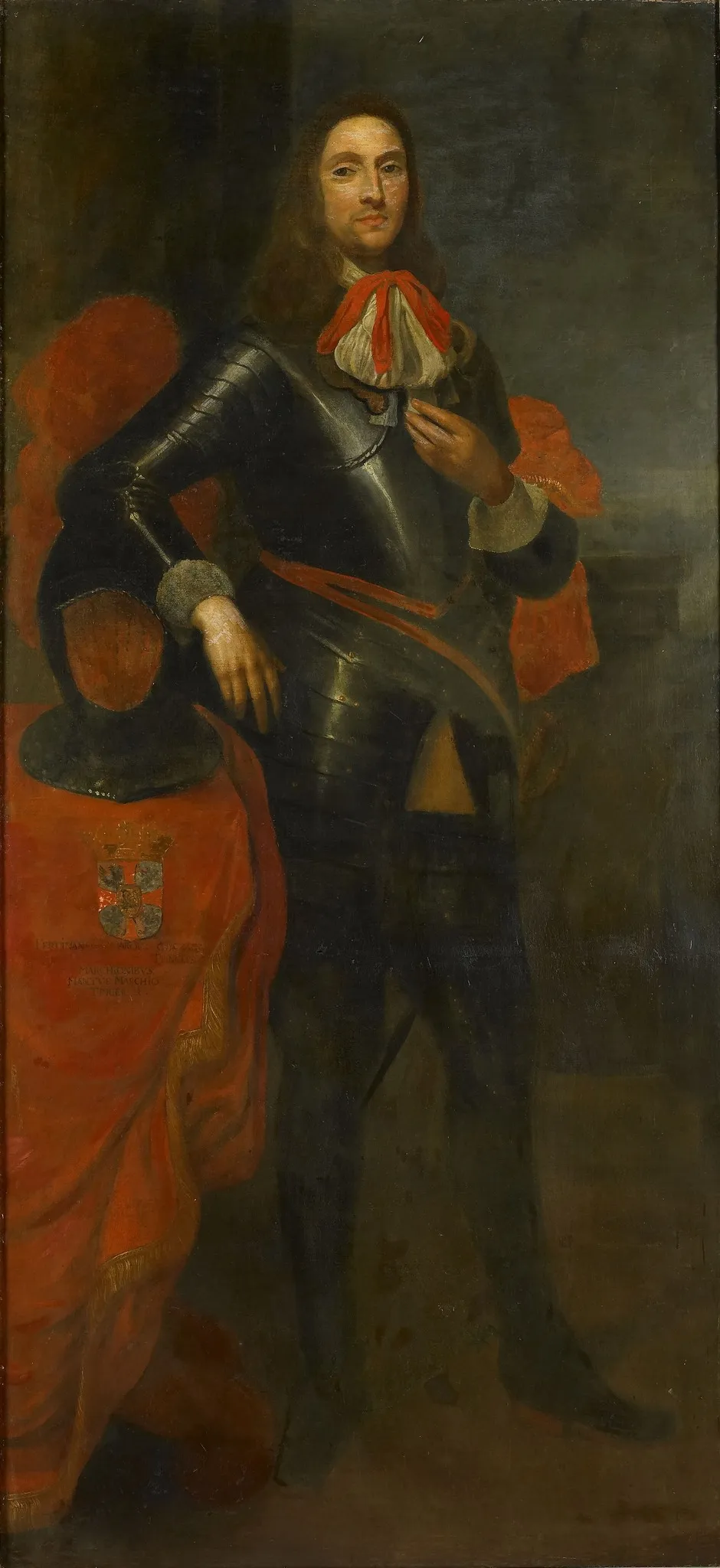
Portrait of Ferdinand Carolus Gonzaga Duke of Mantua (1652-1708) is an oil painting. It dates from 1689 and is held in the collection of the Rijksmuseum. The oil painting depicts Ferdinand Carlo Gonzaga, Duke of Mantua, dressed in a dark, polished suit of armor.
About this work
Subject & Meaning
The painting is a portrait of Ferdinando Carlo Gonzaga, Duke of Mantua and Montferrat, the last Gonzaga ruler of the duchy, who lived from 1652 to 1708.
The painting is a portrait of Ferdinando Carlo Gonzaga, Duke of Mantua and Montferrat, the last Gonzaga ruler of the duchy, who lived from 1652 to 1708. As a state portrait produced in 1677, during his reign, the work functions as a formal representation of ducal authority and dynastic identity, presenting the sitter in the manner conventional for European nobility of the period. The choice of oil on canvas and the large vertical format support its character as an official image of rulership rather than a private likeness.
The portrait thus embodies the visual language of Gonzaga power at the close of the dynasty, presenting Ferdinando Carlo as the reigning duke of Mantua and Montferrat and serving as a record of his status shortly before the extinction of his house.
Technique & Style
The portrait was executed in oil paint on canvas in 1677. It measures 195 cm in height and 91 cm in width, characteristic of a full-length formal portrait from the Dutch Baroque tradition. The composition presents the sitter in a dignified pose with restrained brushwork that emphasizes surface realism over psychological depth, reflecting the stylistic conventions of the circle of Harmen de Bye.
The handling of light and fabric detail demonstrates a refined technique typical of mid-17th century Dutch portraiture, while the restrained palette and precise rendering of textures align with contemporary practices in elite portrait painting.
Legacy
Gonzaga's depiction by the circle of Harmen de Bye established a visual precedent for aristocratic portraiture in Dutch Golden Age circles, influencing how later artists rendered European nobility in oil on canvas. The work's presence in the Rijksmuseum collection has ensured continued scholarly attention to Gonzaga's diplomatic role, though it remains less frequently cited than his contemporaries in studies of 17th-century trans-European power networks.
Overview
The oil painting depicts Ferdinand Carlo Gonzaga, Duke of Mantua, dressed in a dark, polished suit of armor. He rests a hand on his chest while a vivid red cloak, edged with gold embroidery and bearing a crest on the shoulder, drapes over his shoulders. The figure is set against a plain, dark background that accentuates the contrast between the metallic armor and the rich fabrics.
Context
Created in the late 17th or early 18th century, the portrait reflects contemporary courtly conventions that linked aristocratic identity with military prowess and opulent dress. The emphasis on detailed fabric and armor aligns with Baroque portraiture’s focus on realism, status, and the dramatic interplay of light and shadow.
Artist & collection

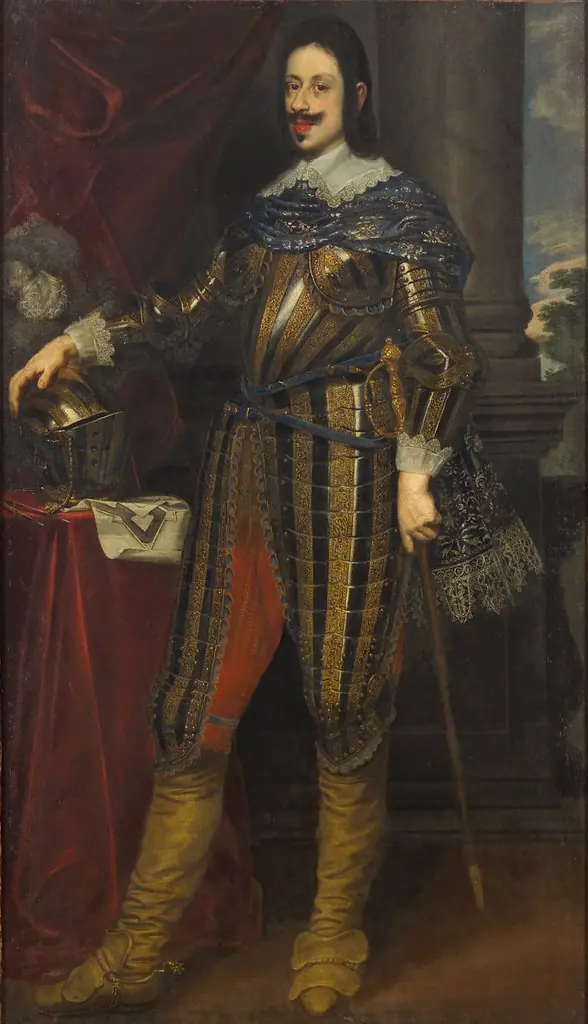 Grand-duke Ferdinand II of Tuscany (1610-1670) in Armour
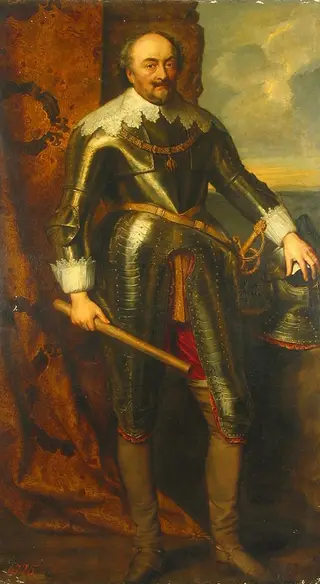 Portrait of Johan, Count of Nassau-Siegen (1583-1638)
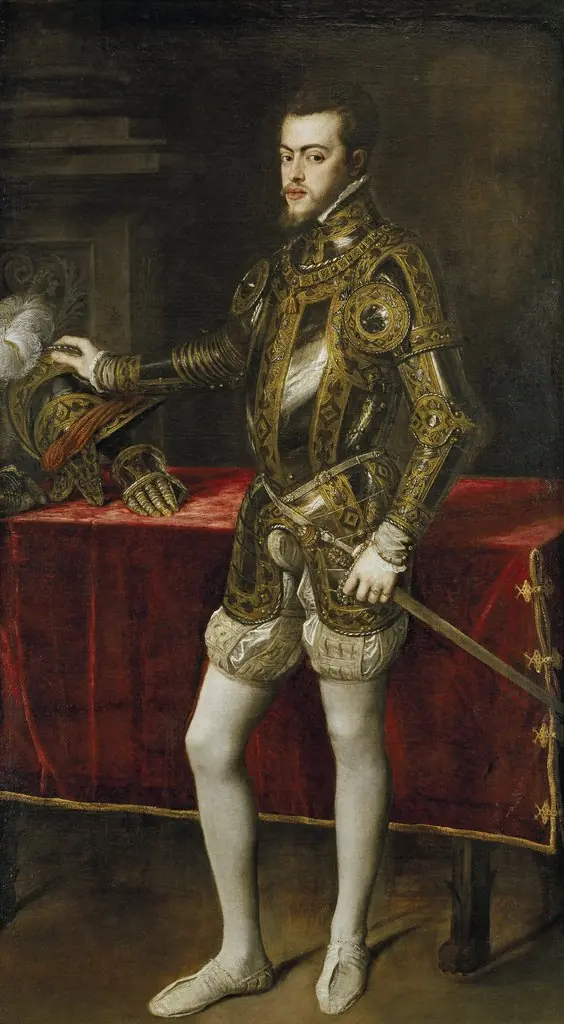 Philip II in Armour
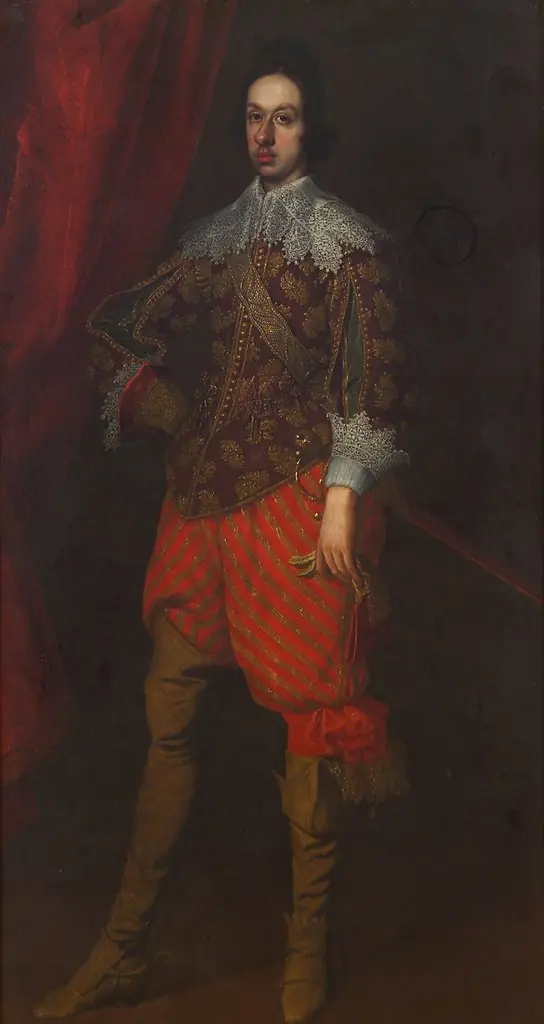 Grand Duke Ferdinando II. (1610-1670) of Tuscany
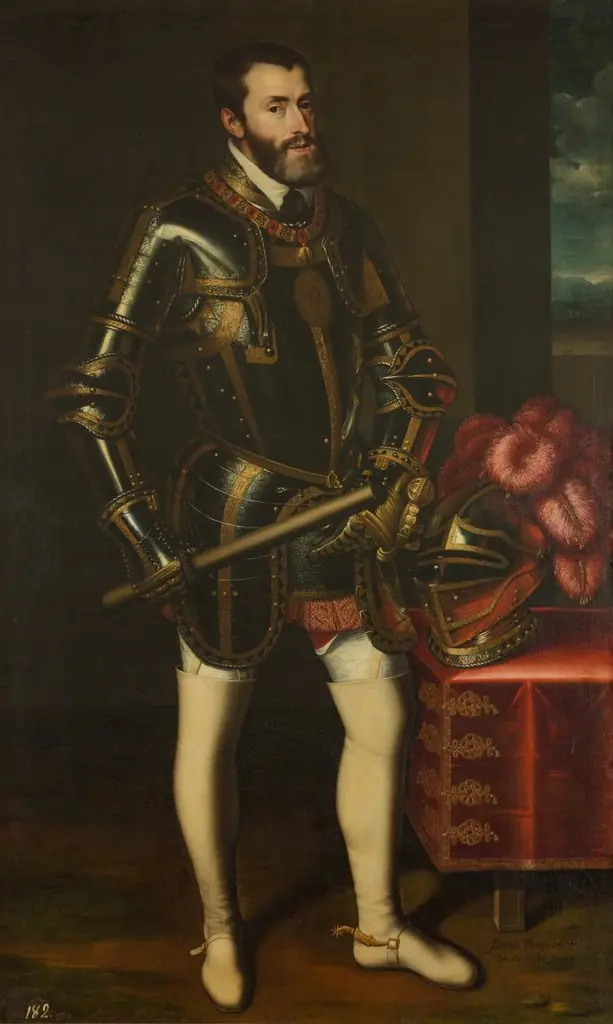 The Emperor Charles V
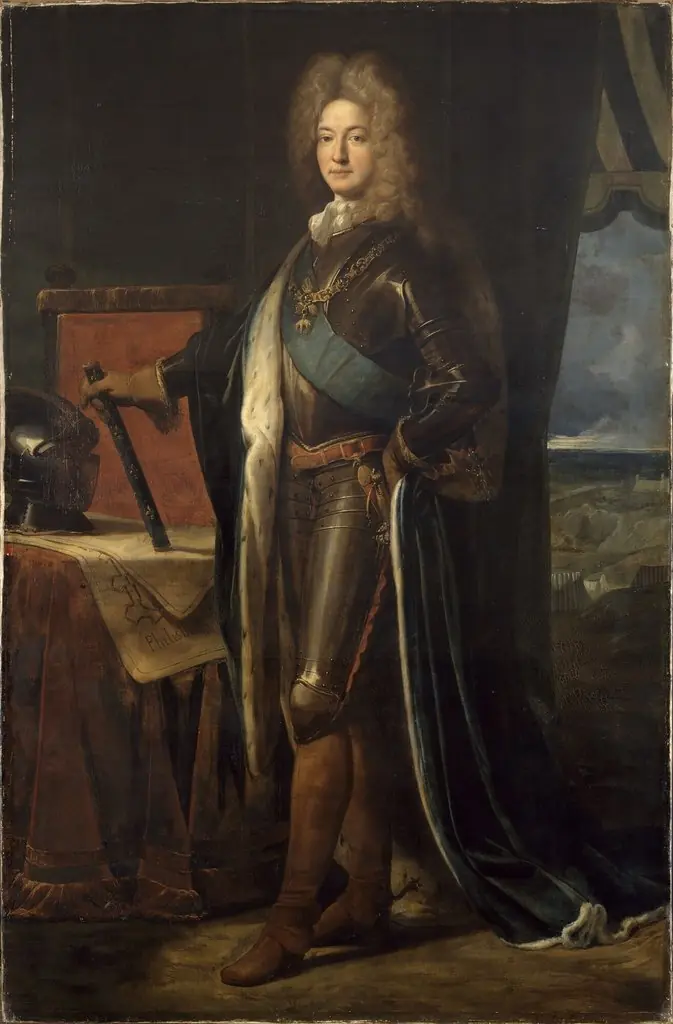 Portrait of Adrien Maurice de Noailles (1678-1766)
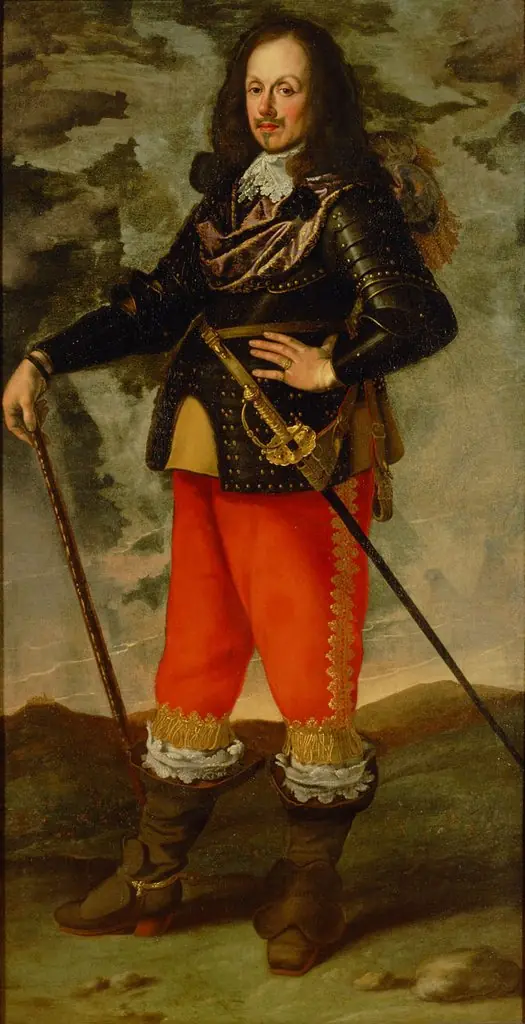 Mattias de' Medici (1613-1667)
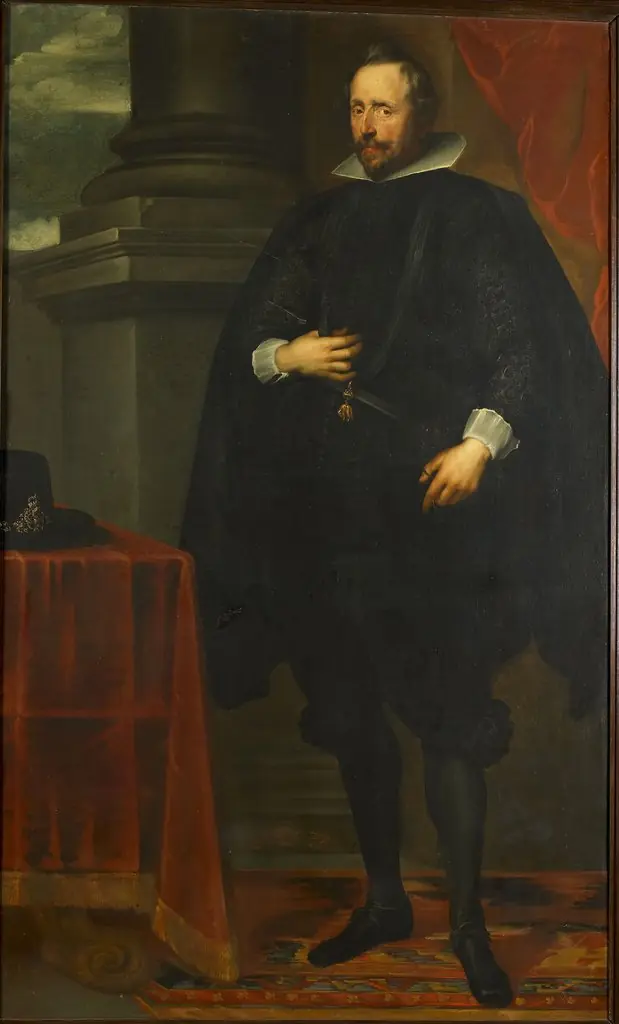 Portrait of Wolfgang Wilhelm, Count Palatine of Neuburg
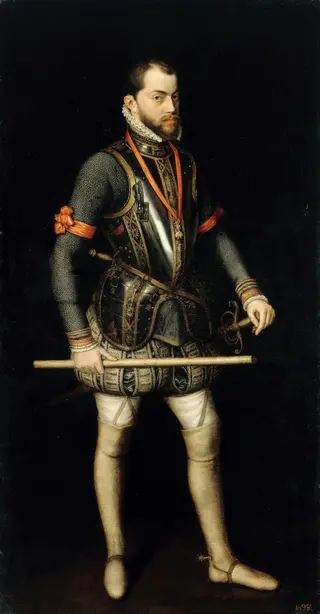 Portrait of Philip II of Spain (1527-1598)