Artwork
Portrait of Frans I van Habsburg (1768-1835), emperor of Austria
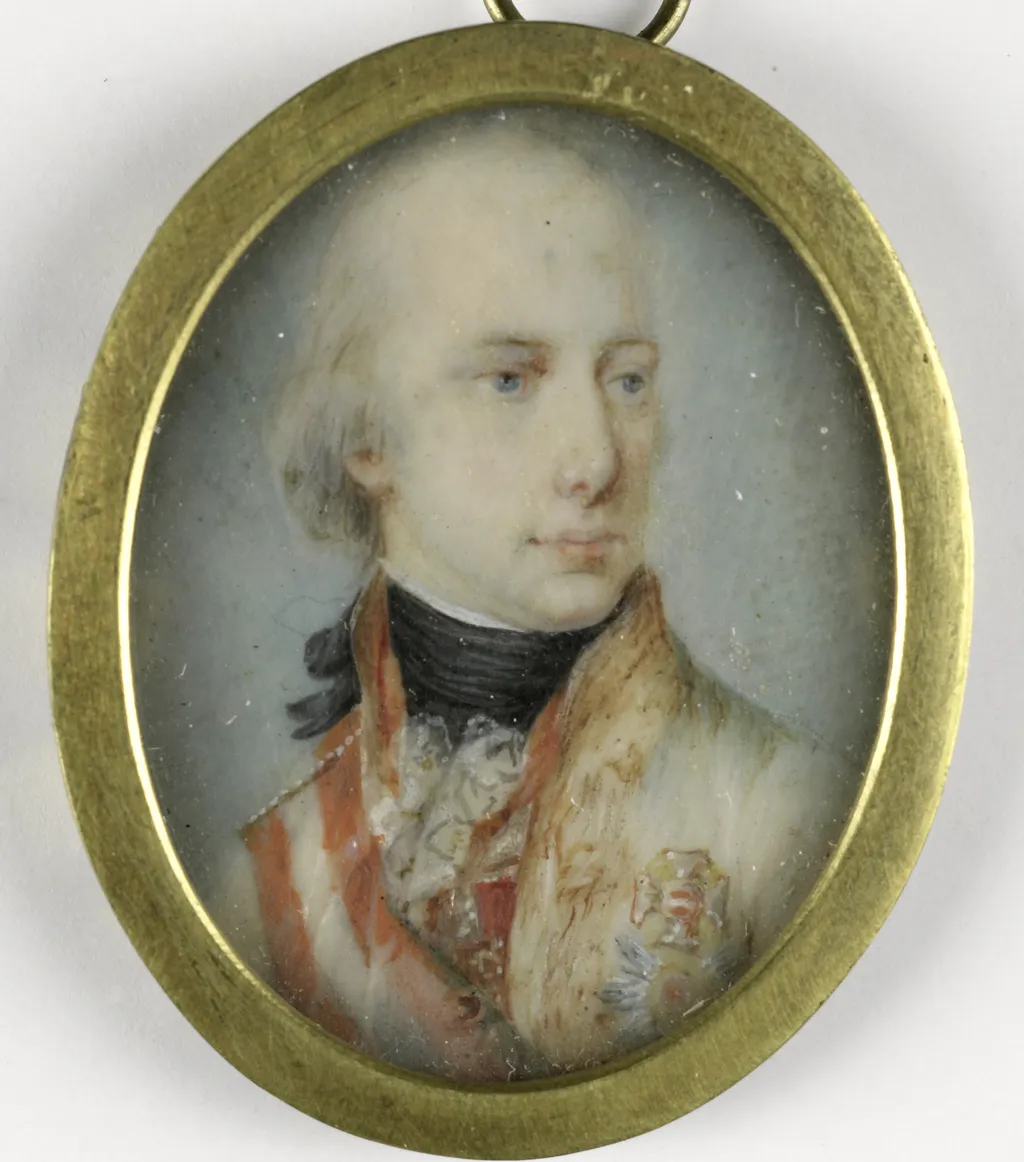
Portrait of Frans I van Habsburg (1768-1835), emperor of Austria is an ivory painting by Unknown. It dates from 1810 and is held in the collection of the Rijksmuseum. This portrait, executed on ivory, captures a solemn figure identified as Frans I van Habsburg, Emperor of Austria.
About this work
History & Provenance
9 cm, matching the specifications listed in the museum’s records.
The portrait of Frans I van Habsburg, painted in 1810 on ivory, was created in Germany and originally entered the collection of the Rijksmuseum in Amsterdam, where it remains on view. Its attribution to an anonymous artist was recorded in the museum’s documentation, and the work was catalogued under the title Portrait of Frans I van Habsburg (1768-1835), emperor of Austria. The painting’s dimensions are 3.5 cm by 2.9 cm, matching the specifications listed in the museum’s records.
Legacy
The ivory portrait of Emperor Francis II, created in 1810, contributed to the visual canon of Habsburg imperial imagery, reinforcing his posthumous reputation as a symbol of imperial authority. Its presence in the Rijksmuseum collection and frequent reproduction in scholarly works cemented its status as a reference point for studies of 19th-century European portraiture and imperial iconography.
Overview
This portrait, executed on ivory, captures a solemn figure identified as Frans I van Habsburg, Emperor of Austria. The subject's attire and demeanor convey high nobility.
Subject & Meaning
Depicting Frans I van Habsburg, the portrait emphasizes his imperial status through formal, intricately detailed regalia, including an orange vest, black cravat, and a white coat with red lapels, set against a subdued gray background.
Technique & Style
The artist demonstrated technical proficiency by rendering intricate textures and patterns on the subject's clothing, leveraging the ivory medium to achieve nuanced detail.
Context
The choice of ivory as a medium and the attention to detail in the subject's formal attire reflect the artistic and social conventions of portraying nobility during the early 19th century.
Artist & collection









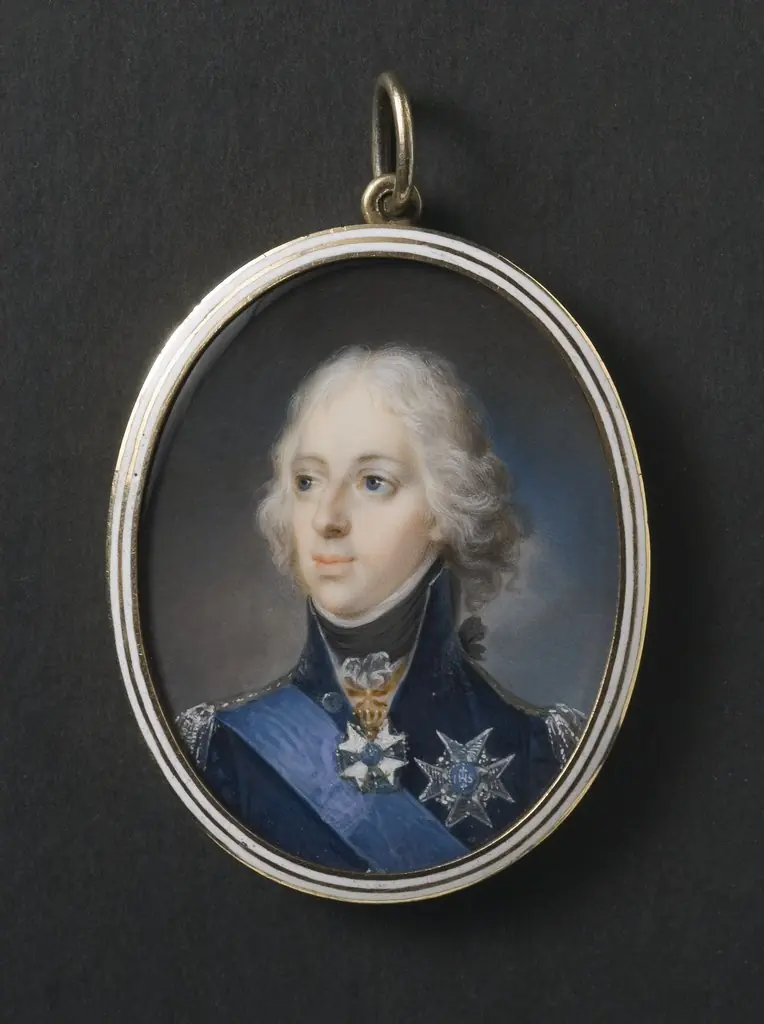 Gustav IV Adolf (1778-1837)
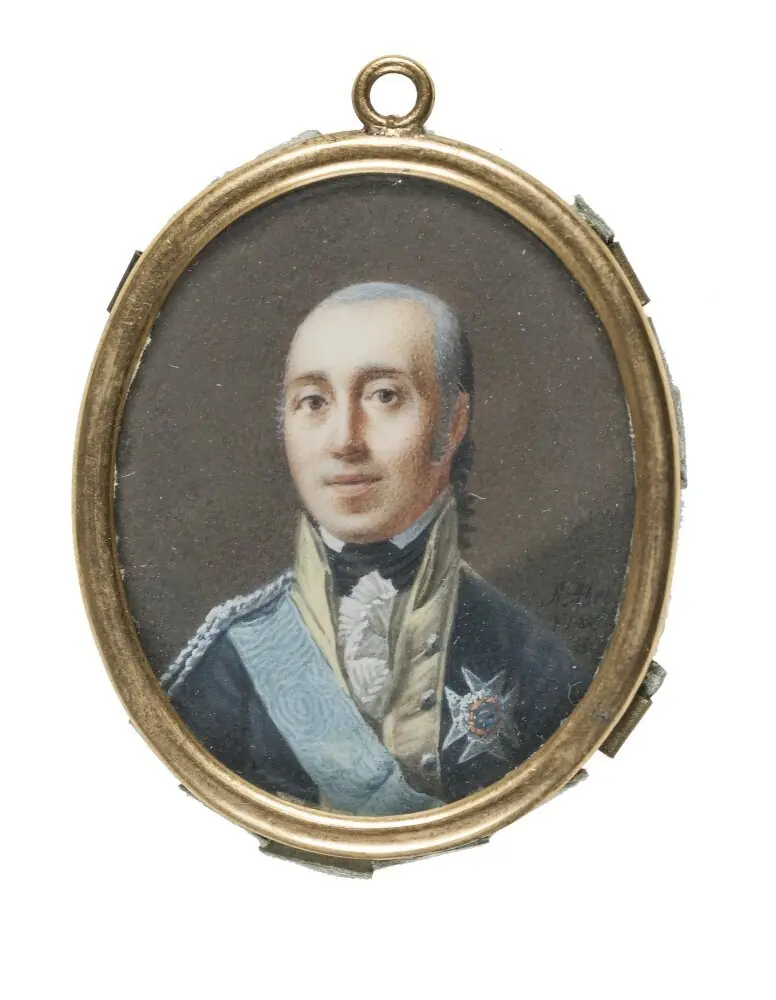 Friedrich Franz, Duke of Mecklenburg-Schwerin
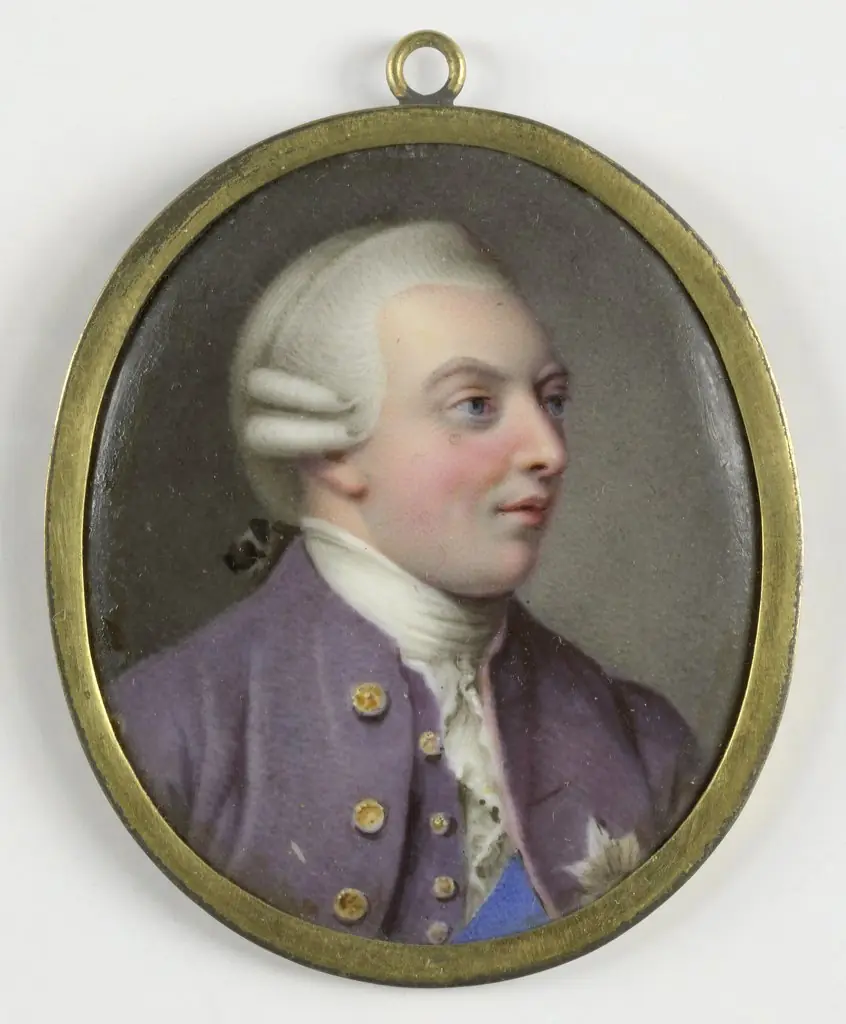 George III (1738-1820), koning van Engeland
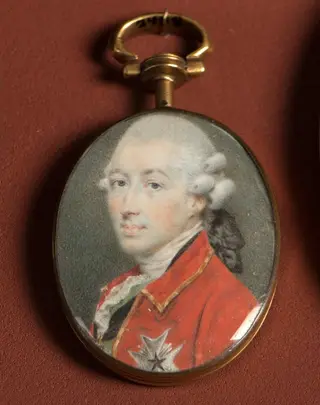 Baron Gustaf Adam von Nolcken
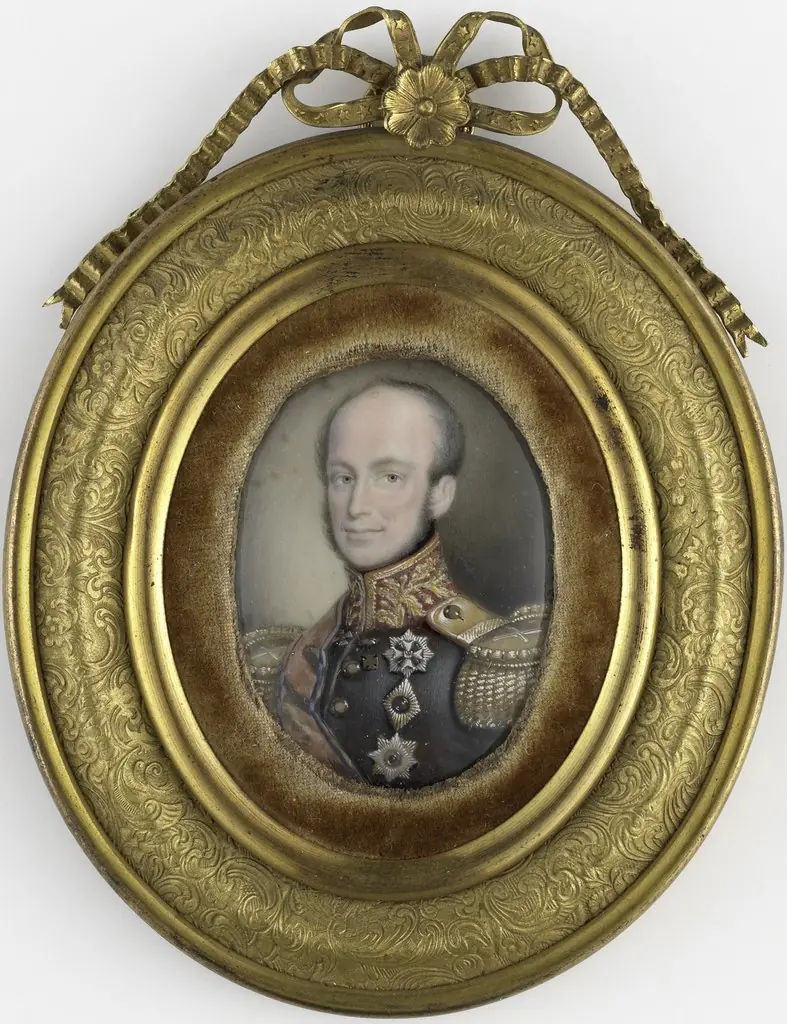 Portrait of Willem II van Oranje- Nassau (1792-1849)
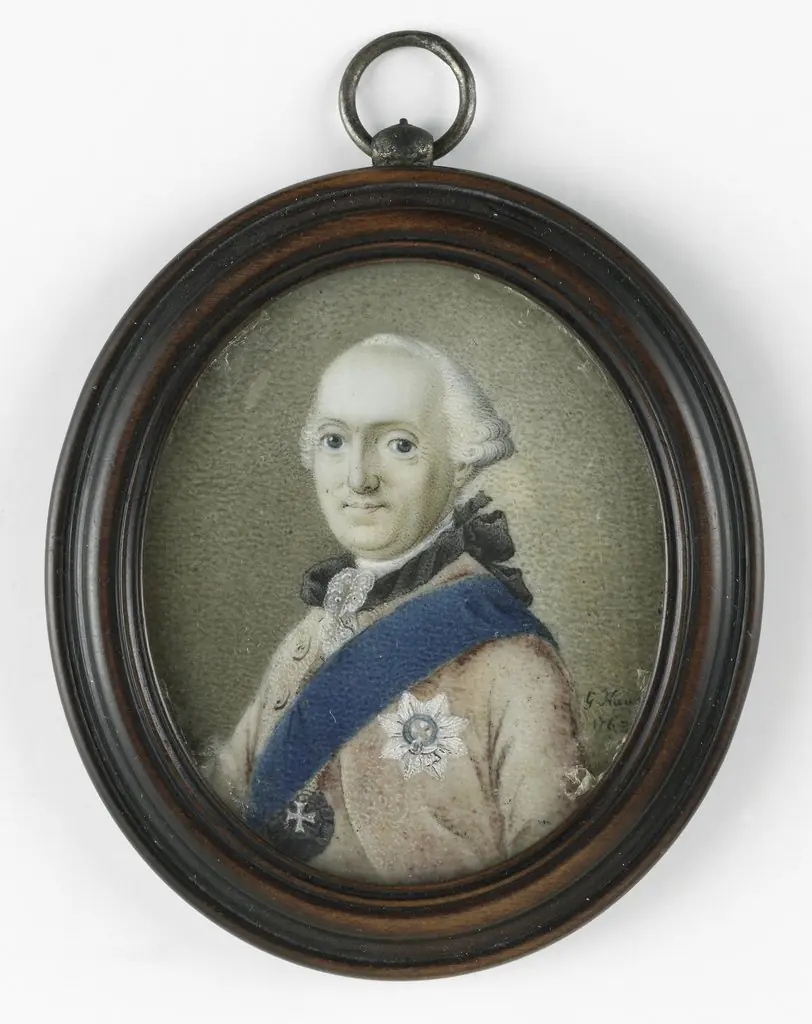 Karl Wilhelm Ferdinand (1735-1806), Duke of Brunswick-Luneburg
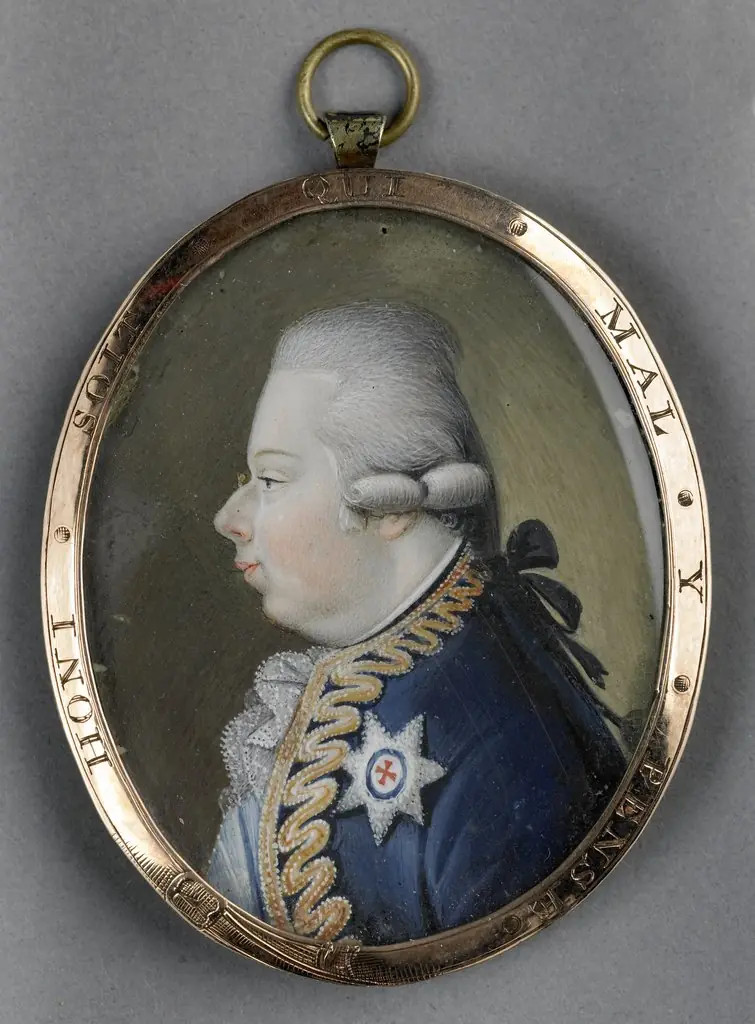 Portrait of Willem V van Oranje- Nassau (1748-1806)
 Richard Montgomery
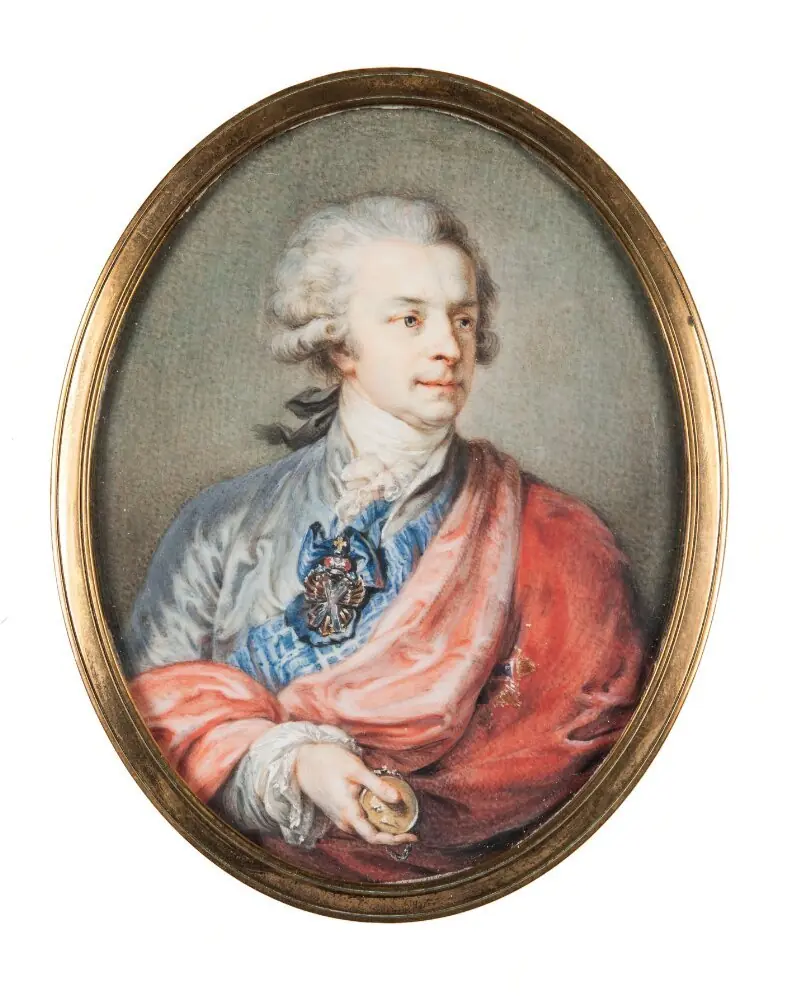 Portrait of Count Michael George Mniszech, Grand Marshall of the Crown