Artwork
Portrait of Jan III Radziwiłł (?–1542)
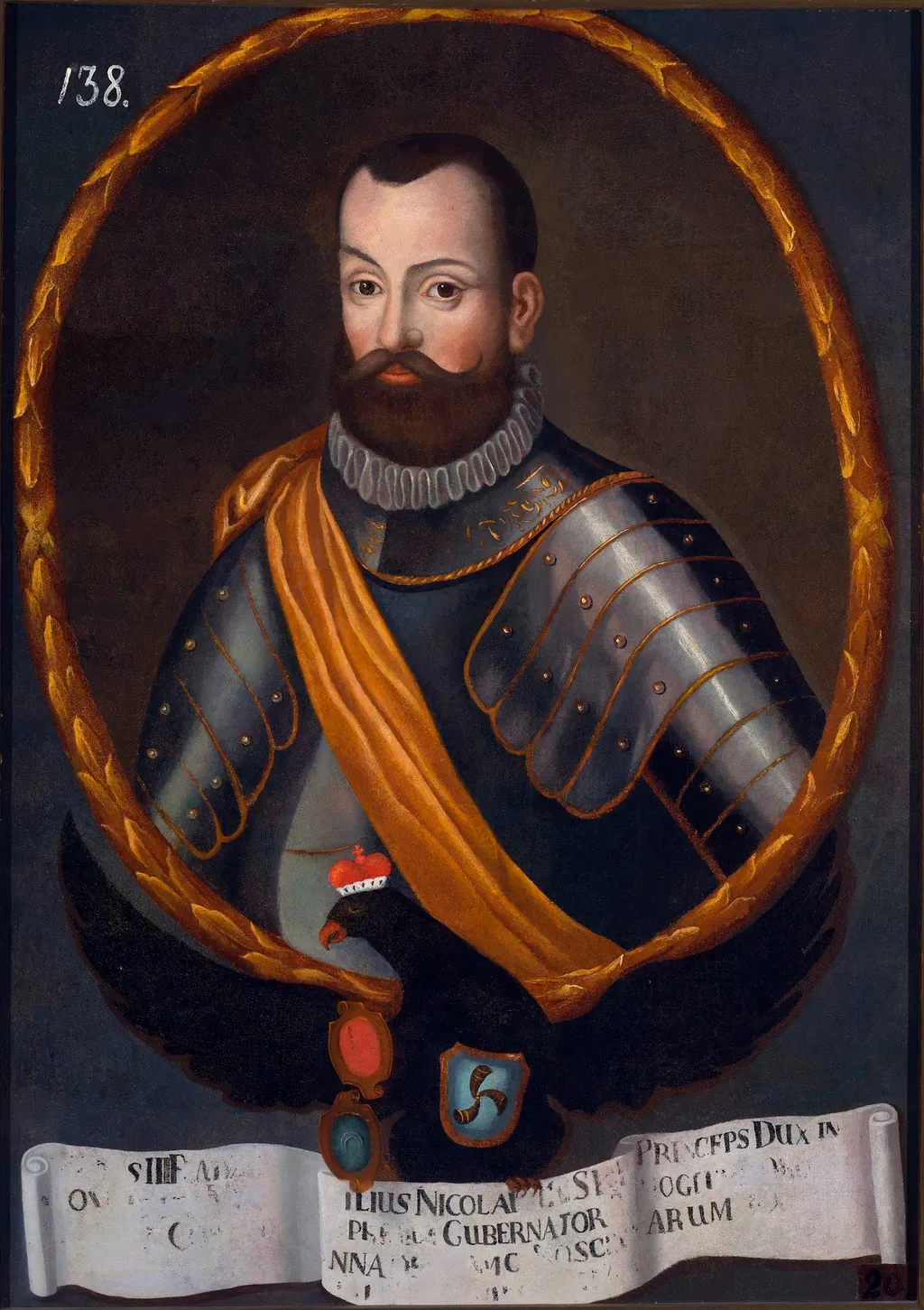
Portrait of Jan III Radziwiłł (?–1542) is an oil painting by the Rococo painting artist Unknown. It dates from 1735 and is held in the collection of the National Museum in Warsaw. The work is an oil portrait set within a dark oval frame, depicting a man in a dark doublet reinforced by a silver breastplate.
About this work
Overview
It is held in the collection of the National Museum in Warsaw, where it is cataloged with the artwork ID 509950 and the accession number MP 4467 MNW.
Portrait of Jan III Radziwiłł (?, 1542) is an oil on canvas painting by an unknown Polish artist, created between 1733 and 1737. The artwork measures 102 cm in height and 72.5 cm in width and is part of a series of portraits in a laurel wreath. It is held in the collection of the National Museum in Warsaw, where it is cataloged with the artwork ID 509950 and the accession number MP 4467 MNW. The painting is a posthumous depiction of a sixteenth-century nobleman, created nearly two centuries after his death, and serves as a historical reconstruction of the sitter rather than a life study.
Subject & Meaning
The painting depicts Jan Radziwiłł, a nobleman who died in January 1542. He served as the Deputy Cup-Bearer of Lithuania and the Elder of Samogitia from 1535 until his death. He was the only son of Mikołaj II Radziwiłł and a grandson of Mikalojus Radvila the Old. Having had no male heirs with his wife Anna Kostevicz, he was the last of the Goniądz-Meteliai Radziwiłł family line. In the portrait, he is presented in polished steel armor with gold rivets and decorative trim, over which drapes a golden-yellow sash. A pendant with red and blue stones hangs from his neck, and a small shield-shaped badge with a curved golden object on a blue field is attached near his waist, likely signifying his heraldic or chivalric affiliations. The armor and heraldic elements emphasize his aristocratic and military standing.
Technique & Style
The artist employed oil paint on canvas to render the bust-length portrait within a painted golden oval frame bordered by a twisted rope motif. The composition centers the bearded figure against a dark, neutral background, with his gaze directed slightly to the viewer's left. The painter used smooth brushwork to capture the reflective quality of the metal armor and the varied textures of the pleated white ruff collar and the dark garment with a fur collar visible beneath the armor. Light falls evenly from the left, modeling the face and armor with soft shadows. The palette relies on dark browns and blacks, warm golds, and cool steel grays. Imaginative elements, such as the inscriptions on the white scroll below the oval and the number 138 painted in the upper left corner outside the frame, contribute to the work's historical and documentary presentation.
History & Provenance
Created between 1733 and 1737, the painting was produced long after the sitter's lifetime, indicating it was a retrospective commission rather than a live portrait. The work is associated with provenance messages at Nieśwież, Belarus, a major estate of the Radziwiłł family, suggesting it was likely commissioned by the family to document their ancestry. The painting eventually entered the collection of the National Museum in Warsaw, where it remains today. A photographic reproduction of the work was taken by Krzysztof Wilczyński on December 18, 2015, as part of the museum's digitization efforts.
Context
The painting belongs to a broader eighteenth-century tradition of creating genealogical portrait galleries. As part of a series of portraits in a laurel wreath, the work reflects the Radziwiłł family's interest in consolidating and visualizing their lineage during the eighteenth century. The unknown Polish painter relied on imaginative elements and inscriptions to construct the image of a figure who had died nearly two centuries earlier. This practice of producing posthumous ancestral portraits was common among European nobility, serving to reinforce dynastic identity and social status through visual records of prominent ancestors.
Legacy
As a posthumous depiction, the portrait functions more as a historical artifact of eighteenth-century genealogical commemoration than as an accurate record of the sitter's physical appearance. Its preservation in the National Museum in Warsaw ensures its continued study as an example of retrospective portraiture and noble self-representation. The inclusion of the painting in digital repositories and its identification with a specific Wikidata entity highlight its role in modern art historical documentation and the ongoing effort to map the visual culture of the Polish-Lithuanian Commonwealth.
Artist & collection









 Emperor Ferdinand II. (1578-1637) in black armor, full-length
 Portrait of Albrecht VII, Archduke of Austria (1559-1621)
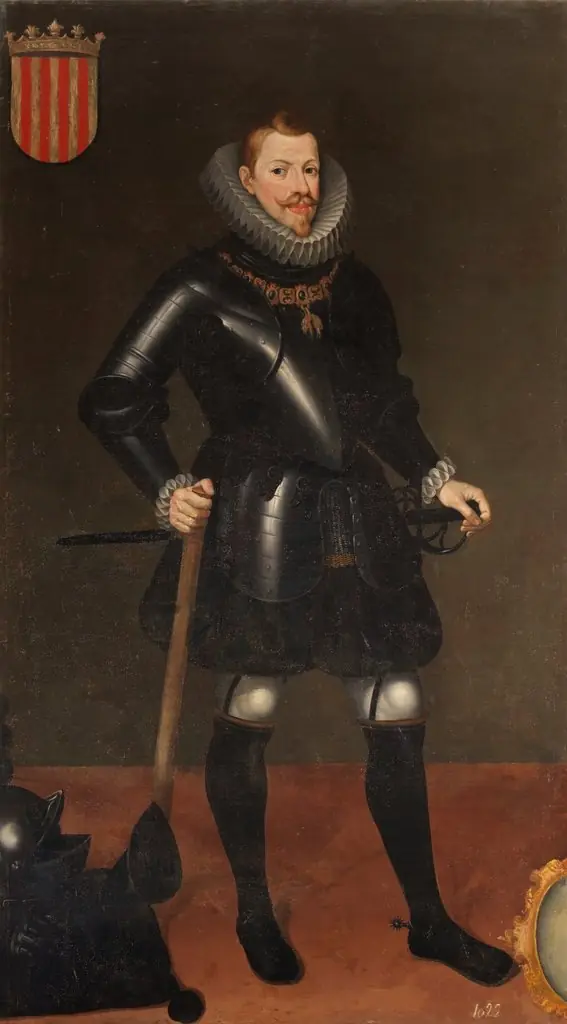 Felipe III El Piadoso y El Bueno
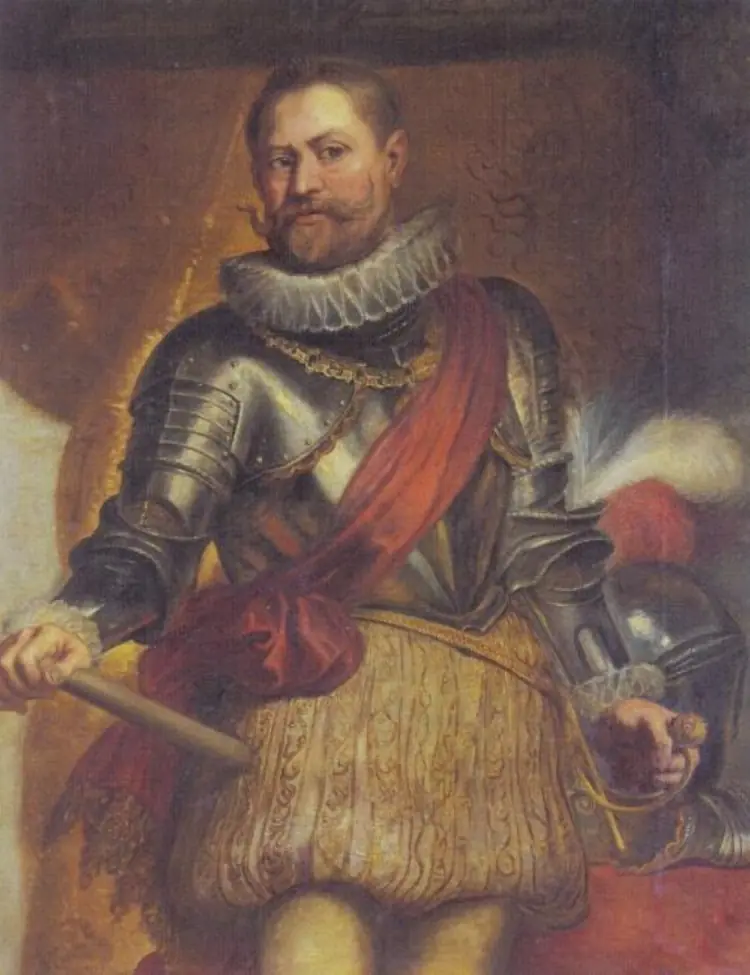 Portrait of Ernest, Archduke of Austria (1553-1595)
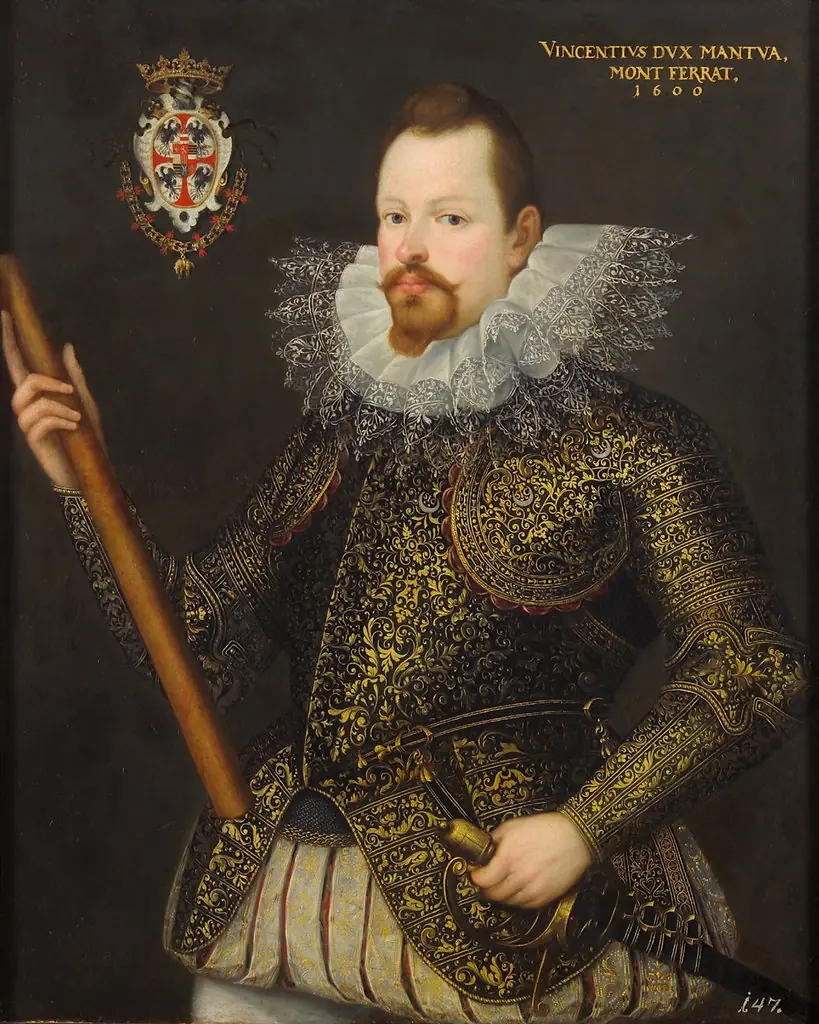 Portrait of Vicenzo Gonzaga, Duke of Mantua
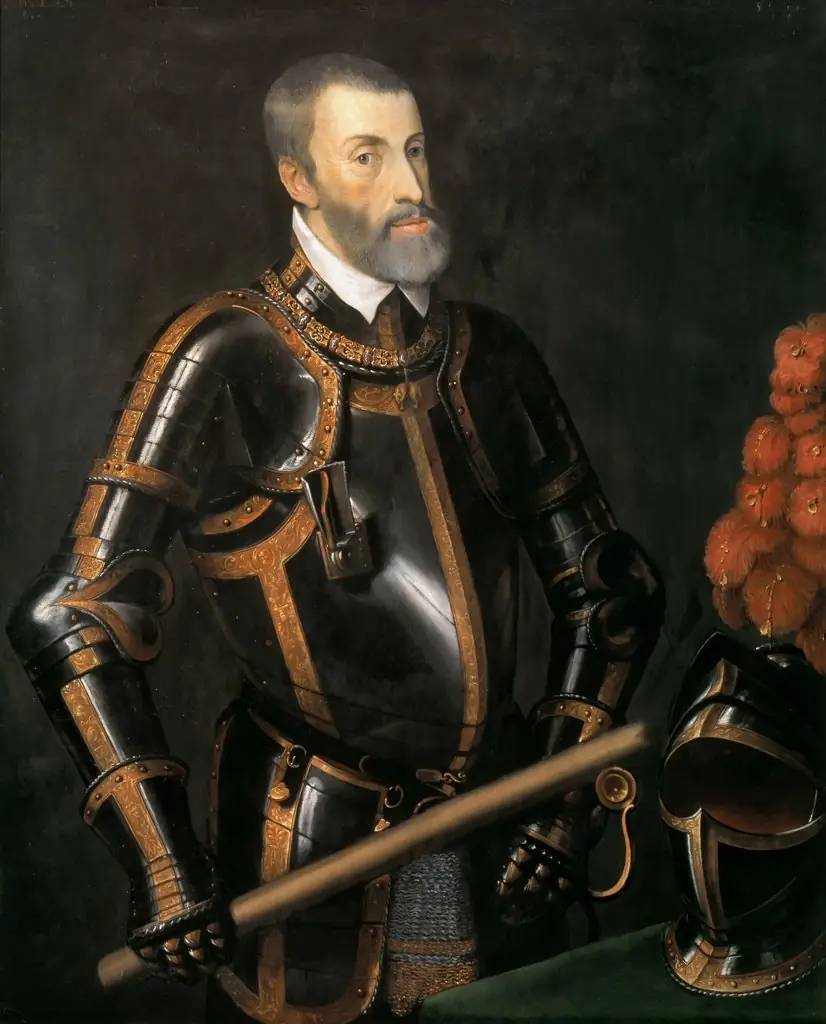 Emperor Charles V in armour
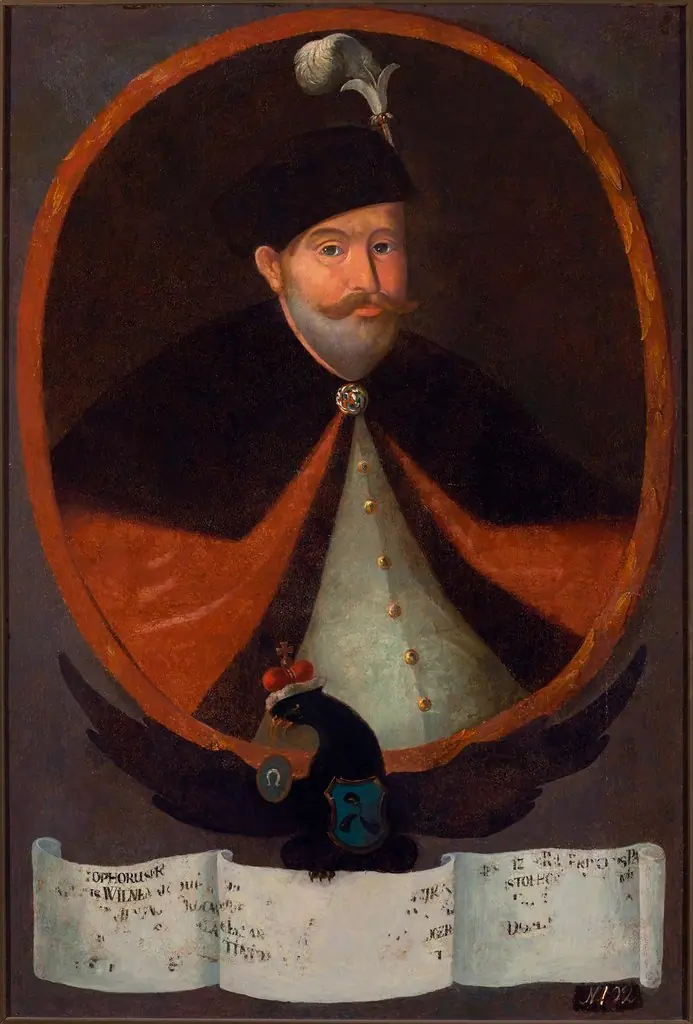 Portrait of Krzysztof II Radziwiłł (1585–1640), Great Hetman of Lithuania
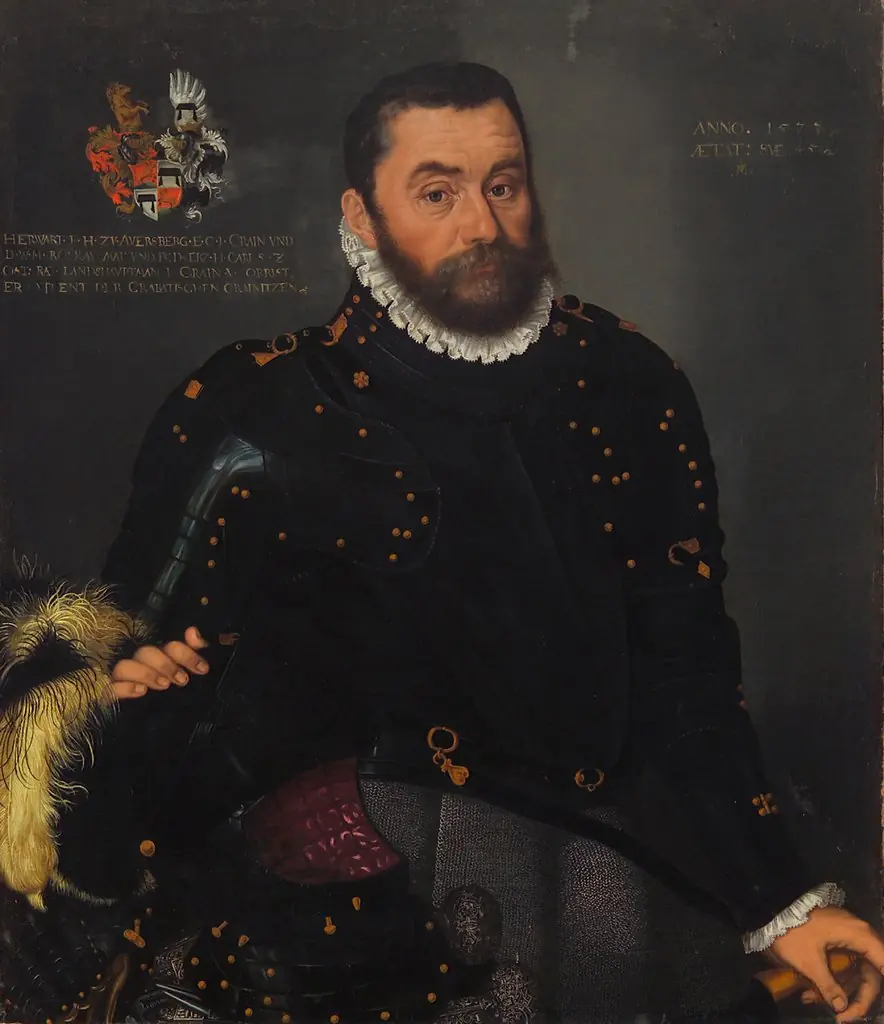 Herwart VIII. Freiherr von Auersperg (1528-1575)
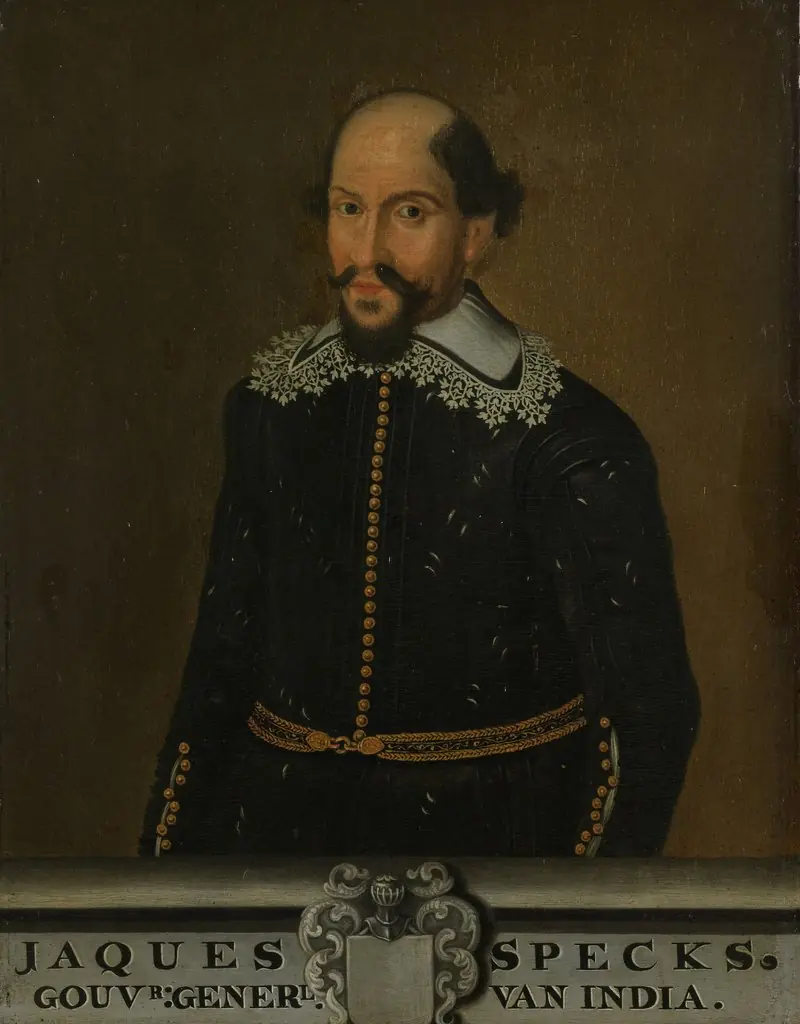 Jacques Specx (geb. 1588). Gouverneur-generaal (1629-32)
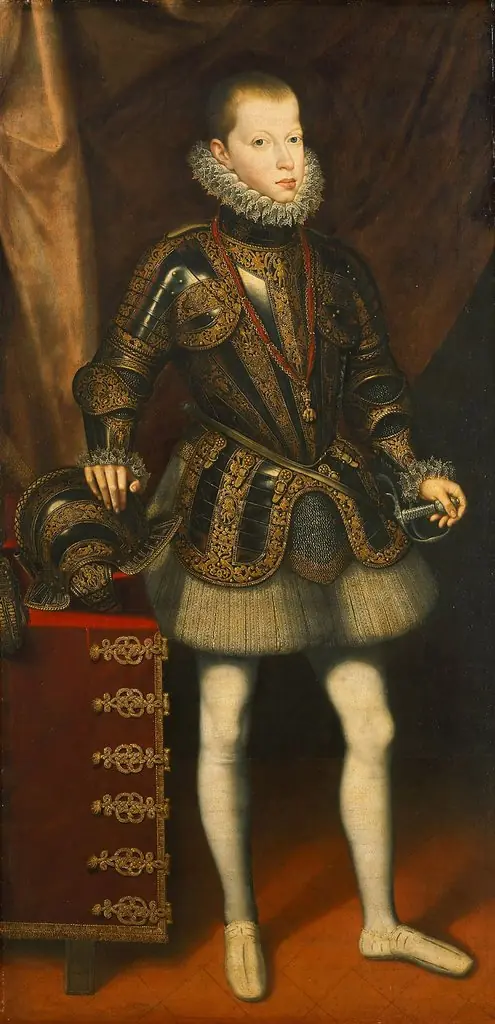 Infant Philipp in einem Harnisch
 Portrait of a Gentleman of the order of Saint James
- Portrait of Jan Demetriusz Solikowski