Artwork
Portrait of Maharaja Rai Singh of Bikaner (reigned 1574–1612)
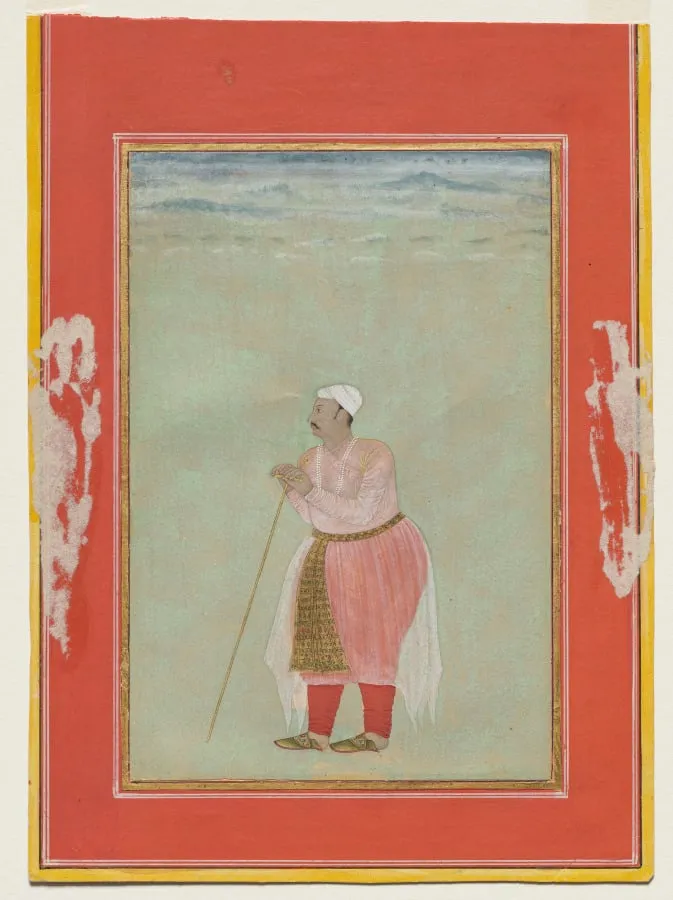
Portrait of Maharaja Rai Singh of Bikaner (reigned 1574–1612) is an unspecified painting by the Baroque artist Unknown. It dates from 1610 and is held in the collection of the Cleveland Museum of Art. This portrait depicts Maharaja Rai Singh of Bikaner, a Rajput ruler who reigned from 1574 to 1612.
- Accession no.
- 2021.11
- Credit line
- Alma Kroeger Fund
About this work
The artist paid close attention to the folds of the fabric and the king’s calm expression, showing respect for his rank.
You see a king in a deep red tunic, sitting cross-legged on a low platform against a bright green background. His thick mustache curls at the ends, and his hands rest on a sword.
This portrait was made around 1610, when the Rajput kingdom of Bikaner was allied with the Mughal empire. The artist paid close attention to the folds of the fabric and the king’s calm expression, showing respect for his rank. The green background isn’t just decoration, it’s meant to suggest paradise.
To see more works like this, look up rajput kingdom of bikaner.
Overview
This portrait depicts Maharaja Rai Singh of Bikaner, a Rajput ruler who reigned from 1574 to 1612. Painted around 1610, it captures him seated cross-legged on a low platform, dressed in a richly detailed crimson tunic and holding a sword. The vivid teal-green background and precise rendering of fabric suggest a court artist of high skill, likely influenced by Mughal painting traditions. The work reflects the political and cultural ties between Bikaner and the Mughal court during Akbar’s reign.
Subject & Meaning
Rai Singh is portrayed with composure and dignity, his hands resting on a sword, a symbol of authority and martial duty. His elaborate mustache and attire reflect Rajput aristocratic norms, while the green backdrop evokes the Islamic and Hindu concept of paradise, reinforcing his divine right to rule. The portrait underscores his status as both a regional sovereign and a trusted ally of the Mughal emperor, whose daughter he married into the imperial family.
Technique & Style
The artist rendered the king’s tunic with meticulous attention to fabric folds and texture, using fine brushwork to suggest weight and sheen. The colors, deep red against a luminous teal, are applied with clarity and restraint, avoiding excessive ornamentation. Facial features are rendered with quiet realism, emphasizing calm authority over dramatic expression. The composition’s simplicity and focus on the figure align with courtly portraiture practices of the period.
History & Provenance
Created circa 1610, the painting emerged during a period of close alliance between Bikaner and the Mughal Empire under Akbar. Rai Singh’s service to the emperor and his family’s marriage to Jahangir elevated Bikaner’s political standing. Though the artist remains unnamed, stylistic parallels suggest training under or influence from Nur Muhammad, a known Mughal painter. The work likely originated in Bikaner’s royal atelier and remained within the family’s collection.
Context
Rai Singh’s reign coincided with the height of Mughal-Rajput diplomacy. As a loyal vassal, he held high military and administrative posts under Akbar, earning imperial trust. This portrait reflects the blending of Rajput identity with Mughal aesthetic norms, where local traditions were expressed through refined, courtly techniques.
The green background, a motif shared across Indo-Persian art, links earthly rule to celestial order, reinforcing the ruler’s legitimacy.
Legacy
The portrait stands as a testament to the cultural synthesis between Rajput and Mughal courts in early 17th-century India. It exemplifies how regional rulers used portraiture to assert status within a broader imperial framework. While few signed works from Bikaner survive, this piece remains a key reference for understanding the evolution of Rajput painting under Mughal influence, preserving the visual language of power in a time of political convergence.
Artist & collection









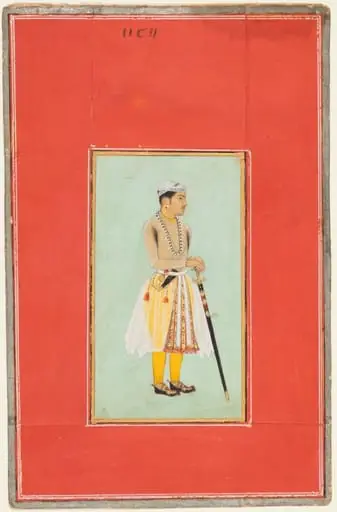
- Portrait of Prince Sur Singh Rathor of Bikaner (1594–1631)
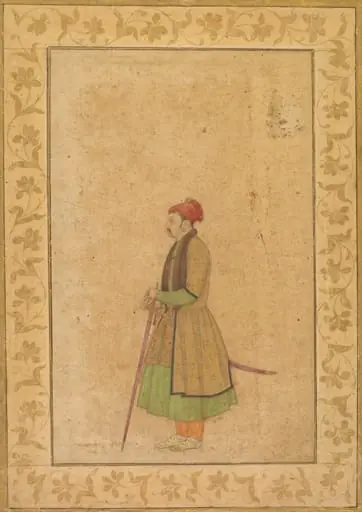 Portrait of Raja Ram Singh of Amber (r. 1667-1688) with a Deccan Sword (recto)
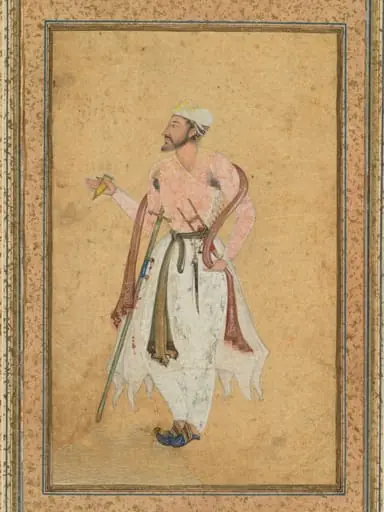 A Mughal courtier
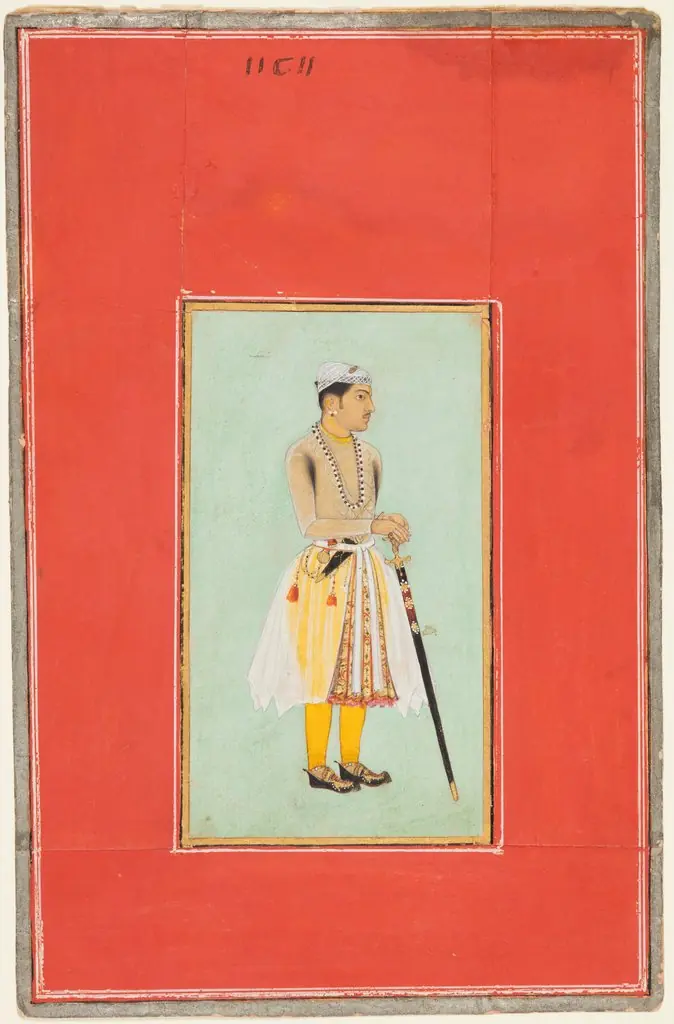 Portrait of Prince Sur Singh Rathor of Bikaner (1594–1631)
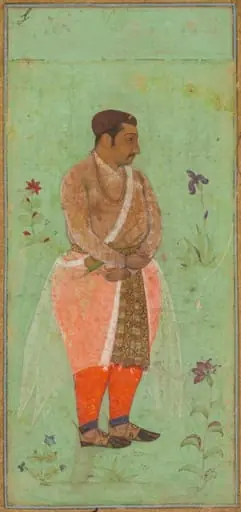 Portrait of Suraj Singh Rathor, Raja of Marwar and Maternal Uncle of Shah Jahan: A Page from the Prince Khurram Album
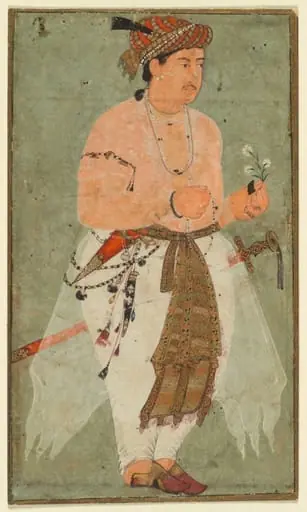 A Mughal Prince, Perhaps Danyal, Holding a Sprig of Flowers