Artwork
Sagittarius
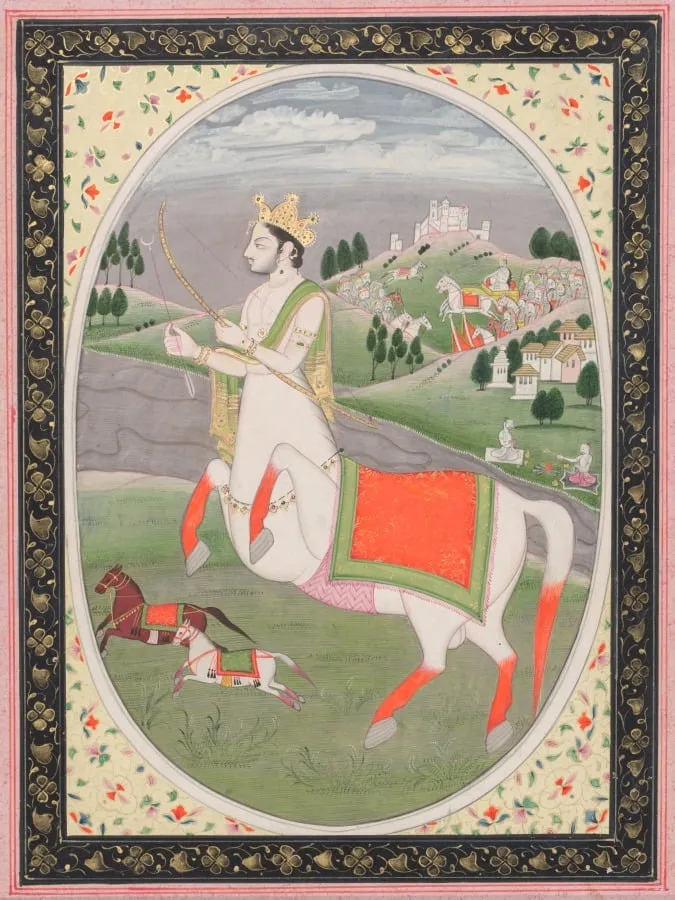
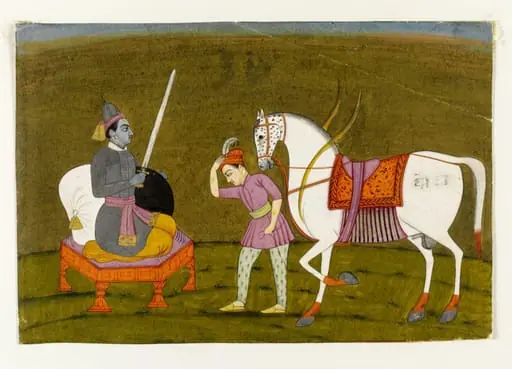
Sagittarius is an unspecified painting by the Pahari Painting artist Unknown. It dates from 1810 and is held in the collection of the Cleveland Museum of Art.
- Accession no.
- 2014.651
- Credit line
- Gift of Nancy and Wayne Hunnicutt
About this work
Overview
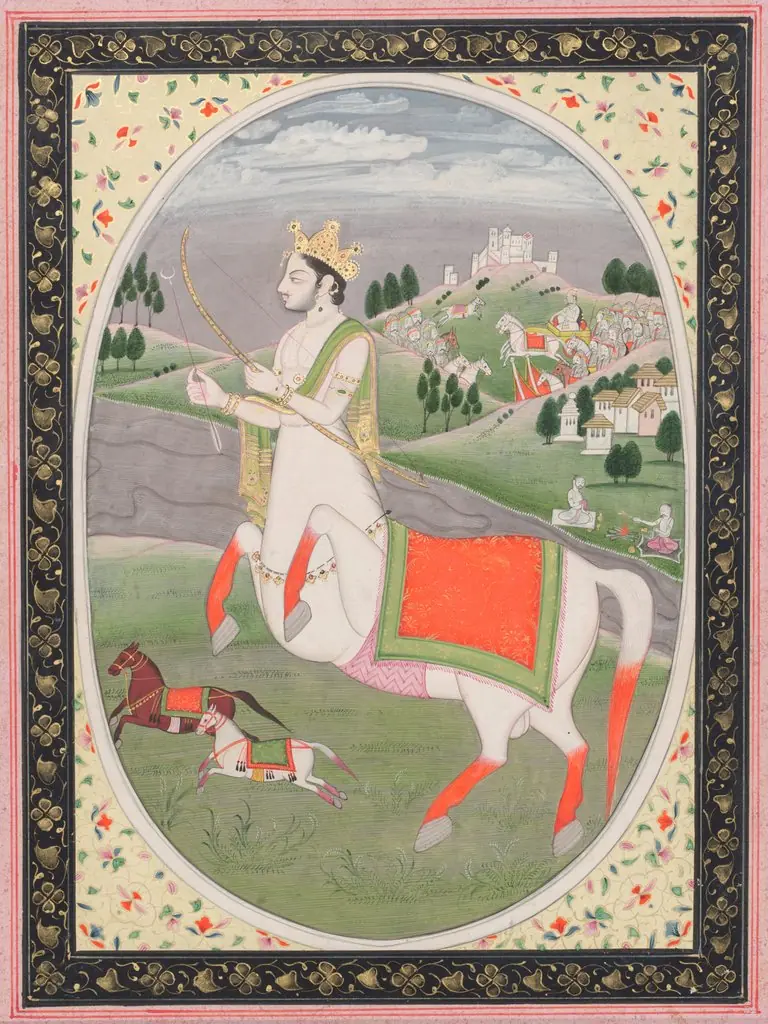
This painting portrays a figure identified as Sagittarius, mounted on a white centaur, moving calmly through a pastoral landscape. The scene combines mythological symbolism with naturalistic detail, suggesting a harmonious relationship between human, beast, and environment. Soft lighting and muted tones contribute to a tranquil mood, distinguishing it from more dramatic mythological depictions.
Subject & Meaning
The figure represents Sagittarius, the archer from celestial mythology, often associated with wisdom and transition. Mounted on a centaur, a hybrid of human intellect and animal instinct, the figure embodies balance between reason and nature. The crown and robe suggest nobility, while the bow, held loosely, implies restraint rather than aggression, reinforcing a theme of serene authority.
Technique & Style
Background elements like hills and trees are rendered with gentle gradations, enhancing depth without distraction.
Brushwork is controlled and deliberate, with attention to texture in fabric, fur, and foliage. The color palette favors earthy greens, soft whites, and muted golds, avoiding stark contrasts. Background elements like hills and trees are rendered with gentle gradations, enhancing depth without distraction. The foreground horse adds kinetic energy through its posture, contrasting the stillness of the central figures.
History & Provenance
The painting’s origin and early ownership remain undocumented. No known exhibition records or artist signatures accompany the work. Its style aligns with early 19th-century European interpretations of classical themes, though it lacks clear ties to major artistic schools or documented collections prior to its modern appearance.
Context
Created during a period when mythological subjects were reinterpreted through Romantic ideals, the painting reflects a broader cultural interest in nature, symbolism, and the sublime. Unlike grand historical narratives, this scene emphasizes quiet contemplation, mirroring Romanticism’s shift toward introspective and emotional resonance over spectacle.
Legacy
The work has not been widely studied or reproduced in scholarly literature. It remains a private collection piece, occasionally referenced in thematic exhibitions on mythological art. Its quiet composition offers a subtle counterpoint to more dramatic renditions of centaurs, preserving a lesser-known strand of Romantic-era visual storytelling.
Artist & collection









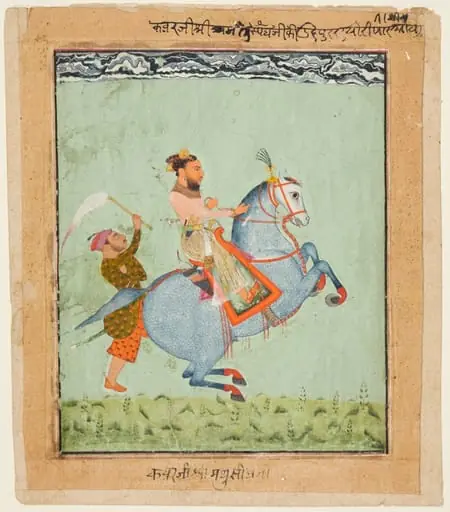 Prince Mathu Singh of Jatoli on a Blue Horse Riding to Udaipur
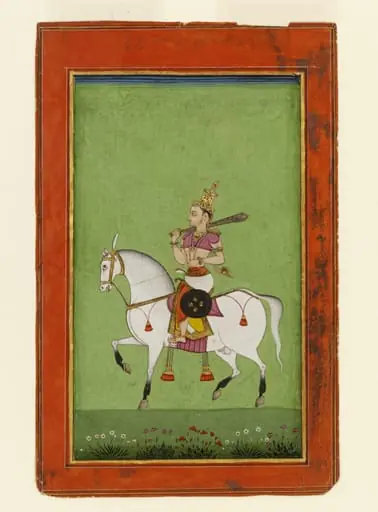 Kalki avatar
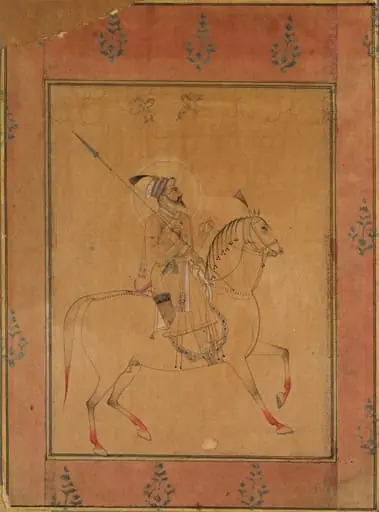 Emperor Shah Jahan
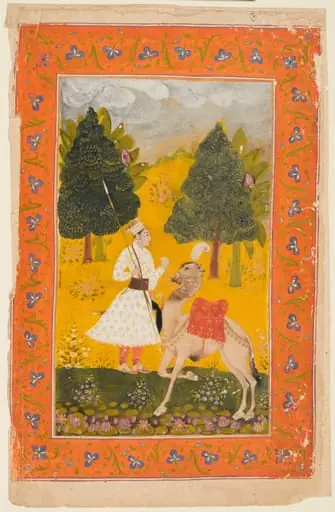 Maru Ragini, from a Ragamala (Garland of Melodies)
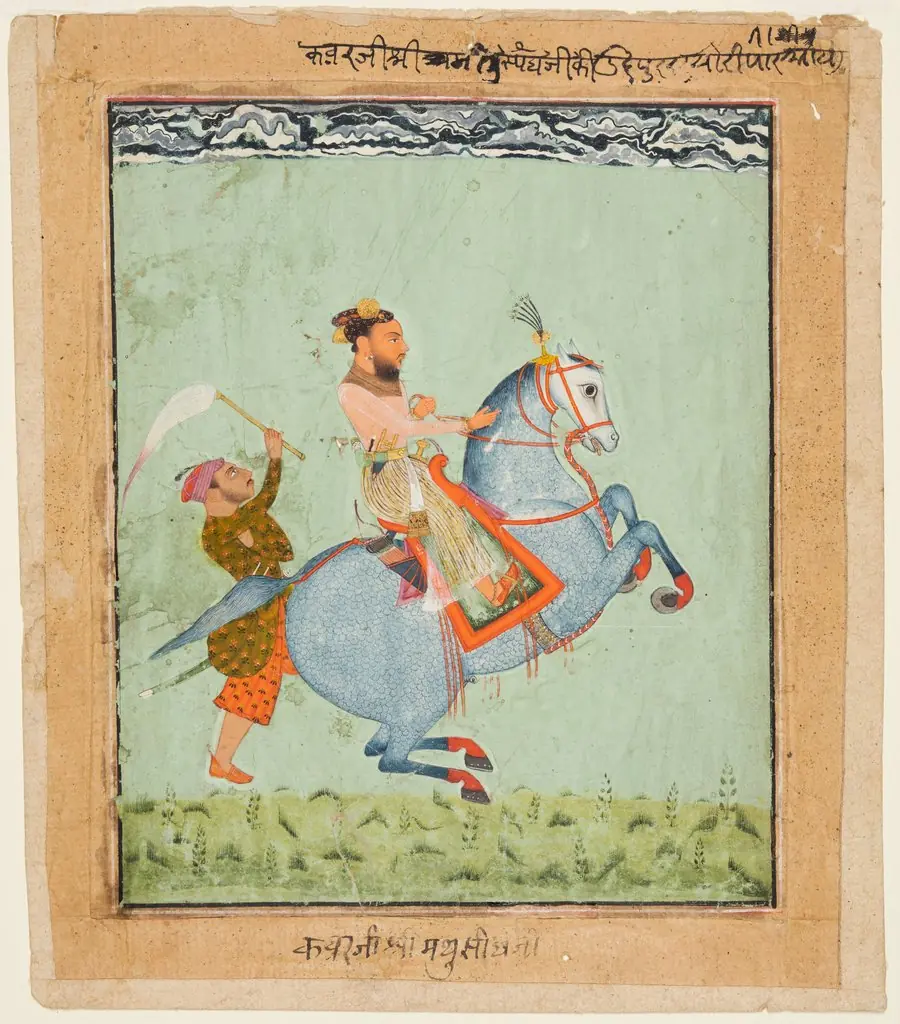 Prince Mathu Singh of Jatoli on a Blue Horse Riding to Udaipur
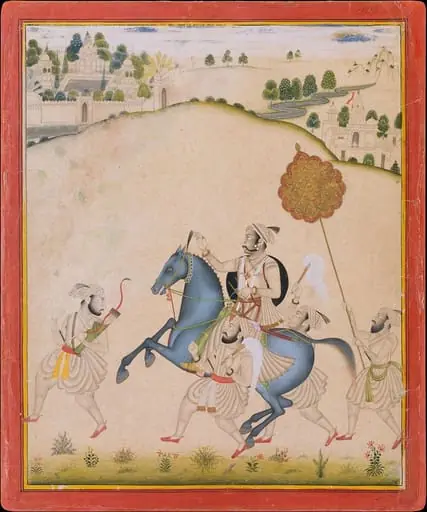 Untitled
 Untitled
 Akrura and Kritavarma flee Dvaraka, page from the "Large Basohli Bhagavata Purana"
 Jai Singh III of Jaipur (r. 1818–1835) Riding
 Equestrian portrait with angels
 Kalki
Kalki- Sagittarius