Artwork
Seven men disputing possession of a woman bring her before the Tree of Justice into which she is absorbed, from a Tuti-nama (Tales of a Parrot): Sixth Night
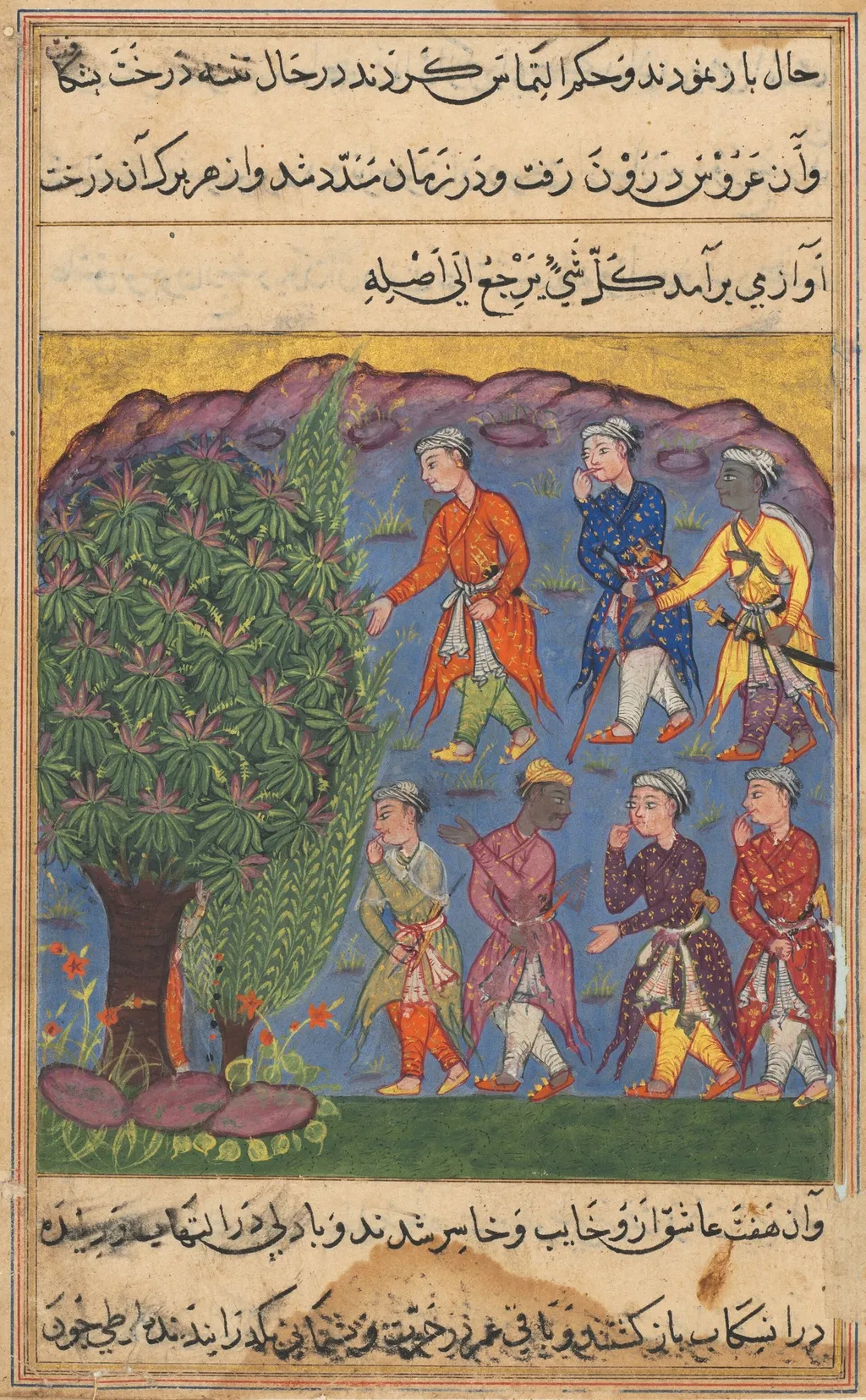
Seven men disputing possession of a woman bring her before the Tree of Justice into which she is absorbed, from a Tuti-nama (Tales of a Parrot): Sixth Night is an unspecified painting. It dates from 1560 and is held in the collection of the Cleveland Museum of Art. The work illustrates a narrative episode from the medieval Persian collection known as the Tuti‑nama, or "Tales of a Parrot.
About this work
Subject & Meaning
The scene thus conveys a moral lesson about the inevitability of divine or natural justice intervening in human disagreements.
The painting illustrates a narrative episode from the Tuti-nama (Tales of a Parrot) in which seven men argue over the possession of a woman and bring her before the Tree of Justice. The tree, depicted as a living, receptive entity, absorbs the woman, thereby resolving the dispute. This iconography presents the tree as a personification of ultimate justice that transcends human conflict, while the group of disputants highlights the futility of quarreling over a woman.
The scene thus conveys a moral lesson about the inevitability of divine or natural justice intervening in human disagreements.
History & Provenance
The painting is a folio from the Tuti-nama (Tales of a Parrot) illustrating the Sixth Night, dated to 1560 and produced in the Mughal Empire. The artist is unknown, and the work is classified as a painting. It entered the Cleveland Museum of Art’s collection and is recorded under accession number 1962.279.42.a.
No earlier owners or commission details are documented in the available sources; the object’s provenance therefore begins with its current holding at the Cleveland Museum of Art.
Context
The miniature from the Tuti-nama's sixth night illustrates a narrative episode where seven suitors contest a woman's hand, leading her to seek refuge beneath a symbolic tree of justice that engulfs her. Rendered circa 1560 during the early Mughal period, the work exemplifies the synthesis of Persian narrative illustration with indigenous Indian sensibilities characteristic of courtly workshops under patronage of Akbar's successors. Its iconography of absorption into the tree functions as a visual metaphor for legal resolution, reflecting contemporary juridical discourse within Persianate cultural matrices.
Stylistic analysis aligns with known outputs of the workshop associated with the anonymous artist recorded in Cleveland Museum of Art holdings, situating the piece within broader trajectories of manuscript painting that merged Safavid aesthetic principles with regional production techniques.
Legacy
The painting's visual narrative of contested desire and divine intervention resonated through later Indian miniature workshops, inspiring reinterpretations of the Tree of Justice motif in Mughal and Rajput manuscripts. Its composition influenced narrative strategies in regional storytelling traditions, particularly in works circulating in the Deccan and Rajasthan from the 17th century onward.
Overview
The work illustrates a narrative episode from the medieval Persian collection known as the Tuti‑nama, or "Tales of a Parrot." In this scene, seven men contend over a woman, guiding her toward a stylized tree that appears to consume her. The composition is set against a blue sky, with a rocky hillside receding in the background, and is rendered with vivid coloration and detailed ornamentation.
Technique & Style
Executed with a rich palette of reds, greens, and blues, the artist employs chiaroscuro to model forms and create spatial depth. Figures are dressed in elaborate robes and turbans, their intricate patterns emphasizing the work’s meticulous craftsmanship and the influence of Persian miniature traditions.
Artist & collection

- Seven men disputing possession of a woman bring her before the Tree of Justice into which she is absorbed, from a Tuti-nama (Tales of a Parrot): Sixth Night
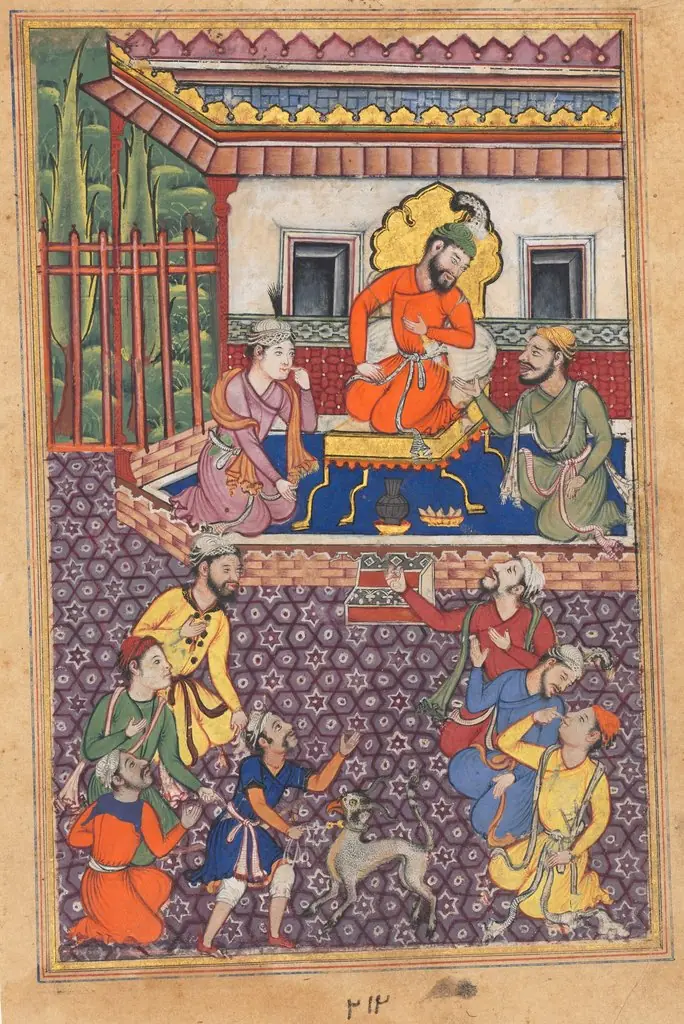 The court of the Raja of Ujjain, from a Tuti-nama (Tales of a Parrot): Forty-sixth Night
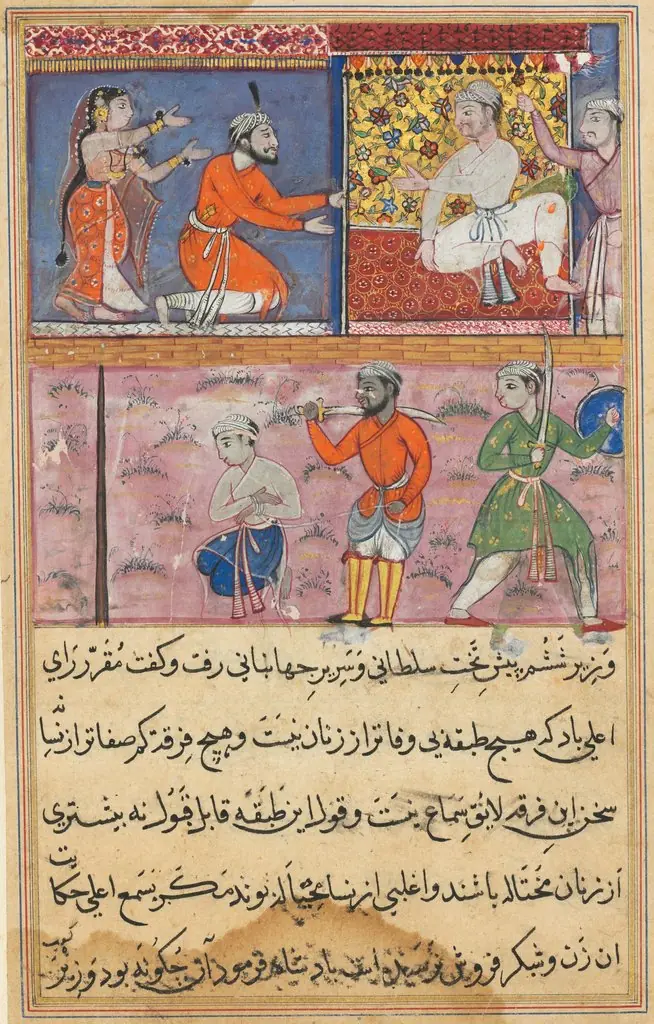 The prince sent back to the place of execution for the sixth time, from a Tuti-nama (Tales of a Parrot): Eighth Night
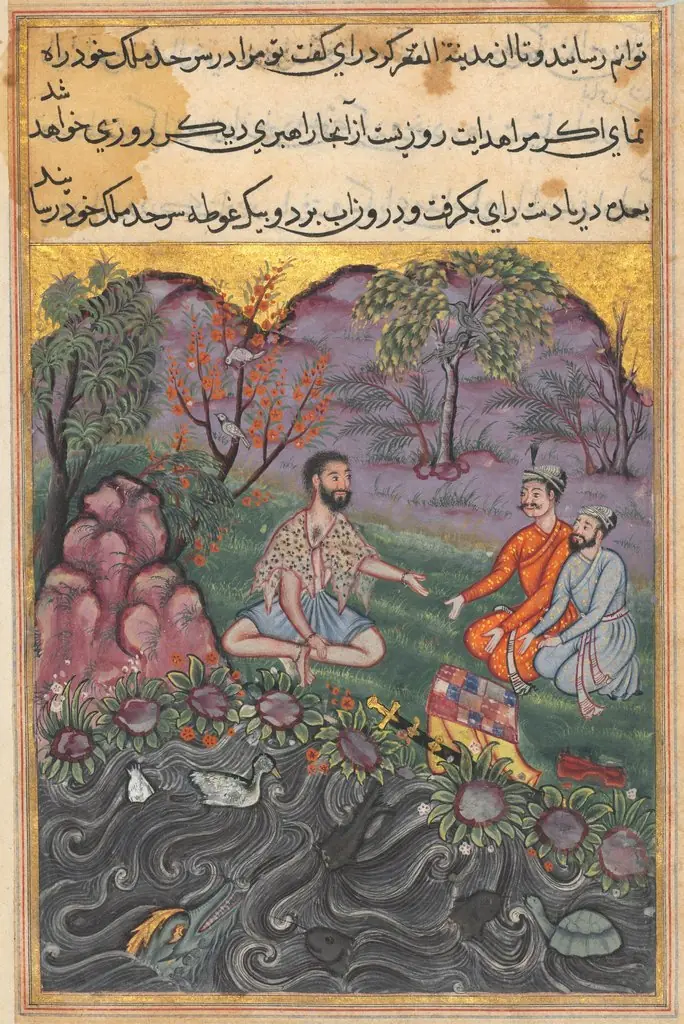 The Raja of Ujjain, who is traveling in the guise of a yogi, meets two brothers who ask him to equitably partition their father’s possession, from a Tuti-nama (Tales of a Parrot): Forty-sixth Night
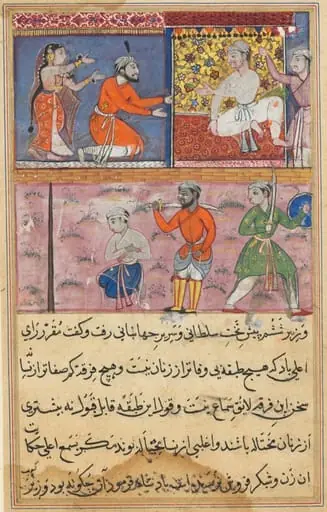 The prince sent back to the place of execution for the sixth time, from a Tuti-nama (Tales of a Parrot): Eighth Night
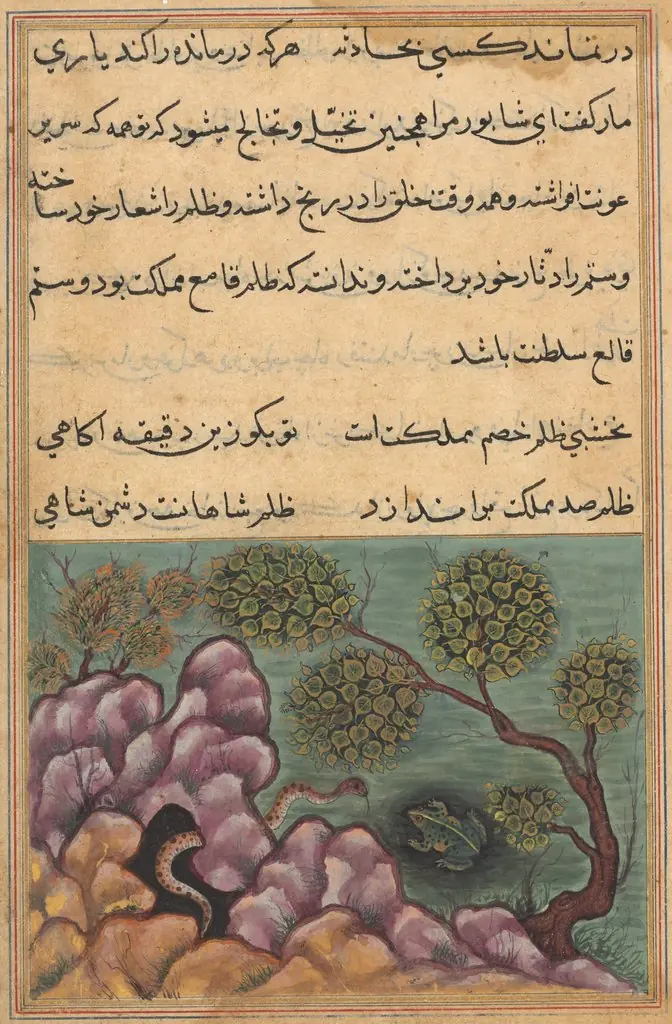 The dethroned frog Shapur seeks the help of the serpent, from a Tuti-nama (Tales of a Parrot): Twenth-sixth Night
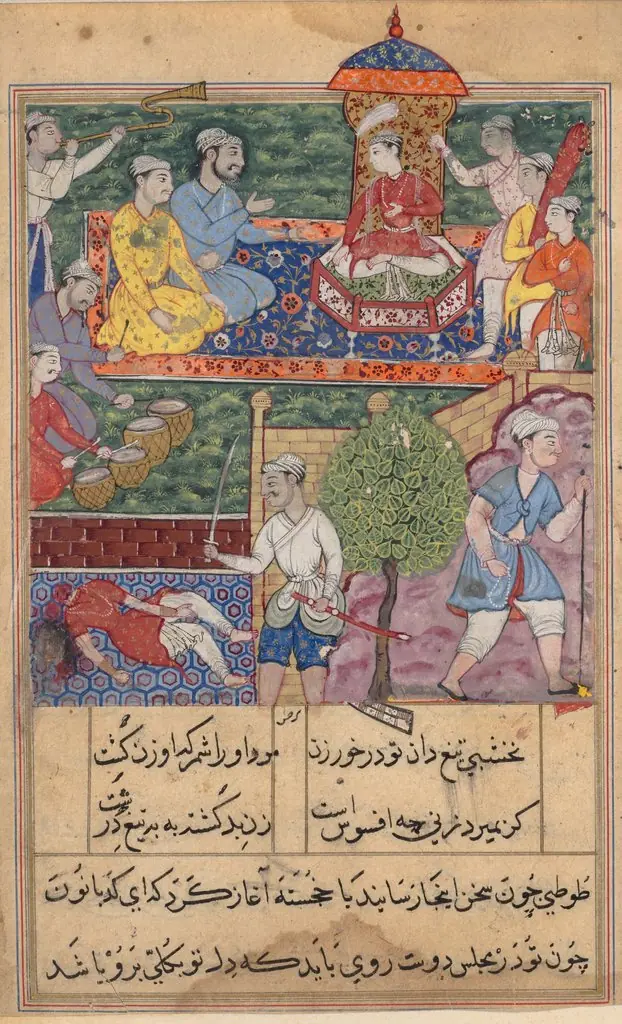 Page from Tales of a Parrot (Tuti-nama): text page
 The sentinel in the employ of the Shah of Tabaristan prepares to sacrifice his son to the ghost of the Shah’s soul, from a Tuti-nama (Tales of a Parrot): Second Night
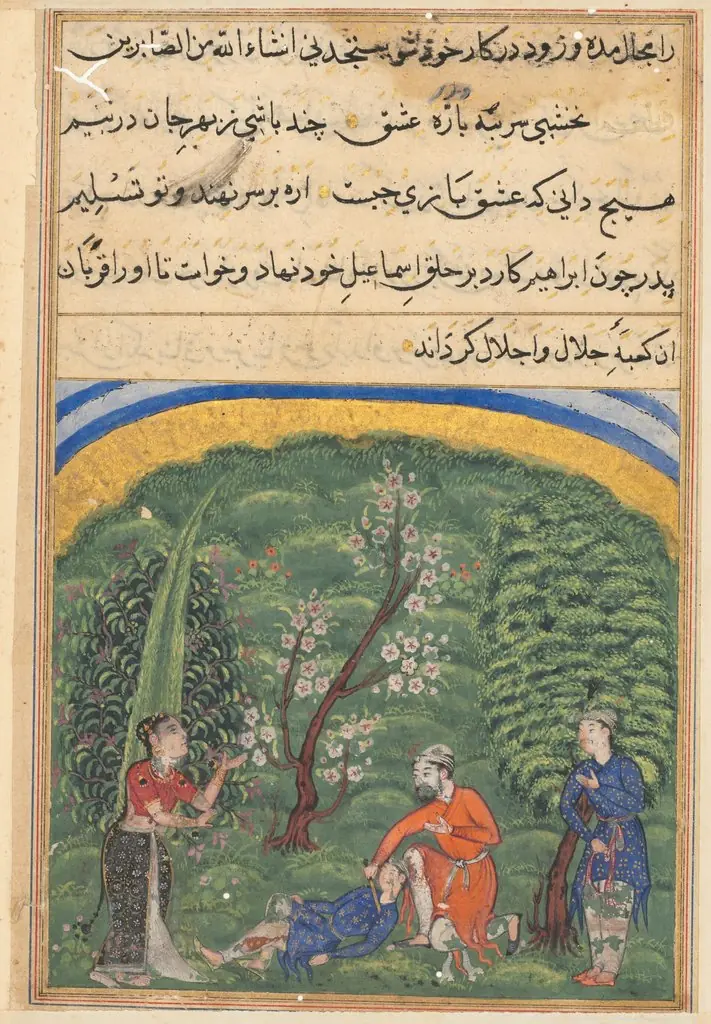 The sentinel in the employ of the Shah of Tabaristan prepares to sacrifice his son to the ghost of the Shah’s soul, from a Tuti-nama (Tales of a Parrot): Second Night
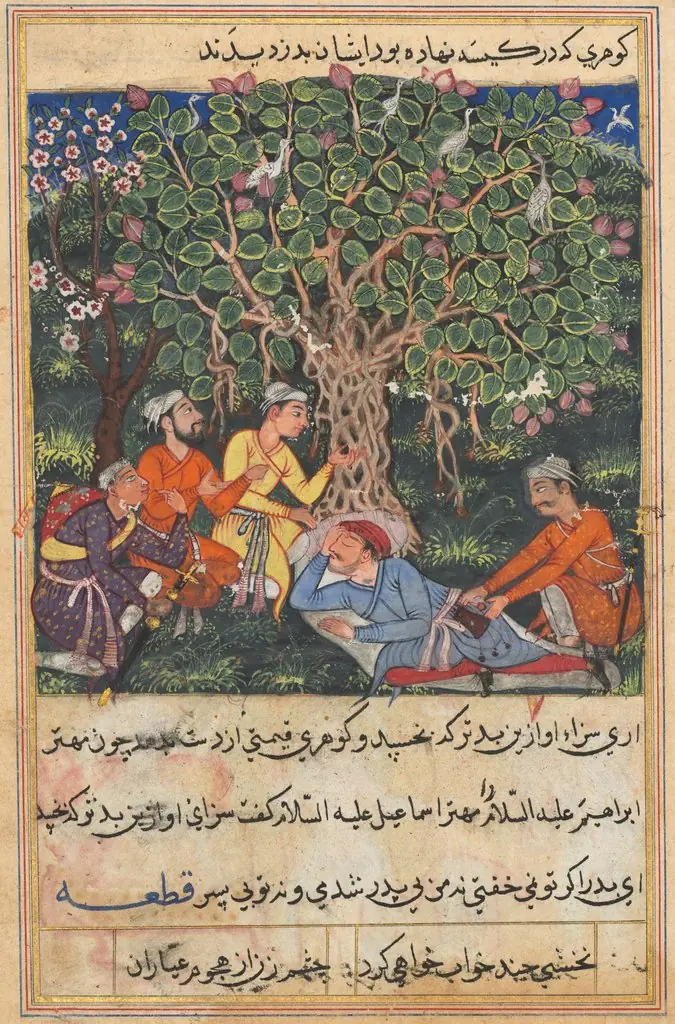 The street cleaner, on his way to meet King Bhojaraja, sleeps under a tree where four thieves disguised as fellow travelers deprive him of a priceless pearl, from a Tuti-nama (Tales of a Parrot): Twelfth Night
 The street cleaner, on his way to meet King Bhojaraja, sleeps under a tree where four thieves disguised as fellow travelers deprive him of a priceless pearl, from a Tuti-nama (Tales of a Parrot): Twelfth Night
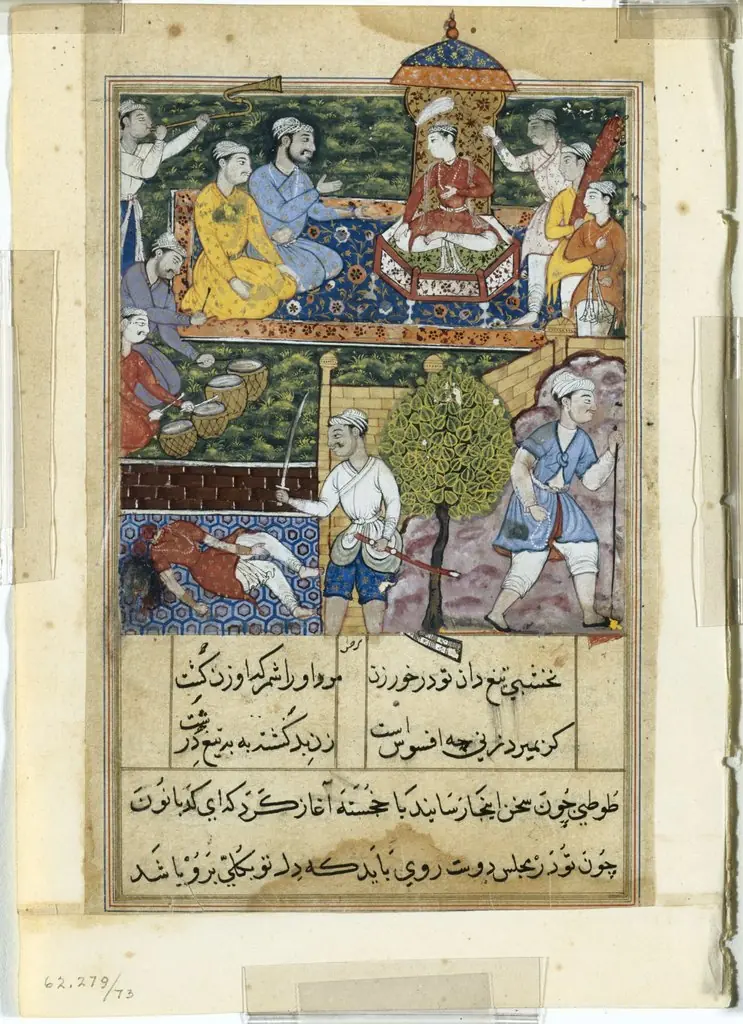 The young prince is crowned and the wicked handmaiden is executed, from a Tuti-nama (Tales of a Parrot): Eighth Night