Artwork
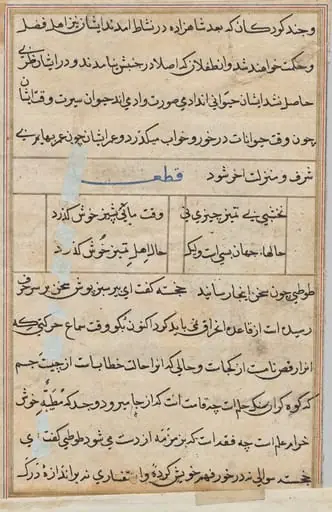
Text page from a Tuti-nama (Tales of a Parrot)
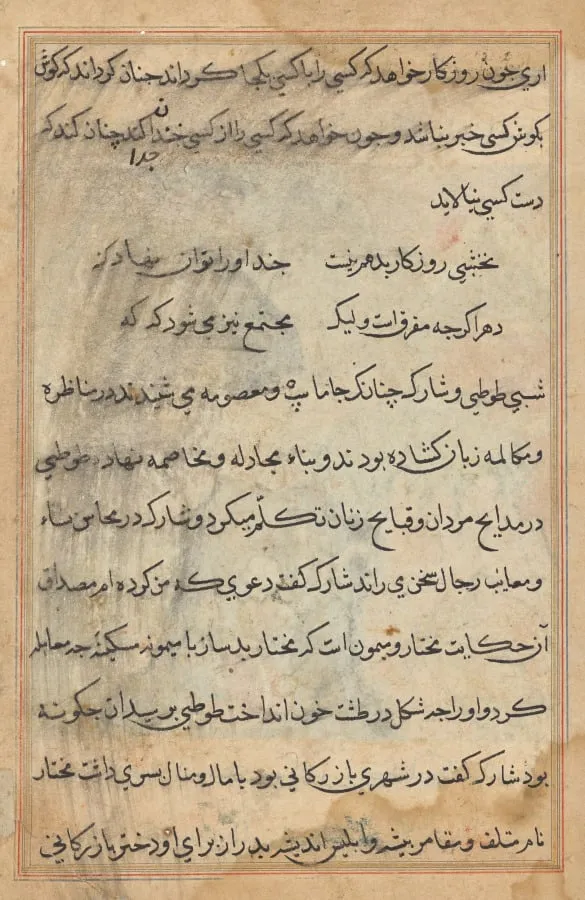
Text page from a Tuti-nama (Tales of a Parrot) is an unspecified painting by the Mughal Painting artist Unknown. It dates from 1560 and is held in the collection of the Cleveland Museum of Art. This page originates from a Tuti-nama manuscript, a collection of moralistic tales told by a parrot to delay its owner’s infidelity.
- Accession no.
- 1962.279.174.a
- Credit line
- Gift of Mrs. A. Dean Perry
About this work
Overview
This page originates from a Tuti-nama manuscript, a collection of moralistic tales told by a parrot to delay its owner’s infidelity.
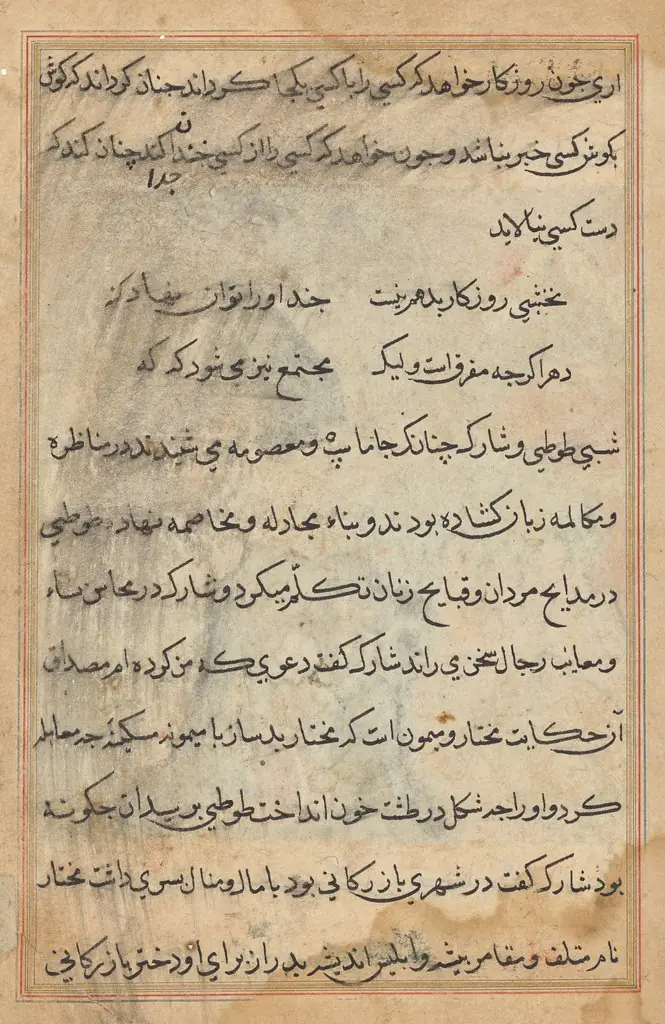
This page originates from a Tuti-nama manuscript, a collection of moralistic tales told by a parrot to delay its owner’s infidelity. The text is rendered in black ink on a beige parchment ground, framed by a narrow red border. The script exhibits a refined cursive form, typical of Persianate book traditions, though the specific language is not Arabic but a variant of Persian written in the Nastaʿlīq script.
Subject & Meaning
The content derives from a Persian literary cycle featuring a talking parrot recounting stories to dissuade a woman from unfaithfulness. Each tale carries ethical lessons, blending romance and caution. The page itself, devoid of illustration, emphasizes textual authority and the cultural value placed on written narrative in courtly contexts of 15th- to 16th-century India.
Technique & Style
The script is executed in Nastaʿlīq, a fluid Persian calligraphic style prized for its elegance and rhythmic flow. Flourishes extend subtly from letter terminals, and spacing between lines is carefully calibrated for visual harmony. The use of red borders and uniform ink suggests production in a royal atelier, where precision and aesthetic discipline were paramount.
History & Provenance
Tuti-nama manuscripts were commissioned by Indo-Persian courts, particularly under the Delhi Sultanate and early Mughals. This page likely dates to the late 15th or early 16th century, produced in northern India. Its survival without illustration is unusual, suggesting either a fragmentary state or a variant textual edition focused on literary transmission over visual embellishment.
Context
In the courts of Delhi and Gujarat, literary manuscripts like the Tuti-nama served both entertainment and didactic purposes. Calligraphy was elevated as an art form, often rivaling painting in prestige. The absence of miniatures here aligns with earlier traditions before Mughal illustrated manuscripts became dominant, preserving the primacy of the written word.
Legacy
This page exemplifies the enduring value placed on Persianate literary culture in South Asia. Though later Mughal manuscripts favored lavish illustration, such text-only pages reflect an earlier phase where the beauty of script alone conveyed authority and refinement. Surviving fragments like this inform modern understanding of pre-Mughal book culture in the Indian subcontinent.
Artist & collection









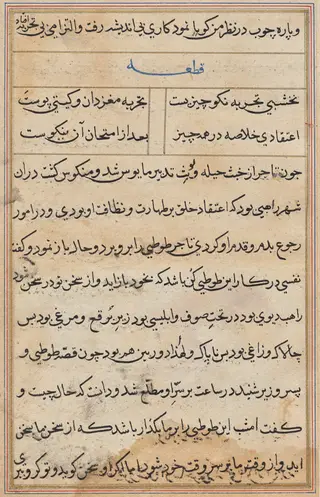 Page from Tales of a Parrot (Tuti-nama): text page
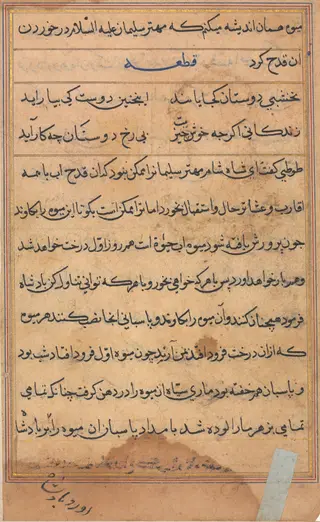 Page from Tales of a Parrot (Tuti-nama): text page
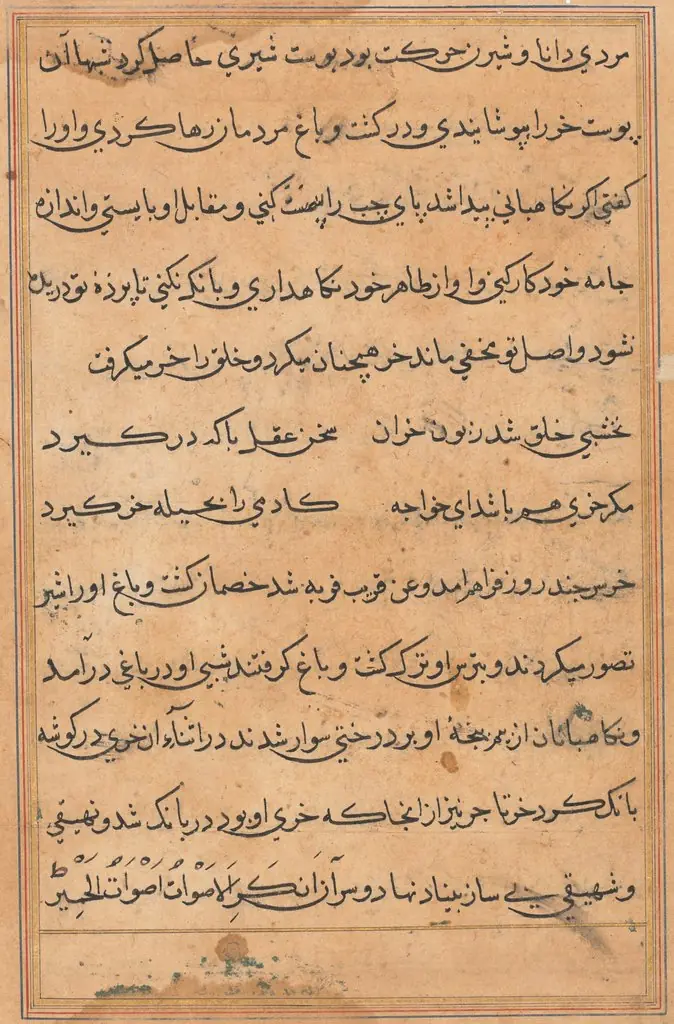 Page from Tales of a Parrot (Tuti-nama): text page
 Page from Tales of a Parrot (Tuti-nama): text page
 Page from Tales of a Parrot (Tuti-nama): text page
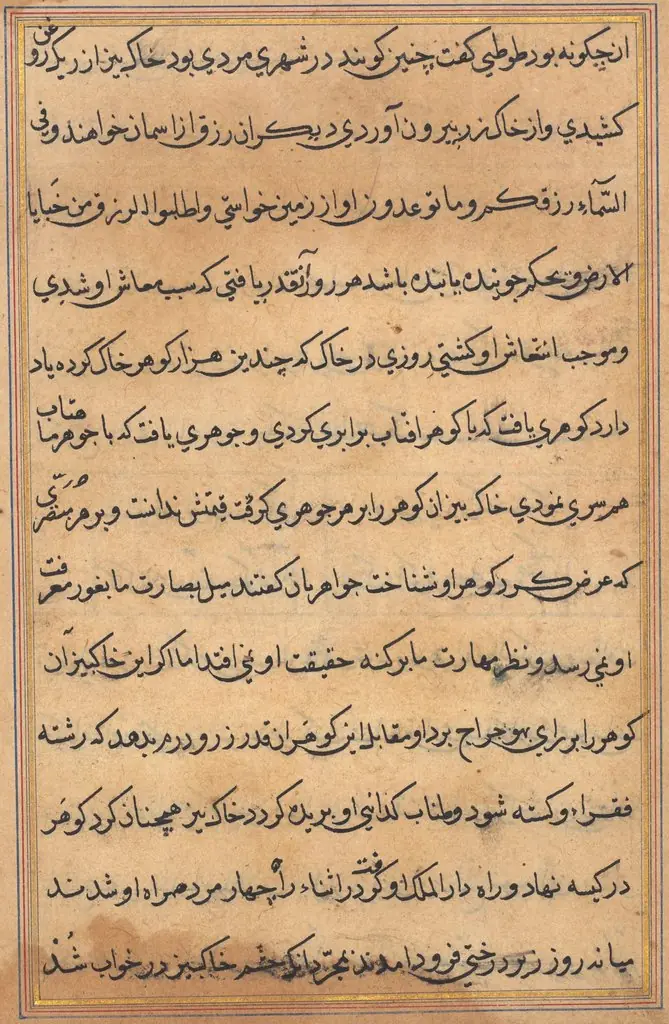 Page from Tales of a Parrot (Tuti-nama): text page
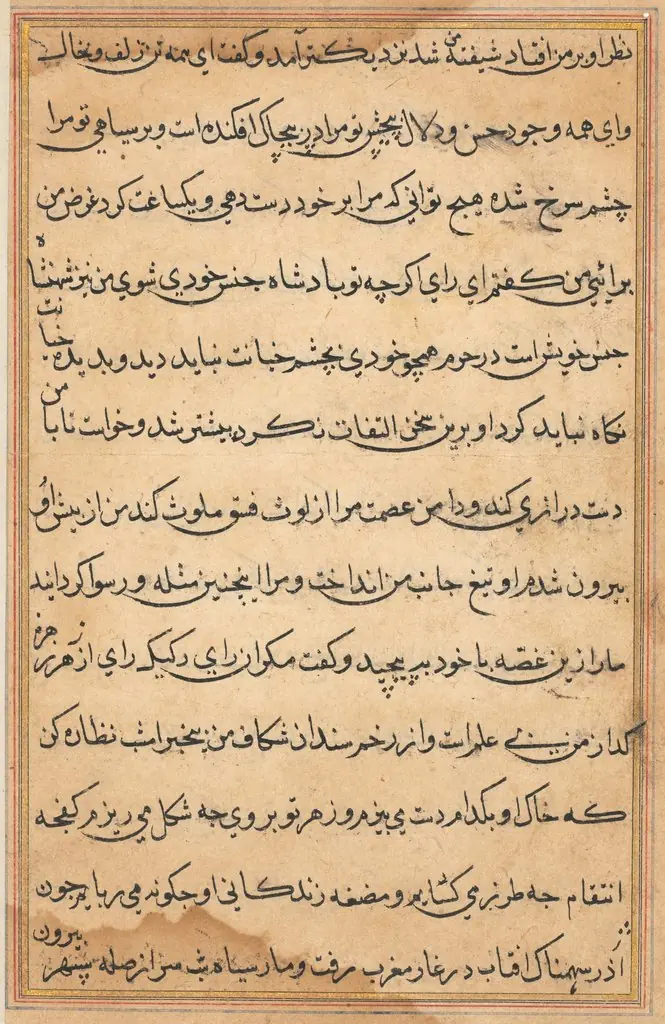 Page from Tales of a Parrot (Tuti-nama): text page
 Page from Tales of a Parrot (Tuti-nama): text page
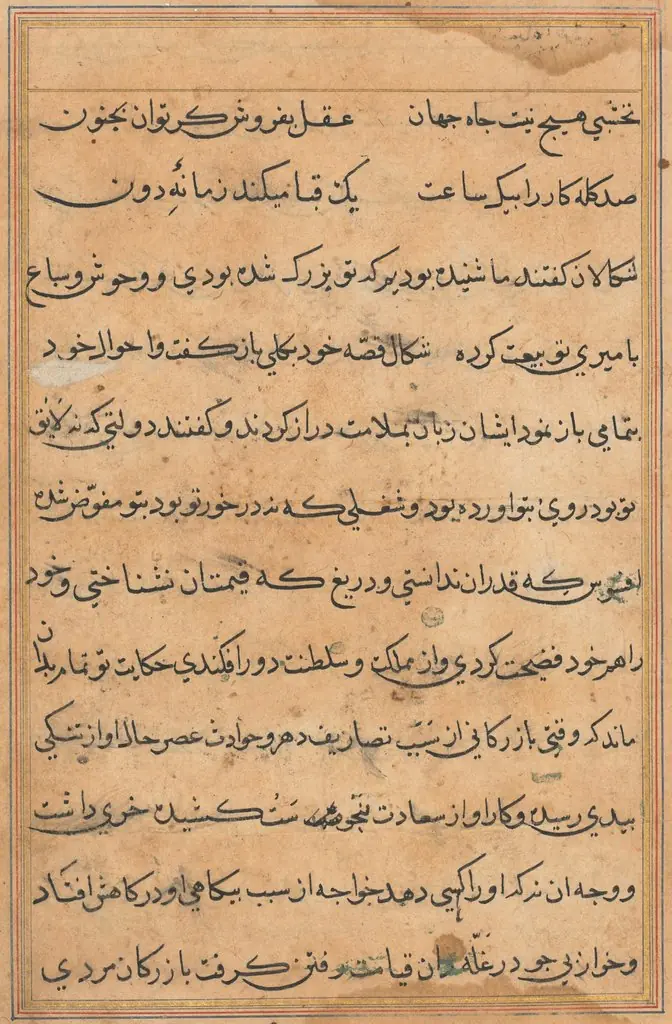 Page from Tales of a Parrot (Tuti-nama): text page
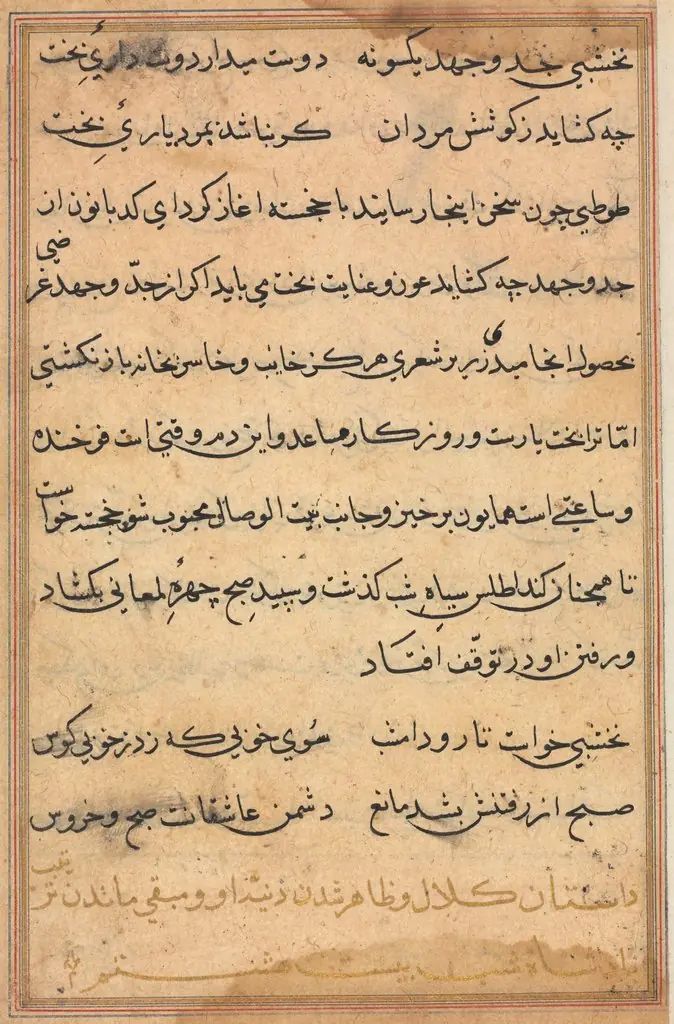 Page from Tales of a Parrot (Tuti-nama): text page
 Tuti-Nama (Tales of a Parrot): Tale XIII
- Text page from a Tuti-nama (Tales of a Parrot)