Artwork
The crucifixion
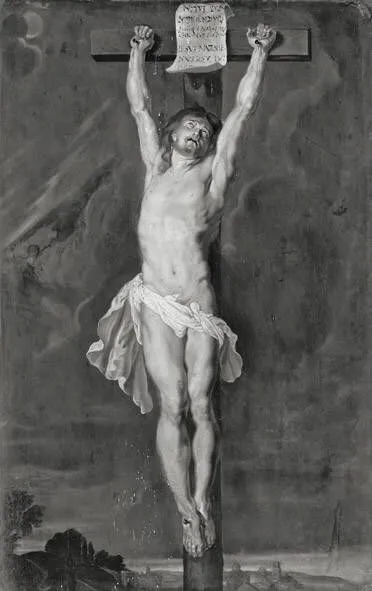
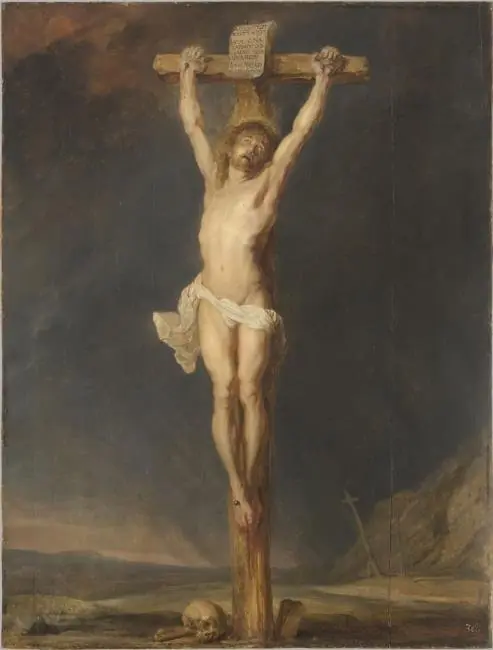
The crucifixion is an unspecified painting by the Early Baroque Italian artist Unknown. It dates from 1608 and is held in the collection of the Bavarian State Painting Collections. The work depicts a crucified figure whose body is contorted in agony.
About this work
Technique & Style
8 cm in width, a relatively modest vertical format suited to an intimate devotional panel rather than a large altarpiece.
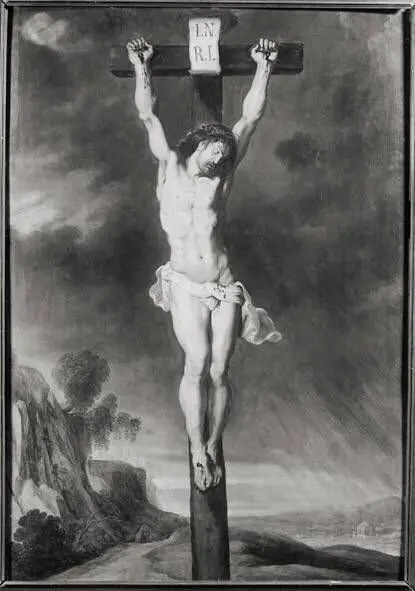
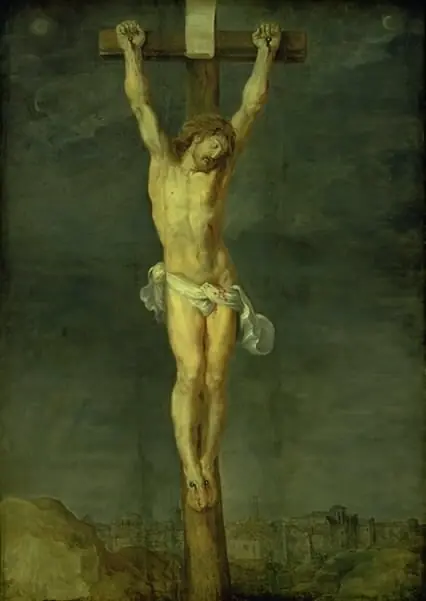
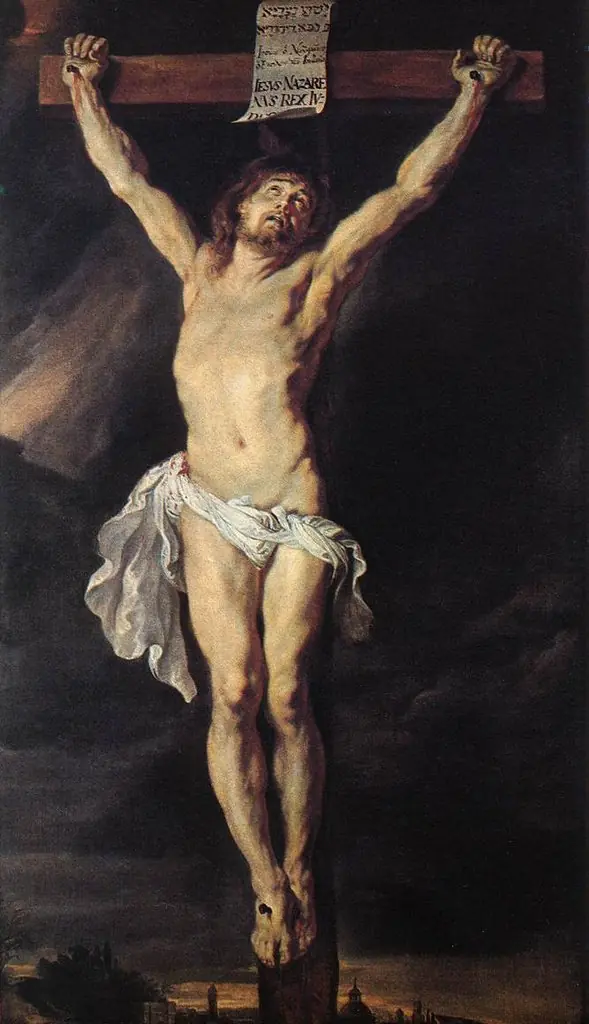
The Crucifixion is a religious painting classified as a copy after Peter Paul Rubens, dated 1608 and held in the Bavarian State Painting Collections at the Alte Pinakothek. Its measured dimensions are 94.7 cm in height by 60.8 cm in width, a relatively modest vertical format suited to an intimate devotional panel rather than a large altarpiece. The work depicts the crucifixion of Jesus Christ and is based on Rubens's original Crucified Christ composition, indicating that it reproduces the formal and stylistic qualities of the master's prototype in a smaller, scaled-down format.
As a copy rather than an autograph work, the painting would have been executed by a follower working from Rubens's model, transmitting the dramatic figural handling and devotional intensity of the source composition.
The sources confirm the painting's medium and support only through its generic classification as a painting; specific information about the support (panel or canvas), pigment, or current condition is not provided.
History & Provenance
The painting was created in 1608 as a religious work depicting the crucifixion of Jesus. It is a copy after Peter Paul Rubens, produced for the Bavarian State Painting Collections and housed in the Alte Pinakothek. The work measures 94.7 cm in height and 60.8 cm in width, reflecting its original dimensions as recorded in the source.
The painting is housed in the Alte Pinakothek within the Bavarian State Painting Collections, where it is recorded under inventory number 2356. It was first exhibited publicly in 1901 as part of the museum’s inaugural display of religious works and later featured in the 1953 exhibition "Masterpieces of Baroque Painting" held at the same institution.
Overview
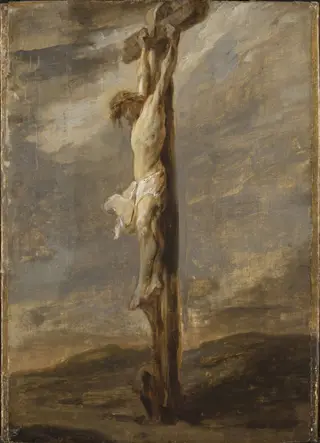
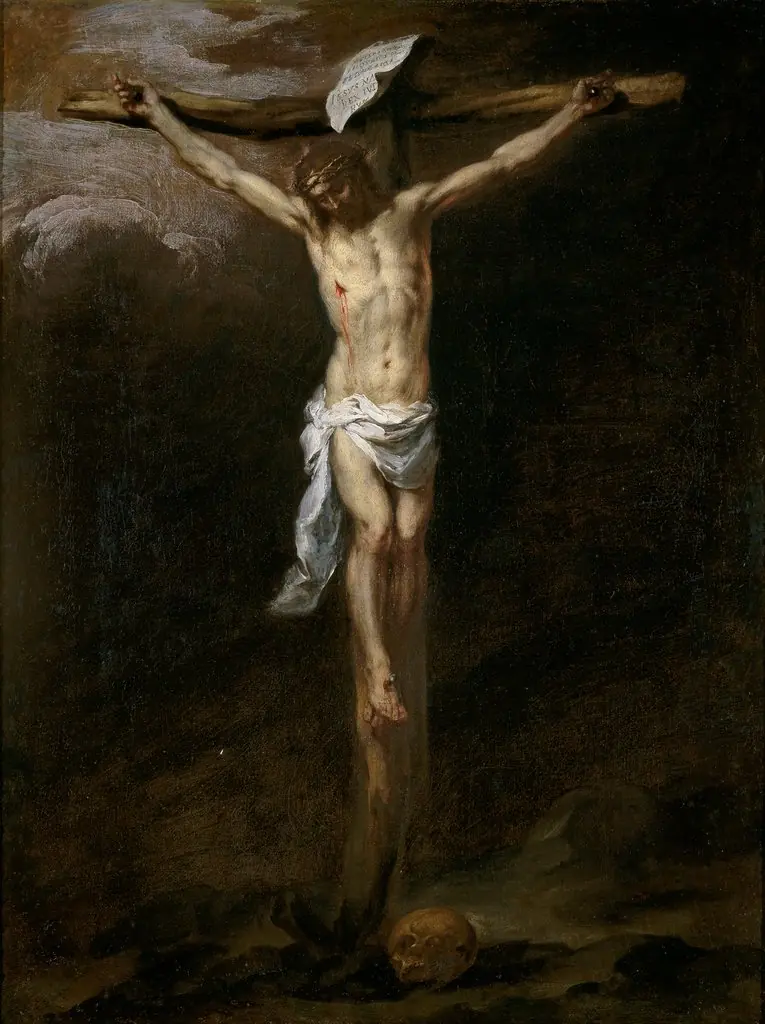
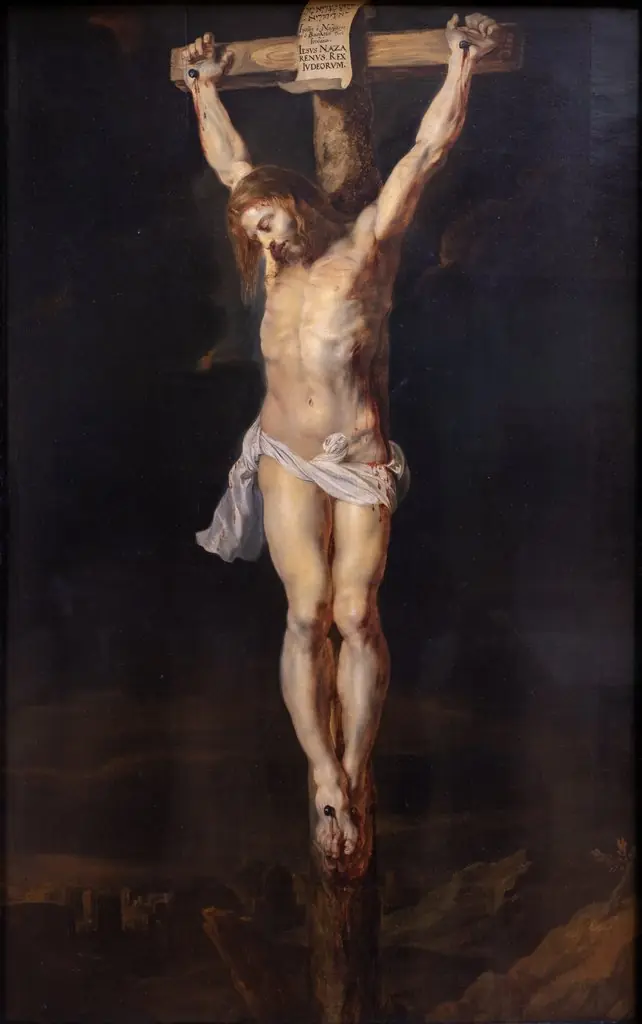
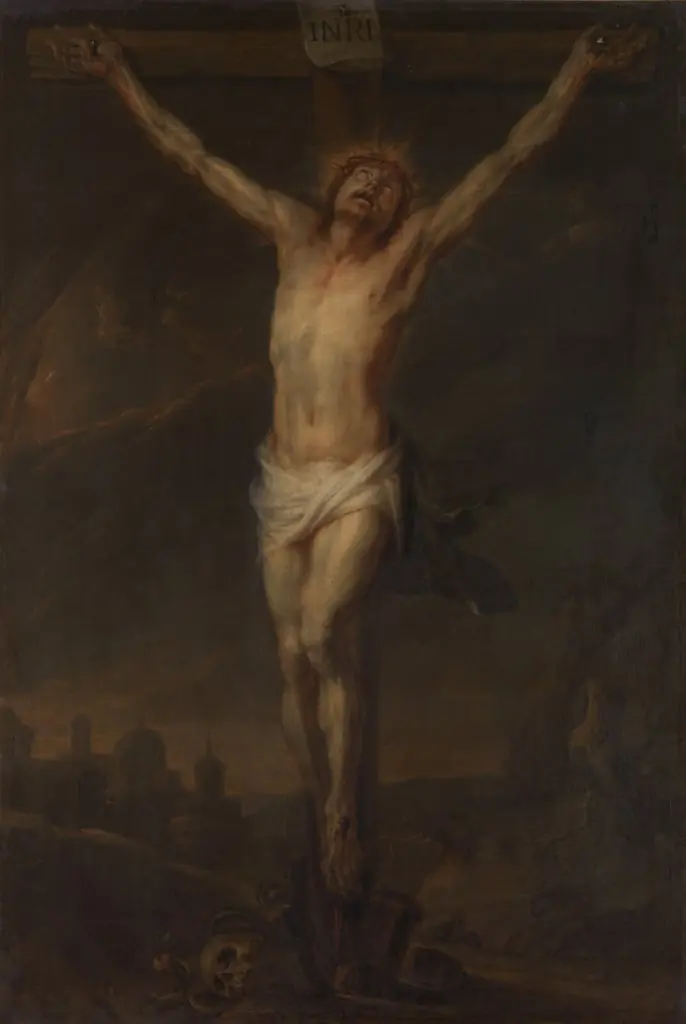
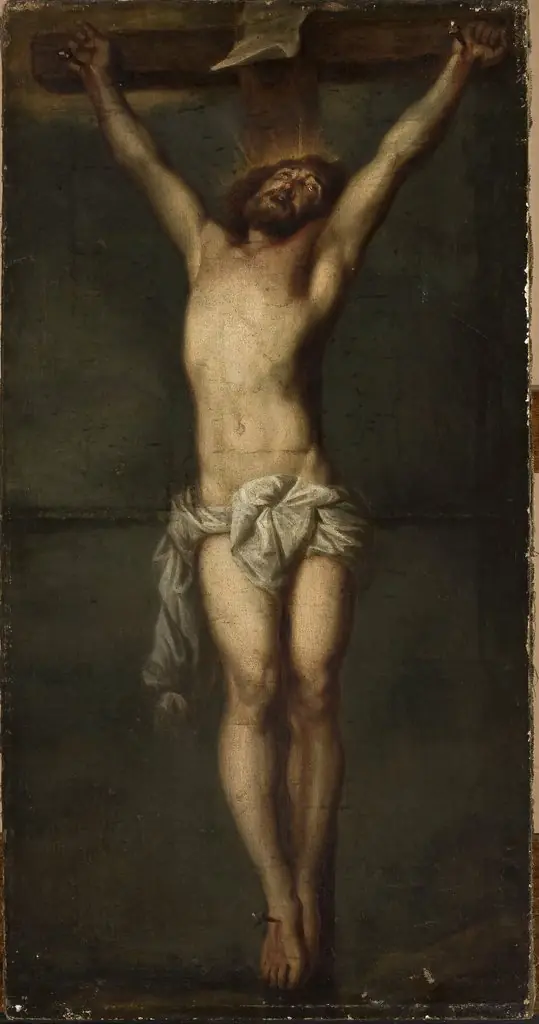
The work depicts a crucified figure whose body is contorted in agony. He hangs on a cross with arms outstretched, nails driven through his hands, and his head tipped backward. A loosely draped cloth hangs from his waist, and his pallid skin stands out against a deep, shadowed backdrop.
Subject & Meaning
The painting presents the traditional Christian scene of the crucifixion, emphasizing the physical torment of the central figure. By focusing on the twisted posture, exposed wounds, and the stark expression, the composition invites contemplation of sacrifice and suffering inherent in the biblical narrative.
Context
Rendered in a period when religious subjects were commonly portrayed with heightened emotional intensity, the painting aligns with artistic trends that sought to engage viewers through visceral realism. The dark background and focused lighting reflect a broader move toward theatricality in devotional imagery.
Artist & collection