Artwork
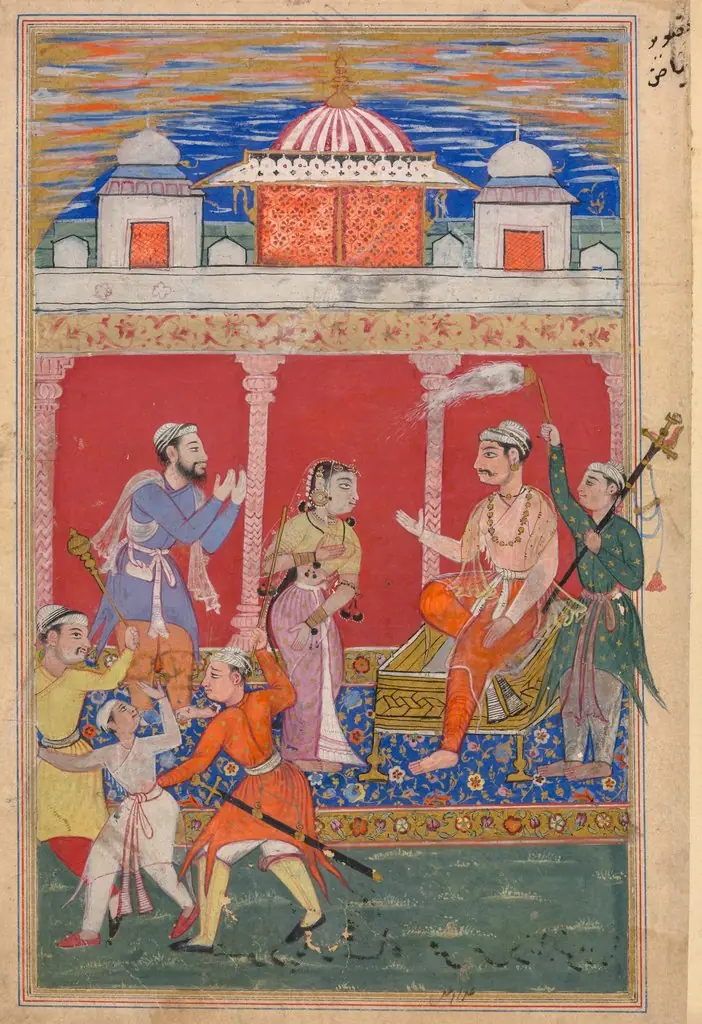
The destitute Mukhtar meets his wife Maimuna at a holy shrine, from a Tuti-nama (Tales of a Parrot): Twenty-fifth Night
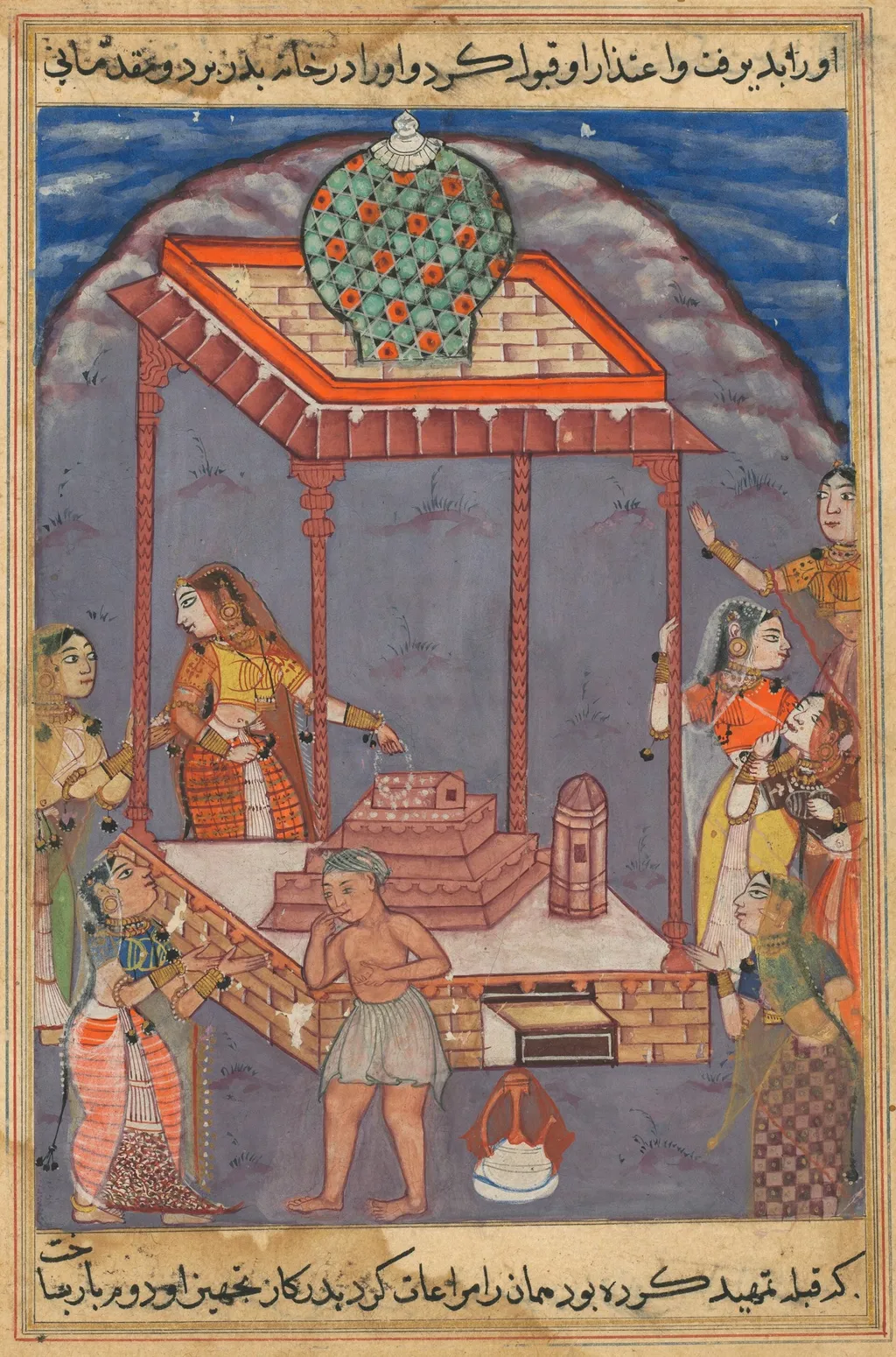
The destitute Mukhtar meets his wife Maimuna at a holy shrine, from a Tuti-nama (Tales of a Parrot): Twenty-fifth Night is an unspecified painting. It dates from 1560 and is held in the collection of the Cleveland Museum of Art. The work depicts a brief episode from a narrative illustration, showing a modest gathering beneath a pavilion with a red roof.
About this work
Subject & Meaning
The scene blends narrative intimacy with symbolic reverence for divine refuge, reflecting Sufi themes of compassion amid hardship.
Mukhtar, depicted in destitute attire, embraces his wife Maimuna at a sacred shrine, illustrating a moment from the Tuti-nama's Twenty-fifth Night where humble characters find spiritual solace. The scene blends narrative intimacy with symbolic reverence for divine refuge, reflecting Sufi themes of compassion amid hardship. The meeting underscores resilience through faith, with the shrine serving as a sanctuary that transcends worldly suffering.
This composition merges poetic storytelling with spiritual allegory, emphasizing redemption through humility and devotion. The artwork originates from the Mughal period and resides in the Cleveland Museum of Art collection.
History & Provenance
Created in 1560 within the Mughal Empire, this painting is part of a manuscript of the Tuti-nama (Tales of a Parrot). The work was executed by an artist whose specific identity remains unknown. It entered the collection of the Cleveland Museum of Art, where it is cataloged under the accession number 1962.279.175.b. The piece is classified as a painting depicting the twenty-fifth night of the narrative, illustrating the meeting of Mukhtar and his wife Maimuna at a holy shrine.
Overview
The work depicts a brief episode from a narrative illustration, showing a modest gathering beneath a pavilion with a red roof. Central figures include a woman in yellow, a small boy clutching a stick, another woman in red holding an infant, and a seated man in a blue‑green turban. A tower and a patterned dome rise in the distance, while the sky remains muted.
Technique & Style
Rendered in vivid pigments, the composition relies on strong primary hues, reds, yellows, and blues, that contrast with a subdued background. The figures are outlined with clear contours, and decorative elements such as the patterned dome and pavilion roof reflect a stylized, narrative miniature tradition rather than naturalistic representation.
Context
Illustrations like this served both decorative and didactic purposes, accompanying textual passages that guided readers through moral stories. The depiction of a holy shrine underscores the religious and cultural setting of the tale, while the domestic figures reflect everyday life in the Persianate world.
Artist & collection

- The destitute Mukhtar meets his wife Maimuna at a holy shrine, from a Tuti-nama (Tales of a Parrot): Twenty-fifth Night
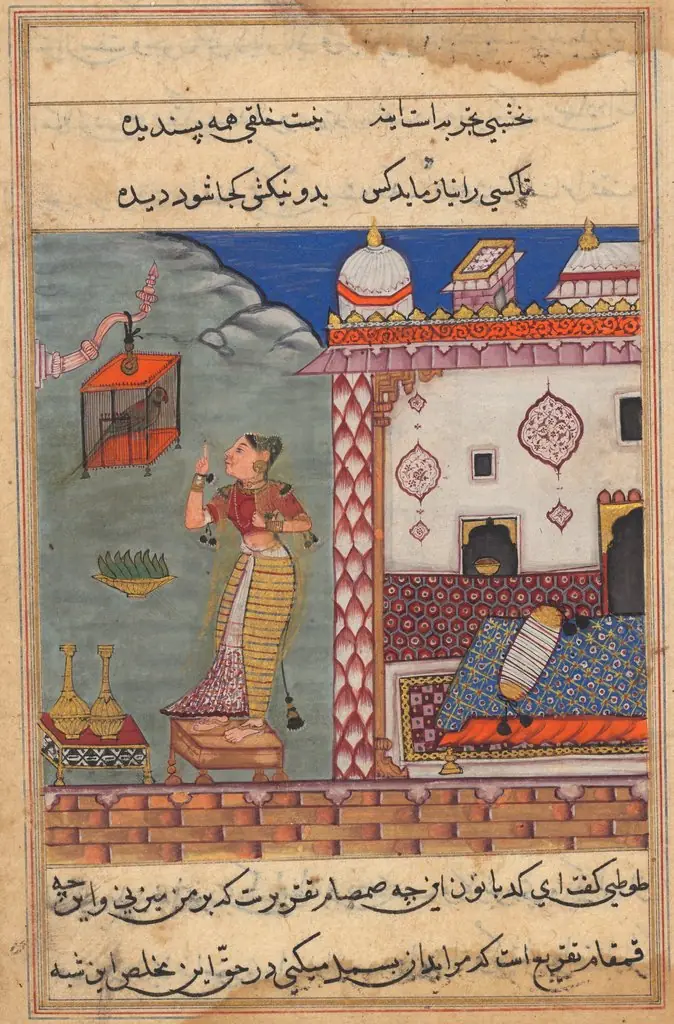 The Parrot Addresses Khujasta at the Beginning of the Twenty-seventh Night, form a Tuti-nama (Tales of a Parrot)
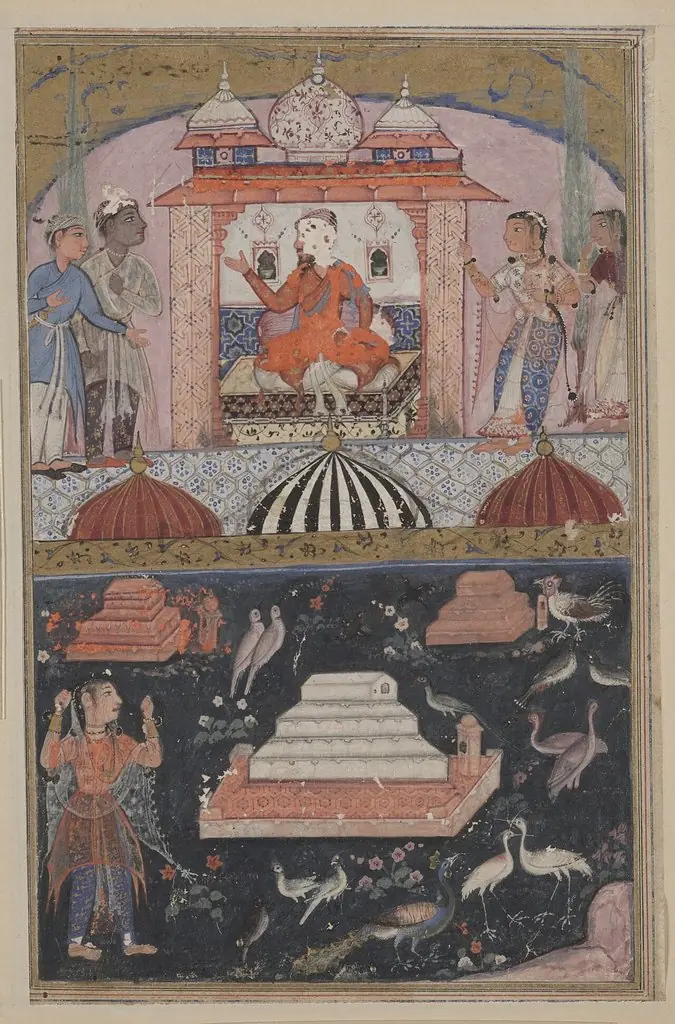 The merchant hears of his wife’s unfaithfulness (above); the unfaithful wife performs penance by plucking her hair (below), from a Tuti-nama (Tales of a Parrot): First Night
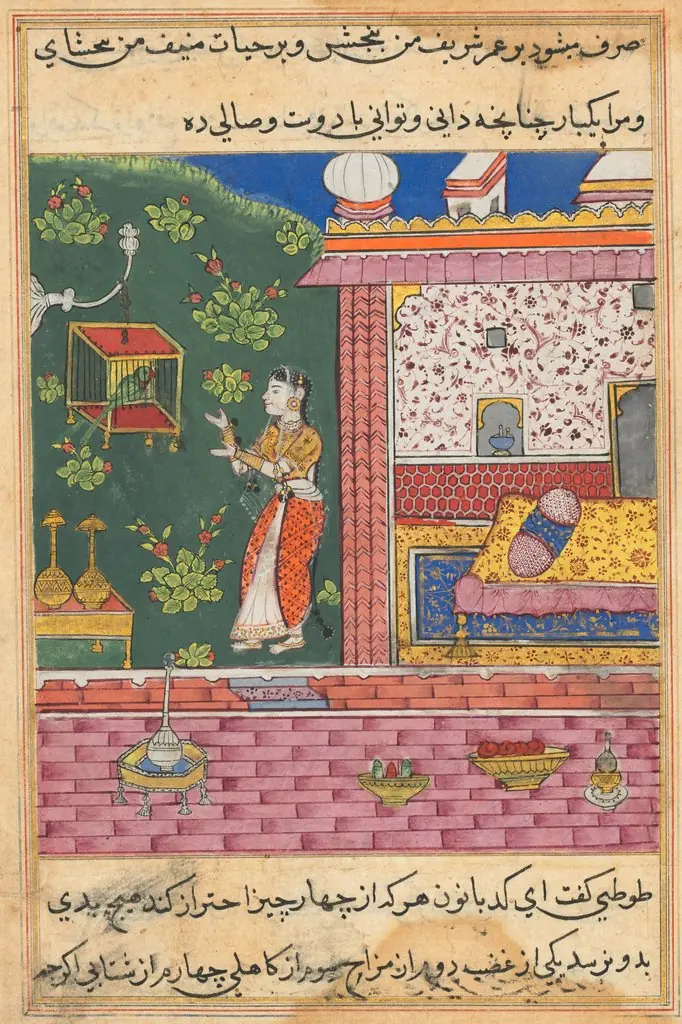 The Parrot Addresses Khujasta at the Beginning of the Thirtieth Night, from a Tuti-nama (Tales of a Parrot)
 The Parrot Addresses Khujasta at the Beginning of the Twenty-seventh Night, form a Tuti-nama (Tales of a Parrot)
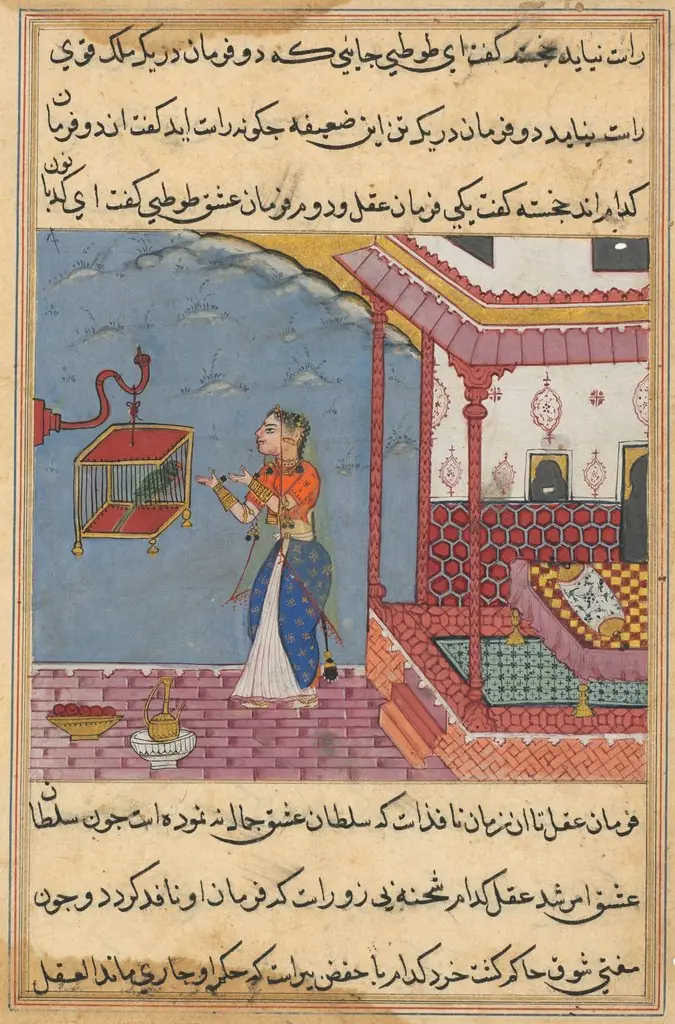 The Parrot Addresses Khujasta at the Beginning of the Twenty-Fourth Night, from a Tuti-nama (Tales of a Parrot)
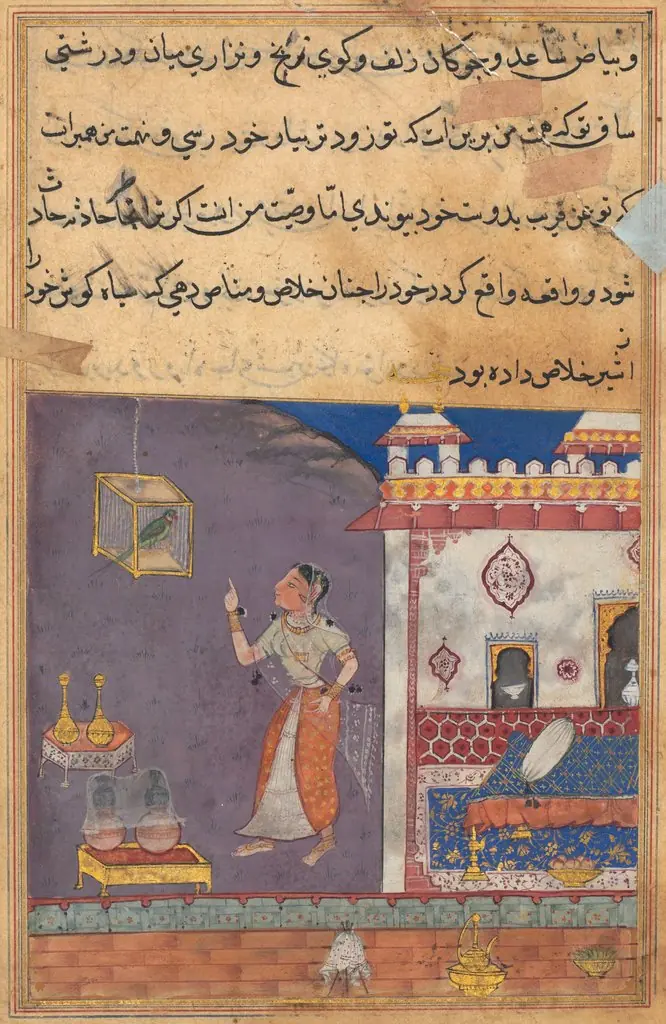 The Parrot Addresses Khujasta at the Beginning of the Twenty-ninth Night, from a Tuti-nama (Tales of a Parrot)
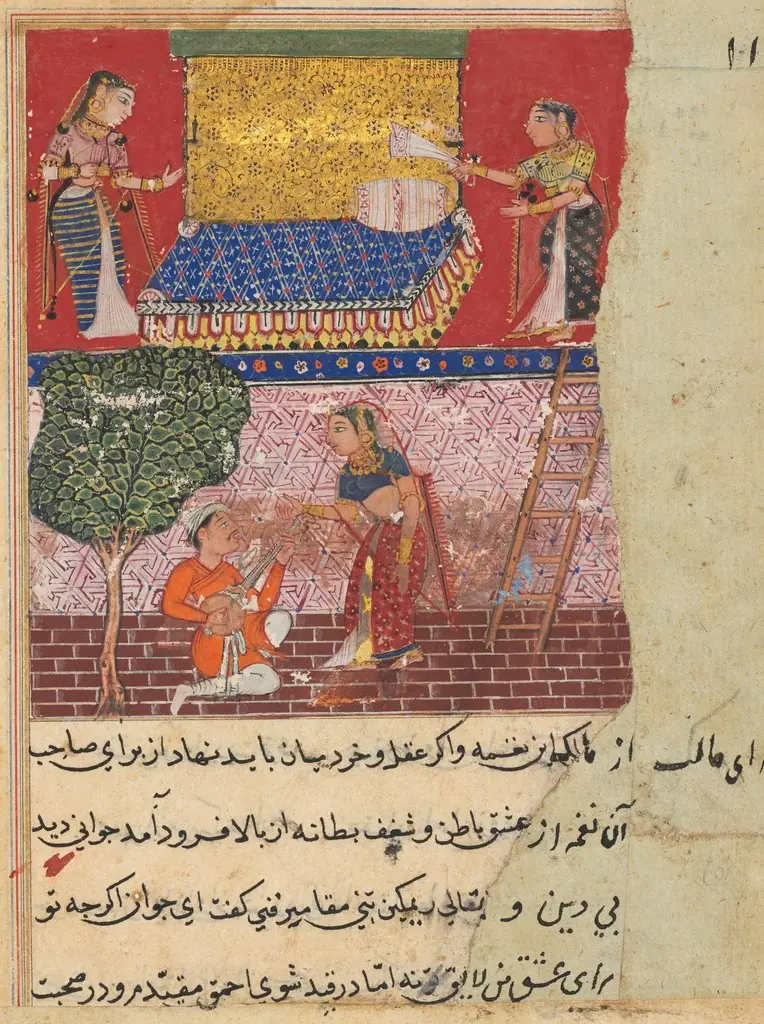 The daughter-in-law of the king of Banaras, charmed by the music of a vagabond, comes down to meet him, from a Tuti-nama (Tales of a Parrot): Sixteenth Night
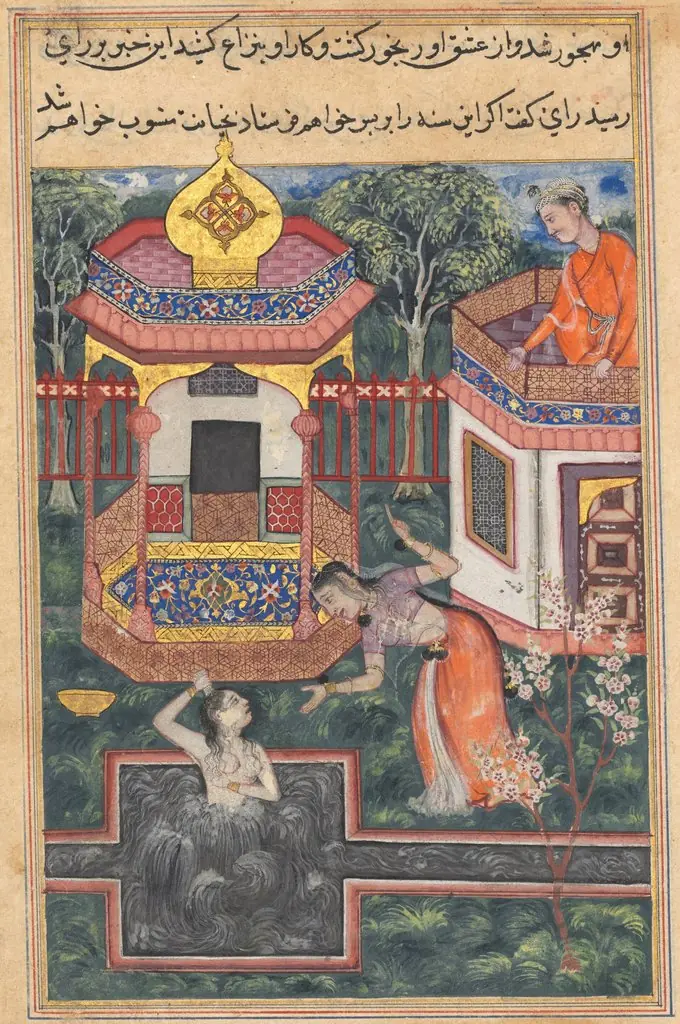 The son of the king of Babylon sees the Brahman transformed into a woman bathing and falls in love with her, from a Tuti-nama (Tales of a Parrot): Thirty-fifth Night
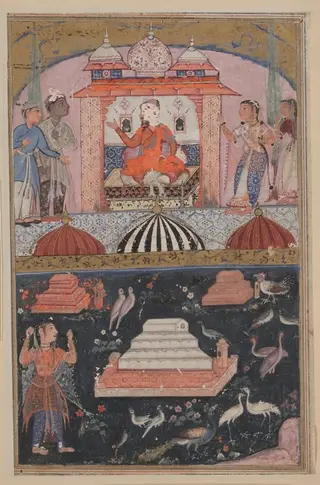 The merchant hears of his wife’s unfaithfulness (above); the unfaithful wife performs penance by plucking her hair (below), from a Tuti-nama (Tales of a Parrot): First Night
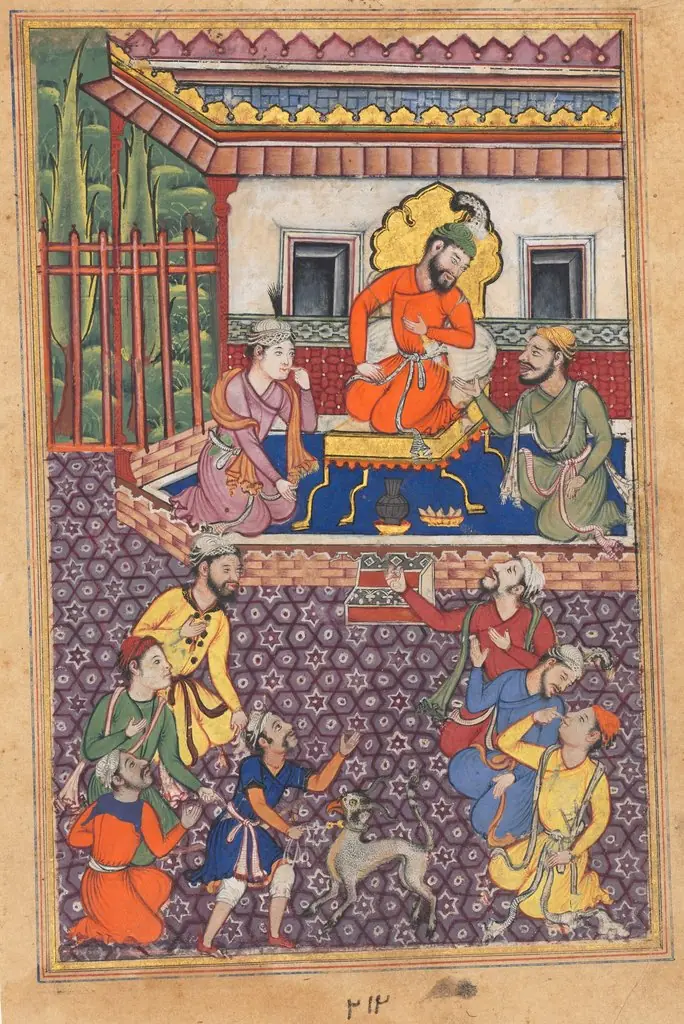 The court of the Raja of Ujjain, from a Tuti-nama (Tales of a Parrot): Forty-sixth Night
 Page from Tales of a Parrot (Tuti-nama): text page